OpenAI and Broadcom Cook Up ‘Jalapeño’ as Qualcomm Drops $3.9 Billion to Reshape the AI Silicon Matrix
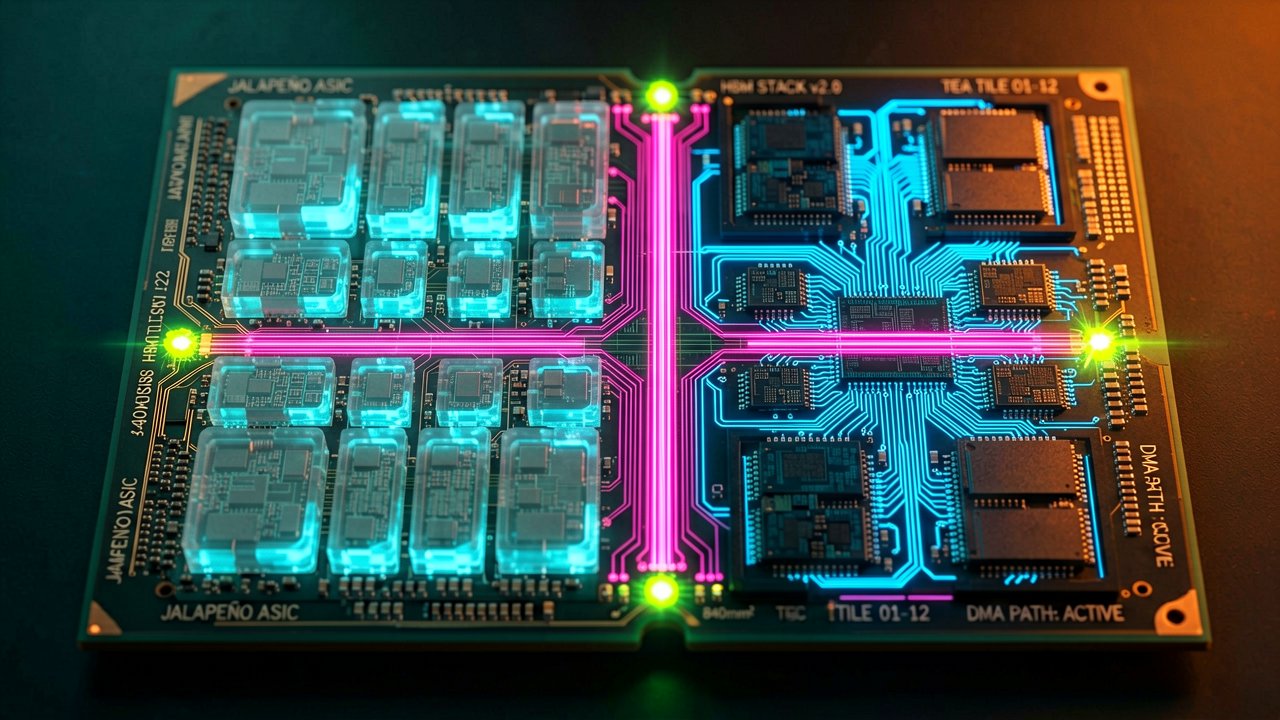
The artificial intelligence arms race just moved from the compiler to the foundry floor. In a striking testament to how fast the industry is moving, OpenAI and Broadcom have officially taken the wraps off "Jalapeño," a custom-built Application-Specific Integrated Circuit (ASIC) engineered specifically for large language model inference. Moving from initial concept to a final tape-out in a blistering nine-month development cycle—partially accelerated by OpenAI’s own frontier models—the processor represents Sam Altman's crew taking direct control over the physics of their execution stack to bypass standard merchant silicon bottlenecks.
But OpenAI isn't the only one building an empire to challenge Nvidia's dominance; across the field, Qualcomm has dropped a staggering $3.92 billion to acquire AI infrastructure startup Modular. Detailed in reports by The Wall Street Journal, this massive all-stock acquisition lands Chris Lattner's buzzy platform squarely in Qualcomm’s hands, setting up an open, multi-vendor software layer to explicitly dismantle Nvidia’s proprietary CUDA moat. Combined, these two structural shifts signal a broader market transition away from standard GPU monoliths toward independent, highly tailored cloud and edge silicon architectures.
Inside the Reticle: The Architectural Blueprint of Jalapeño
While the collaborating firms haven't dumped the entire register map into the public domain, a structural analysis of the physical chip tells a compelling story. Experts digging into early hardware images at Tom's Hardware estimate that Jalapeño’s primary compute chiplet measures roughly 25.46 mm by 33 mm. That yields an enormous die size of approximately 840 mm², parking it right up against the theoretical physical reticle limit of extreme ultraviolet (EUV) lithography systems. Surrounded by dense stacks of High Bandwidth Memory, the hardware architecture is explicitly optimized from the ground up for massive matrix multiplication, localized weight retention, and lightning-fast memory movement. Rather than scattering compute elements across a distributed array of smaller chiplets, which introduces latency overhead, OpenAI opted for a massive single-die footprint to keep critical model kernels as close to the arithmetic logic units as possible.
This physical scale translates directly into efficiency metrics that the creators claim will outpace today's gold standard. Early internal testing indicates that Jalapeño delivers a performance-per-watt profile that is substantially better than current state-of-the-art accelerators, operating remarkably close to the hardware's theoretical limits during real-time inference workloads. OpenAI intends to put these claims to the test by the end of the year, deploying the custom ASICs inside specialized servers built by Celestica to drive down the eye-watering infrastructure costs that currently plague generative and agentic AI platforms.
Engineering the Jalapeño Execution Engine
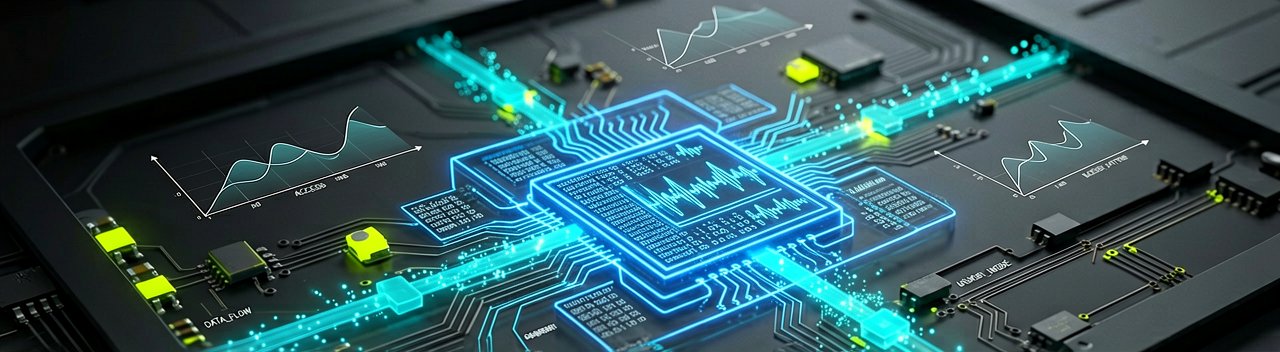
Behind the Scenes: Building a production-ready large language model accelerator from scratch in just nine months required the design teams to bypass conventional generic compute logic completely. Systems engineers architecting Jalapeño chose to replace the standard, heavy out-of-order instruction pipelines found in modern CPUs and general-purpose GPUs with an array of deeply pipelined, lean Tensor Execution Core (TEC) tiles. These logic blocks operate directly on low-precision numeric formats, optimizing silicon surface area strictly for dynamic mixed-precision matrix arithmetic. By focusing entirely on inference execution pathways, the hardware strips out massive blocks of unnecessary scheduling circuitry, dedicating the bulk of the die's active silicon real estate to dense accumulation registers and low-latency internal buses.
To eliminate the persistent memory wall that slows down real-time autoregressive token generation, the architecture implements a highly optimized, hardware-managed static scratchpad memory instead of a traditional hierarchical cache. This configuration gives the underlying software compiler explicit runtime control over the placement of key KV cache matrices and active model layers. System code directly coordinates data migration between the physical High Bandwidth Memory and the local computing tiles using advanced, multi-channel Direct Memory Access (DMA) controllers. This deterministic approach allows the silicon to predict exact memory addresses and preload weight vectors in parallel with current computational instructions, keeping the matrix engine fed with zero stall cycles during operation.
The compiler stack plays an equally vital role in these hardware efficiencies by executing aggressive graph-level optimizations before any binary code reaches the chip. Because the compiler knows the physical layout of the processing array, it merges consecutive mathematical operations, like combining a linear layer with its activation function, right at the hardware level. This fusion keeps intermediate execution data inside the fast register files, preventing the system from wasting power and time writing data back to external memory. Additionally, the software dynamically sections large neural models into clean sub-graphs that fit into the available silicon spaces, allowing multiple execution tiles to process workloads concurrently with minimal cross-chip communication overhead.
At the lowest software layer, specialized runtime drivers utilize customized low-level instructions to execute sparse matrix operations directly inside the processor. When dealing with models where many parameters are zero, the silicon detects these empty data blocks at the hardware level, bypassing unnecessary calculations entirely and saving significant power. These native operations work seamlessly with advanced kernel architectures, allowing engineers to write highly optimized code that manages thread groups with minimal software overhead. By aligning the software compiler directly with the hardware logic, the overall system significantly reduces execution latency, paving the way for the efficient deployment of next-generation agentic workflows on the physical servers.

The Real-World Cost of Bespoke Silicon Moats
Reading Between the Lines: The tech sector has fallen deeply in love with the narrative of custom silicon self-sufficiency, but the financial and operational realities of running proprietary hardware frameworks tell a far more complicated story. OpenAI and Broadcom’s nine-month rush to tape out the Jalapeño processor is undeniably a triumph of automated design engineering, yet it forces the industry to confront an awkward contradiction. For years, the fundamental value proposition of AI startups was their agile, asset-light software architecture. By anchoring themselves to massive, custom-designed physical ASICs, players like OpenAI are effectively mutating into capital-intensive infrastructure firms that must continuously subsidize and justify their own specialized foundry pipelines.
This rush toward bespoke hardware architectures also risks fracturing the fragile open-source software ecosystem that made the generative AI boom possible in the first place. While Qualcomm’s massive multi-billion-dollar bet on Modular aims to create a unified, cross-vendor abstraction layer to liberate developers from Nvidia’s proprietary CUDA software trap, OpenAI’s parallel move toward isolated, proprietary hardware points in the exact opposite direction. If every major frontier laboratory begins deploying its own closed, highly customized silicon architectures, the industry will inevitably fragment into competing software silos. Developers will no longer write code for a universal compute framework; instead, they will be forced to optimize their models for narrow, platform-specific instruction sets, which will slow down the broader distribution of academic research.
Furthermore, relying on hyper-optimized hardware architectures introduces an inherent risk of technical obsolescence before the physical chips even clear testing. The Jalapeño architecture achieves its impressive efficiency gains by stripping away general-purpose logic to focus entirely on low-precision, autoregressive transformer inference. However, AI research is moving at a chaotic pace, with newer architectures like state-space models, liquid neural networks, and advanced diffusion transformers constantly threatening to displace traditional attention mechanisms. By freezing current model mechanics into expensive, mass-produced physical silicon, OpenAI is gambling that the basic mathematical structures of their frontier models will not fundamentally change over the next three years—a risky assumption in a field where today's cutting-edge breakthroughs routinely become tomorrow's legacy code.
Ultimately, the true measure of success for this wave of custom silicon will not be found in laboratory performance benchmarks or theoretical power-efficiency metrics, but in the brutal economics of the global supply chain. Moving from a successful initial tape-out to reliably shipping high-yield wafers from advanced foundries represents an entirely different operational hurdle, especially as global chip manufacturing capacity remains tightly bottlenecked. Even if Jalapeño operates flawlessly inside specialized data centers, the massive overhead required to maintain a proprietary chip ecosystem could easily erase the expected infrastructure savings, proving that building a chip is often much simpler than scaling it.
"We spent a decade convincing the world that the beauty of software lies in its ability to adapt instantly to any problem, only to realize that the ultimate tech status symbol is a piece of hyper-specific, multi-million-dollar sand that refuses to do anything else but multiply matrices very quickly."
Artūras Malašauskas is an AI Systems Integrator with 20+ years of production-grade web engineering experience. He has designed, shipped, and scaled enterprise Python/PHP systems for logistics, SaaS, and public-sector clients. For the past year, he has focused exclusively on AI integrations: deploying open-source LLMs, building generative media pipelines (image, audio, video), and engineering multi-agent workflows for real production environments. His standard: reproducibility, security, cost-efficient inference—no vaporware. He documents and evaluates emerging AI tooling, separating verified capabilities from marketing noise. Technical editor at: muza-ai.eu, ai-verslas.lt, ai-naujinos.lt Connect on LinkedIn
Comments