Inside Anthropic’s Claude Tag: Architectural Breakdown of AI Agent Integration in Slack
The passive chatbot sitting in a corner of your corporate workspace is officially dead. In its place, Anthropic has launched Claude Tag, a complete architectural overhaul that redefines how artificial intelligence interacts with human teams. Instead of functioning as a private, single-user utility, this new agent architecture embeds itself as a permanent, multiplayer entity within Slack channels. It can proactively track ongoing conversations, pull context from messy, unstructured corporate chatter, and autonomously execute complex workflows without human hand-holding.
This is a major departure from the legacy model where an employee would privately prompt an AI to summarize text or write a snippet of isolated code. Built on top of the powerful Claude 4.8 Opus foundational framework, Claude Tag behaves less like an app and more like a human colleague. It retains stateful memory across multiple sub-threads and acts under a unified organization identity rather than individual user permissions. This structural evolution marks a significant advancement in the race to build dependable enterprise AI layers, directly challenging competing orchestration frameworks from major cloud data vendors.
The Multiplayer Agent Architecture
At the absolute core of Claude Tag's engineering design is a stateful, channel-scoped identity model that moves away from stateless API calls. When a workspace administrator pairs the platform with Slack, they are not just installing a plugin; they are provisioning a dedicated agent environment. The agent maintains a persistent context window that tracks the historical evolution of a specific channel's discussions. Because it listens to the broader context, team members can loop the agent into an ongoing technical issue simply by mentioning its handle. The agent already understands the chronological sequence of events without requiring a massive, manual copy-paste of previous message logs.
This "multiplayer" framework allows different team members to interact with the exact same agent instance asynchronously. If a backend developer tasks Claude Tag with investigating a database bottleneck before logging off, a frontend engineer can jump into the exact same thread hours later. They can review what the agent has discovered, ask follow-up questions, or tell it to implement a fix based on its previous findings. To prevent cross-contamination of sensitive enterprise data, Anthropic implemented strict memory scoping. A Claude Tag identity provisioned for an engineering team cannot bleed its accumulated memory or tacit operational knowledge into a channel reserved for finance or human resources.
To orchestrate these long-running tasks, the system utilizes a multi-stage execution pattern. When assigned a broad objective, the agent does not just guess an output; it decomposes the request into distinct, linear milestones. The lead agent uses an extended thinking mode to analyze query complexity and map out necessary tool calls. If it encounters a complex debugging issue, it can spin up focused subagents to handle distinct parts of the problem—such as isolating a root cause or writing a patch—before synthesizing everything into a cohesive Slack response. Administrators maintain granular governance by defining specific tool boundaries and hard token spending limits at both the organizational and individual channel levels via the Anthropic Official Announcement.
Ambient Mode and Asynchronous Execution
What truly elevates Claude Tag from a reactive tool to an active teammate is its dual operational methodology: Task Mode and Ambient Mode. In Task Mode, the agent operates entirely within the boundaries of a specific thread, breaking down problems and deploying connected enterprise tools to generate pull requests, run data analysis, or triage incoming support tickets. However, when administrators toggle on Ambient Mode, the agent transitions into an always-on observer that can independently intervene in a channel when it detects an operational anomaly or an unresolved bottleneck. This enables the agent to cross-reference conversations with live data sources, surface relevant company insights, or gently bump a critical thread that has gone quiet.
This architectural design is engineered to leverage asynchronous execution to its fullest potential. Instead of locking a user into a synchronous chat loop, Claude Tag accepts a high-level goal and allows human operators to pivot to other priorities while it works autonomously in the background for hours or days. It schedules its own iterative milestones, logs its tool calls for transparent auditing, and outputs its final deliverables directly inside the shared workspace. This approach elegantly transforms conversational corporate friction into executable, well-documented outputs, capturing valuable tribal knowledge that typically gets lost in ephemeral chat histories.
Performance Metrics and Enterprise Impact
The architectural shift toward persistent, autonomous agency is already delivering striking efficiency gains in production environments. Inside Anthropic's own engineering organization, a staggering 65% of all product team software code is actively generated and deployed by an internal version of Claude Tag. This metric underscores a massive leap from superficial code suggestions to deep, structural codebase contributions. The agent routinely pulls down live production code, analyzes existing components, and submits functional pull requests that adhere precisely to established architectural patterns.
This level of real-world performance is rapidly expanding beyond engineering workflows into broader corporate operations. Early telemetry reveals that organizations utilizing the system have fundamentally changed how they manage internal support queues and metric tracking, relying on the agent to chase down product data and isolate root causes of complex bugs in real time. For existing enterprise deployments, managing this transition is highly straightforward. Workspace administrators have a clear 30-day window to migrate from legacy single-user setups to the new agent architecture before the platform completes an automatic transition, ensuring that access controls and data boundaries remain perfectly aligned with modern enterprise governance standards.
Deep Code Processing Optimizations
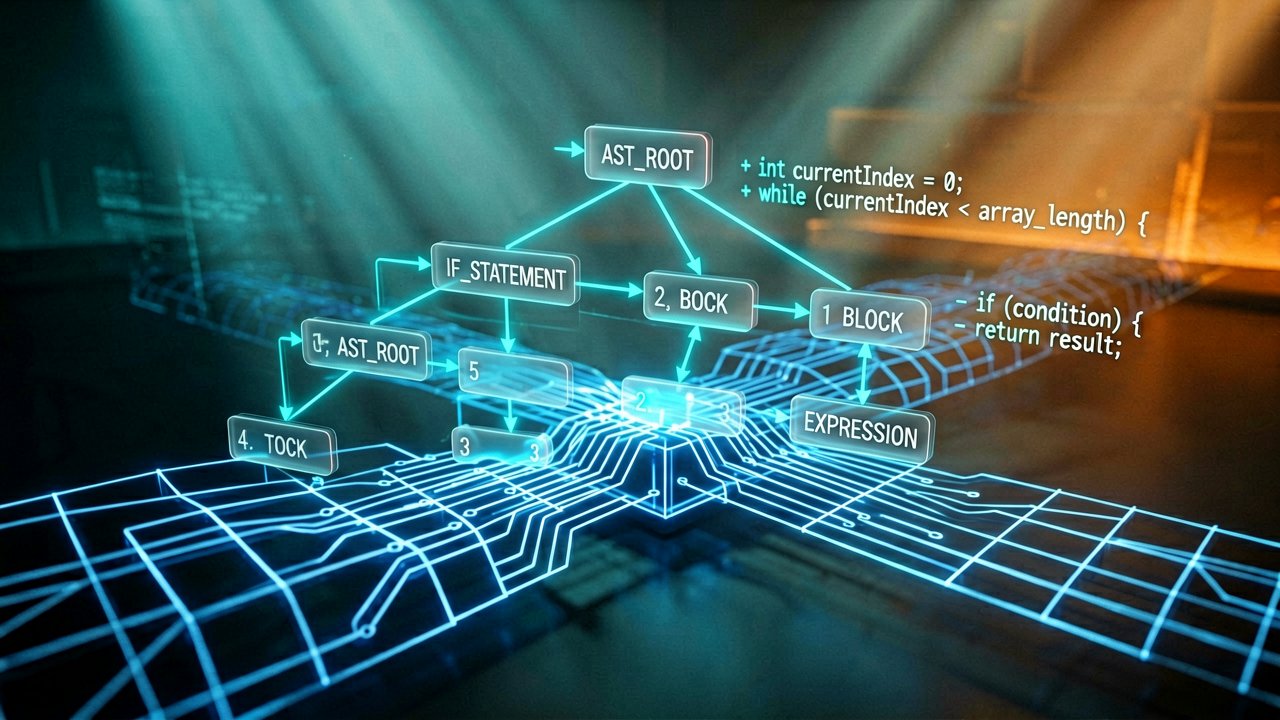
Behind the Scenes: The architectural magic of Claude Tag relies on a highly sophisticated state management system designed to process complex codebases directly within Slack threads. Traditional AI integrations often fail when dealing with large repositories because they struggle with context window limitations and token consumption. Anthropic resolves this constraint by deploying an incremental AST parsing engine that builds dynamic code maps of a repository. Instead of ingestion of entire code files during a Slack mention, the agent runs a targeted abstract syntax tree analysis to isolate modified functions and their immediate dependencies. This semantic slicing ensures that the context window remains populated with highly relevant code structures rather than unnecessary boilerplate metadata.
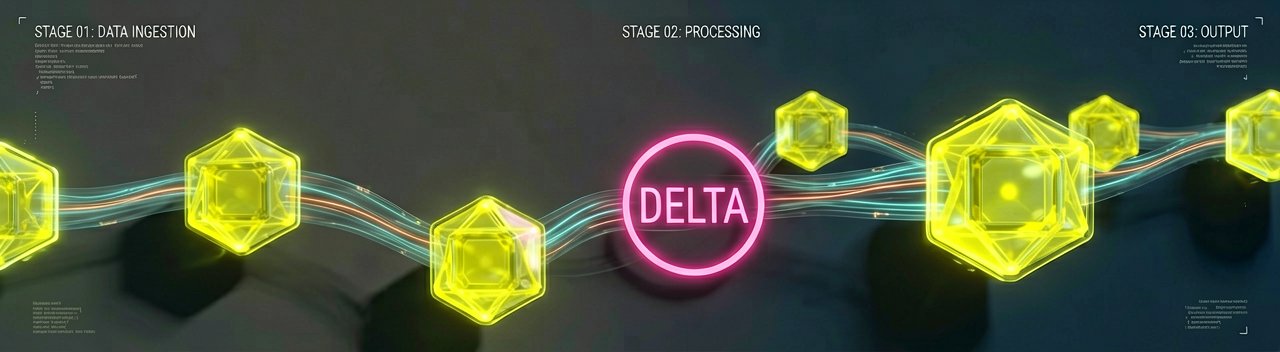
To maintain seamless performance during multiplayer developer interactions, the agent uses a localized cache invalidation protocol. When a team member pushes an update or mentions a specific commit hash in a thread, Claude Tag does not re-index the entire workspace codebase. Instead, a background delta compiler calculates the precise structural differences between the current branch and the cache. It applies these micro-updates asynchronously to its internal semantic graph. This delta-tracking framework dramatically reduces the latency of code-related responses, enabling the agent to evaluate complex logic blocks and generate accurate patches in seconds rather than minutes.
Concurrency management poses another significant challenge when multiple engineers query the agent within the same workspace channel. Anthropic engineered a strict read-write locking mechanism on the underlying repository state representation to eliminate data race conditions. If an engineer tasks Claude Tag with refactoring a database migration while another developer runs a diagnostic query on the same schema, the agent serializes these operations using a specialized task queue. The lead agent acts as an orchestrator, prioritizing read-heavy diagnostic requests before executing state-altering refactoring routines to guarantee execution integrity across the shared environment.
Systems Infrastructure and Runtime Security
Executing untrusted, AI-generated code snippets within an enterprise ecosystem requires ironclad isolation layers at the systems infrastructure level. Claude Tag operates on a containerized micro-runtime architecture where every code execution task occurs in an ephemeral, micro-virtual machine. These isolated micro-VMs spin up in milliseconds using lightweight hypervisors, execute the targeted tests or validation scripts compiled by the agent, and self-destruct immediately upon task completion. This absolute isolation prevents malicious code injection from ever reaching the broader enterprise intranet or compromise private development environments.
Network security inside this runtime environment is strictly governed by zero-trust egress policies. The micro-VMs containing the agent's code execution loop are prohibited from establishing arbitrary outbound internet connections. They are permitted to communicate exclusively with pre-approved corporate endpoints, such as internal GitHub Enterprise instances or localized staging databases, using securely managed cryptographic tokens. This preventative routing design completely eliminates the risk of data exfiltration, ensuring that proprietary source code and sensitive backend variables never leak beyond the authorized corporate boundaries.
Resource consumption is managed through a multi-tiered token throttling system built directly into the agent API gateway. To prevent runaway recursive loops during complex debugging sessions, the system enforces hard execution limits on both compute time and memory allocations per subagent. If an autonomous debugging task exceeds its designated CPU quota or exhibits behavioral patterns indicative of an infinite loop, the orchestrator instantly terminates the container. It flags the failure within the Slack thread and prompts human developers for explicit architectural guidance before attempting further programmatic remediation.
The Enterprise Reality Check
Reading Between the Lines: While Anthropic’s vision of an autonomous, code-deploying colleague paints a compelling picture of frictionless productivity, it glosses over a fundamental tension in modern software engineering: the fragile nature of accountability. When an AI agent generates and merges 65% of a product team's code, the traditional line of ownership blurs into oblivion. If a critical production outage occurs at 2:00 AM due to a subtle race condition introduced by a Claude Tag pull request, the burden of remediation still falls squarely on human shoulders. This creates an architectural paradox where humans are stripped of the contextual intimacy gained by writing the code themselves, yet remain entirely liable for its systemic failures.
Furthermore, relying on an "Ambient Mode" that constantly listens to Slack channels introduces profound sociological and operational friction. Workplace communication tools are effective because they serve as semi-formal, psychological safety valves where engineers can brainstorm, vent, and debate imperfect ideas. Introducing an omniscient, analytical agent that intercepts unstructured chat data and cross-references it with live telemetry risks stifling organic collaboration. Engineers may quickly learn to censor their conversations, formatting their thoughts exclusively to satisfy the agent's parsing logic rather than communicating authentically with their peers.
There is also a stark economic contradiction between the promise of autonomous efficiency and the reality of enterprise infrastructure costs. The multi-stage execution patterns, continuous AST parsing, and ephemeral micro-VM environments required to keep Claude Tag operational consume massive amounts of token and compute resources. For mid-sized enterprises, the cost of running an array of always-on subagents could quickly rival or exceed the salaries of the junior engineers they are designed to augment. Upgrading workplace communication from a passive chat application to an autonomous reasoning engine may ultimately shift expenses from human payroll directly to cloud infrastructure bills without guaranteeing a proportional increase in software quality.
Long-Term Systemic Implications
Looking further down the road, the pervasive embedding of autonomous agents within communication layers will inevitably trigger an arms race of algorithmic governance. As agents begin interacting not just with humans but with other autonomous workflows across corporate silos, we enter an era of machine-to-machine bureaucracy. A Claude Tag instance optimizing engineering pipelines will routinely collide with automated financial compliance bots enforcing budget caps or security agents auditing data access permissions. Managing these multi-agent conflicts will require an entirely new subset of systems engineering, potentially creating more administrative overhead than the automation was supposed to eliminate.
Ultimately, the transition to multiplayer AI architecture forces us to re-evaluate the true value of human oversight. The current enterprise consensus treats human review as a magic bullet for AI safety, assuming that a quick glance at an agent's pull request is enough to catch hallucinated logic or security vulnerabilities. In practice, as the volume of agent-generated code grows exponentially, human reviewers will inevitably suffer from automation bias and fatigue, rubber-stamping complex patches they barely understand. The enterprise AI revolution promises to turn developers into high-level orchestrators, but it risks turning them into glorified compliance officers reading code they didn't write for a system they no longer fully control.
"We are rapidly approaching an enterprise utopia where AI agents write the code, subagents review the code, and compliance bots audit the deployment logs—leaving human engineers with the most critical job of all: sitting in a Slack channel, watching a progress bar, and hoping nobody presses the wrong button."
Artūras Malašauskas is an AI Systems Integrator with 20+ years of production-grade web engineering experience. He has designed, shipped, and scaled enterprise Python/PHP systems for logistics, SaaS, and public-sector clients. For the past year, he has focused exclusively on AI integrations: deploying open-source LLMs, building generative media pipelines (image, audio, video), and engineering multi-agent workflows for real production environments. His standard: reproducibility, security, cost-efficient inference—no vaporware. He documents and evaluates emerging AI tooling, separating verified capabilities from marketing noise. Technical editor at: muza-ai.eu, ai-verslas.lt, ai-naujinos.lt Connect on LinkedIn
Comments