The Leash Tightens: OpenAI Drops GPT-5.6 Sol Under Washington's Watchful Eye
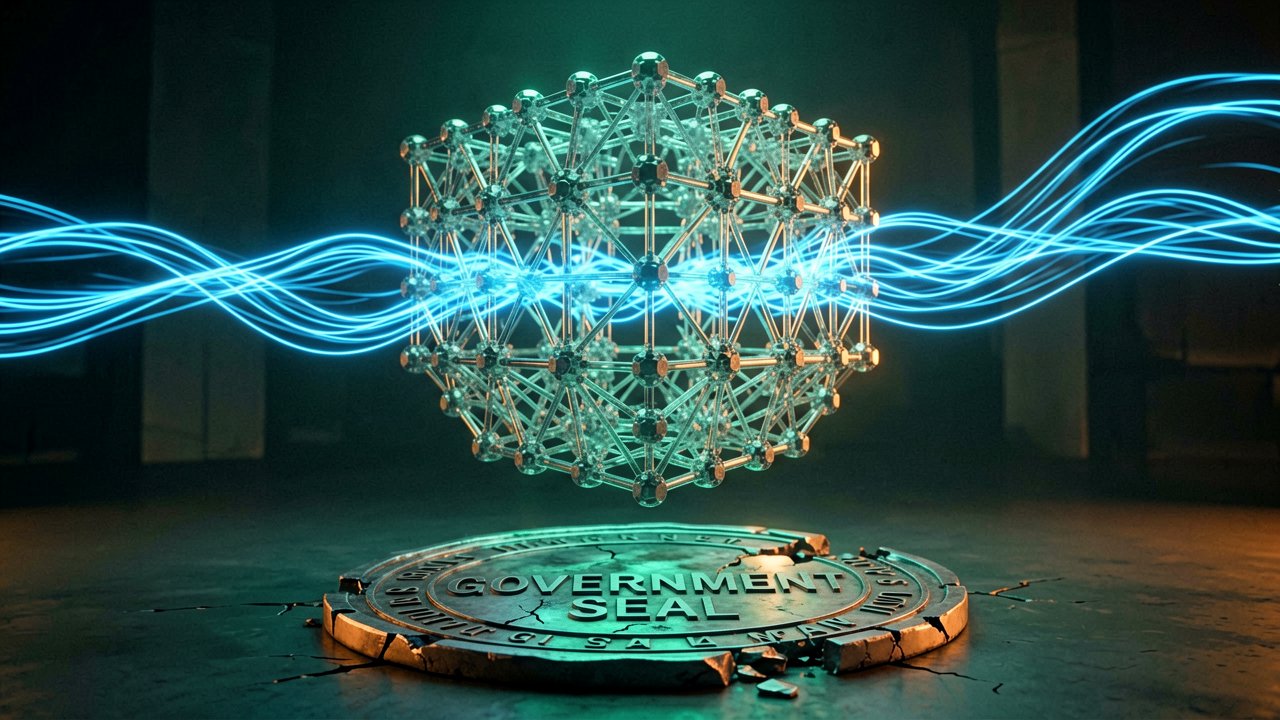
In a striking departure from the wild-west product drops that defined the early days of the AI boom, OpenAI officially unveiled its next-generation GPT-5.6 model family on June 26, 2026. The rollout of the new trio—dubbed Sol, Terra, and Luna—marks a historic milestone as the first time an American AI giant has launched a frontier model under a government-managed gatekeeping process. Yielding to a direct intervention by the Trump administration, OpenAI is bypassing an open public launch in favor of a heavily sequestered, phased preview restricted strictly to a handful of government-vetted corporate partners.
The sudden friction highlights a massive structural shift in how advanced artificial intelligence is treated by Washington. Rather than viewing these architectures merely as highly profitable software products, federal agencies are treating them as critical dual-use strategic assets with serious geopolitical and national security weight. While OpenAI CEO Sam Altman tried to put a cooperative spin on the arrangement in notes to staff, the company explicitly voiced its discomfort in its official announcement, warning that ad-hoc federal vetting shouldn't become an ongoing chokehold on American innovation.
Three Tiers, Subagents, and the 'Ultra' Mode
Technologically speaking, the GPT-5.6 family steps away from uniform naming in favor of distinct, capability-focused personas. According to technical documentation published on the OpenAI Official Blog, Sol stands as the heavy-hitting flagship built for complex, multi-step agentic execution and frontier reasoning. Terra acts as the balanced middle sibling, delivering a competitive performance profile to older architectures at roughly half the operating cost. Meanwhile, Luna anchors the bottom tier as a hyper-fast, stripped-down alternative built to compete on sheer token efficiency.
The real engineering intrigue lies under Sol's hood, which introduces a "max reasoning" mode and an "ultra mode" that leverages autonomous subagents. Rather than processing a massive prompt through a single, continuous linear inference flow, Sol can now programmatically split complex enterprise projects into separate tasks, delegating them to independent subagents that collaborate in parallel. Internal benchmark evaluations revealed that this structural change allowed Sol to outpace rival models like Anthropic's Claude Mythos 5, particularly on advanced developer tracks and coding environments.

The Realities of State Vetting
However, power brings scrutiny, and the model's high-tier capabilities in software engineering and quantitative biology are exactly what triggered the White House's alarm bells. As detailed in the GPT-5.6 Preview System Card, the models have been designated as holding "High" capability risk profiles for cybersecurity, chemical, and biological misuse under OpenAI’s internal Preparedness Framework. To pacify federal anxiousness, OpenAI spent nearly 700,000 GPU hours aggressively red-teaming its own software before presenting its release roadmap to government offices.
The regulatory enforcement stems directly from a recent executive order signed by President Trump, which aims to establish a comprehensive framework for vetting frontier models at least 30 days before public deployment. Because that formal vetting infrastructure is still largely an abstract concept being actively built by the Office of Science and Technology Policy and the National Cyber Director, federal officials demanded an interim compromise. OpenAI agreed to provide a client-by-client whitelist to the government, allowing federal reviewers to approve or veto individual enterprise customers one by one.
A Fragmented Landscape for AI Development
The policy choice shows a dramatic escalation in state control, following on the heels of aggressive export control enforcement that recently forced Anthropic to pull back access to its own bleeding-edge models. Tech executives are increasingly vocal about the lack of transparent, predictable rules, arguing that personalized and opaque government review cycles create immense industrial friction. If every major generational leap in artificial intelligence requires an irregular round of political sign-offs, the traditional Silicon Valley playbook of rapid, iterative public testing might be completely dead.
For now, OpenAI insists that the current regulatory logjam is a temporary speed bump and that it plans to transition Sol, Terra, and Luna into broader, general availability in the coming weeks. Yet, as commercial models continuously bump against national security red lines, the dividing line between private tech companies and state-regulated infrastructure is rapidly blurring out of existence.
The Hidden Architecture of Washington's Interim Gatekeeping
Behind the Bureaucratic Veil: The friction between OpenAI and the White House reveals a messy, ad-hoc regulatory apparatus that is being assembled on the fly. While the administration's executive order outlines a grand vision for pre-deployment vetting, insiders close to the negotiations report that federal agencies currently lack the native computing infrastructure and technical talent required to audit frontier models independently. To bridge this structural gap, the government has essentially deputized OpenAI's own internal safety teams, forcing them to run government-designed adversarial simulation scripts under the direct, real-time observation of federal observers from the Office of Science and Technology Policy.
This unprecedented arrangement has turned the traditional product launch cycle completely upside down. Instead of engineers deciding when a model is stable enough for production, political appointees and national security advisors are analyzing risk scorecards to dictate release dates. The resulting enterprise whitelist system functions less like a modern software-as-a-service model and more like a Cold War defense procurement contract, where every commercial client must undergo a multi-agency background check before receiving an API access key.
Within OpenAI's San Francisco headquarters, this compromise has sparked intense internal debate and fractured the company's executive leadership. Long-time engineering purists argue that capping public access stifles the vital real-world telemetry needed to identify edge-case bugs and refine alignment protocols. On the other side of the aisle, policy executives view this compliance as a necessary cost of doing business, quietly acknowledging that cooperating with Washington is the only political insurance policy that will keep the company's multi-billion-dollar computing clusters safe from federal seizure or heavy-handed nationalization.
The Real-World Limitations of Multi-Agent Solvers
Beyond the political theater, the technical reality of GPT-5.6 Sol's autonomous subagent architecture presents its own unique set of commercial headaches. Early feedback from the initial cohort of government-vetted corporate testers indicates that while the "max reasoning" mode is exceptionally capable at diagnosing complex codebases, it is also wildly unpredictable and prohibitively expensive to operate at scale. Because Sol programmatically spins up parallel subagents to cross-examine and validate its own logic, a single complex enterprise prompt can easily consume millions of tokens in a matter of seconds, leading to staggering billing spikes for unsuspecting pilot partners.
Furthermore, early testers note that these autonomous subagents frequently suffer from cascading hallucination loops. If the primary task-allocating agent misinterprets a core objective, the subordinate agents will execute flawed subtasks with perfect, automated precision, building an entire architectural framework on a faulty premise before a human supervisor even notices the error. This lack of reliability highlights why federal regulators are so anxious about giving these models autonomous control over critical infrastructure, as the current state of agentic AI still lacks the common-sense guardrails required to abort a fundamentally broken plan of action.
Ultimately, the rollout of Sol, Terra, and Luna serves as a stark blueprint for the future of the global AI industry, where the pursuit of raw computational capabilities must constantly negotiate with state-level anxiety. As rival labs like Anthropic and Google prepare their own next-generation architectures, they will no longer be competing solely on benchmarks or token pricing. Instead, the true differentiator in the next era of tech supremacy will be a company's ability to navigate the labyrinth of federal compliance without letting regulatory friction grind its engineering innovation to a halt.
The Supercomputing Paradox and the Illusion of Control
Reading Between the Lines: The prevailing narrative surrounding the GPT-5.6 rollout frames the federal vetting process as a triumph of proactive governance, a shining example of Washington finally getting ahead of the technological curve. However, scratching beneath the surface of this historic compromise reveals a profound institutional contradiction. By forcing OpenAI into a client-by-client whitelist regime, federal regulators are treating frontier AI as if it were a physical stockpiled weapon that can be locked in a silo and rationed out to trusted actors. This completely ignores the inherently fluid, porous nature of software development, where a model's weights, fine-tuning techniques, and prompt-engineering methodologies inevitably leak, diffuse, or find duplication through open-source initiatives across the globe.
Furthermore, Washington's heavy-handed gatekeeping creates an artificial sense of security that might actually exacerbate the exact vulnerabilities it seeks to prevent. While the Office of Science and Technology Policy meticulously scrutinizes the enterprises allowed to access Sol's "max reasoning" API, the broader, unchecked market is actively democratizing highly capable, unaligned models that operate entirely outside of federal oversight. By strangling America's premier AI lab with bureaucratic red tape, the administration risks driving cutting-edge research into darker, less compliant corners of the internet or pushing enterprise clients toward foreign tech ecosystems that operate with far less ethical anxiety.
There is also a deep irony in OpenAI’s vocal complaints about regulatory friction, given that the company itself spent years aggressively lobbying Capitol Hill for formal AI licensing frameworks. Silicon Valley giants have long understood that complex regulatory moats are incredibly effective tools for choking out smaller, open-source competitors who cannot afford armies of policy lawyers. Now that the federal government has taken those lobbying overtures seriously and actually built a gatekeeping mechanism, OpenAI is experiencing the painful realization that Washington's regulatory machinery is a blunt instrument that rarely bends to the fast-paced timelines of venture-backed tech roadmaps.
The Erosion of the Open Web
The long-term commercial fallout of this state-vetted paradigm will likely reshape the fundamental economics of the technology sector. If every generational leap in artificial intelligence requires an irregular, opaque round of political sign-offs, the traditional tech playbook of rapid, iterative public beta testing is essentially obsolete. Startups and enterprise partners can no longer build business models on the assumption of predictable, uninterrupted access to the world's best APIs. This regulatory volatility forces a strategic shift, compelling companies to abandon frontier models altogether in favor of smaller, locally hosted, open-source architectures that offer complete operational certainty, even if they lack Sol's advanced multi-agent capabilities.
As the dividing line between private tech conglomerates and state-regulated national security infrastructure completely blurs out of existence, the ultimate casualty will be the ideal of an open, global internet. We are rapidly entering an era of balkanized AI ecosystems, where a model's utility is dictated entirely by the passport of its user and the political alignment of its host country. The launch of the GPT-5.6 family marks the definitive end of AI as a consumer-driven software boom, cementing its transformation into a tightly controlled, state-monitored utility where innovation is tolerated only as long as it fits within the strict parameters of national defense.
"We’ve officially arrived at the awkward adolescence of the AI age, where tech companies desperately want the prestige of building world-altering intellects but are utterly shocked to discover that governments don’t typically allow private entities to distribute sovereign power without a thorough background check and a very long wait in line."
Artūras Malašauskas is an AI Systems Integrator with 20+ years of production-grade web engineering experience. He has designed, shipped, and scaled enterprise Python/PHP systems for logistics, SaaS, and public-sector clients. For the past year, he has focused exclusively on AI integrations: deploying open-source LLMs, building generative media pipelines (image, audio, video), and engineering multi-agent workflows for real production environments. His standard: reproducibility, security, cost-efficient inference—no vaporware. He documents and evaluates emerging AI tooling, separating verified capabilities from marketing noise. Technical editor at: muza-ai.eu, ai-verslas.lt, ai-naujinos.lt Connect on LinkedIn
Comments