AI-Driven 3D Creation Tools Reshape Industry Standards

The paradigm of digital asset generation is experiencing a foundational shift as generative artificial intelligence moves from speculative experimentation into core production pipelines. Leading this transition is the recent rollout of the FinanceWire report on Tripo Studio, an all-in-one AI-powered platform designed to automate complex processes including modeling, segmentation, retopology, texturing, and rigging. By compressing traditional, labor-intensive modeling workflows into seconds, these native three-dimensional architectures alter how studios approach visual asset creation across e-commerce, game development, and architectural visualization.
Market dynamics indicate a broader trend toward commercial maturation for generative 3D technologies, driven by substantial institutional backing. This evolution is underscored by a recent capitalization milestone where Tripo AI secured PR Newswire -reported $50 million in funding from major tech investors Alibaba and Baidu Ventures. This financial influx targets the deployment of production-ready assets built within native 3D space, shifting the enterprise narrative away from simple 2D-to-3D interpretations toward deep spatial intelligence and structural consistency.
Strategic Shifts in Professional Design Workflows
The primary barrier to adopting AI in professional 3D pipelines has historically been poor mesh topology and chaotic geometry that require extensive manual cleanup. Recent software optimizations address this pain point directly by training foundation models on curated spatial datasets. Platforms are increasingly prioritizing rapid geometric stability and structured geometry, ensuring that generated assets respect real-world proportions and spatial relationships right out of the engine.
Overcoming Traditional Pipeline Bottlenecks
Integrating automation into standard engineering environments bridges the gap between raw AI generations and established industry tools like Blender. Advanced algorithmic features, such as smart topology meshes and part-based texture generation, allow technical artists to bypass initial prototyping phases entirely. This technical evolution democratizes asset creation for smaller development teams, shifting the operational focus from technical execution to high-level asset direction and creative refinement.
Engineering the Future of Spatial Geometry
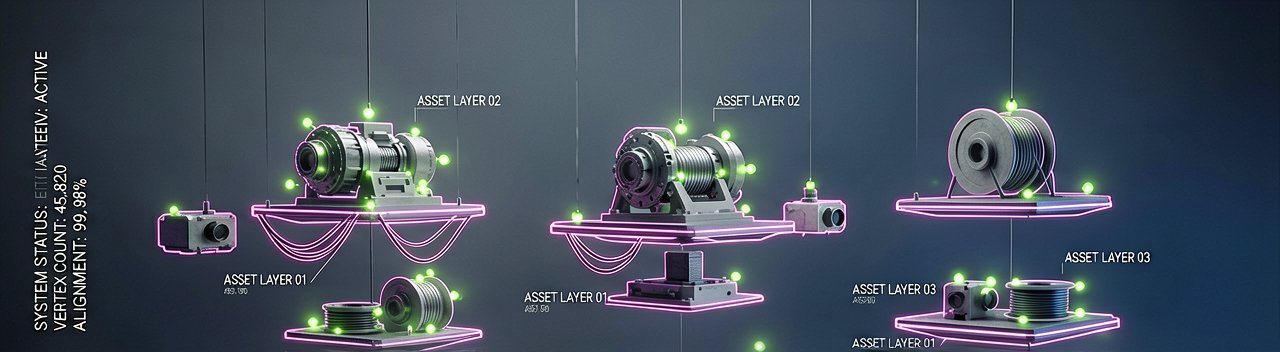
Behind the Scenes: While mainstream interest frequently centers on large language models, a quieter engineering revolution is occurring within native three-dimensional computational architectures. Traditional 3D generation techniques relied on converting geometric points into linear token sequences, a method heavily adapted from language translation. This data approximation often resulted in fragmented vertices and structural deformities that rendered assets useless without extensive human cleanup. According to architectural details released by AiThority, the newest iteration of model pipelines skips these intermediate sequence approximations entirely, generating complex mesh topologies globally rather than assembling triangles step by step.
This paradigm shift relies on parallel spatial computation, allowing algorithms to process global geometry in a single pass. By calculating spatial relationships natively, these platforms eliminate the computational bottlenecks associated with traditional autoregressive prediction. The development drastically reduces asset generation times from hours to seconds while maintaining exact geometric proportions. Industry analysts view this as a crucial infrastructure layer for programmable spatial content, bridging the gap between flat generative prompts and functional interactive environments.
Commercial Infrastructure and Market Re-Centering
The strategic deployment of these specialized tools marks a critical transition point for venture capital investments in artificial intelligence software. For several quarters, tech conglomerates focused primary funding rounds on consumer-facing chatbots and broad foundation layers. However, enterprise demand is forcing a pivot toward vertical tools with demonstrable commercial utility. Market data compiled by Dealroom confirms that investment pipelines are broadening into practical 3D tooling sectors, driving prominent spatial intelligence startups straight into unicorn valuation territory.
This capital shift aligns directly with industries burdened by slow asset production pipelines, particularly interactive entertainment, industrial manufacturing, and spatial computing. By focusing on production-ready mesh assets rather than speculative 2D conceptualization, tool developers have secured a rapidly growing base of millions of active creators worldwide. Corporate strategies are now explicitly targeting the North American developer ecosystem, turning geometry and topology into the primary battlegrounds for next-generation spatial computing dominance.

Automating the Professional Pipeline
For technical directors and environment artists, the true value of automated creation tools lies within their modular post-generation workspaces. Rather than outputting uneditable static objects, modern web platforms incorporate automated rigging, automatic re-topology, and deep asset extraction capabilities. Documentation from Tripo AI highlights intelligent part segmentation features that automatically split complex, unified generations into discrete, logical layers without altering the underlying polygon structure. This ensures that assets remain compatible with standard skeletal animation rigs and cross-platform export formats.
The integration of ultra-high-resolution rendering paths and multi-layered Physically Based Rendering textures directly optimizes these meshes for immediate deployment in industry-standard software like Blender or Unreal Engine. By converting high-fidelity references into clean low-poly meshes or dense geometric layouts, creators can tailor outputs directly to specific performance budgets. This eliminates the mechanical overhead of initial prototyping and allows studio professionals to focus exclusively on refined environmental art direction and narrative execution.
The Friction Between Automation and Production Realities
Reading Between the Lines: The corporate narrative surrounding automated 3D modeling promises a frictionless future where complex visual assets materialize in seconds, yet this optimistic outlook routinely glosses over the harsh realities of professional development pipelines. While a venture-funded platform can easily generate a visually convincing chair or an isolated fantasy character on a web canvas, integrating that asset into a dynamic, performance-constrained environment remains a separate engineering challenge. Professional game engines and cinematic renderers operate on rigid technical constraints regarding draw calls, precise texture budgeting, and highly optimized edge loops. A mesh that appears perfect on a portfolio page frequently dissolves into a tangled mess of non-manifold geometry the moment a technical artist attempts to deform it with an animation rig.
This technical disparity highlights a fundamental contradiction in the current generation of spatial foundation models. The algorithms are fundamentally optimized for visual plausibility rather than structural engineering precision. An AI model trained predominantly on flat images or uncurated 3D datasets excels at guessing what an object looks like from an unrendered angle, but it lacks the contextual awareness to understand why an artist placed a specific vertex loop around a character's shoulder joint. Consequently, the time saved during the initial automated generation phase is often lost during the subsequent manual cleanup phase, as human artists are forced to reconstruct poorly placed edge flows and erratic polygon clusters.
Furthermore, the democratization of asset creation introduces significant economic and legal liabilities that enterprise studios are hesitant to ignore. As foundation models scrape vast repositories of internet data to refine their spatial intelligence, the exact provenance of specific geometric patterns and material textures remains obscured within complex mathematical weights. Corporate legal departments, particularly within major entertainment conglomerates, view these black-box generations with immense skepticism, fearing potential copyright infringement claims over protected industrial designs or proprietary character aesthetics. Until tool developers implement transparent, fully auditable training histories, the adoption of automated modeling will likely remain confined to early prototyping phases rather than final, shipping products.
Looking ahead, the long-term impact on the digital art labor market will likely trigger a strategic realignment rather than the outright elimination of creative roles. The demand for entry-level modelers who specialize solely in brute-force geometric extrusion is undeniably shrinking as automated tools master basic object replication. However, this shift elevates the institutional value of senior technical artists, supervisors, and style directors who possess the specialized knowledge required to curate, refine, and optimize these automated outputs. The industry is transitioning from an era defined by manual polygon manipulation to one focused on systemic asset direction, where human expertise is measured by the ability to fix what the algorithm inevitably misinterprets.
"We are rapidly approaching a milestone where an artificial intelligence can effortlessly generate a hyper-realistic, fully rigged fire-breathing dragon in less than thirty seconds, leaving human artists with the uniquely modern privilege of spending the next three days manually debugging why its left eyelid stretches across the entire screen whenever it tries to blink."
Artūras Malašauskas is an AI Systems Integrator with 20+ years of production-grade web engineering experience. He has designed, shipped, and scaled enterprise Python/PHP systems for logistics, SaaS, and public-sector clients. For the past year, he has focused exclusively on AI integrations: deploying open-source LLMs, building generative media pipelines (image, audio, video), and engineering multi-agent workflows for real production environments. His standard: reproducibility, security, cost-efficient inference—no vaporware. He documents and evaluates emerging AI tooling, separating verified capabilities from marketing noise. Technical editor at: muza-ai.eu, ai-verslas.lt, ai-naujinos.lt Connect on LinkedIn
Comments