The Animation Paradigm Shift: How Former Pixar Talent Views AI as a New Creative Canvas
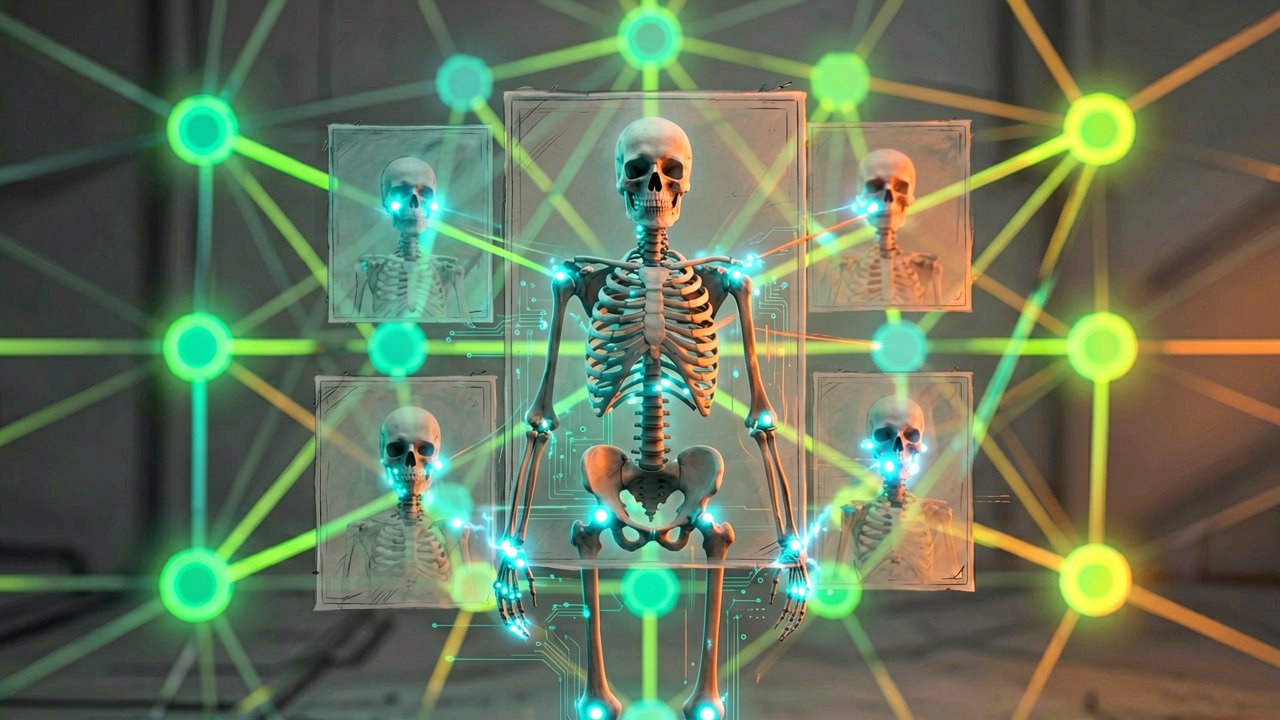
The traditional animation pipeline, known for its high financial barriers and rigid technical dependencies, is undergoing a profound structural evolution. Former Pixar artist Connie He, in collaboration with Google DeepMind, recently demonstrated an alternative production blueprint at the Sundance Film Festival with the animated short Dear Upstairs Neighbors. As analyzed by Creative Bloq, veterans of the industry are increasingly viewing machine learning models not as automation mechanisms designed to displace human labor, but as a "fresh box of paint" that expands the scope of independent storytelling.
This strategic pivot marks a transition from heavy capital-intensive studio systems to agile, hyper-efficient workflows. By rejecting unguided text-to-video generators and opting for an image-to-video pipeline driven by hand-drawn art, professional animators are successfully embedding algorithmic tools into existing artistic processes. Market data highlights that integrating these custom machine learning models into specific production layers can drastically streamline workflow timelines. In fact, advanced studios implementing these workflows report that AI-driven frameworks have reduced calendar time by 30% to 50%, as documented by Creative Bloq, while simultaneously securing higher visual consistency across complex long-form sequences.
The macroeconomic impact of this shift is actively forcing entertainment conglomerates to rewrite their intellectual property strategies. Rather than resisting automation, media giants are building corporate foundations to commercialize machine-generated content, highlighted by major multi-year licensing and development agreements with prominent AI software developers. While this normalization provides unprecedented cost efficiencies for high-volume content, it introduces intense creative friction. Studio executives must now carefully balance immediate operational savings against the long-term risk of homogenizing unique artistic styles into data-driven statistical averages.
Prioritizing Artist-First Architecture Over Pure Automation
To prevent generative tools from diluting original art direction, technical directors are championing an artist-first system configuration. Instead of surrendering full creative agency to automated generators, filmmakers lock hand-drawn anchor frames and utilize purpose-trained models to handle specialized tasks like rotoscoping, cleanup, and plate preparation. By automating these baseline mechanical passes, core creative teams can focus entirely on fine edge cases and nuanced character expressions. This methodology transforms the role of the animator into that of a high-level creative director, maintaining strict authorial intent over the final render.
Deconstructing Technical Barriers for Independent Creators
Historically, complex 3D environments, custom fluid simulations, and high-fidelity rendering required millions of dollars in infrastructure and hundreds of specialized software engineers. The democratization of custom neural networks effectively bypasses these resource bottlenecks, allowing solo creators and boutique studios to execute ambitious concepts without massive capital backing. This paradigm shift expands the boundaries of independent pre-production, enabling writers and directors to rapidly iterate and visualize highly complex worldbuilding elements during early development phases.
Navigating the Volatile Legal and Economic Transition
Despite massive technical promise, the mainstream adoption of AI animation software faces severe friction due to systemic regulatory ambiguities regarding training data ownership and copyright protections. Hollywood institutions and labor unions remain locked in delicate negotiations to protect human craft from unethical dataset exploitation. Industry veterans anticipate a highly chaotic period of adaptation as both tool developers and corporate studios strive to codify clear legal boundaries. Establishing secure, copyright-safe, and artist-compensated frameworks remains the critical factor required to stabilize this industry-wide transformation.
An Insider Perspective on the Production Line
Behind the Digital Canvas: The traditional animation pipeline has historically operated as a hyper-specialized conveyor belt where creative intent often bottlenecks at the intersection of technical execution and budgetary caps. For decades, a single frame of high-end feature animation demanded intricate cooperation among layout artists, character riggers, lighting TDs, and rendering engineers. Veteran animators migrating into the AI research space point out that this massive structural overhead frequently smothers experimental storytelling, as studios prioritize safer, proven visual motifs to protect multi-million-dollar software investments. The introduction of neural rendering and latent-space diffusion models collapses these rigid divisions, allowing a single creator to bridge the gap between initial concept sketch and final composite in a fraction of the time.
This structural compression is fundamentally transforming how studios approach pre-production and asset generation. By using localized control mechanisms such as depth maps and segmentation masks, animators can instruct an AI model to maintain exact geometric proportions while experimenting with hundreds of distinct art styles, textures, and lighting environments in real time. Rather than waiting hours or days for a standard render farm to process a complex sequence, directors can iterate on high-fidelity visuals during live storyboarding sessions. This real-time adaptability changes the financial math of independent filmmaking, shifting the competitive advantage from sheer computing power back to distinct artistic vision.
However, the industry's rank-and-file workforce views this rapid evolution with intense skepticism, sparked by fears of structural unemployment and the erosion of specialized technical crafts. Labor advocates and union organizers emphasize that while senior creative leads celebrate these tools as labor-saving devices, entry-level positions like cleanup artistry, rotoscoping, and background painting are the most vulnerable to immediate automation. The long-term challenge for the industry will be establishing a sustainable equilibrium where automated efficiency serves to elevate human labor rather than completely erase the foundational entry points that allow junior artists to develop their professional capabilities.
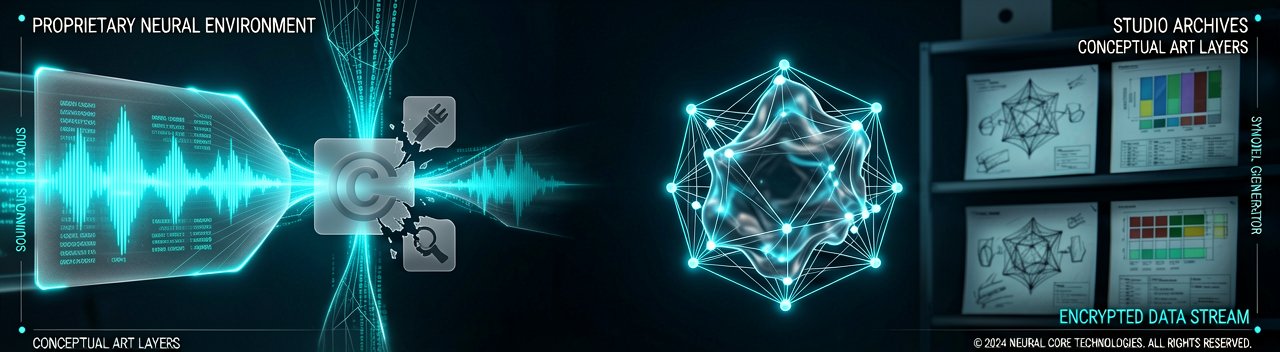
The technical trajectory is also triggering a massive shift in how intellectual property is managed, secured, and monetized at the studio level. To safeguard their proprietary visual identities, major entertainment companies are actively moving away from public, open-source models trained on unverified internet scrapings. Instead, studios are building closed, proprietary neural environments trained exclusively on their own extensive historical archives of concept art, character models, and finished films. This strategy allows a studio to maintain strict copyright compliance, protect its signature aesthetic, and ensure that any synthetic asset generated remains completely secure within its corporate ecosystem.
Challenging the Automated Utopia
Reading Between the Lines: The corporate narrative surrounding generative AI in animation paints a picture of ultimate creative liberation, yet this glossy outlook glosses over a glaring structural contradiction. Tech companies and enthusiastic studio executives frequently champion the democratization of filmmaking, arguing that automated tools will allow solo creators to challenge major studio systems. However, this perspective ignores the reality of infrastructure control, as high-end custom model training and real-time rendering still rely on massive cloud computing resources. The industry is not necessarily decentralizing; rather, it is shifting its financial reliance from traditional, human-intensive rendering teams over to the proprietary server farms of silicon valley conglomerates.
Furthermore, the belief that machine learning will completely eliminate mundane production tasks to let artists focus solely on high-level creativity overlooks basic economic behavior. Historically, when technological breakthroughs cut production costs and speed up timelines, the entertainment industry rarely maintains stable budgets just to give creative teams extra breathing room. Instead, production schedules contract to fit the new speed limits, while volume expectations surge. Animators may find themselves trapped in a high-velocity loop of endless revision, where the time saved by automated generation is immediately swallowed by demands for a higher volume of creative output.
This relentless push for hyper-efficiency also threatens the core element that gives animation its magic: the intentionality of human error. Computer models excel at calculating statistical averages and smoothing out visual anomalies based on their training datasets, but cinematic innovation often comes from erratic creative choices and breaking technical rules. If the pipeline becomes over-reliant on algorithmic guidance to ensure character consistency and safe aesthetic formulas, the industry risks entering an era of beautifully polished, hyper-detailed mediocrity. True artistic evolution requires a willingness to make messy, mathematically inefficient choices—a chaotic human trait that clean, predictive software optimization is explicitly engineered to iron out.
"We are rushing toward a future where a single artist can generate an entire feature film over a weekend, which is incredibly impressive right up until we realize we have to spend the next five weekdays figuring out who actually owns the rights to the background scenery."
Artūras Malašauskas is an AI Systems Integrator with 20+ years of production-grade web engineering experience. He has designed, shipped, and scaled enterprise Python/PHP systems for logistics, SaaS, and public-sector clients. For the past year, he has focused exclusively on AI integrations: deploying open-source LLMs, building generative media pipelines (image, audio, video), and engineering multi-agent workflows for real production environments. His standard: reproducibility, security, cost-efficient inference—no vaporware. He documents and evaluates emerging AI tooling, separating verified capabilities from marketing noise. Technical editor at: muza-ai.eu, ai-verslas.lt, ai-naujinos.lt Connect on LinkedIn
Comments