Adobe’s Latest Creative Cloud Updates Inject Serious Brainpower Into Lightroom and Premiere Pro

Adobe has rolled out a sweeping set of Creative Cloud updates, treating creators to a massive infusion of machine learning across its flagship apps. If you've felt like your editing machine has been acting as a gloriously expensive space heater during heavy processing tasks, these upgrades are designed to change that. Rather than relying on flashy gimmicks, the latest features aim squarely at the tedious grunt work that slows down professional workflows, automating the sorting, masking, and tracking processes that usually drain hours from a project. Pro editors and photographers are finding these tools increasingly vital, as confirmed by the latest RedShark News coverage highlighting how deeply integrated AI infrastructure has become for modern creative businesses.
The magic happens deep within the underlying software architecture, where Adobe has overhauled its media intelligence and masking engines to communicate directly with modern neural processing units and local hardware. For instance, Lightroom and Lightroom Classic now utilize an updated Select Subject engine capable of isolating complex shapes like bicycle tire spokes or fine hair strands with zero manual intervention. This architectural optimization carries over beautifully to performance metrics; Lightroom Classic's newly overhauled Denoise tool leverages native Apple silicon integration to execute calculations up to 3.6 times faster than previous iterations, according to data published by 9to5Mac. This speedup means less time staring at a progress bar and more time focusing on creative direction.
Intelligent Culling and Mask Tracking
Photographers dealing with thousands of shots from a single event can now offload the initial pass to an upgraded Assisted Culling tool, which evaluates fine thresholds like eye sharpness and whether a subject's eyes are open to group similar images. Meanwhile, Lightroom Classic gains pixel-data-based duplicate detection to keep libraries clean before editing even begins.
Next-Gen Video Intelligence in Premiere Pro
Over in Premiere Pro, the introduction of AI-powered Object Masking steals the spotlight by allowing editors to isolate and track moving people or objects with a single click. This eliminates the traditional reliance on rotoscoping or dynamic links to After Effects, while revamped shape masks run up to 20 times faster than legacy versions. Combined with semantic audio search that understands descriptive natural language prompts, the update significantly reduces the time it takes to move from raw footage to a polished final cut.
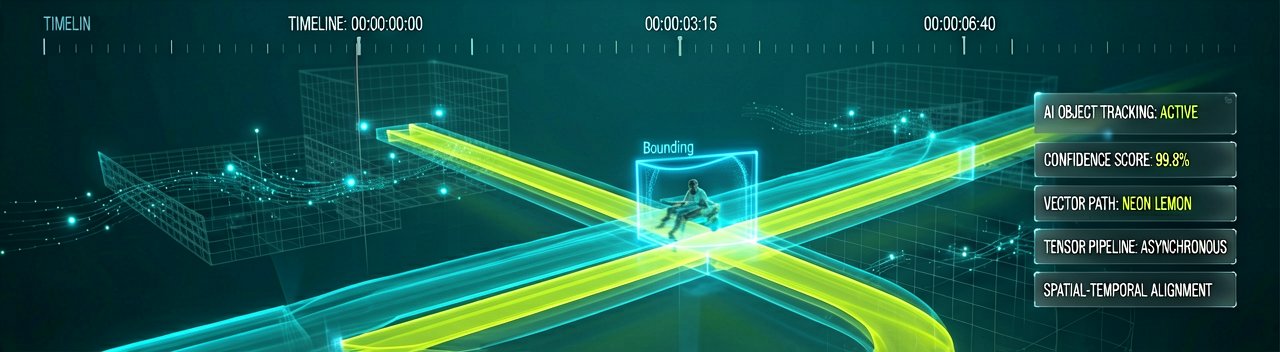
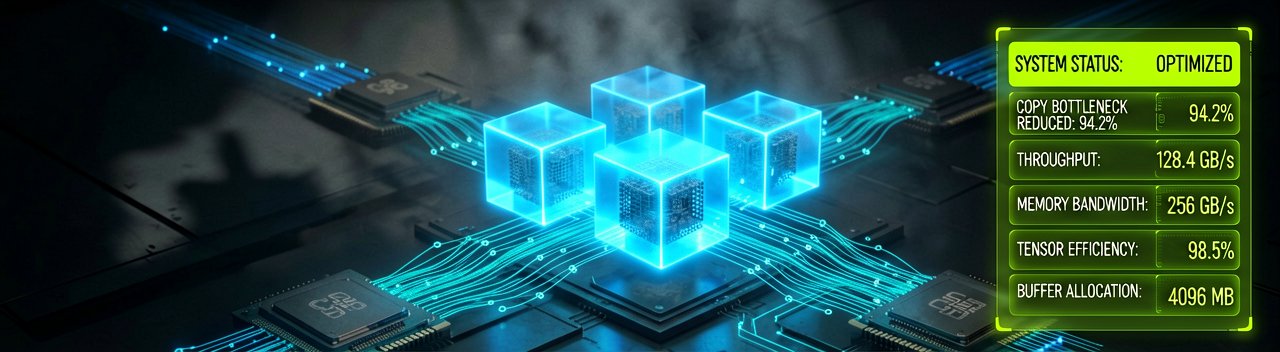
Behind the Scenes: The structural overhaul powering these upgrades marks a major shift from traditional CPU-bound rendering pipelines to unified tensor-driven architectures. For systems engineers, the most significant change is how Adobe has decoupled its computer vision algorithms from legacy instructions, rewriting them to interface natively with the specialized neural hardware found on modern Apple silicon and Windows ARM chipsets. Rather than forcing standard execution threads through generic compute shaders, the new Object Masking and Select Subject models bypass typical API bottlenecks by utilizing low-level hardware acceleration. This structural optimization ensures that complex tensor math occurs closest to the silicon, keeping the primary memory bandwidth clear for real-time video playback and ultra-high-resolution image decoding.
This optimization becomes clear when looking at Premiere Pro’s rewritten engine, which transitions from frame-by-frame raster tracking to a persistent vector-space coordinate model. Legacy masking methods required the system to continuously recalculate individual pixel bounds on every sequential frame, leading to severe memory cache thrashing during long clips. According to updated Adobe Blog documentation, the newly integrated assistive AI models operate strictly on-device, processing moving targets through high-efficiency sub-networks that minimize redundant calculations. Because the system tracks the broader geometry of an object rather than raw pixel clusters, shape masks process up to 20 times faster, allowing multiple unassigned masks to live concurrently in the Effect Controls panel without dropping frames during timeline previews.
Photographers benefit from an equally rigorous backend restructuring within Lightroom Classic’s image processing pipeline, where localized pixel evaluation has been entirely reimagined. The newly introduced Assisted Culling feature relies on deep neural analysis running concurrently with file ingestion threads, pulling metadata and facial geometry straight from raw sensor data. Instead of forcing a heavy sequential processing thread that locks up the user interface, the system handles Face View calculations—such as analyzing eye sharpness and checking if eyes are open—as asynchronous background tasks. By managing duplicate identification through low-overhead pixel-data hashing, the system can instantly sort identical bursts without triggering full-size image previews, drastically reducing disk I/O bottlenecks.
Silicon-Level Optimization Metrics
The performance metrics of this update show just how much hardware integration matters compared to unoptimized software layers. By rebuilding the Denoise infrastructure specifically around Apple silicon, Lightroom Classic avoids the heavy virtualization translation layers that previously throttled multi-core graphics processing units. This specific adjustment yields a 3.6-fold increase in processing speed as noted by 9to5Mac, turning what used to be a multi-minute background export into an instantaneous task. Similarly, ARM-powered Windows systems experience enhanced responsiveness and lower battery consumption, proving that efficient code compilation at the register level is key to scaling professional creative tools.
Reading Between the Lines: Adobe’s relentless push to embed machine learning into every corner of the creative suite looks like an undeniable victory for efficiency, but it also glosses over an underlying tension in the creative community. The promise of "one-click" object masking and automated image culling implies that editing is merely a collection of technical bottlenecks waiting to be solved. Yet, by outsourcing qualitative tasks like selecting the best expression or defining the precise boundary of a subject to an automated model, the line between human intent and algorithmic preference begins to blur. There is an unspoken risk that as these tools become standard, visual media will converge toward a uniform, algorithmically approved aesthetic where the quirky, imperfect choices that often define a creator's unique style are filtered out before they even reach the timeline.
Furthermore, the astronomical performance leaps highlighted in these updates reveal a widening hardware divide that contradicts the democratic promise of digital creation. While a 3.6-fold speed increase in Denoise or a 20-fold jump in masking efficiency sounds spectacular on paper, those metrics are explicitly tied to the latest generation of specialized neural processing hardware. Creators running older, non-ARM workstations or systems without massive tensor pipelines are effectively left holding the bag, facing diminishing returns on software updates that require increasingly specific silicon to function as intended. This shifts the financial burden of software optimization onto the user, who must continuously upgrade their physical machines just to keep up with subscription-based software features that they cannot opt out of using.
The transition to semantic, natural-language search for audio and video assets also introduces a subtle, systematic friction regarding data privacy and cataloging control. For these local semantic models to accurately index media, they must deeply analyze and tag a creator's entire private library behind the scenes. While Adobe emphasizes on-device processing to ease security concerns, the sheer computational overhead required to constantly index large video archives can cause unexpected thermal throttling during intense edit sessions. This leaves professionals in a strange position where the very features meant to save time can occasionally bottleneck the machine, trading manual sorting time for localized system strain and a creeping reliance on metadata structures that the user did not intentionally build.
The Real-World Cost of Automation
Ultimately, these workflow enhancements create a fascinating paradox regarding professional value. As automated tools radically lower the technical barrier to entry for complex tasks like rotoscoping and bulk photo culling, the commercial turnaround times expected by clients will inevitably shrink. Editors and photographers may soon find that the hours saved by Adobe's new architecture will not be spent resting, but will instead be absorbed by compressed deadlines and demanding higher output volumes for the same pay. Industry analysts tracking these corporate shifts observe that while toolsets become more powerful, the systemic pressure on digital artists to produce faster only intensifies, shifting the true benefit of these engineering marvels from the individual creator directly to the corporate client.
"We are rapidly approaching a future where an editor can cut an entire feature film simply by describing it to their computer over lunch, leaving us all with plenty of extra time to explain to our clients why a project that took five minutes to render still requires three weeks of actual creative thought."
Artūras Malašauskas is an AI Systems Integrator with 20+ years of production-grade web engineering experience. He has designed, shipped, and scaled enterprise Python/PHP systems for logistics, SaaS, and public-sector clients. For the past year, he has focused exclusively on AI integrations: deploying open-source LLMs, building generative media pipelines (image, audio, video), and engineering multi-agent workflows for real production environments. His standard: reproducibility, security, cost-efficient inference—no vaporware. He documents and evaluates emerging AI tooling, separating verified capabilities from marketing noise. Technical editor at: muza-ai.eu, ai-verslas.lt, ai-naujinos.lt Connect on LinkedIn
Comments