Getty-OpenAI Alliance Redefines AI-Driven Image Licensing Markets

The global digital media landscape experienced a historic consolidation as Getty Images announced a multi-year display partnership with OpenAI. This milestone agreement integrates Getty's massive, premium licensed visual libraries directly into ChatGPT's search and discovery feeds, validating legacy content ownership in an increasingly automated tech economy. The strategic alignment signals a profound shift from aggressive adversarial litigation to cooperative, high-value data monetization.
Wall Street responded with historic enthusiasm, sending Getty Images (NYSE: GETY) shares skyrocketing by over 140% immediately following the public disclosure, according to financial reporting by Bloomberg. Prior to the deal, the stock faced immense pressure and had cratered more than 66% over the preceding 12 months as investors openly questioned whether generative models posed an existential threat to traditional marketplaces. By turning its proprietary collection into an authoritative visual data feed, Getty transformed a major technological threat into its most potent near-term catalyst for growth.
Market Context and Strategic Pivots
The alliance underscores a broader structural re-rating among digital media and technology companies trying to navigate modern distribution hurdles. Tech providers are increasingly prioritizing legitimate, legally compliant sources to power consumer applications without running into complex copyright infringement issues. Market data tracking from Fast Company highlights that this pivot effectively lifts Getty out of a prolonged valuation slump and reverses months of intense operational headwinds. This partnership establishes a blueprint for content providers to thrive alongside large language models rather than fighting them.
The Value of High-Quality Visual Content
Integrating verified photography into interactive consumer platforms solves a core challenge for generative AI developers, who desperately need to combat hallucinated data and deliver accurate informational results. Media analyst reports published by Forbes reveal that access to copyrighted archives significantly improves user trust and interface utility during search queries. By choosing structured commercial licensing over unauthorized scraping, the broader tech sector is establishing a stable ecosystem that rewards creators while advancing real-time digital discovery.

Behind the Scenes of the Content Licensing Paradigm Shift
The explosive valuation rebound for Getty Images marks a profound ideological truce in the war over intellectual property training data. For the past several years, the creative industry viewed generative AI development as an existential threat, characterized by aggressive scraping tactics and highly publicized copyright battles. This comprehensive partnership reveals that the ultimate resolution lies not in prolonged courtroom standoffs, but in structuring a highly lucrative, multi-year content conduit. By integrating verified photography directly into search feeds, tech providers are effectively paying a premium for legal safety and factual grounding.
From an operational standpoint, the transaction solves critical infrastructure challenges for both organizations. OpenAI gains an uninterrupted, legally bulletproof pipeline of premium visual data to power its real-time conversational search tools, mitigating the risk of regulatory backlash and copyright litigation. Concurrently, Getty Images secures a recurring, predictable enterprise revenue stream that bypasses the secular decline of traditional, manual stock photography downloads. This shift fundamentally redefines the role of legacy archives from passive image repositories into dynamic, high-utility data feeds optimized for automated discovery models.
Industry analysts emphasize that this alliance creates a stark divide within the digital media landscape, effectively creating a premium class of compensated content originators. Smaller syndicates and independent artists now face intense consolidation pressures, as major technology platforms show a distinct preference for large-scale, single-source institutional agreements over fragmented licensing deals. By establishing a formalized infrastructure for asset display and attribution, the deal sets a rigorous structural standard for how intellectual property must be valued, tracked, and compensated in an AI-dominated economy.
Reading Between the Lines: The Structural Skepticism of AI Alliances
While Wall Street's euphoric reaction suggests a permanent salvation for legacy media, a colder appraisal of the Getty-OpenAI alliance reveals a deeply asymmetrical power dynamic. The sudden 140% stock surge exposes how thoroughly dependent traditional content libraries have become on Silicon Valley’s blessing for validation. By celebrating a distribution deal as a business-saving triumph, legacy platforms inadvertently acknowledge that their independent market viability has peaked, effectively transitioning from sovereign content marketplaces into mere component suppliers for monopolistic ecosystem builders.
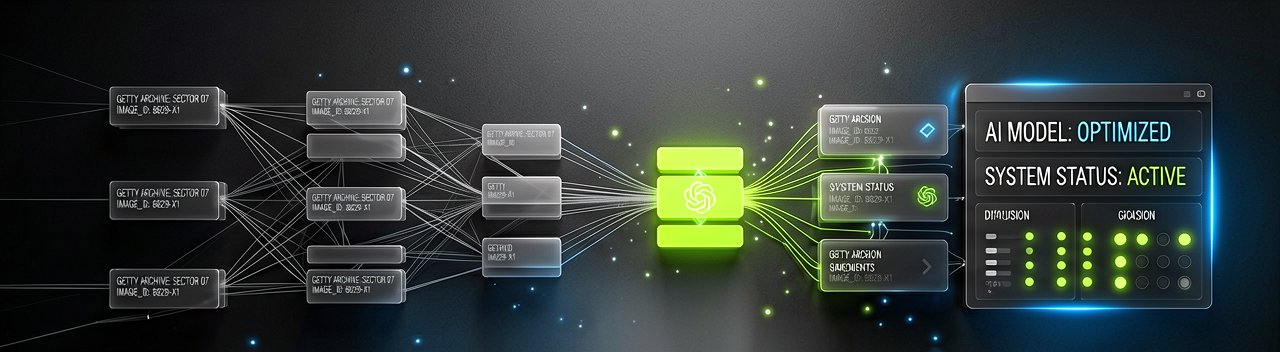
This partnership also exposes an inherent contradiction in the generative AI thesis regarding data scarcity and legal compliance. For years, AI pioneers insisted that fair use fully covered the scraping of public networks, downplaying the necessity of commercial licensing. The sudden, costly rush to secure multi-year distribution agreements with institutional giants like Getty suggests that the legal shield of fair use is increasingly viewed as an unstable foundation for commercial enterprise applications. Yet, this institutional pivot creates an exclusionary moat, protecting tech giants from litigation while locking out smaller creators who lack the scale to negotiate individual terms.
The long-term operational risk for Getty lies in the cannibalization of its core consumer base. By feeding premium imagery directly into an interactive conversational engine, the need for corporate subscribers to ever visit Getty's standalone platform diminishes. Enterprises seeking visual context will increasingly consume this data downstream within OpenAI’s interface, shifting the customer relationship entirely. If the tech platform succeeds in becoming the primary gateway to the internet, traditional syndicates risk losing their direct digital audience, trading a diversified global client base for a single, overwhelmingly powerful corporate customer.
It appears the ultimate destiny of human creativity is to be meticulously archived, legally indemnified, and served up as a highly curated visual snack for an insatiable algorithm—proving that while a picture may be worth a thousand words, it is worth significantly more when it keeps a tech giant out of court.
Artūras Malašauskas is an AI Systems Integrator with 20+ years of production-grade web engineering experience. He has designed, shipped, and scaled enterprise Python/PHP systems for logistics, SaaS, and public-sector clients. For the past year, he has focused exclusively on AI integrations: deploying open-source LLMs, building generative media pipelines (image, audio, video), and engineering multi-agent workflows for real production environments. His standard: reproducibility, security, cost-efficient inference—no vaporware. He documents and evaluates emerging AI tooling, separating verified capabilities from marketing noise. Technical editor at: muza-ai.eu, ai-verslas.lt, ai-naujinos.lt Connect on LinkedIn
Comments