FLUX 2 Redefines AI Image Generation: A Deep Dive into Its Industry Impact

Black Forest Labs has fundamentally disrupted the competitive dynamics of the generative media sector by introducing FLUX 2, an advanced image generation architecture designed to displace long-standing commercial solutions. Engineered by the prominent researchers behind Stable Diffusion, this next-generation release departs from traditional diffusion pipelines, implementing an optimized, multi-billion parameter rectified flow transformer framework. This structural innovation delivers unprecedented contextual grounding and spatial intelligence, presenting an assertive challenge to established ecosystems such as Midjourney and OpenAI.
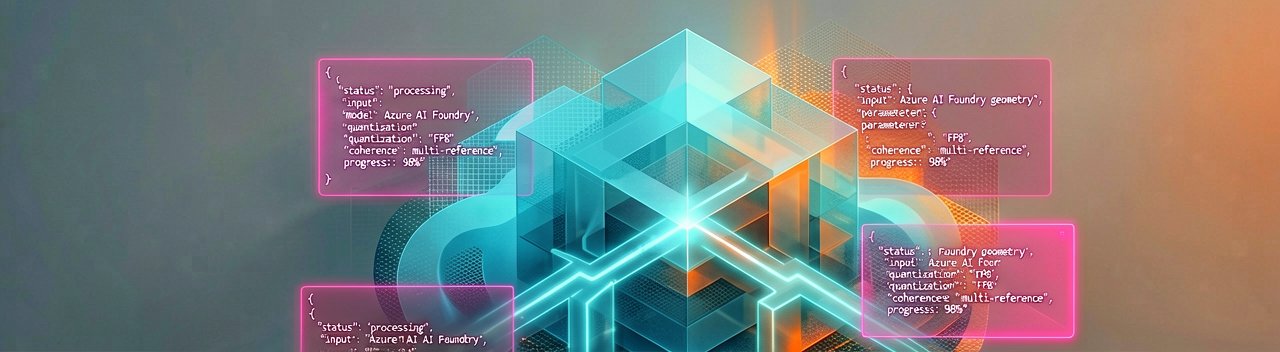
The marketplace rollout of FLUX 2 targets distinct tiers of the enterprise, developer, and open-source ecosystems. The comprehensive lineup consists of the high-performance FLUX 2 [pro] and FLUX 2 [max] variants, engineered to generate hyperrealistic visuals at high resolutions with ultra-sharp textures, while the accessible FLUX 2 [dev] and the Apache 2.0-licensed VentureBeat FLUX 2 [klein] version cater specifically to local deployment pipelines and hardware-constrained commercial environments. Enterprise adoption has progressed rapidly, accented by official, pre-optimized deployments via cloud infrastructure platforms like Azure AI Foundry , ensuring that the model is readily actionable within heavily scaled production frameworks.
Advanced Architectures and Multi-Reference Coherence
Architectural evaluations demonstrate that FLUX 2 successfully addresses the persistent issues of anatomical degradation and textural artificiality that frequently compromise competing models. The system features a native cinematic-lighting engine alongside highly granular multi-image referencing capabilities. This allows studios and content creators to feed multiple distinct reference images into a prompt sequence to ensure exact character and style consistency across different sequential frames or panels. The system also excels at precise text rendering, exact hex color matching, and native JSON prompt processing, positioning it as a highly reliable tool for complex layout, interface design, and commercial brand asset production.
Shifting the Industry Standard for Local Deployment
The strategic introduction of quantized FP8 variants, optimized specifically for hardware such as consumer-grade NVIDIA RTX GPUs, signals a significant evolution for independent developers and decentralized production houses. According to technical documentation detailing the integration of these models on platforms like NVIDIA Blog, these quantizations reduce VRAM overhead while accelerating generation speeds by up to 40%. By democratizing state-of-the-art visual fidelity via highly efficient open-weight models, Black Forest Labs has forced a definitive industry-wide pivot toward edge computing and open-source accessibility, shifting the commercial power balance away from purely closed-source, API-gated visual generation models.
Behind the Scenes of the Open-Weight Revolution
The acceleration of the generative AI landscape has historically relied on a delicate balance between corporate proprietary gates and decentralized developer engineering. By positioning FLUX 2 as a highly capable, open-weight ecosystem, Black Forest Labs has effectively remapped the timeline for production-ready visual asset pipelines. Industry veterans note that the true value proposition of this shift does not merely lie in free accessibility, but in the rapid customization it unlocks. Enterprise development teams are no longer bottlenecked by the restrictive fine-tuning APIs of closed platforms, allowing them to train highly specific Low-Rank Adaptations (LoRAs) on proprietary IP within isolated local environments.
This decentralized approach has fundamentally altered the economics of visual production for boutique studios and independent creators alike. In traditional pipelines, generating a multi-frame storyboard with exact character replication required hours of manual compositing or brittle, multi-layered prompting hacks that broke down under close scrutiny. The multi-reference control mechanics native to the FLUX 2 framework effectively close this gap by transforming the model from a stochastic novelty into a deterministic design tool. Studios are now leveraging these features to ingest physical product mockups and output photorealistic, context-aware marketing campaign assets at a fraction of the legacy computational cost.
The strategic ripple effects are also forcing a major reassessment among cloud infrastructure providers and hardware manufacturers. The rapid optimization of the FP8 and INT8 quantized variants has turned consumer-grade workstations into localized render farms, shifting a significant portion of the rendering workload away from costly cloud API dependencies. This structural migration to edge computing satisfies stringent corporate data compliance mandates, ensuring sensitive pre-release assets never leave internal networks. As specialized workflows migrate from centralized web portals directly into local user interfaces, the foundational architecture established by Black Forest Labs is solidifying its place as the underlying engine driving the next generation of industrial design, gaming, and commercial advertising.
Reading Between the Lines of the Generative Illusion
The swift coronation of FLUX 2 as the new pinnacle of enterprise image synthesis masks a deeper, more systemic contradiction within the generative media marketplace. While tech enthusiasts praise the model's hyperrealistic output and local hardware optimizations, enterprise risk assessors are raising flags over the legal and structural vulnerabilities of open-weight ecosystems. The reliance on decentralized community-driven fine-tuning inherently fractures accountability. Corporations using these models face a continuous compliance struggle, as the lack of centralized data filtering on custom, local adaptations reintroduces substantial copyright risks that proprietary, API-gated competitors have spent millions to legally insure against.
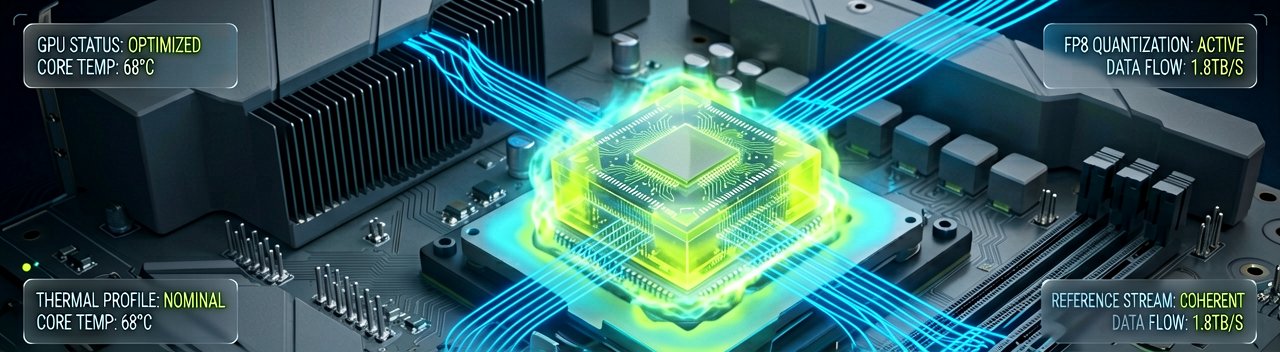
Furthermore, the industry's rush toward local edge-computing deployment introduces a harsh hardware paradox. Although quantized FP8 variants run remarkably well on consumer-grade workstations, true professional-grade scalability—such as generating high-volume, uncompressed promotional media or real-time cinematic storyboards—still requires massive computational clusters. The cost savings promised by bypassing commercial APIs are frequently offset by the soaring overhead of maintaining specialized local hardware and hiring advanced ML engineers to manage the pipeline. This reality reveals a distinct market divide, where small design studios celebrate a localized revolution while true enterprise players remain tethered to the predictable cost structures of enterprise cloud networks.
Ultimately, the long-term impact of FLUX 2 will be measured not by its technical superiority, but by its economic sustainability. Black Forest Labs must maintain a dual track of open-weight goodwill and profitable corporate licensing to survive in a landscape where training costs grow exponentially with every model iteration. If commercial adoption of their premium tiers fails to subsidize the immense research and development required for future architectures, the open-weights movement risks becoming a victim of its own success. This delicate balance leaves the creative sector in a volatile position, building entire production pipelines on an open ecosystem whose foundational financial backing remains dependent on the whims of venture capital.
"We have officially reached a point where AI can flawlessly render human anatomy and precise brand text in seconds, leaving creative directors with only one remaining existential crisis: figuring out how to explain to their clients why a project still takes three weeks to deliver."
Artūras Malašauskas is an AI Systems Integrator with 20+ years of production-grade web engineering experience. He has designed, shipped, and scaled enterprise Python/PHP systems for logistics, SaaS, and public-sector clients. For the past year, he has focused exclusively on AI integrations: deploying open-source LLMs, building generative media pipelines (image, audio, video), and engineering multi-agent workflows for real production environments. His standard: reproducibility, security, cost-efficient inference—no vaporware. He documents and evaluates emerging AI tooling, separating verified capabilities from marketing noise. Technical editor at: muza-ai.eu, ai-verslas.lt, ai-naujinos.lt Connect on LinkedIn
Comments