Anthropic Tags In: Claude Becomes Your Newest Asynchronous Slack Teammate
The era of the passive chatbot is officially drawing to a close. On June 23, 2026, AI pioneer Anthropic unveiled Claude Tag, a persistent, self-learning AI agent that moves beyond simple Q&A to operate as a full-fledged corporate teammate inside Slack. Currently rolling out in beta for Claude Team and Enterprise customers, this new tool permanently replaces the previous Claude in Slack app, signaling an aggressive push toward agentic, multiplayer AI that lives where teams already collaborate.
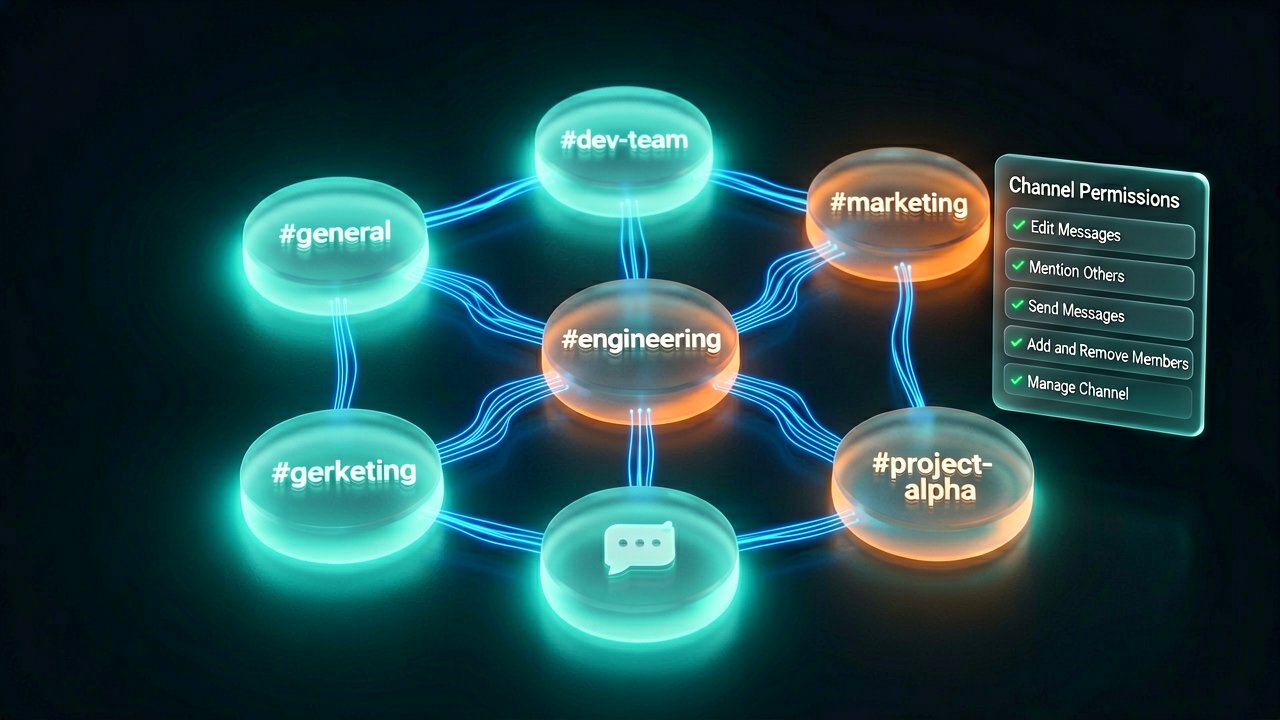
Instead of locking conversations in private, one-on-one sidebars, Claude Tag works out in the open. Slack administrators can assign specific data access, tools, and codebases to individual channels, effectively creating scoped AI identities for different departments. Once deployed, anyone on the team can pull the agent into a thread by typing @Claude. From there, the agent works asynchronously—breaking down multi-stage engineering problems, running metrics analysis, or handling customer support tickets—allowing human colleagues to pivot to other priorities while the AI handles the heavy lifting in public view.
What makes this iteration particularly striking is its ability to take initiative. When its optional ambient mode is turned on, Claude proactively monitors connected channels, flags critical updates, and bumps forgotten threads that have gone quiet. According to Anthropic, this isn't just a conceptual experiment; the internal version of this tool already generates an astonishing 65% of the code deployed by its own product team. By turning the workspace multiplayer and letting the agent absorb conversational context over time, Anthropic is trying to eliminate the tedious ritual of re-explaining background info to an AI before every single task.
A Massive Enterprise Push and the War on SaaS Wrappers
The timing of the release couldn't be more strategic for Anthropic. As reported by Fortune, corporate spend data shows Anthropic recently pulling ahead of OpenAI in business adoption for the first time, commanding a 34.4% share among surveyed companies compared to OpenAI's 32.3%. Much of that early momentum was driven by Claude Code, and Claude Tag represents the natural evolutionary leap of that technology into a collaborative ecosystem. This aggressive enterprise focus arrives right as the company eyes a major public market debut, having recently filed confidentially for an initial public offering.
By transforming Slack from a simple chat application into an autonomous workspace, Anthropic is directly encroaching on territory occupied by legacy software providers and smaller SaaS startups alike. Built-in administrative safeguards, including strict token spend limits and channel-scoped memories, address the exact security and budget anxieties that have stalled deeper AI adoption in the past. Slack’s parent company is leaning hard into the shift, with general manager Rob Seaman noting that bringing Claude Tag into the open makes the whole organization smarter by exposing the AI to the actual context of how a business operates day-to-day. While the tool is restricted to Slack for its initial beta run, Anthropic has already confirmed plans to expand the tagging feature to other major workplace platforms in the coming weeks.
What Most Reports Miss: The Architectural Shift to Ambient Workspace Labor
The standard media narrative focuses squarely on convenience, framing Claude Tag as a faster way to draft summaries or fetch data. However, the architectural blueprint reveals a much more radical shift: Anthropic is quietly dismantling the sandbox model of enterprise software. For the past decade, enterprise AI operated behind closed doors via private, single-user API endpoints or walled-off chatbot windows. By injecting a persistent, stateful agent directly into public Slack channels, Anthropic is fundamentally redefining corporate memory. The agent does not reset between prompts; it absorbs the messy, organic context of team arguments, shifting deadlines, and casual engineering breakthroughs, effectively building a continuous internal history that mirrors human onboarding.
This persistent presence shifts the employee-AI relationship from active dictation to passive supervision. Early enterprise adopters of agentic workflows frequently point out that the hardest part of leveraging AI isn't the model's intelligence, but the friction of prompt engineering. Claude Tag circumvents this by using channel-scoped permissions as an implicit prompt framework. Because the agent is already pinned to a specific development or marketing channel, it implicitly understands the project parameters, coding standards, and strategic goals of that specific sub-team. Employees transition from being prompt engineers to acting as editors and quality assurance managers, reviewing code blocks or strategy documents generated asynchronously while they slept.
From an administrative standpoint, this model solves a massive operational headache that has plagued Chief Information Officers since the generative AI boom began. Up until now, tracking the ROI of enterprise AI licenses was an exercise in guesswork, hidden behind individual user accounts. By moving the labor out into shared channels, executives can audit the agent's productivity, accuracy, and token spend as transparently as they would track a human contractor's billable hours. This visibility is precisely why early enterprise feedback highlights a dramatic drop in compliance anxiety; when an AI agent's thought process, tool executions, and mistakes are laid bare in a public thread, debugging and oversight become collaborative rather than forensic.
Yet, this ambient integration introduces a psychological friction that tech companies rarely acknowledge in press releases. When an AI agent generates over sixty percent of a team's production code, the traditional metrics for evaluating human workers—such as lines written or tickets closed—instantly become obsolete. Middle managers are forced to pivot toward measuring systemic oversight, architectural design, and contextual problem-solving. This shift can trigger quiet anxiety among mid-level engineers and writers who worry that their specialized skills are being reduced to merely supervising the machine that replaced their day-to-day tasks.
Ultimately, Anthropic's strategy underscores a broader battle for the true operating system of the modern enterprise. By embedding deeply within Slack, Anthropic isn't just selling an application; they are attempting to lock businesses into an ecosystem where the AI is the foundational fabric of the workplace. If a company's entire historical context, workflows, and automated logic become deeply intertwined with Claude's memory structures, migrating to a competing model becomes an incredibly expensive engineering nightmare. It is a brilliant, high-stakes play to secure enterprise stickiness long before the broader market commoditizes raw language models.
Reading Between the Lines: The Illusion of the Frictionless Digital Employee
The corporate marketing surrounding Claude Tag paints a utopian picture of an autonomous digital worker seamlessly picking up the slack while human employees focus on high-level strategic thinking. But this narrative glosses over a glaring contradiction in the current state of enterprise AI: the persistent overhead of oversight. While Anthropic boasts that its internal engineering teams rely on this agentic infrastructure for a staggering portion of their code production, the reality for the average enterprise is far less fluid. Every asynchronous action taken by an AI agent requires human validation, creating a new and exhausting corporate bottleneck known as "verification fatigue." Instead of freeing up time, senior engineers and managers may find their days swallowed by a relentless stream of peer-reviewing AI-generated output.
Furthermore, the shift toward an ambient, listening AI teammate exposes a deep tension between workplace surveillance and corporate compliance. Anthropic emphasizes that Claude Tag only listens when explicitly prompted or when its optional ambient mode is toggled on, but the psychological reality for human workers is quite different. Knowing that a self-learning agent is continuously digesting the conversational history of a channel inevitably sanitizes corporate communication. The candid, messy, and often deeply collaborative venting that happens in Slack—the exact environment where genuine breakthroughs are frequently born—risks being stifled when employees realize their casual remarks are permanently training a piece of enterprise infrastructure.
There is also an unresolved economic paradox at the heart of this deployment model. Anthropic addresses budget anxieties by introducing strict token spend limits and channel-scoped memories, yet the very nature of a self-learning agent incentivizes continuous usage. If the agent’s primary value proposition is its ability to absorb complex, multi-stage business context over time, restricting its token diet directly degrades its long-term utility. Organizations will soon face a frustrating catch-22: either pay an unpredictable, ballooning monthly invoice to keep the agent fully contextualized, or throttle its access and deal with a digital teammate that suffers from artificial amnesia every few weeks.
Finally, we must look skeptically at the broader platform dependency this integration creates. By locking Claude Tag so tightly into Slack for its initial launch, Anthropic is tying its enterprise destiny to Salesforce’s ecosystem. While plans to expand to other platforms are underway, this initial exclusivity highlights the fragmented nature of modern work. A tool that excels at managing workflows inside Slack remains functionally blind to the massive amounts of institutional knowledge trapped in siloed emails, legacy internal wikis, or competing chat platforms. Until agentic AI can navigate the entire chaotic sprawl of a company's digital footprint, calling any single tool a self-guided enterprise workspace remains a premature victory lap.
"We were promised that artificial intelligence would finally eliminate our endless meetings and tedious status updates; instead, we have simply built a tireless digital colleague that creates three times as much paperwork for us to review before five o'clock."
Artūras Malašauskas is an AI Systems Integrator with 20+ years of production-grade web engineering experience. He has designed, shipped, and scaled enterprise Python/PHP systems for logistics, SaaS, and public-sector clients. For the past year, he has focused exclusively on AI integrations: deploying open-source LLMs, building generative media pipelines (image, audio, video), and engineering multi-agent workflows for real production environments. His standard: reproducibility, security, cost-efficient inference—no vaporware. He documents and evaluates emerging AI tooling, separating verified capabilities from marketing noise. Technical editor at: muza-ai.eu, ai-verslas.lt, ai-naujinos.lt Connect on LinkedIn
Comments