ByteDance Cracks the 30-Second AI Video Ceiling with Seedance 2.5
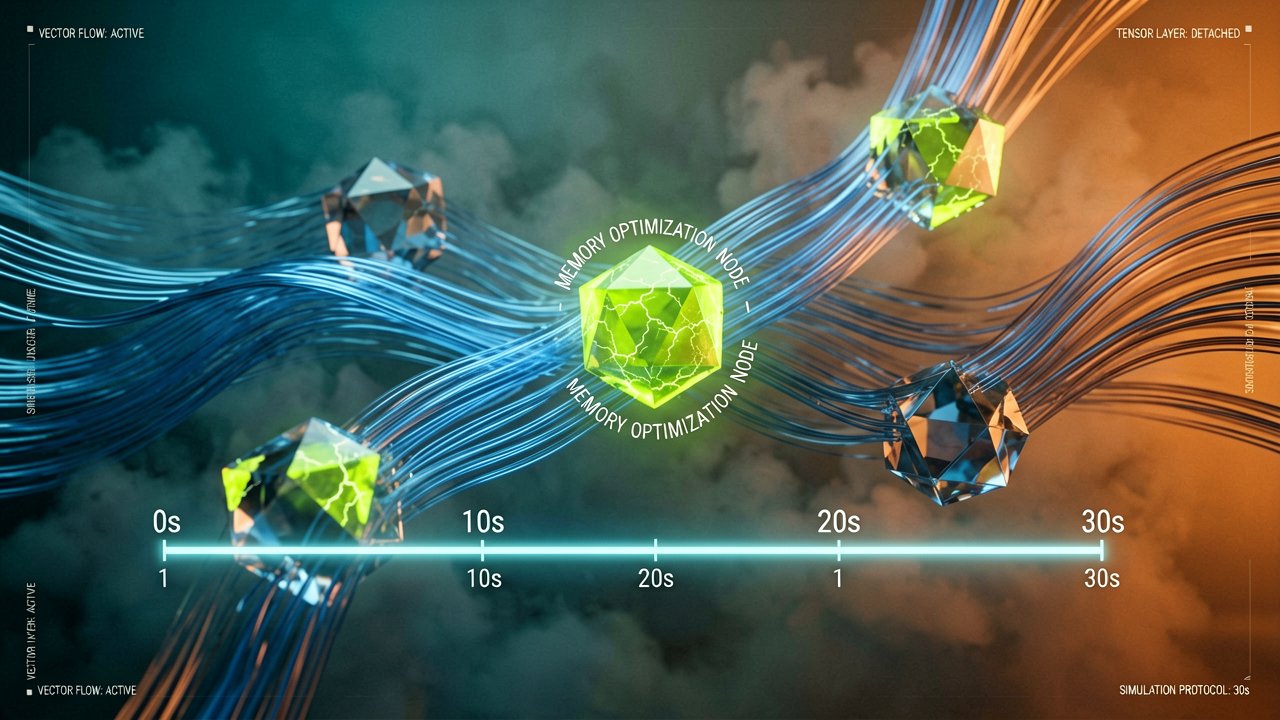
For months, the generative video space has felt like a gorgeous but deeply frustrating exercise in miniature filmmaking. You get an unbelievable six seconds of a hyper-realistic camera sweep, followed by a mad scramble to stitch, extend, and pray the physics engine doesn't dissolve the floor into digital soup on the next pass. That paradigm just took a massive hit. At its Volcano Engine FORCE conference in Beijing, ByteDance dropped Seedance 2.5, skipping several version numbers entirely to announce a model that spits out native, continuous 30-second clips from a single prompt—no clunky cross-stitching required.
This isn't just an incremental bump to keep up with the competition; it's a deliberate structural overhaul targeting the biggest bottleneck in production workflows. Historically, AI models have buckled under the weight of long-horizon consistency because their attention mechanisms couldn't hold scene state and object identity across extended durations. According to reporting from The Next Web, ByteDance bypassed this by building spatial-temporal attention mechanisms that generate the entire half-minute block in a single coherent diffusion pass, keeping characters recognizable and environments perfectly stable from frame one to frame nine hundred.
Under the Hood: Mass References and Native 4K
The architectural shift extends well beyond pure clock time. In what looks like a direct bid to lure professional VFX houses and commercial ad agencies, ByteDance has aggressively expanded the model’s ingestion capacity. While Seedance 2.0 capped multimodal inputs at a modest 12, version 2.5 allows creators to pump in up to 50 simultaneous reference assets. This means a director can feed the system character design sheets, specific audio tracks, 3D blockouts, and style templates all at once, forcing the AI to synthesize a highly controlled scene rather than guessing its way through a vague text prompt.
On the performance side, the raw metrics back up the bravado. The model delivers native 4K resolution output with a reported 20% bump in prompt adherence accuracy compared to its predecessor. By keeping the generation localized within a unified timeline, it sidesteps the standard seam artifacts that usually ruin stitched video sequences. It’s a massive technical flex, particularly since Seedance 2.0 already held the top spot for text-to-video with audio on the Artificial Analysis Video Arena leaderboard. As reported by CNET, the enterprise beta is already rolling out ahead of an official launch in China next month, signaling that the race for long-form synthetic media is no longer about generating clips, but about mastering the scene.
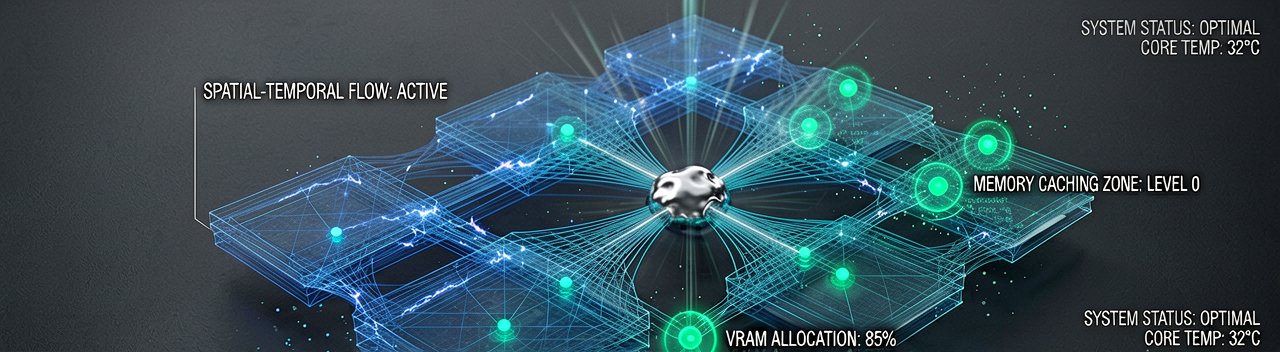
Behind the Scenes: The breakthrough of Seedance 2.5 relies less on sheer compute scaling and more on a fundamental redesign of how memory registers behave during massive tensor transformations. In standard spatial-temporal transformers, memory consumption scales quadratically with both frame count and pixel resolution, creating a hardware bottleneck that routinely triggers out-of-memory errors on enterprise cluster nodes. To circumvent this, the engineers behind Seedance replaced the monolithic attention matrices with a layered, decoupled system that processes spatial detail and temporal sequence progression as two separate, interwoven tensor flows.
Decoupled Attention and Memory Optimization
By decoupling these spatial and temporal vectors, the system can dynamically allocate memory overhead based on scene complexity rather than applying a fixed computational tax to every frame. Static background blocks are cached early in the pipeline, freeing up massive amounts of VRAM to handle high-frequency motion vectors and micro-expressions in the foreground. This caching layer utilizes a proprietary key-value streaming protocol that lets the model retrieve historical structural tokens from frame 5 without re-evaluating the entire intervening sequence, effectively flattening the memory curve across the 30-second timeline.
Underpinning this efficiency is a complete overhaul of the underlying hardware synchronization layer within the cluster. Video synthesis at 4K resolution requires distributing a single generation task across dozens of interconnected GPUs simultaneously. Seedance 2.5 introduces specialized pipeline parallelism that synchronizes tensor communication at the kernel level, minimizing the idle wait times that traditionally plague multi-node distributed training. By reducing this communication latency, the model achieves a nearly linear speedup across cluster topologies, ensuring that the heavy multi-asset reference injection does not choke the network fabric.
Variable-Rate Latent Diffusion and Native Rendering
The final pillar of this architectural upgrade involves variable-rate latent diffusion processing. Rather than executing a uniform number of denoising steps across all regions of a clip, the model deploys an adaptive noise scheduler that evaluates pixel-level delta updates. Areas of high motion receive dense, granular denoising sweeps to eliminate the ghosting and compression artifacts common in fast-moving AI generations, while slower-moving textures are resolved using a streamlined path. This surgical allocation of compute cycles allows the model to output a crisp, uncompressed 4K stream natively, bypassing the need for separate, artifact-prone upscaling modules.
Reading Between the Lines: The triumphalist narrative surrounding Seedance 2.5’s 30-second breakthrough conveniently glosses over the brutal economic realities of deployment. Generating a pristine half-minute of 4K video natively requires an astronomical amount of compute per query, raising serious questions about commercial viability outside of deep-pocketed enterprise beta tests. While ByteDance’s architectural tweaks undeniably optimize memory distribution, the sheer raw wattage required to sustain these multi-node, low-latency clusters means the cost-per-second of video remains prohibitively high for the average creator market. The technology exists, but the business model currently depends on subsidizing massive computational deficits.
The Disconnect Between Benchmarks and Production Reality
Furthermore, boasting a 20% increase in prompt adherence ignores the inherent subjectivity of AI evaluation metrics. A model can technically align with a text description on paper while still delivering a final output that feels uncanny or fundamentally unusable for high-end cinematic production. The capability to ingest 50 distinct reference assets is a massive step forward, yet it simultaneously introduces a logistical bottleneck. Forcing a neural network to reconcile a dozen conflicting style sheets, audio tracks, and 3D meshes often results in a compromised middle ground, where the AI prioritizes technical consistency over artistic intent, flattening the unique visual style a director might actually want.
The geopolitical and regulatory implications also cast a shadow over this rapid development cycle. As ByteDance pushes the boundaries of hyper-realistic, long-form generation, it inevitably steps into a regulatory minefield concerning training data copyright and deepfake proliferation. A continuous 30-second clip provides enough runway to generate highly convincing narrative misinformation or unauthorized commercial likenesses. While the technical achievement is undeniable, the lack of transparent watermarking frameworks or rigorous safety boundaries across international deployments suggests that the engineering pace has once again dramatically outstripped the policy infrastructure needed to contain it.
It turns out that conquering the 30-second AI video barrier didn't require a miracle—just the power grid of a small nation and enough reference assets to give a Hollywood producer a headache. We have finally achieved the dream of generating flawless, long-form cinema with the push of a button, assuming that button is backed by a venture capital fund and an enterprise server cluster running hot enough to fry an egg.
Artūras Malašauskas is an AI Systems Integrator with 20+ years of production-grade web engineering experience. He has designed, shipped, and scaled enterprise Python/PHP systems for logistics, SaaS, and public-sector clients. For the past year, he has focused exclusively on AI integrations: deploying open-source LLMs, building generative media pipelines (image, audio, video), and engineering multi-agent workflows for real production environments. His standard: reproducibility, security, cost-efficient inference—no vaporware. He documents and evaluates emerging AI tooling, separating verified capabilities from marketing noise. Technical editor at: muza-ai.eu, ai-verslas.lt, ai-naujinos.lt Connect on LinkedIn
Comments