The Trillion-Dollar Pivot: How Zhipu’s GLM-5.2 Triggered a Hong Kong AI Stock Frenzy
The global artificial intelligence race just hit a massive structural milestone, and the financial markets are reacting with pure euphoria. On June 22, 2026, the market capitalization of Hong Kong-listed AI pioneer Zhipu AI crossed the staggering HK$1 trillion mark. Trading under its listed entity name, Knowledge Atlas Technology, the firm watched its stock skyrocket by as much as 42% in a single morning session. While profit-taking eventually trimmed those extreme gains back to a 15.1% close, the message to Silicon Valley was loud, clear, and incredibly expensive.
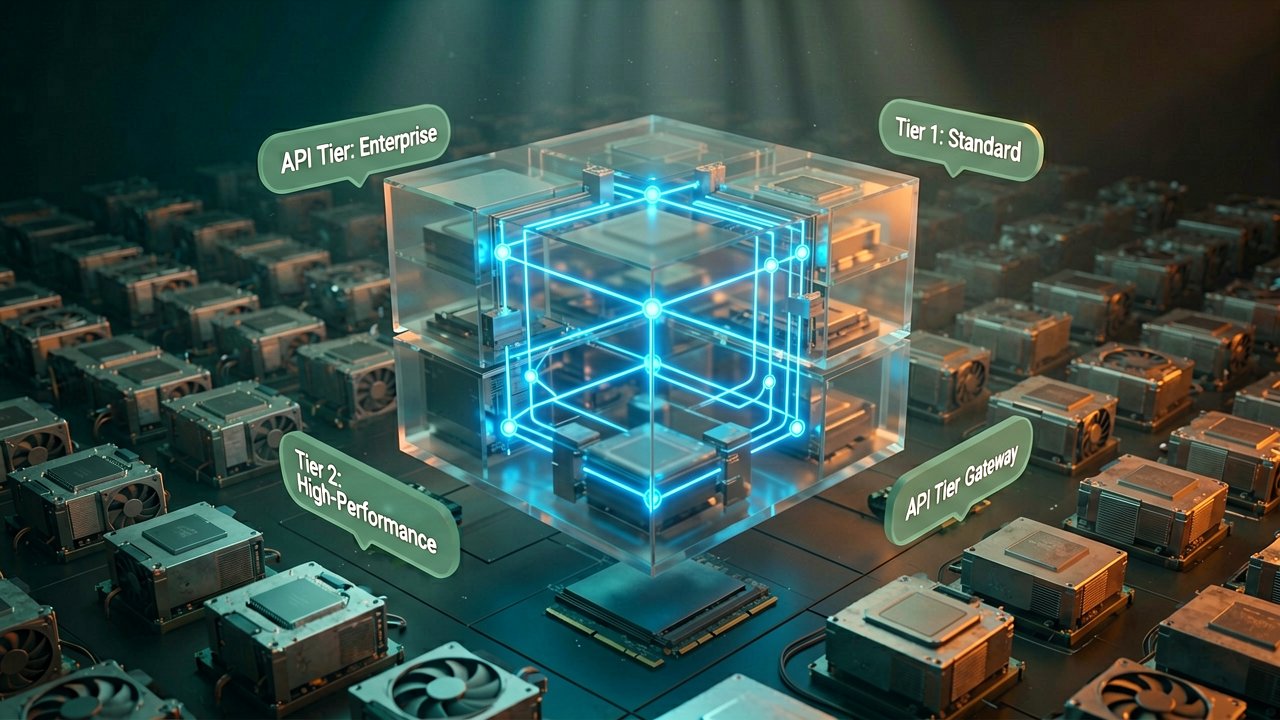
This immense market rally wasn't born in a vacuum; it was directly triggered by the official launch of Zhipu's open-source GLM-5.2 large language model. Wall Street quickly took notice of the release, with JPMorgan releasing a highly bullish note that aggressively bumped Zhipu’s revenue forecasts through 2030. The banking giant noted that the startup is rapidly gaining genuine pricing power, especially after removing legacy discounts on its API tiers—a move that proves developers are willing to pay top dollar for domestic frontier performance. The ripple effect was impossible to miss across the trading floor, as regional semiconductor giants like Smic and Innoscience also rode the coattails of the surge.
Challenging the Closed-Source Status Quo
What makes this specific piece of engineering so disruptive isn't just its massive 1-million-token context window, but where it sits on the global leaderboard. According to technical documentation and benchmark results published on the Z.ai Blog, the 744-billion-parameter architecture is purpose-built to handle complex, long-horizon tasks that traditionally break lesser models. It recently secured the coveted number-two spot globally on the prestigious Code Arena ranking for front-end web development, trailing only Anthropic's flagship Claude Fable 5. This competitive edge has fundamentally shifted expectations for the entire open-weights ecosystem, proving that open-source alternatives can now go toe-to-toe with the world's most guarded proprietary systems.
The sudden ascent has also sparked some high-profile friction between international tech titans. After Elon Musk estimated on social media that it would take Chinese labs until early next year to match the capabilities of Fable 5, Zhipu founder Tang Jie flatly countered that it wouldn't take nearly that long. Given that US export controls have restricted access to certain Western proprietary platforms in the region, Zhipu's strategy of radical openness is paying off handsomely. By offering a model that can be downloaded and run locally on independent hardware, the company has effectively insulated its user base from geopolitical volatility while simultaneously capturing a dominant share of the Asian enterprise market.

The Architectural Shift Driving the Valuation
Behind the Tech Horizon: The explosive valuation crowning Knowledge Atlas Technology is less about market hype and far more about a fundamental architectural gamble that paid off. While most Silicon Valley heavyweights have locked their most advanced reasoning models behind proprietary APIs, Zhipu AI chose a path of aggressive open-weights deployment. Industry insiders note that GLM-5.2 relies on a highly optimized Mixture-of-Experts (MoE) architecture that selectively activates only a fraction of its 744 billion parameters per token. This design dramatically cuts down the computational inference costs that typically plague large-scale deployments, allowing enterprise clients to integrate massive context windows without bankrupting their operational budgets.
This economic viability has fundamentally shifted how regional enterprise buyers view the open-source ecosystem. Historically, open models were viewed as lightweight alternatives suited only for basic fine-tuning, while heavy-duty reasoning tasks were outsourced to closed systems. Zhipu’s breakthrough completely upends that paradigm by proving that a distributed, open-weights framework can match the multi-step planning capabilities of the world’s leading proprietary models. The financial markets reacted so violently because they finally saw a viable, cost-effective path to localized AI independence that does not rely on a continuous, fragile pipeline to Western cloud infrastructure.
Geopolitical Insulation and the Supply Chain Wave
The timing of this release adds another layer of complexity to the sudden market surge. As international export controls tighten around advanced hardware, regional enterprises have been forced to maximize the efficiency of their existing compute clusters. GLM-5.2 was specifically optimized to run on a diverse array of domestic accelerators, reducing the traditional software lock-in associated with Western hardware ecosystems. This compatibility triggered a sympathy rally across the broader tech supply chain, pulling local semiconductor foundries and advanced packaging firms upward in Zhipu's wake as investors anticipated a massive wave of hardware retrofitting.
Furthermore, the decision to remove legacy API discounts—a move that usually drives users away—instead signaled intense product confidence to institutional investors. Analysts tracking the sector point out that when a software firm can raise its effective pricing during a broader economic consolidation, it possesses a genuine competitive moat. By capturing the developer mindshare through open repositories while simultaneously monetizing high-throughput enterprise pipelines, Knowledge Atlas Technology has constructed a dual-engine revenue model that few regional competitors can currently match.

Ultimately, this market correction reflects a deeper realization among global asset managers regarding the true velocity of decentralized AI development. The traditional narrative predicted that restricted access to specific fabrication nodes would permanently stall regional software capabilities. Instead, the optimization breakthroughs embedded within GLM-5.2 suggest that algorithmic ingenuity and structural architecture can heavily compensate for hardware constraints. As the dust settles on this historic trading session, the broader tech landscape is waking up to a reality where the gap between open-source agility and closed-source dominance has effectively evaporated.
The Mirage of the Momentum
Reading Between the Lines: The celebratory champagne on the trading floors of Hong Kong may be premature, as a cold look at the underlying mechanics of this rally reveals significant structural fragility. A 42% single-day surge followed by a sharp contraction is rarely the sign of a mature, stable asset revaluation; instead, it looks suspiciously like a classic liquidity squeeze driven by algorithmic FOMO. While the market capitalization of Knowledge Atlas Technology crossed the psychological HK$1 trillion threshold, sustaining that valuation requires an uninterrupted pipeline of high-margin enterprise revenue that the open-weights model of AI monetization has yet to consistently deliver globally.
There is a glaring contradiction at the heart of Zhipu’s current strategy that institutional investors seem eager to ignore. The company won its massive developer mindshare by offering open-source access, yet its path to profitability relies entirely on aggressive monetization through the removal of API discounts and the sale of closed enterprise variants. Historically, tech platforms that attempt to squeeze a community built on free, open-source principles face rapid churn as developers migrate to the next unmonetized repository. Assuming that enterprise loyalty will remain steadfast in a hyper-competitive, rapidly commoditizing software layer is an incredibly risky bet for a company trading at such an inflated premium.
Furthermore, the claims surrounding structural independence from Western hardware constraints gloss over a harsh engineering reality. Optimizing software to run on a patchwork of domestic accelerators is a brilliant short-term stopgap, but it introduces massive technical debt. Maintaining, updating, and scaling a 744-billion-parameter model across fragmented, non-standardized hardware architectures inevitably degrades performance efficiency over time compared to competitors operating on unified, cutting-edge hardware stacks. The algorithmic ingenuity embedded in GLM-5.2 is undeniable, but it is effectively running a marathon with a self-inflicted weight handicap.
As the initial speculative dust settles, the broader implication for the global AI ecosystem is not necessarily the triumph of one regional champion, but the accelerating fragmentation of the entire industry. We are moving away from a unified global tech landscape into highly regionalized, politically insulated tech monopolies. While this reality guarantees Zhipu a captive domestic audience, it also heavily restricts its ability to expand into lucrative Western enterprise markets, effectively capping its long-term growth potential within a geopolitical bubble.
It turns out that the easiest way to build a trillion-dollar tech empire is to give your product away for free until the algorithms panic buy your stock, leaving engineers with the unenviable task of figuring out how to actually pay the electricity bill on a 744-billion-parameter cluster.
Artūras Malašauskas is an AI Systems Integrator with 20+ years of production-grade web engineering experience. He has designed, shipped, and scaled enterprise Python/PHP systems for logistics, SaaS, and public-sector clients. For the past year, he has focused exclusively on AI integrations: deploying open-source LLMs, building generative media pipelines (image, audio, video), and engineering multi-agent workflows for real production environments. His standard: reproducibility, security, cost-efficient inference—no vaporware. He documents and evaluates emerging AI tooling, separating verified capabilities from marketing noise. Technical editor at: muza-ai.eu, ai-verslas.lt, ai-naujinos.lt Connect on LinkedIn
Comments