The Swarm Beats the Monolith: Under the Hood of Sakana AI's Fugu Orchestration Engine
For the past few years, the AI arms race has followed a predictable, brutish script: build a bigger foundational model, harvest more data, and pray your computing budget doesn't bankrupt the company before the next training run finishes. But Tokyo-based startup Sakana AI has spent its existence questioning that exact dogma. Founded by industry veterans including Llion Jones, a co-author of the seminal 2017 Transformer paper, the lab prefers biomimicry and evolutionary approaches over brute-force scaling. Their latest release, a multi-agent orchestration system named Fugu, turns the entire concept of frontier AI on its head by proving that a masterfully coordinated collective of mid-tier models can systematically outmaneuver the tech world's most guarded monolithic giants.
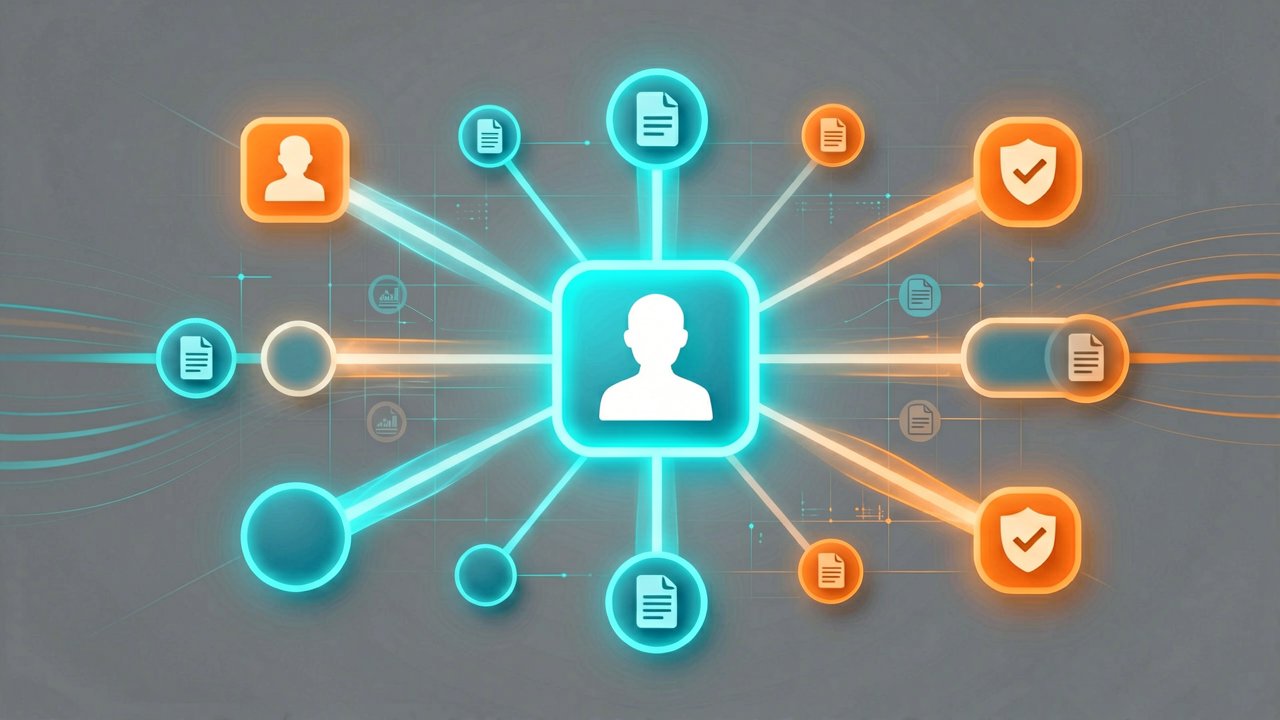
Fugu isn't a brand-new, multi-billion-parameter foundation model trained from scratch. Instead, it is a highly specialized, leaned orchestration language model that presents itself to developers as a single OpenAI-compatible API endpoint while acting as a brilliantly adaptive air traffic controller behind the scenes. When a query comes in, Fugu doesn't just process it; it decomposes the task, dynamically routes the fragments across a shifting pool of third-party public models, and synthesizes the results into a single cohesive output. The beauty of this design lies in its friction-free integration. Enterprises can swap out their existing single-model connections for Fugu without heavy SDK migrations, immediately gaining an automated squad of expert agents that handle task selection, delegation, verification, and final aggregation completely out of sight.
The Architecture: Trinity, Conductor, and Learned Autonomy
Unlike traditional orchestration engines that rely on rigid, hand-coded if/else rules to shuffle text between APIs, Fugu's coordination logic is entirely learned. The structural framework rests upon two major research papers presented by Sakana AI at ICLR 2026, known as Trinity and Conductor. The Trinity architecture formalizes the division of labor into three specific agent roles: the Thinker, who dissects the user's prompt and plans the operational approach; the Worker, which executes the specific subtasks like writing software or parsing legal text; and the Verifier, who cross-examines the outputs and flags errors before any response reaches the user. According to the technical documentation hosted on arXiv, this setup uses recursive self-calls alongside reinforcement learning via the Conductor algorithm, teaching the system to naturally discover the optimal collaboration patterns for any given problem.
This decentralized approach provides enterprises with a powerful weapon against single-provider lock-in and geopolitical unpredictability. By treating the underlying models as an interchangeable "agent pool"—which currently includes models like GPT-5.5, Gemini 3.5 Flash, and Claude Opus 4.8—Fugu constructs native, robust redundancy into an organization's AI stack. If a specific provider goes down, or if sudden international regulatory shifts block a specific tool, the orchestrator simply shifts its traffic and routes around the failure. Sakana AI explicitly framed this launch as a direct response to recent export controls that cut off access to elite American models in certain territories. Because enterprise teams need to protect strict corporate privacy standards, the system allows developers to selectively opt specific models or providers out of their routing pool entirely, though the exact, granular routing paths for any individual query remain hidden as proprietary intellectual property.
Performance Metrics: Squaring Up to the Frontier
To serve different operational requirements, Sakana AI has deployed two distinct flavors of the technology. The standard Fugu variant is optimized for low-latency everyday workloads, typically selecting a single highly matched worker per input to keep speeds competitive with traditional frontier APIs. Meanwhile, the flagship tier, Fugu Ultra, trades response time for deep accuracy by composing multi-agent workflows that iterate through the complete Thinker-Worker-Verifier pipeline. The architectural gamble clearly pays off on the scoreboard, as reported by VentureBeat, which detailed how Fugu Ultra matches or exceeds the performance of top-tier monolithic models across rigorous engineering and reasoning benchmarks.
The numbers reveal a striking advantage in messy, multi-step scenarios where single LLMs often lose their footing. On the highly demanding SWE-Bench Pro evaluation, Fugu Ultra posted a score of 73.7, pulling ahead of standalone giants like Claude Opus 4.8 at 69.2 and GPT-5.5 at 58.6. It achieved a peak score of 95.5 on the GPQA-Diamond benchmark, a brutal battery of graduate-level scientific multiple-choice questions specifically designed to push reasoning limits. Early beta users have also highlighted Fugu Ultra's practical superiority in automated code reviews, noting that it regularly surfaced twenty or more genuine bugs in codebases where competing systems only managed to catch three. While running multiple underlying API calls simultaneously introduces unavoidable latency overhead and complex token pricing, the collective intelligence model establishes a highly resilient blueprint for future enterprise deployments.
Behind the Scenes: Token Lifecycle and Dynamic State Merging
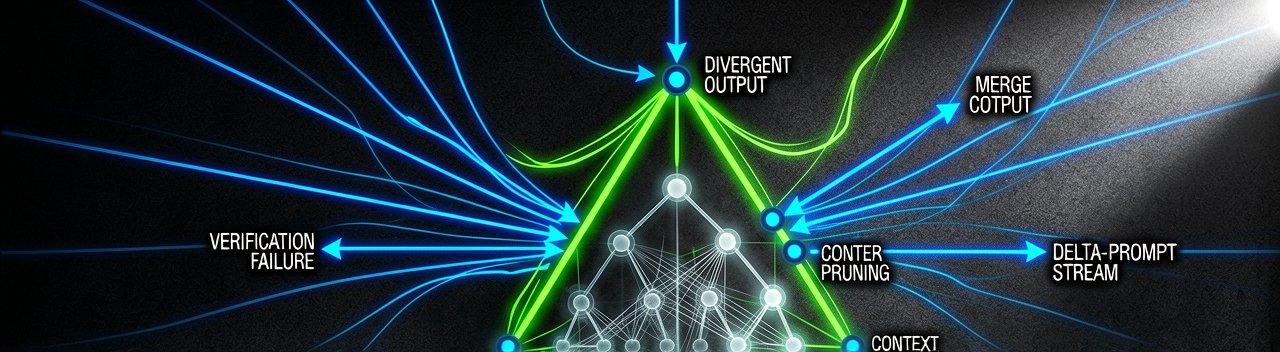
Behind the Scenes: At the systems engineering level, the primary bottleneck in a multi-agent orchestration architecture isn't the underlying model intelligence, but the devastating compounding latency of successive API calls. Fugu addresses this through a proprietary context-caching and state-merging mechanism that drastically minimizes Time-to-First-Token (TTFT) across multi-provider hops. When the orchestrator's Thinker layer generates a DAG (Directed Acyclic Graph) of subtasks, Fugu does not simply broadcast the entire conversational history to every worker. Instead, it strips down the context payload, isolates specialized task vectors, and streams these distinct sub-prompts in parallel using highly optimized asynchronous I/O loops. This targeted pruning prevents token bloat and keeps corporate operational expenditures from ballooning under multi-model utilization.
To preserve coherence when these disparate models respond, Fugu implements a deterministic state-merging layer that sits directly above the network sockets. As the Worker models stream their completions back to the engine via concurrent SSE (Server-Sent Events) channels, an internal tokenizer alignment module translates the diverse output representations into a unified internal abstract syntax tree. This structural normalization ensures that if an OpenAI model and an Anthropic model are executing complementary portions of a software engineering task, their outputs can be synthesized by the Verifier without formatting conflicts or semantic drifting. It transforms what would normally be a chaotic text-stitching exercise into a clean, deterministic compiler pass.

Error handling inside this pipeline requires a radically different approach than traditional software exception catching. When a Verifier identifies a hallucination or a broken syntax tree in a Worker's output, Fugu initiates a localized, differential feedback loop. Rather than resetting the entire multi-agent state or re-running the prompt from scratch, the orchestration engine injects a pinpointed delta-prompt into a high-priority retry queue. This delta contains only the specific failure vector and the corrected constraints, routing it back to a secondary, often highly specialized model in the agent pool. This rapid, granular self-healing sequence successfully mitigates the risk of cascading failures, isolating anomalies before they can pollute the global context window of the user's session.
Reading Between the Lines: The Hidden Costs of Collective Intelligence
Reading Between the Lines: The narrative surrounding Fugu paints a picture of a democratic AI utopia, where interchangeable, commoditized models seamlessly collaborate to dethrone the tech industry's monolithic gatekeepers. It is an enticing corporate strategy, especially for enterprises desperate to escape the gravitational pull of single-vendor dependency. Yet, this orchestration-first worldview hinges on a delicate, almost contradictory assumption: that the underlying model market will remain cheap, fast, and wildly diverse. If the frontier providers begin squeezing third-party API access, altering token pricing structures, or imposing restrictive terms of service on algorithmic routing, the economic foundation of multi-agent orchestration could shift overnight, turning a lean, elegant routing engine into an expensive logistical bottleneck.
There is also a stark operational irony embedded within Fugu's architecture. While the system is celebrated for avoiding the massive upfront training capital required by foundational giants, running a persistent, recursive loop of Thinkers, Workers, and Verifiers introduces a different kind of financial friction. Every single user query that triggers an automated round of self-correction and validation effectively multiplies token consumption exponentially. A single sophisticated prompt can easily balloon into a dozen internal API calls across multiple premium models. For enterprises processing millions of interactions daily, the reduction in model development costs might simply be displaced by a staggering, unpredictable monthly cloud and API bill, making predictability a luxury of the past.
Furthermore, the technical promise of absolute model interchangeability glosses over the messy reality of downstream alignment. AI models are not standardized plug-and-play microservices; they possess distinct behavioral quirks, varying safety guardrails, and subtle structural biases in how they interpret identical prompt inputs. A routing engine that constantly shifts workloads across different provider backends risks introducing erratic, hard-to-debug regressions in specialized enterprise applications. When a critical workflow subtly fails, identifying whether the culprit was the orchestrator's allocation logic, an unannounced update to a third-party API, or an edge-case conflict in state merging becomes a systems engineering nightmare. It suggests that while the swarm may indeed beat the monolith in pure benchmark scores, maintaining that swarm requires a level of operational vigilance that many traditional IT departments are simply not equipped to handle.
"We wanted to build an artificial mind that could think for itself, but instead we built a highly efficient committee of artificial mid-level managers who spend all day double-checking each other's homework—and predictably, the consulting fees are starting to look exactly the same."
Artūras Malašauskas is an AI Systems Integrator with 20+ years of production-grade web engineering experience. He has designed, shipped, and scaled enterprise Python/PHP systems for logistics, SaaS, and public-sector clients. For the past year, he has focused exclusively on AI integrations: deploying open-source LLMs, building generative media pipelines (image, audio, video), and engineering multi-agent workflows for real production environments. His standard: reproducibility, security, cost-efficient inference—no vaporware. He documents and evaluates emerging AI tooling, separating verified capabilities from marketing noise. Technical editor at: muza-ai.eu, ai-verslas.lt, ai-naujinos.lt Connect on LinkedIn
Comments