AI Art in Gaming: Kingdom Hearts Collection Sparks Industry Debate Over Generative Assets
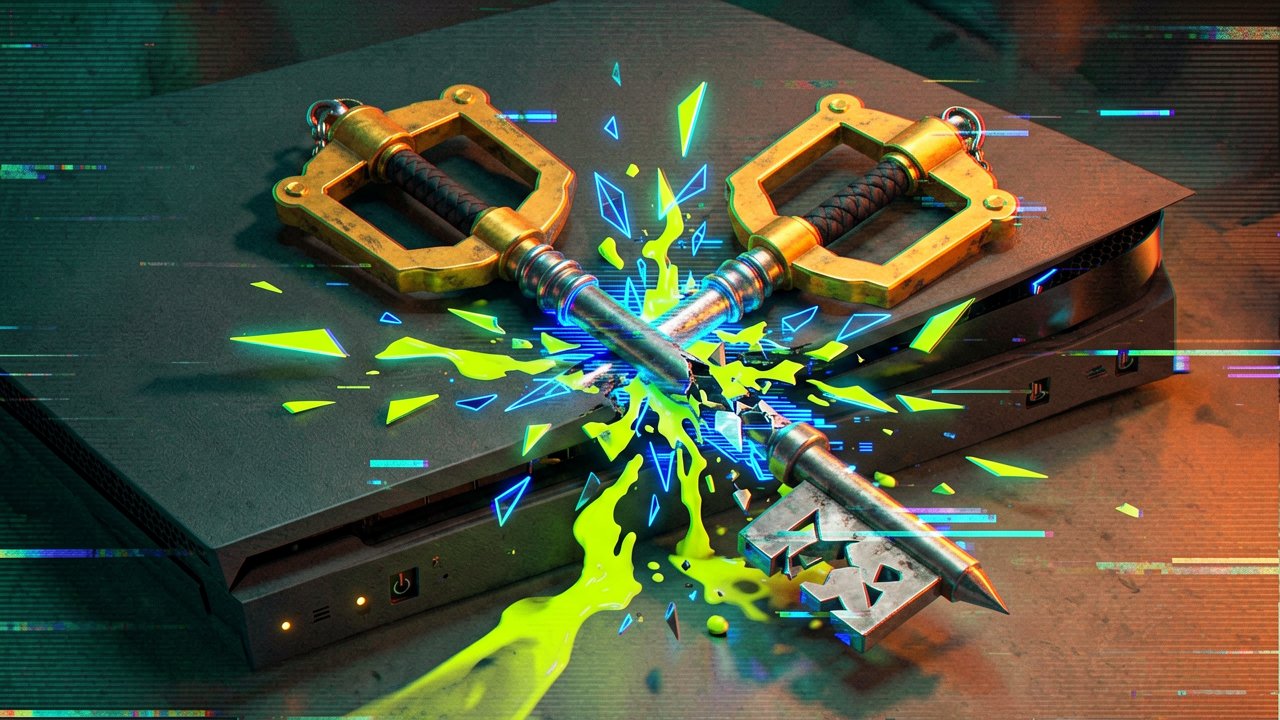
The gaming industry has reached a controversial milestone as Square Enix faces intense community scrutiny over its newly announced Kingdom Hearts Collection [I~III] for the PlayStation 5 and Nintendo Switch 2. Official promotional and retail assets showcased during the June 2026 presentation revealed glaring visual inconsistencies, including Donald Duck drawn with five fingers on his left hand and melted background geometries. This has triggered widespread reporting from outlets like GamesRadar and PC Gamer, positioning the legendary franchise at the center of a heated debate regarding generative AI and automated upscaling in AAA marketing.
While tech-centric players debate whether the asset is entirely generated from a prompt or is a botched AI-driven upscaling of classic illustrations by veteran director Tetsuya Nomura, the structural shift remains clear. Major publishers are increasingly testing public tolerance for algorithmic automation in key user-facing art. This transition is heavily driven by corporate initiatives to eliminate traditional graphic production pipelines, substituting manual human refinement with fast, cost-saving algorithmic tools.
Strategic Imperatives and Cost Reduction in Modern Publishing
Publisher decisions to introduce automation into front-facing products highlight an aggressive push to compress marketing budgets for legacy re-releases. Re-rendering or manually repainting promotional art for high-resolution console generations requires dedicated design teams, whereas generative tools offer instant output. Square Enix leadership has previously hinted at a corporate philosophy favoring AI exploration, and this practical application highlights a willingness to risk fan alienation to standardize automated workflows. For competitors observing from the sidelines, the initial reception of this collection will serve as a critical case study on whether corporate savings outweigh the public relations fallout.
Erosion of Brand Identity vs. Scalable Automation
The primary commercial risk of utilizing generative tools for major intellectual properties lies in the dilution of established brand heritage. The Kingdom Hearts franchise built its massive appeal on precise, hand-drawn key art that historically combined Disney motifs with square-enix design principles. Introducing melted lines, anatomical anomalies, and inconsistent layers strips away the premium feel of physical retail releases. However, from a pure volume perspective, automated tools grant publishers unprecedented scale. Marketing departments can dynamically generate countless digital banners, storefront thumbnails, and localized regional covers in minutes, reshaping how major catalogs are managed across multi-platform networks.
Market Implications for Digital and Physical Storefronts
As the PlayStation 5 and the upcoming Nintendo Switch 2 solidify their roles in the retail market, the definition of a "premium product" is shifting. If platform holders permit unverified or automated art to dominate digital dashboards, consumer pushback could force storefronts to adopt stricter disclosure rules for AI-assisted products. Over time, the tension between elite manual craftsmanship and efficient, algorithmic asset generation will likely segment the gaming landscape. High-budget flagship releases will continue to use human artisans as a luxury marketing point, while comprehensive remasters, bundles, and port collections lean on generative tools to keep operational overhead down.
Behind the Scenes: The Technical Compromises of Algorithmic Archiving
Beyond the Immediate Backlash: The visual errors found in the Kingdom Hearts Collection marketing materials point to a deeper structural challenge within modern game archiving and remastering. Publishers face a massive mountain of low-resolution legacy art created for standard-definition cathode-ray tube (CRT) monitors. Manually repainting this classic key art to meet the crisp, 4K display demands of the PlayStation 5 requires significant time and artisan budgets. Instead of funding long restoration projects, publishing houses frequently turn to automated neural networks to instantly upscale older source images. This fast process often blends, warps, or completely invents micro-details, turning iconic design features into digital artifacts.
This technical shortcut creates a major clash between corporate financial strategies and the creative teams who build these worlds. Internal developers and seasoned concept artists express quiet frustration that automated tools disrupt the precise line work that defines legendary franchises. When an algorithm handles the final layers of a public-facing product, it skips the careful checks of human creative directors. This gap breaks the vital connection between a game’s original creators and its core audience, creating a noticeable drop in visual quality that fans spot immediately.
The business calculations behind these automated workflows highlight a clear double standard in how major publishers value different parts of their catalog. While brand-new, flagship sequels receive massive budgets for human concept art and elite marketing campaigns, legacy bundles and multi-platform ports are treated as secondary revenue sources that must keep operational costs as close to zero as possible. This approach treats historical collections as simple commodities rather than important milestones of gaming history. If this automated workflow becomes the industry norm, it risks turning physical retail covers into generic, machine-made products that lack any genuine artistic identity.

Looking forward, the long-term impact of this shift will likely reshape the premium collector's market. As machine-generated imagery becomes common on digital storefronts and standard retail boxes, hand-drawn art will become a rare luxury feature. Indie studios and boutique physical publishers are already using their commitment to human-made art as a key selling point to attract passionate collectors. This divide will force the gaming industry to choose between high-speed, automated asset production and the preservation of authentic artistic craftsmanship.
Reading Between the Lines: The Illusion of Cost-Efficiency
The Hidden Cost of Automation: The reliance on generative algorithms for high-profile retail assets exposes a major contradiction in corporate strategy. Publishers justify using automated tools by pointing to massive budget savings and faster production schedules. However, this math completely ignores the expensive reality of public relations cleanup, community backlash, and the eventual need to pay human artists to repair bot-chiseled mistakes. When a major franchise suffers public embarrassment over warped hands and melted backgrounds, the damage to brand equity often costs far more than the initial design fee. The core irony of the modern gaming industry is that companies are willing to risk multi-million dollar intellectual properties just to shave a few thousand dollars off a marketing budget.
This trend also highlights a deeper structural hypocrisy regarding how the technology is marketed versus how it is actually used. Enthusiasts claim that generative tools democratize creativity and free up human designers to focus on high-level artistic vision. In reality, the practical application on display here reveals a dynamic where the algorithm creates the final, visible product while human workers are relegated to acting as glorified error-checkers. This completely flips the creative hierarchy, prioritizing raw, algorithmic output speed over genuine human artistic intent and forcing veteran creators to adapt to the limitations of a machine.
Furthermore, the assumption that consumers will gradually accept automated visual flaws as a normal industry standard remains highly questionable. While standard audiences might ignore minor imperfections in digital store banners, physical collectors behave entirely differently. The community that buys physical discs and premium cartridges demands high-quality, archival packaging. Treating these physical releases as low-priority products to be filled with automated filler art alienates a publisher's most loyal and profitable consumers. This dynamic sets up an inevitable clash between short-term corporate accounting and long-term brand loyalty.
Ultimately, this aggressive push toward generative automation reveals a broader identity crisis within the AAA gaming ecosystem. As production budgets for next-generation consoles become increasingly unsustainable, executive suites are desperately trying to automate their way into profitability. Yet, by stripping away the specific, human-driven art styles that made these franchises famous in the first place, publishers risk turning their most valuable assets into generic, soulless digital noise. The automated future may deliver the fast, scalable pipelines that corporate shareholders demand, but it risks leaving behind the very magic that makes people want to play these games.
"The modern gaming pipeline has finally achieved its ultimate dream: an automated system that can generate a multi-platform release in five minutes and spark a global community public relations crisis in three. It turns out that teaching a computer to paint an iconic character is incredibly cheap, but teaching it to count to five on a single hand remains a luxury option."
Artūras Malašauskas is an AI Systems Integrator with 20+ years of production-grade web engineering experience. He has designed, shipped, and scaled enterprise Python/PHP systems for logistics, SaaS, and public-sector clients. For the past year, he has focused exclusively on AI integrations: deploying open-source LLMs, building generative media pipelines (image, audio, video), and engineering multi-agent workflows for real production environments. His standard: reproducibility, security, cost-efficient inference—no vaporware. He documents and evaluates emerging AI tooling, separating verified capabilities from marketing noise. Technical editor at: muza-ai.eu, ai-verslas.lt, ai-naujinos.lt Connect on LinkedIn
Comments