Zilliz Vector Lakebase Redefines Enterprise AI Infrastructure with Unified Data Platform
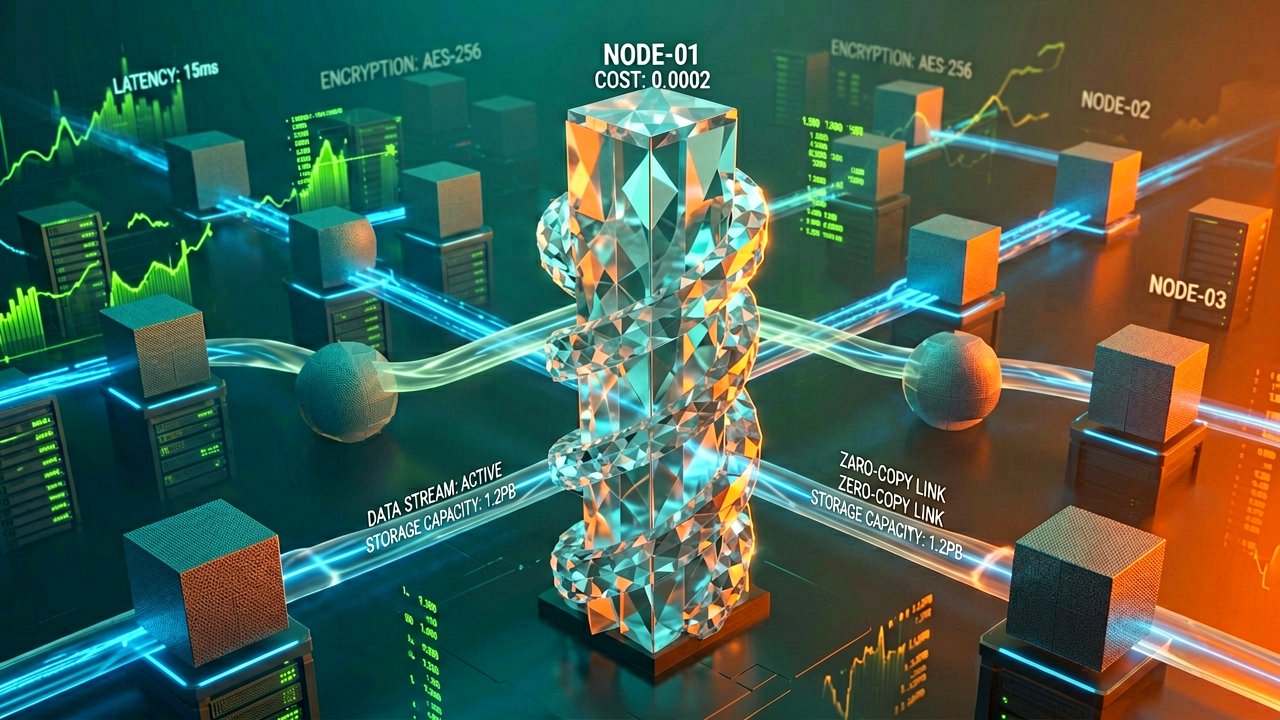
The enterprise artificial intelligence landscape is shifting from simple, single-query retrieval systems toward complex, continuous loops that combine real-time production serving with massive offline processing. To address this architectural evolution, Zilliz has introduced Vector Lakebase in a public preview on Zilliz Cloud , transforming its infrastructure from a pure vector database into a unified, lake-native data platform. This strategic move directly tackles the costly issue of data fragmentation by establishing a zero-copy semantic data plane over a single logical copy of enterprise data, eliminating the complex multi-day migrations traditionally required to transfer billions of vectors between disparate production and batch environments.
As unstructured data volume grows across global industries, organizations struggle to maintain distinct always-on serving clusters alongside isolated batch analytics tools. This launch positions Zilliz to capture a larger portion of the foundational AI infrastructure stack by offering shared lake-native storage that supports real-time serving, interactive discovery, and batch analytics simultaneously. According to details published by Business Wire, the platform utilizes Vortex—an open columnar format engineered for faster random reads than alternative formats like Parquet and Lance—while leveraging object-storage-aware indexes to reduce read amplification by over 90%.
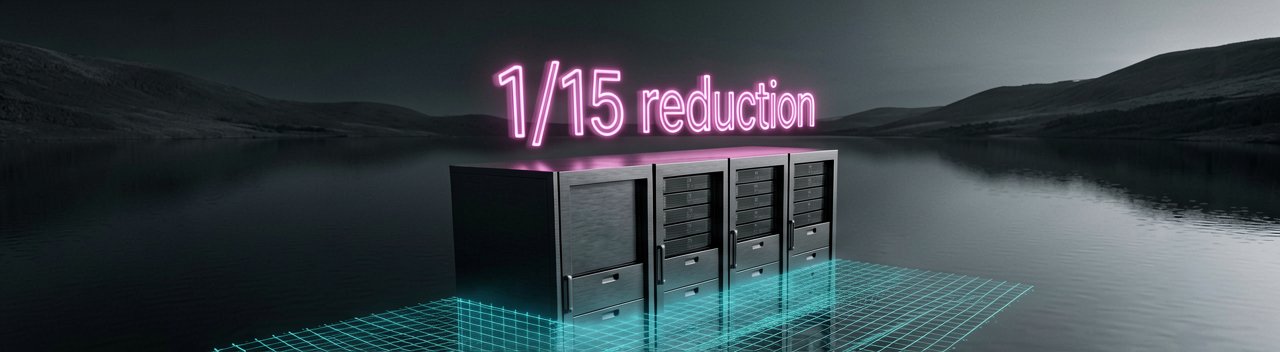
By integrating multi-vector, text, JSON, and geospatial data into one platform, the technology provides a highly competitive economic model for enterprise machine learning pipelines. For instance, internal benchmarks released by the company show that its pay-as-you-go On-Demand Search compute model can reduce operational infrastructure costs to roughly 1/15 of a comparable serverless path. This hybrid retrieval design allows teams to scale compute down to zero between massive jobs, providing a flexible framework that addresses both latency-critical production demands and offline dataset optimization loops.
Market Shift from Siloed Vector Storage to Lake-Native Architectures
The transition from point-solution vector databases to comprehensive data lake platforms marks a mature phase in enterprise AI infrastructure deployment. Early AI adopters relied on specialized vector databases exclusively for real-time semantic retrieval, which required maintaining separate data stores for analytics and core business applications. By expanding into lake-native storage, Zilliz directly competes with broader cloud data warehouse and lakehouse vendors, offering enterprises a path to consolidate operations, maintain consistent data versioning, and prevent vendor lock-in through open storage formats.
Economic Implications of On-Demand Compute in Machine Learning
Infrastructure cost remains a primary barrier to scaling production-level artificial intelligence models. Traditional serverless options often penalize fluctuating development cycles with high premium markups, while dedicated clusters require continuous expenditure even during idle hours. The introduction of decoupled, pay-as-you-go compute combined with low-cost object storage allows companies to execute heavy operations like semantic deduplication or multi-step discovery sessions without accumulating massive overhead, fundamentally shifting the return on investment equation for data-intensive AI operations.
Unification of Multimodal and Hybrid Structured Retrieval
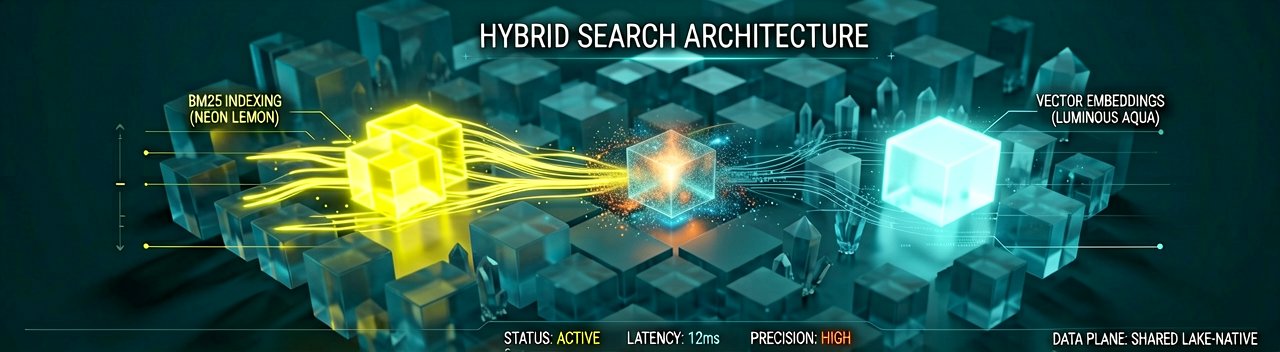
Modern machine learning workflows require contextual awareness across dense embeddings, sparse vectors, structured text, and relational tables simultaneously. Data engineering teams frequently build fragile data pipelines to combine keyword searches with semantic vector retrieval. Integrating native hybrid search tools, BM25 indexing, and third-party reranking capabilities into a single underlying data plane allows developers to build more accurate retrieval-augmented generation systems while significantly reducing the engineering overhead of the enterprise AI stack.
An Inside Look at the Infrastructure Transformation
Behind the Engineering Breakthrough: The transition from specialized vector databases to unified lake-native platforms is a direct response to a quiet crisis unfolding within enterprise data engineering teams. For the past several years, organizations building retrieval-augmented generation systems have operated under a highly fractured paradigm. They relied on traditional databases for structured metadata, separate data lakes for raw files, and a dedicated vector database to power semantic search. This setup required building and maintaining fragile, costly data pipelines to sync data across systems. The introduction of a zero-copy semantic data plane marks a shift away from this fragmented approach, allowing enterprises to query massive vector datasets directly where they reside in low-cost object storage without moving files between siloed platforms.
At the center of this architectural shift is a fundamental rethinking of open table and file formats for machine learning workloads. While formats like Apache Parquet revolutionized analytical data warehousing, they were never optimized for the rapid, high-dimensional random reads required by vector search and large language model pipelines. The creation of specialized columnar formats, such as Vortex, addresses this specific bottleneck. By optimizing how dense embeddings and structured metadata are packed into columnar files, infrastructure teams can now achieve over a 90% reduction in read amplification. This capability allows systems to scan vast vector indices on cloud storage without incurring the severe latency penalties that historically forced companies to keep all production data in expensive, always-on solid-state drives.
This technical evolution also redefines the financial reality of scaling enterprise AI. The prevailing infrastructure model forced a compromise between the high costs of provisioned memory and the steep premiums of standard serverless platforms. Decoupling storage from compute via a pay-as-you-go model changes this dynamic by allowing compute resources to scale down to zero when idle. For enterprises running massive batch jobs—such as nightly semantic deduplication, model evaluation, or multi-vector discovery sessions—this flexibility dramatically lowers operational overhead. This financial predictability allows data science teams to iterate on larger datasets without facing unpredictable cloud bills, making continuous AI optimization viable for mainstream enterprises.
From a strategic standpoint, this infrastructure shift signals a broader convergence in the data landscape. Point-solution vector databases are rapidly expanding into full-scale data platforms, while traditional data lakehouses are scrambling to add native vector capabilities. For enterprise technology buyers, the decision-making process is shifting from a tool's peak query performance to its long-term compatibility with open data standards. By anchoring new architectures to open formats and shared lake storage, the industry is moving toward a more sustainable ecosystem. This evolution prevents vendor lock-in, unifies structured and unstructured data pipelines, and establishes a robust foundation for the next generation of multimodal AI applications.
The Reality Check for Lake-Native AI Platforms
Reading Between the Lines: The industry-wide rush toward lake-native vector infrastructure promises a friction-free future where data silos vanish and cloud computing bills plummet. Yet, this idealized narrative glosses over a fundamental engineering tension between real-time production latency and distributed lakehouse storage. Object storage systems, by their very nature, introduce network latency overhead that conflicts with the millisecond-level responsiveness expected by consumer-facing AI applications. While a 90% reduction in read amplification looks impressive on paper, optimizing cloud file structures cannot entirely rewrite the physical laws of distributed networks, meaning organizations with extreme latency constraints will likely still have to maintain high-cost, memory-cached databases for their hot data.
Furthermore, the arrival of specialized open columnar formats like Vortex highlights a growing fragmentation problem within the open-source data community itself. While the industry standardizes around Apache Iceberg, Delta Lake, or Parquet for traditional business intelligence, the AI ecosystem is fracturing into its own subset of hyper-specific file formats engineered for dense embeddings. For enterprise IT architectures, this introduces a hidden governance burden. Database administrators who spent the last decade consolidating their data assets into a single corporate lakehouse now face the prospect of managing a separate, parallel universe of AI-specific storage formats, muddying the waters of unified data compliance and lineage tracing.
The financial promise of scaling compute down to zero between massive analytical jobs also carries a subtle operational catch. While on-demand compute structures prevent wasting budget on idle servers, they introduces a notorious "cold-start" problem. Enterprises running bursty, unpredictable AI pipelines may discover that waking up heavy vector index engines from a dead stop incurs a noticeable performance delay. This reality forces engineering teams into a perpetual balancing act, deciding whether to accept sluggish initial query responses or pay to keep warm placeholder nodes active, which quietly erodes the highly touted cost efficiencies of a truly serverless model.
Ultimately, the pivot from specialized point-solutions to all-encompassing data platforms reveals a classic tech industry pattern of consolidation. Pure-play vector databases are aggressively expanding their feature lists to avoid being commoditized by legacy data giants who are simultaneously building vector capabilities into standard relational engines. For technology buyers, the challenge is no longer about finding the absolute fastest vector search engine, but rather deciphering which platform can handle the weight of enterprise security, hybrid data types, and massive analytical processing loops without collapsing under its own architectural complexity.
"We are told the ultimate goal of modern AI engineering is to seamlessly merge transactional data, analytical pipelines, and machine learning models into a single, unified database ecosystem—a beautiful technical utopia that will comfortably persist until the exact moment a developer discovers they need yet another highly specialized point-solution to fix next week's infrastructure bottleneck."
Artūras Malašauskas is an AI Systems Integrator with 20+ years of production-grade web engineering experience. He has designed, shipped, and scaled enterprise Python/PHP systems for logistics, SaaS, and public-sector clients. For the past year, he has focused exclusively on AI integrations: deploying open-source LLMs, building generative media pipelines (image, audio, video), and engineering multi-agent workflows for real production environments. His standard: reproducibility, security, cost-efficient inference—no vaporware. He documents and evaluates emerging AI tooling, separating verified capabilities from marketing noise. Technical editor at: muza-ai.eu, ai-verslas.lt, ai-naujinos.lt Connect on LinkedIn
Comments