Autodesk’s $350M Push to Future-Proof Workforce Sparks Debate on AI's Role in Physical Industries
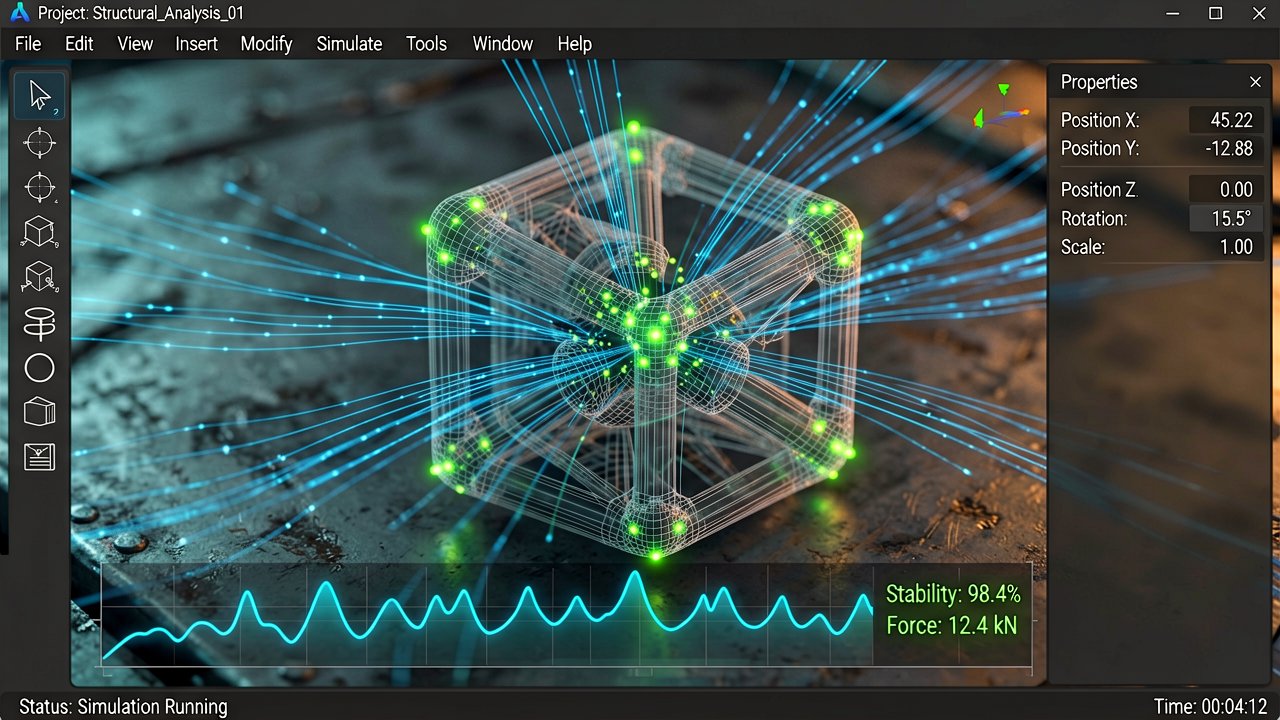
In a decisive move to solidify its footprint in the rapidly evolving digital landscape, design software giant Autodesk has pledged a massive $350 million initiative aimed at preparing the next generation of workers for artificial intelligence roles within the physical industries. Announced via an official statement on the Autodesk News Portal, this three-year funding package expands access, training, and professional certifications to bridge the critical skills gap separating emerging cloud-based automation from real-world applications in architecture, engineering, construction, and manufacturing.
The strategic deployment comes at a pivotal period for Autodesk. This investment closely follows structural shifts within the company, including a high-profile restructuring where Autodesk announced it would downsize approximately 7% of its global workforce, reallocating those capital expenditures explicitly toward advanced artificial intelligence and specialized industry clouds. The pivot underscores a sharp corporate realignment from legacy, human-driven product sales toward automated, self-serve SaaS ecosystems, driving intense industry dialogue on whether this education funding serves as a vital upskilling lifeline or an essential mitigation tactic against systemic tech-driven corporate displacement.
The Spatial Dilemma: Bringing AI to Tangible Workflows
While the broader tech sector remains heavily saturated with large language models built for text and code generation, physical-world industries demand spatial reasoning, advanced mechanics, and strict adherence to the laws of physics. Autodesk has continuously pushed its core platforms, like Fusion, to automate repetitive labor through generative design and automated toolpaths. However, building foundational systems capable of accurately predicting building lifecycles or fabricating complex components requires a workforce fluent in what engineers call augmented or adaptive intelligence. By funneling $350 million into technical colleges, high schools, and vocational centers, Autodesk is actively shaping an educational pipeline tailored to its proprietary software suite, ensuring that future structural designers view its AI ecosystems as the industry standard.
Market Implications and the Evolving Definition of Technical Competency
Market data released via Autodesk’s own analytical research partnerships indicates that AI fluency is rapidly shifting from a specialized technical asset into a foundational corporate prerequisite. According to data tracked in the Autodesk AI Jobs Report, mentions of artificial intelligence in general job listings within the design and make sectors have historically skyrocketed—surging 114.8% in 2023 and an additional 120.6% in 2024. Interestingly, latest market metrics indicate that human-centered design skills, communication, and interdisciplinary collaboration have actually surpassed raw coding proficiency as the most in-demand traits within AI-specific job listings. This demonstrates that while software continues to ingest manual drafting responsibilities, the high-value market premium is moving directly toward professionals who can manage, audit, and strategically direct automated tools.

Strategic Defense Against Industry Destabilization
The staggering $350 million commitment is also an aggressive defense mechanism against macro market anxieties. Corporate surveys published in the Autodesk State of Design & Make Report revealed that 55% of media, entertainment, and complex engineering leaders fear artificial intelligence could radically destabilize their sectors. By democratizing access to professional-grade tools and structured credentialing systems, Autodesk aims to soothe labor friction and position itself as an ethical pioneer in automated workflows. This long-term educational strategy ensures that as the industrial world transitions toward predictive digital twins and algorithmic construction, Autodesk remains the indispensable structural backbone of the global industrial labor force.
The Architectural Shift: Autodesk’s Calculated Gamble on the Autonomous Workspace
Behind the Scenes: While the headline figure of $350 million commands attention, the true narrative lies in Autodesk’s strategic maneuvering to dominate the foundational layer of industrial automation before agile, open-source competitors can decentralize the market. For decades, the architecture, engineering, and construction sectors operated on deterministic software models where every line, joint, and tolerance was meticulously plotted by human hands. The transition to cloud-first, AI-driven environments requires a fundamental psychological shift among practitioners who are historically risk-averse due to the high-stakes nature of structural engineering. Autodesk’s massive financial injection into global educational pipelines is less about corporate altruism and more about institutionalizing its proprietary AI frameworks as the default vocabulary for the next generation of builders.
Industry veterans view this aggressive push with a mixture of optimism and skepticism, highlighting a growing tension between traditional craftsmanship and algorithmic efficiency. On one side, structural engineers and project managers face unprecedented labor shortages and compressed project timelines, making the promise of automated toolpaths and real-time generative design incredibly appealing. Conversely, labor advocates caution that by accelerating the transition to self-serve SaaS ecosystems, the company risks commoditizing mid-level technical roles. The underlying fear is that as AI systems absorb the heavy lifting of drafting and code compliance, the entry-level positions that historically served as the training grounds for junior architects could vanish, disrupting the traditional mentorship pipeline that has sustained these industries for over a century.
Historically, Autodesk has navigated these paradigm shifts by positioning its software as an indispensable utility, a strategy heavily mirrored in its current pivot toward specialized industry clouds. During the transition from physical drafting boards to early computer-aided design, and later to Building Information Modeling, the company successfully secured market dominance by ensuring educational institutions received heavily subsidized or free student licenses. This replicated strategy ensures that tomorrow's workforce becomes deeply dependent on Autodesk’s predictive ecosystems before they even enter the professional market. By cultivating an army of certified AI-fluent operators, the software giant effectively forces enterprise construction and manufacturing firms to maintain their expensive Autodesk subscriptions, neutralizing the threat of emerging AI-native startups that lack institutional integration.

The market implications of this upskilling blitz extend far beyond corporate balance sheets, signaling a profound evolution in what defines technical competency in the modern era. As the software increasingly dictates optimal material distributions and predicts structural lifecycles, human value is shifting rapidly from execution to oversight. The successful professionals of the next decade will not be those who can manually calculate load distributions, but those who possess the interdisciplinary acumen to audit, prompt, and refine automated outputs. Autodesk’s calculated gamble hinges entirely on this dynamic, betting $350 million that it can successfully bridge the gap between digital predictive models and the uncompromising physics of the physical world, ultimately cementing its role as the narrative architect of the future industrial workforce.
The Technical Paradox: Friction at the Intersection of Algorithms and Reality
Reading Between the Lines: The core vulnerability in Autodesk’s grand workforce vision is the vast, unpredictable chasm separating a clean digital simulation from the messy realities of the physical job site. In a purely virtual ecosystem, automated generative designs optimize material usage with mathematically flawless precision, yielding organic, futuristic structural components that look exceptional on a high-resolution display. However, when these algorithmically generated models meet the chaotic variables of a physical fabrication floor or a muddy construction site—where material delivery delays, unpredictable weather, human labor variances, and microscopic structural imperfections are the norm—the theoretical efficiency often breaks down. Training a workforce to trust automated design outputs implicitly creates a dangerous systemic risk if future engineers lack the foundational, hands-on intuition required to recognize when an AI system makes a physically unfeasible assumption.
Furthermore, an inherent corporate contradiction underpins this multi-million-dollar upskilling initiative. Autodesk is funneling massive resources into technical colleges to build an AI-ready talent pool at the exact moment its corporate strategies are designed to reduce reliance on human headcount through automated, self-serve SaaS platforms. This creates an existential paradox for the students entering these programs: they are being trained to operate tools explicitly engineered to automate away the very entry-level drafting and modeling positions they hope to secure upon graduation. Enterprise firms are adopting these AI integrations to compress project timelines and trim operational budgets, meaning the market demand for a massive army of software operators may naturally shrink as the software itself becomes more autonomous, leaving newly certified workers competing for a rapidly dwindling pool of oversight roles.
From a macroeconomic perspective, this educational push also functions as a highly effective, long-term customer lock-in strategy disguised as corporate social responsibility. By dictating the curriculum, certification parameters, and technological vocabulary of AI-driven manufacturing and architecture, Autodesk is effectively pre-conditioning the future workforce to view its proprietary ecosystems as the sole standard for industrial automation. This aggressive academic saturation makes it financially and operationally prohibitive for future engineering firms to ever migrate to competing open-source platforms or nimble, AI-native software suites, effectively stifling broader market innovation. Ultimately, while the $350 million initiative successfully buffers the company against public backlash over technological displacement, it simultaneously secures Autodesk's positioning as the unilateral gatekeeper of industrial labor for the foreseeable future.
"We are spending millions to teach the next generation how to co-pilot an artificial intelligence that is working around the clock to ensure they never actually have to leave the ground."
Artūras Malašauskas is an AI Systems Integrator with 20+ years of production-grade web engineering experience. He has designed, shipped, and scaled enterprise Python/PHP systems for logistics, SaaS, and public-sector clients. For the past year, he has focused exclusively on AI integrations: deploying open-source LLMs, building generative media pipelines (image, audio, video), and engineering multi-agent workflows for real production environments. His standard: reproducibility, security, cost-efficient inference—no vaporware. He documents and evaluates emerging AI tooling, separating verified capabilities from marketing noise. Technical editor at: muza-ai.eu, ai-verslas.lt, ai-naujinos.lt Connect on LinkedIn
Comments