AI Proxy Battles Threaten to Redraw Congressional Power Structures
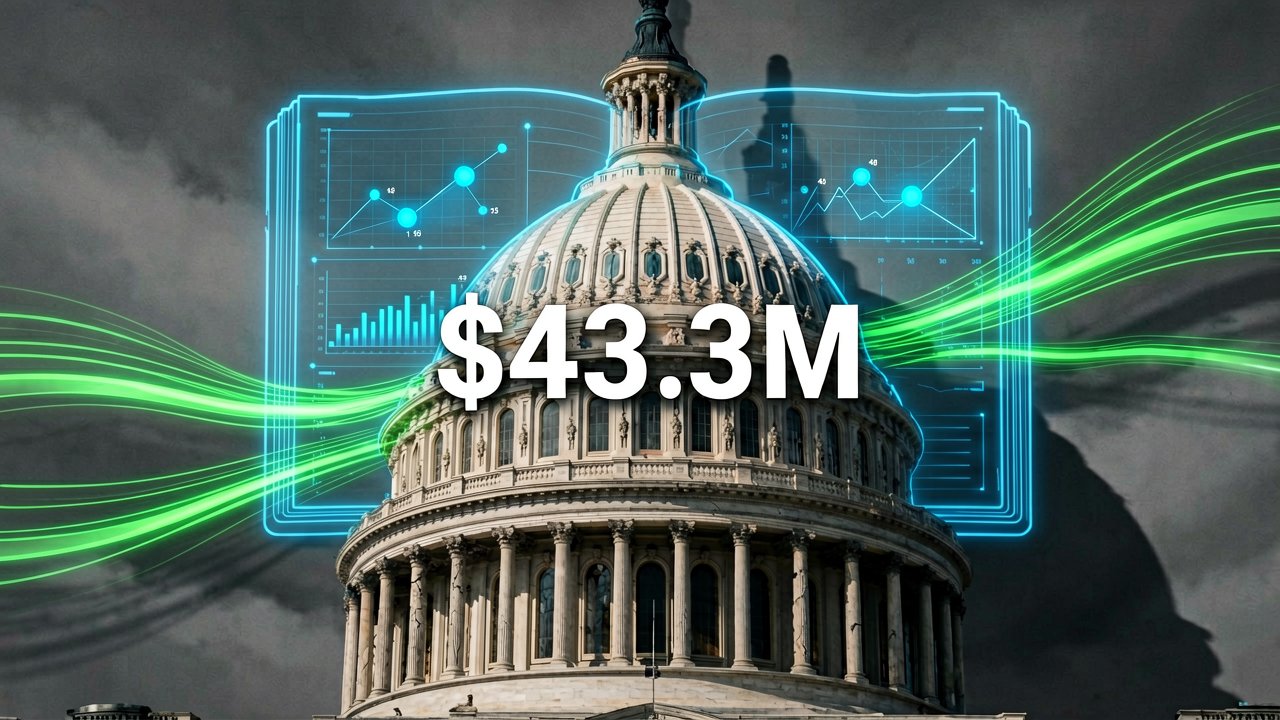
The race to regulate artificial intelligence has transformed into a high-stakes proxy war as political factions and tech rivals weaponize campaign finance to reshape congressional power dynamics. According to data tracked by NPR via OpenSecrets, AI-focused super PACs have already deployed $43.3 million into congressional races this cycle. This aggressive capital flight into political infrastructure represents a strategic shift by corporate tech interests aiming to install favorable lawmakers before federal oversight frameworks solidify. By capturing key committee seats and leveraging algorithmic influence, these factions are effectively dictating the terms of future legislative debates.
The corporate antagonism between sector leaders has spilled directly into primary elections, mapping onto broader debates over technology governance. As reported by GPB News, Anthropic contributed $20 million to Public First Action, an affiliated nonprofit designed to oppose aggressive federal preemption of state-level safeguards. In direct opposition, networks aligned with competing interests like OpenAI are funding counter-operations. This dynamic has resulted in millions of dollars flowing into localized battlegrounds, such as the open Democratic primary for New York's 12th Congressional District, effectively turning targeted campaigns into proxy fields for frontier tech laboratories.
While the private sector aggressively funds these political networks, the federal legislative process remains largely paralyzed. Policy experts at the via the Center for American Progress note that while consensus exists regarding the transformative nature of AI, lawmakers are deeply divided on what federal standards should actually look like. This gridlock has created a dangerous vacuum; as long as Congress fails to pass comprehensive guardrails, the structural integrity of legislative committees will remain highly vulnerable to targeted algorithmic manipulation and the financial influence of the very industry they are tasked to govern.
Corporate Warfare Replaced by Campaign Finance
The traditional boundaries of corporate lobbying have dissolved into direct electoral intervention. Frontier AI labs are no longer just pitching policy white papers to congressional staffers. Instead, they are using independent expenditure committees to select the regulators themselves, treating the midterms as an extension of their market-share battles.

The Threat of Algorithmic Capture
Beyond campaign donations, the deployment of generative modeling inside political campaigns threatens to distort constituent feedback loops. Automated lobbying engines and hyper-targeted campaign ads allow special interests to simulate grassroots consensus. If legislators remain dependent on these sophisticated digital ecosystems for re-election, the risk of structural regulatory capture shifts from a possibility to an inevitability.
The Hidden Architecture of Algorithmic Influence
Behind the Scenes of the Capitol Hill Power Shift: The collision of capital and code is fundamentally altering how legislation is drafted and advanced. For decades, traditional lobbying relied on personal access, white papers, and direct campaign contributions to shape policy. Today, a more sophisticated paradigm has emerged, where advanced technological tools are used to create the illusion of widespread public support. This method, often referred to as synthetic grassroots lobbying, utilizes large language models to generate thousands of unique, contextually relevant letters, emails, and public comments from constituents. Congressional offices, already understaffed and overwhelmed by the volume of digital communications, struggle to separate authentic citizen feedback from automated campaigns designed to stall specific regulatory measures.
This systematic vulnerability is complicating the work of key legislative bodies, including the House Committee on Science, Space, and Technology and the Senate Judiciary Subcommittee on Privacy, Technology, and the Law. Lawmakers now face an environment where the technical expertise required to understand frontier models resides almost entirely within the private sector corporations they are trying to regulate. This asymmetry has forced committee staffers to rely on industry-sponsored fellowships and corporate-backed think tanks for policy analysis. Consequently, statutory language regarding algorithmic bias, copyright liability, and compute thresholds is increasingly being drafted by individuals with deep professional ties to major technology laboratories.
The strategic deployment of capital by AI-focused political action committees has also triggered a notable shift in generational dynamics within both major political parties. Younger legislators, recognizing the long-term economic and national security implications of computational power, are pushing for strict disclosure requirements and algorithmic audits. However, senior leadership often prioritizes immediate economic competitiveness with global rivals, leading to internal party friction. This divide prevents the formation of a unified legislative front, allowing special interest groups to target individual members in swing districts with hyper-targeted digital advertising campaigns that frame any regulatory oversight as a threat to local jobs and American tech supremacy.
Historically, Congress has struggled to keep pace with rapid technological inflections, as seen during the rise of social media platforms and early digital commerce. The current proxy war, however, represents a more complex challenge because the technology itself is being used to manipulate the legislative machinery. As industry-funded super PACs continue to influence primary elections, the prospects for a comprehensive, bipartisan federal framework dwindle. Instead, the United States is moving toward a fragmented regulatory environment driven by state-level mandates, leaving the federal government increasingly dependent on the automated systems it has failed to govern.
The Paradox of Self-Regulating Sovereignty
Reading Between the Lines of the Regulatory Rhetoric: The prevailing narrative suggests that Congress is locked in a desperate race against time to rein in rogue artificial intelligence before the technology outpaces the law. This assumption, however, overlooks a more cynical reality: many lawmakers are entirely comfortable with the regulatory vacuum. Publicly, politicians deliver stern speeches about algorithmic bias and national security risks; privately, their campaign operations heavily rely on the exact same generative tools to optimize fundraising and micro-target voters. This blatant contradiction undermines the moral authority required to enact sweeping federal guardrails, transforming legislative oversight into a performative exercise where the regulators are quietly co-dependent on the regulated.
Furthermore, the tech industry’s sudden enthusiasm for federal oversight deserves deep skepticism. Major labs are not lobbying for regulation out of a sense of civic duty; they are pursuing strategic regulatory capture. By advocating for complex licensing regimes, mandatory compliance audits, and high compute thresholds, established industry leaders are effectively trying to codify a legal moat around their businesses. These massive regulatory burdens do little to stop trillion-dollar corporations, but they efficiently choke out open-source developers and underfunded academic startups. The ultimate irony of the current congressional battle is that a framework ostensibly designed to protect the public from corporate tech monopolies will likely end up permanentizing them.
Projecting this trajectory forward suggests that the traditional nation-state model of governance is poorly equipped for an era of borderless, decentralized computing. While Congress bickers over localized campaign finance and committee jurisdictions, the true infrastructure of power is shifting toward the entities that own the data centers and energy grids. If a legislative body becomes structurally dependent on algorithmic synthesis to process constituent sentiment, draft bills, and fundraise for survival, it ceases to be an independent branch of government. Instead, Congress risks being demoted to an administrative theater—a place that stamps approval on policies already optimized and decided by predictive models long before the gavel strikes.
"Washington's grand strategy for managing the frontiers of artificial intelligence seems to follow a timeless blueprint: aggressively accept millions in campaign donations from the tech sector, draft five hundred pages of incomprehensible rules, and then act shocked when the algorithms figure out how to automate the loopholes."
Artūras Malašauskas is an AI Systems Integrator with 20+ years of production-grade web engineering experience. He has designed, shipped, and scaled enterprise Python/PHP systems for logistics, SaaS, and public-sector clients. For the past year, he has focused exclusively on AI integrations: deploying open-source LLMs, building generative media pipelines (image, audio, video), and engineering multi-agent workflows for real production environments. His standard: reproducibility, security, cost-efficient inference—no vaporware. He documents and evaluates emerging AI tooling, separating verified capabilities from marketing noise. Technical editor at: muza-ai.eu, ai-verslas.lt, ai-naujinos.lt Connect on LinkedIn
Comments