The Human Premium: Mapping Irreplaceable Competencies in an AI-Driven Economy
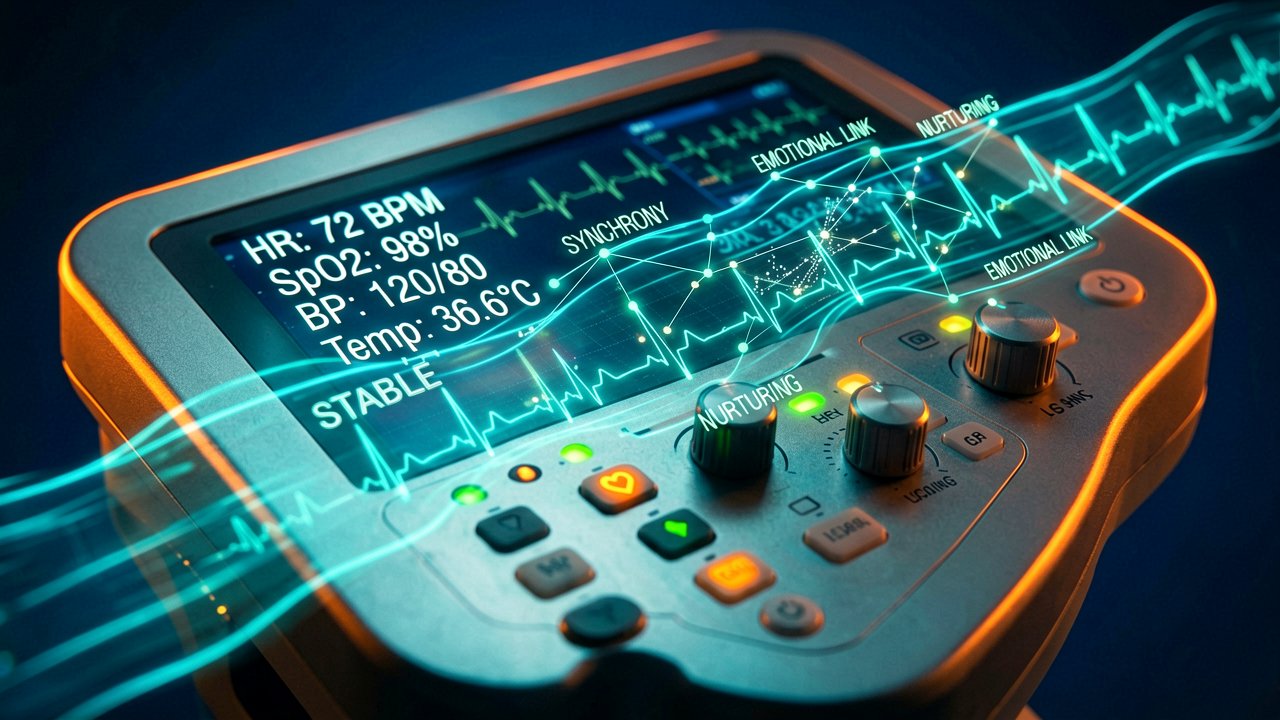
The rapid integration of generative technologies has created a two-speed labor market, placing a premium on roles that demand human judgment, systemic empathy, and creative problem-solving. While artificial intelligence successfully streamlines algorithmic operations and basic text synthesis, global studies reveal that the ultimate enterprise value resides in capabilities that machines cannot replicate. Research published by the McKinsey Global Institute establishes that while automation could absorb more than half of current U.S. work hours, this shift will primarily redefine everyday workflows rather than cause wholesale job elimination. Consequently, organizations that prioritize human capability development are capturing significantly higher strategic returns than those focusing solely on software deployment.
This structural change has fundamentally altered corporate compensation structures and employee sentiment across major economic regions. Enterprise data from the PwC Global AI Jobs Barometer reveals that occupations demanding complex human intervention combined with technical literacy carry an average wage premium of 56%. Concurrently, findings from the PwC Global Workforce Hopes and Fears Survey indicate that despite widespread automation, 54% of employees have actively utilized AI in their daily operations to reduce administrative friction. This reality shifts the corporate mandate away from routine task execution and toward specialized human supervision, strategic critical thinking, and advanced emotional navigation.
The Clinical Imperative: Empathy and Care in Healthcare
The healthcare industry serves as a primary example where human expertise remains entirely irreplaceable. While AI agents effectively parse diagnostic datasets and automate invoicing workflows, they completely lack the capacity for genuine human connection and psychological safety. Effective clinical care relies on non-verbal communication, acute emotional intelligence, and the ethical orchestration of treatment plans during fluid medical crises. Medical institutions are restructuring roles to offload paperwork onto digital systems, thereby maximizing the face-to-face time doctors and nurses spend delivering compassionate, nuanced patient interaction.
The Leadership Matrix: Navigating Uncertainty and Trust
Corporate governance and organizational transformation demand complex decision-making capabilities that sit far beyond automated logic. Leadership in the modern enterprise requires managing systemic cultural shifts, resolving nuanced internal conflicts, and establishing long-term organizational trust under high-stakes uncertainty. Data from the McKinsey Global Institute indicates that demand for AI fluency has risen sevenfold over a two-year period, proving that modern executive mastery lies in designing workflows where human teams and software agents interact securely. True strategic vision involves establishing psychological boundaries, defining ethical frameworks, and inspiring diverse workforces—human traits that cannot be codified into statistical algorithms.
The Innovation Frontier: Divergent Thinking and Original Concept Design
While generative models excel at recombining historical datasets to output predictable variations, they are fundamentally incapable of genuine, paradigm-shifting innovation. Human creativity operates through divergent thinking, contextual rule-breaking, and the unique ability to draw inspiration from disparate life experiences. True creative leaps in product design, engineering, and strategic marketing depend on cognitive capabilities anchored in the physical world. Enterprises must transition their research and development investments toward nurturing human curiosity and experimentation, ensuring that automated systems function merely as accelerators for foundational, human-driven concepts.
The Hidden Overhead of the Automated Enterprise
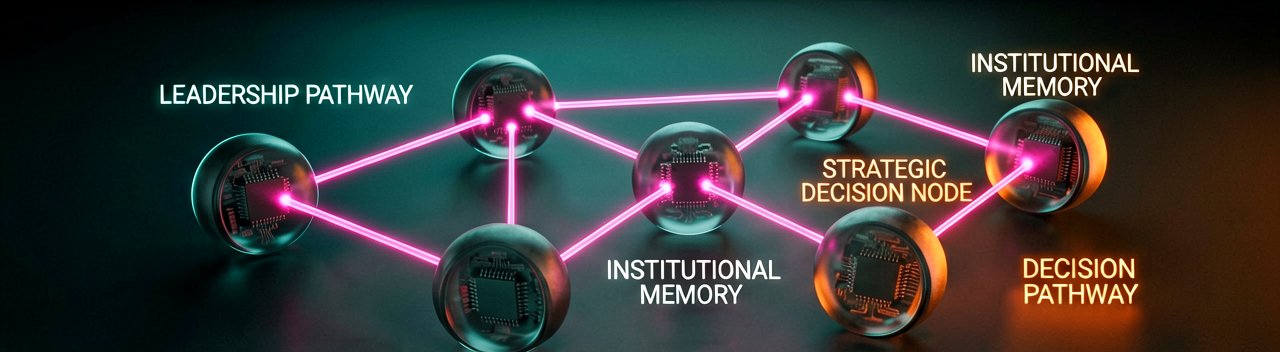
Beyond the Headlines: The corporate rush to automate routine workflows has revealed a structural vulnerability that most macroeconomic reports overlook: the rapid degradation of foundational institutional knowledge. When enterprises offload junior-level analytical tasks entirely to algorithmic systems, they inadvertently sever the traditional apprenticeship pipelines that produce future senior leaders. Seasoned operational executives are raising alarms that the next generation of decision-makers may lack the deep, first-principles intuition traditionally developed by performing basic manual assessments, data synthesis, and routine diagnostic work during the early stages of their careers.
This operational blind spot has forced a strategic course correction within forward-thinking organizations. Rather than viewing generative tools as an outright replacement for entry-level staff, engineering and financial firms are treating these systems as highly collaborative sandboxes. Senior architects are designing frameworks where junior employees act as primary supervisors of the automated outputs, forcing them to critically evaluate, cross-reference, and audit the machine's work against historical compliance standards. This hybrid training methodology ensures that critical human oversight capabilities are actively maintained, preventing a catastrophic loss of institutional memory over the coming decade.
Concurrently, a profound shift in labor dynamics is altering how technical organizations assess potential talent during the hiring process. Technical proficiency, once measured primarily by syntactic coding speed or structured dataset manipulation, has been significantly commoditized by sophisticated software agents. Modern technical recruiters are shifting their evaluation matrices toward assessing an applicant's cognitive adaptability, linguistic precision in systemic prompting, and systemic troubleshooting capabilities. The ability to deconstruct a highly abstract corporate problem and translate it into a reliable, machine-executable workflow has emerged as the defining metric of high-value technical talent.
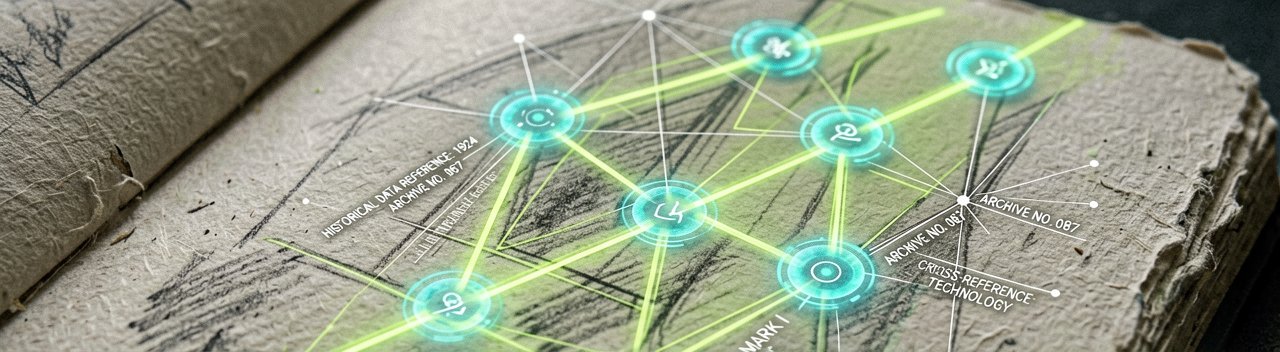
Ultimately, the long-term competitive differentiation between global enterprises will not be determined by the specific software models they license, but by the psychological infrastructure they build to support their human workforces. Organizations that treat automation as an optimization mechanism for human creativity, rather than a cost-cutting tool to eliminate headcount, are demonstrating vastly superior retention rates and operational agility. Cultivating an environment where strategic non-conformity, ethical bravery, and empathetic collaboration can flourish remains the definitive insurance policy against systemic technological obsolescence.
The Paradox of Automated Efficiency
Reading Between the Lines: The corporate enthusiasm surrounding the "human premium" frequently relies on a flawed economic assumption: that freed-up administrative time automatically translates into higher-level strategic innovation. Enterprise realities paint a far more contradictory picture, as professionals liberated from routine data entry find their cognitive bandwidth consumed by an entirely new strain of bureaucratic friction. Instead of brainstorming transformative business models, workers are increasingly spent auditing endless streams of synthetic content, resolving hallucinated software errors, and managing hyper-accelerated communications channels that demand instant, around-the-clock responses.
This dynamic reveals a deeper systemic tension within the modern workplace, as the very human qualities celebrated by leadership executives are systematically stifled by corporate metrics. Organizations champion empathy, emotional intelligence, and divergent thinking in their public relations messaging, yet continue to evaluate human performance using optimization models originally designed for software efficiency. When a clinical nurse's value is measured by minute-by-minute patient throughput, or a creative designer is judged by daily content volume, the psychological safety required for deep, meaningful human connection and genuine innovation completely evaporates.
Furthermore, the widespread push to outsource institutional memory to algorithmic databases introduces an unprecedented systemic risk. When critical historical context is converted into centralized training weights, enterprises become uniquely vulnerable to a homogenization of thought and strategy. If every market participant relies on similar fine-tuned intelligence agents to perform risk analysis and strategic planning, the competitive advantage of idiosyncratic human intuition is entirely lost, leading to industry-wide blind spots and a fragile, monocultural corporate ecosystem.
Navigating this transition requires moving past the naive optimism of seamless human-machine collaboration and confronting the uncomfortable structural changes ahead. True resilience in the automation era demands that leadership deliberately protect human friction—the slow, messy, and inefficient processes of debate, trial-and-error, and unquantifiable relationship-building that define actual breakthroughs. The organizations that thrive will not be those that build the smoothest automated workflows, but those that intentionally maintain space for the brilliant, unpredictable messiness of human judgment.
We are spending billions of dollars teaching machines to act like empathetic humans, while simultaneously forcing our human workforces to work with the rigid, hyper-optimized efficiency of machines. The ultimate corporate irony of the next decade will be hiring expensive consultants to teach our automated managers how to pass a human vibe check.
Artūras Malašauskas is an AI Systems Integrator with 20+ years of production-grade web engineering experience. He has designed, shipped, and scaled enterprise Python/PHP systems for logistics, SaaS, and public-sector clients. For the past year, he has focused exclusively on AI integrations: deploying open-source LLMs, building generative media pipelines (image, audio, video), and engineering multi-agent workflows for real production environments. His standard: reproducibility, security, cost-efficient inference—no vaporware. He documents and evaluates emerging AI tooling, separating verified capabilities from marketing noise. Technical editor at: muza-ai.eu, ai-verslas.lt, ai-naujinos.lt Connect on LinkedIn
Comments