The Personal AI Supercomputer: ASUS ExpertCenter Pro ET900N G3 Reinvents the Deskside Data Center
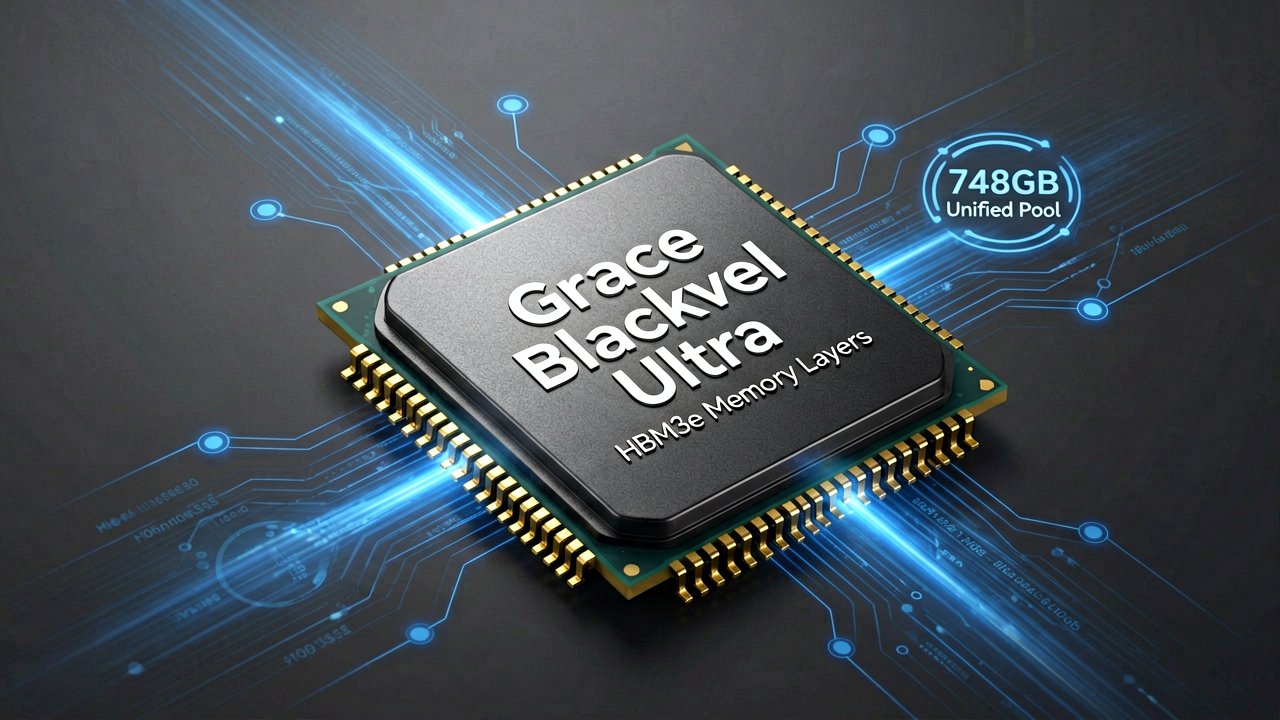
ASUS has officially cracked the code on bringing true, data-center-grade artificial intelligence infrastructure into an office environment with the launch of the ASUS ExpertCenter Pro ET900N G3. Built around the revolutionary NVIDIA DGX Station architecture, this deskside behemoth skips the usual compromise of stripped-down desktop parts. Instead, it places the formidable NVIDIA GB300 Grace Blackwell Ultra Desktop Superchip right beneath your desk, eliminating the latency, cloud subscription fees, and intense privacy anxieties that typically plague massive modern machine learning operations.
Under the hood, the engineering collaboration pays massive dividends via a tightly coupled compute layout. The system discards traditional, detached motherboard architecture in favor of an ultra-high-bandwidth NVIDIA NVLink-C2C interconnect. By linking a 72-core Arm Neoverse V2 Grace CPU directly to a Blackwell Ultra GPU, the workstation boasts a staggering 748GB unified, coherent memory pool. For engineers, this unified design means massive LLMs and complex datasets scale natively without hitting the hard VRAM walls that traditionally bottleneck independent PCIe hardware configurations.
Unprecedented Local Throughput
The practical result of this hardware synergy is raw, unadulterated speed. The system delivers up to 20 petaflops of AI performance, effectively shifting serious deep learning workflows away from shared cloud instances into dedicated local loops. In real-world enterprise validation environments, engineering teams utilizing vLLM optimization stacks pushed the massive open-source Qwen model to an output throughput of 864 tokens per second, with combined input and output scaling topping out at 1,600 tokens per second. It is a striking indicator of how local, secure agentic AI development will operate moving forward.
Beyond raw token generation, the workstation is optimized out of the box for the comprehensive NVIDIA AI software stack, including specialized workflows like NemoClaw for developing autonomous enterprise assistants. The integration of high-speed SmartNIC connectivity and robust PCIe expansion ensures the physical chassis can easily bridge into broader high-performance compute clusters. By maintaining extreme stability under continuous, grueling simulation workloads, this deskside supercomputer provides a turnkey blueprint for research labs looking to scale their physical AI ambitions without building a dedicated server room.
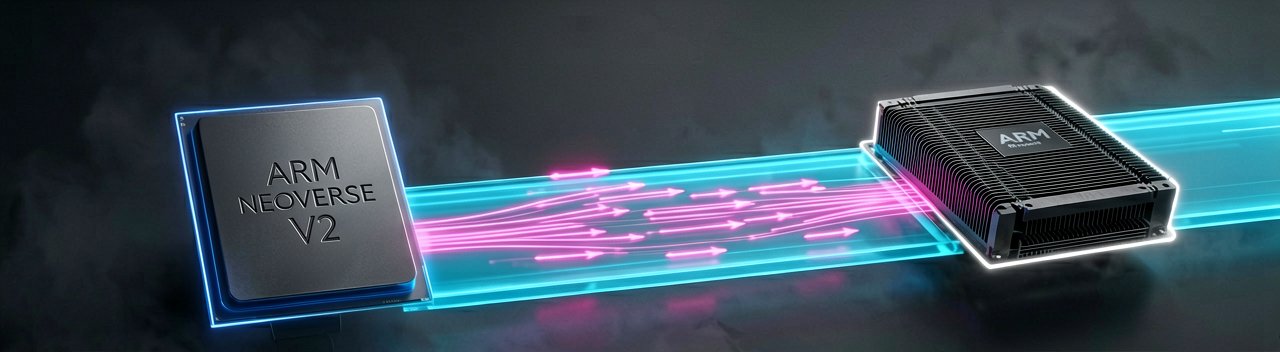
Behind the Scenes: The true engineering marvel of the ASUS ExpertCenter Pro ET900N G3 lies in how its physical and logical architectures mitigate the classic "memory wall" that cripplingly binds multi-GPU systems. Standard x86 workstations operating over traditional PCIe Gen5 lanes max out at a theoretical 128 GB/s bi-directional throughput, a crawl when feeding complex tensor operations. By abandoning this legacy bottleneck, the Grace Blackwell architecture employs an integrated NVLink-C2C (Chip-to-Chip) interface, yielding a blistering 900 GB/s of bidirectional bandwidth between the Arm Neoverse V2 CPU and the Blackwell GPU. This tight hardware cohesion enables unified memory addressability, allowing systems engineers to execute large-scale workloads without explicit, high-overhead cudaMemcpy calls across isolated bus lanes.
From a low-level systems engineering perspective, handling memory access across this 748GB unified cache requires highly strategic thread scheduling and precise memory mapping. The system thrives on the integration of HBM3e memory, operating with a bus width and clock speed configured to sustain trillions of operations per second without thermal choking. By mapping neural network weights natively into this massive coherent space, memory allocation algorithms can utilize zero-copy memory pinned allocations. This optimization ensures that processing threads on the GPU can access data structures prepared by the host Arm CPU directly, stripping away the software driver latency that historically plagued complex pipelining tasks.
Low-Level Optimization and Execution Stacks
To fully exploit this hardware layout, software engineering teams must optimize execution via custom vLLM and TensorRT-LLM runtimes tailored to the Blackwell architecture. For instance, when running inference on massive multi-billion parameter models, leveraging FP4 and FP8 quantization matrix multiplication kernels allows for unprecedented computational density. System developers use custom FlashAttention-3 implementations that map directly onto the hardware's updated Tensor Cores. These specialized kernels utilize asynchronous data transfers to pre-fetch attention matrix tiles into the GPU's high-speed shared memory while simultaneously processing the current computation chunk, hiding memory latency entirely beneath tensor execution cycles.
At the kernel execution layer, maximizing the system's 20 petaflops of AI performance demands meticulous management of CUDA streams and thread blocks to ensure maximum hardware utilization. Systems engineers focus on minimizing context switching overhead by utilizing CUDA Graphs to instantiate complex multi-stage neural network topologies. By capturing the entire execution graph—from initial token embedding layers to final softmax sampling—in a single host-side launch, the runtime environment reduces CPU-side launch overhead down to virtually zero, ensuring that the ultra-fast Blackwell execution pipes are never starved for incoming commands.

Furthermore, managing the intense thermal and power profiles inherent to a deskside supercomputer requires sophisticated hardware-level monitoring and power-capping configurations. The ET900N G3 utilizes an advanced liquid-cooling system paired with firmware-level telemetry that interfaces directly with the NVIDIA System Management Interface (NVML). Systems administrators can script dynamic power-management policies using custom Python-wrapped C libraries, striking a balance between sustaining maximum GPU boost frequencies during extended training loops and operating within strict acoustic limits suitable for standard office environments.
Reading Between the Lines: The sheer marketing gravity of a deskside AI supercomputer tends to obscure a fundamental tension in enterprise IT procurement: the economic reality of localized compute versus the operational flexibility of the cloud. While ASUS paints a compelling picture of local autonomy and zero data egress fees, dropping a 20-petaflop Blackwell station into a standard office environment forces systems engineers to confront immediate architectural contradictions. It is an impressive engineering feat to compress this tier of compute into a workstation chassis, but localizing hardware means inheriting the very management overhead that the enterprise cloud was designed to abstract away.
The core contradiction lies in the utilization paradox of specialized silicon. A cloud-based cluster can be reallocated, spun down, or shared across multi-tenant teams instantly, ensuring that expensive hardware rarely sits idle. The ExpertCenter Pro ET900N G3, conversely, represents a massive upfront capital expenditure locked into a single physical location. If an engineering team’s development cycles dip, or if workflows pivot away from heavy local fine-tuning toward lightweight API consumption, this powerhouse rapidly transforms into the world's most expensive paperweight, silently drawing idle power while its market value depreciates at the speed of modern hardware cycles.
The Realities of Office Integration
Furthermore, the physical reality of the "deskside data center" rarely aligns perfectly with office logistics, no matter how advanced the liquid cooling claims to be. Dissipating the thermal energy generated by a unified Grace Blackwell platform running at full tilt requires moving massive amounts of heat out of the chassis. While acoustic engineering can muffle the high-pitched whine of traditional server fans, the laws of thermodynamics remain unyielding; that energy is dumped directly into the room. Unless an enterprise plans to overhaul its office HVAC infrastructure, localized deployments of this scale may inadvertently turn engineering offices into literal hot zones during prolonged training loops.
Software lifecycle fragmentation presents another layer of friction that requires measured skepticism. NVIDIA’s proprietary software ecosystem, while undeniably dominant, binds organizations to a monolithic stack that dictates development velocity. Relying on specialized local runtimes means software engineers must continuously patch, configure, and maintain local drivers and CUDA environments across an internal fleet. This hidden labor cost frequently offsets the projected savings of skipping cloud subscription fees, turning what was marketed as a turnkey hardware asset into a continuous software maintenance commitment.
"We have officially reached the point where you can harness the raw computing power of a mid-2010s national laboratory right next to your lukewarm morning coffee—assuming, of course, your office circuit breaker can handle the strain and you don't mind your desk doubling as a space heater."
Artūras Malašauskas is an AI Systems Integrator with 20+ years of production-grade web engineering experience. He has designed, shipped, and scaled enterprise Python/PHP systems for logistics, SaaS, and public-sector clients. For the past year, he has focused exclusively on AI integrations: deploying open-source LLMs, building generative media pipelines (image, audio, video), and engineering multi-agent workflows for real production environments. His standard: reproducibility, security, cost-efficient inference—no vaporware. He documents and evaluates emerging AI tooling, separating verified capabilities from marketing noise. Technical editor at: muza-ai.eu, ai-verslas.lt, ai-naujinos.lt Connect on LinkedIn
Comments