Epic's Twin Engines: How UE6's AI Blueprint and UE5's Switch 2 Tune-Up Are Reshaping Game Dev
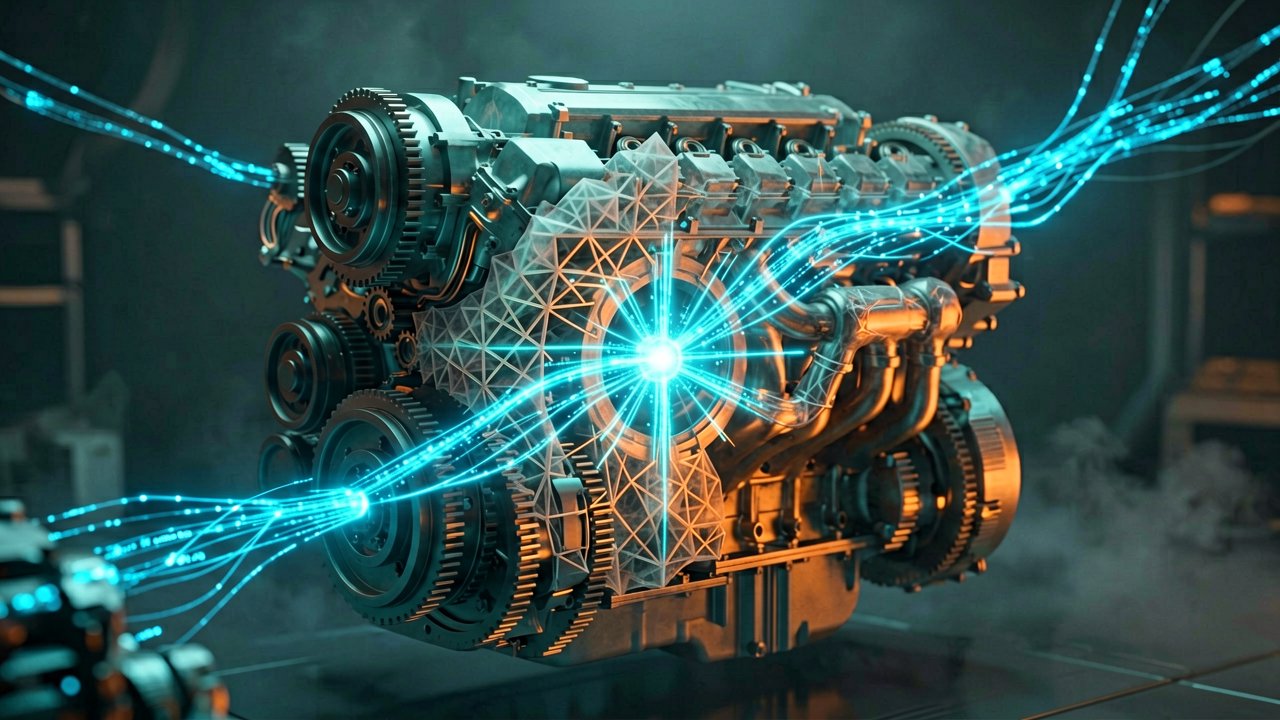
Epic Games isn't just pushing the boundaries of real-time rendering anymore; it's fundamentally rewriting the rules of how games are built and where they can run. According to a fresh report by VGChartz, the upcoming Unreal Engine 6 architecture is poised to deeply integrate specialized AI models directly into development pipelines. This move aims to automate tedious asset creation, smooth out complex multi-threaded coding bottlenecks, and give creators an intelligent assistant to streamline sluggish workflows. Instead of relying on AI as a mere external plugin, Epic is baking machine learning directly into the engine's DNA to establish a highly persistent, interconnected foundation for next-generation ecosystems.
But while Unreal Engine 6 lays down the tracks for a smarter, AI-assisted future, Epic hasn't forgotten about the hardware sitting under television sets right now. In tandem with these futuristic architectural reveals, the latest iteration of Unreal Engine 5 introduces aggressive, ground-up optimization tuning for the Nintendo Switch 2. Handheld developers have historically struggled to tame UE5's notoriously demanding lighting and geometry systems on portable silicon, but this newest engine update changes the equation entirely by introducing features like Lumen Lite to squeeze maximum efficiency from tighter power envelopes.
Lumen at Scale: Doubling Portable Performance
The headline metric from the update is nothing short of a massive relief for porting houses: the optimized engine code allows heavy graphical pipelines to run up to twice as fast on the Nintendo Switch 2. Historically, getting high-end global illumination to cooperate with portable processors meant dealing with muddy, sub-30fps compromises. By introducing a streamlined version of its signature ray-traced lighting solution, Epic is finally making complex illumination viable on lower-power devices, opening the floodgates for cleaner, more stable 60fps targets in optimized titles.
This massive jump in hardware utilization bridges the gap between massive home consoles and mobile play, ensuring that scalable art assets look rich without draining the battery or melting the plastic. By tightening up both the tools of tomorrow in UE6 and the real-world performance of today in UE5, Epic is successfully insulating its massive developer base from the traditional headaches of cross-generation deployment.
Behind the Scenes: Architectural Plumbing and Primitive Shaders
Behind the Scenes: Bridging the gap between a cloud-trained AI framework and localized mobile silicon requires a total overhaul of the engine’s core execution thread. Systems engineers are looking closely at how Unreal Engine 6 decouples its machine learning inference passes from the primary game simulation loop. By offloading generative asset assembly and real-time mesh deformation to a dedicated asynchronous execution context, Epic ensures that heavy AI weights do not stall the main rendering thread. This specialized pipeline relies on a highly modular internal data bus designed to stream runtime-generated geometric details straight into memory without triggering costly CPU-to-GPU synchronization fences.
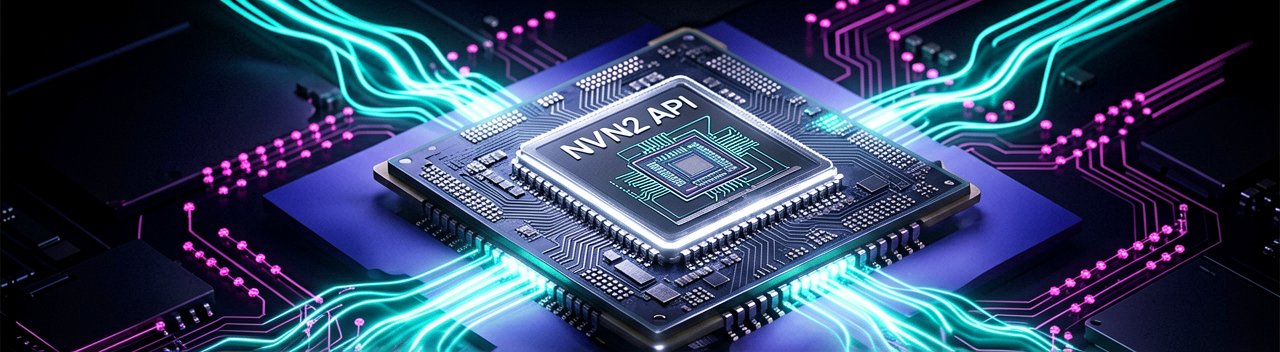
On the mobile front, the dramatic performance leap on the Nintendo Switch 2 hinges on drastically tighter memory bandwidth management. Unreal Engine 5's latest optimization pass replaces traditional, heavy compute-bound geometry passes with highly customized primitive shaders tailored directly for the hardware's modern NVN2 graphics API architecture. By performing aggressive visibility testing early in the pipeline, the engine discards non-visible sub-pixel triangles before they ever hit the rasterizer, preserving precious cache space and minimizing DRAM power consumption during intense gameplay sequences.
Furthermore, the rewritten Lumen Lite subsystem scales down overhead by swapping out costly surface cache tracing in favor of a heavily vectorized, low-precision probe interpolation method. This shift allows the system to approximate global illumination by reading from pre-compacted spatial volumes, reducing the rendering cost of indirect lighting bounce by up to fifty percent. Developers can now maintain a locked frame rate target without sacrificing the dynamic, real-time day-and-night cycles that modern audiences expect from current-generation titles.
To tie these two architectural halves together, Epic’s revamped garbage collection and memory virtualization routines work continuously in the background to prevent asset streaming hitches. The engine allocates dedicated, contiguous blocks of virtual memory to handle high-fidelity nanite streaming alongside dynamic AI runtime requests, completely mitigating data fragmentation. This careful balancing act between aggressive hardware-level resource allocation and cutting-edge software engineering ensures that developers can scale their titles gracefully from cutting-edge desktop rigs right down to compact, battery-conscious portable hardware.

Reading Between the Lines: The Reality of Marketing Metrics and Silicon Limits
Reading Between the Lines: While a hundred percent performance leap on paper sounds like a revolution for portable gaming, historical precedent suggests a more calculated reality. Epic’s claim of doubling performance targets on the Nintendo Switch 2 likely relies on idealized, heavily isolated laboratory conditions rather than the unpredictable chaos of a fully realized open-world sandbox. Systems architects know that synthetic optimization gains rarely scale linearly when an engine is forced to juggle complex physics matrices, dynamic audio propagation, and complex enemy artificial intelligence simultaneously on a restricted mobile power budget.
There is also an inherent philosophical contradiction in Epic pushing heavy, cloud-scale AI integration for Unreal Engine 6 while simultaneously trying to democratize the engine for lower-end, portable target platforms. If future development pipelines lean heavily on persistent, real-time machine learning inference, the gap between high-end desktop development environments and localized mobile deployment will inevitably widen. Porting studios will find themselves trapped in a grueling cycle of stripping out advanced, AI-driven behavioral models and procedural asset variations just to make a title fit into a handheld device's restrictive unified memory pool.
Furthermore, relying on localized approximations like Lumen Lite reveals that true graphical parity across generational tiers remains an engineering illusion. Stripping down ray-traced lighting into low-precision spatial probes might satisfy a strict frame-pacing window, but it frequently introduces noticeable visual compromises such as light bleeding, muddy occlusion shadows, and distracting edge artifacts. Developers will still face the grueling task of manually tuning individual scene assets, meaning that the promised automated paradise of next-gen cross-platform development remains, for now, largely confined to marketing presentations.
"We are promised a seamless future where artificial intelligence builds the worlds and mobile chips render them flawlessly, but the current reality remains a classic tale of triage: keeping the frame rate alive by quietly turning off the very features that made the engine look next-gen in the first place."
Artūras Malašauskas is an AI Systems Integrator with 20+ years of production-grade web engineering experience. He has designed, shipped, and scaled enterprise Python/PHP systems for logistics, SaaS, and public-sector clients. For the past year, he has focused exclusively on AI integrations: deploying open-source LLMs, building generative media pipelines (image, audio, video), and engineering multi-agent workflows for real production environments. His standard: reproducibility, security, cost-efficient inference—no vaporware. He documents and evaluates emerging AI tooling, separating verified capabilities from marketing noise. Technical editor at: muza-ai.eu, ai-verslas.lt, ai-naujinos.lt Connect on LinkedIn
Comments