Generative AI Transforms Game Development Workflows with Unreal Engine 6's AI Integration
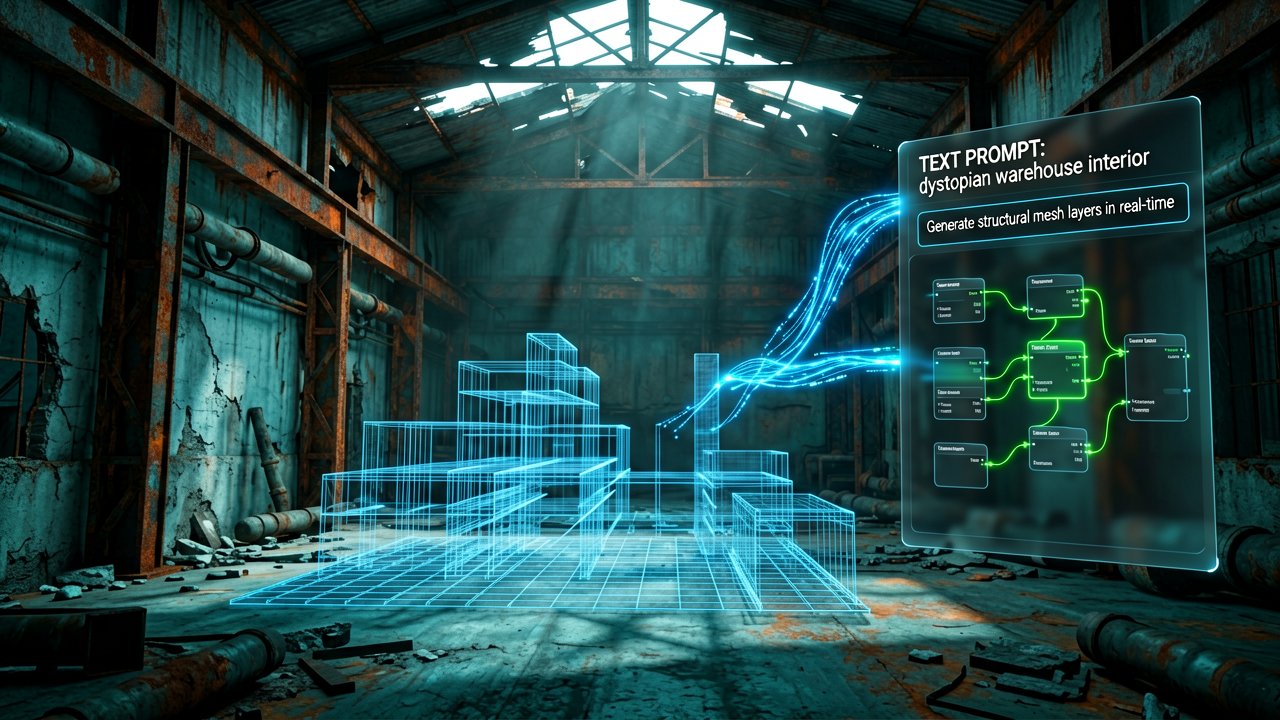
The gaming industry is undergoing a structural paradigm shift as automated tools move from external experimental novelties directly into the core middleware of game creation. At the State of Unreal keynote during Epic Games' Unreal Fest Chicago 2026, the company officially unveiled its strategic vision for Unreal Engine 6 (UE6), explicitly cementing Large Language Models (LLMs) and generative artificial intelligence as core architectural pillars. By building native bridges for foundational models, Epic Games aims to alter the economics of asset generation, scene building, and world layout, transitioning the engine from a passive rendering tool into an active, collaborative development assistant.
This massive infrastructural shift arrives at a time when the developer ecosystem is already aggressively adopting automation to counter skyrocketing production costs and unsustainable timelines. Real-world validation of this trend has saturated the market, as seen in the recent Steam Next Fest, where an unprecedented wave of independent titles featured explicit disclosures for generative AI content used in asset creation and engineering. Epic's native approach seeks to standardize these fractured experimental workflows, delivering a regulated, high-fidelity pipeline that addresses both execution speed and the preservation of granular creative control.
While the long-term road to Unreal Engine 6 targets an early access deployment in late 2027, Epic Games has already launched immediate solutions to bridge the gap. The company rolled out its Unreal Engine 5.8 update, featuring the groundbreaking Unreal MCP (Model Context Protocol) plugin. This tool allows external LLMs to plug directly into the engine, enabling real-time, text-prompted scene modifications and asset placement, signaling a permanent evolution in how virtual worlds will be constructed moving forward.
Deep LLM Integration and the Unreal MCP Architecture
Unlike previous development iterations that relied on disconnected third-party plugins, Epic's new strategy natively connects industry-leading foundational models directly to the engine's internal data structures. The engine utilizes the Model Context Protocol to establish a real-time bidirectional communication stream between the engine's editor and advanced models like Google's Gemini and Anthropic's Claude, as reported by Gadgets360.
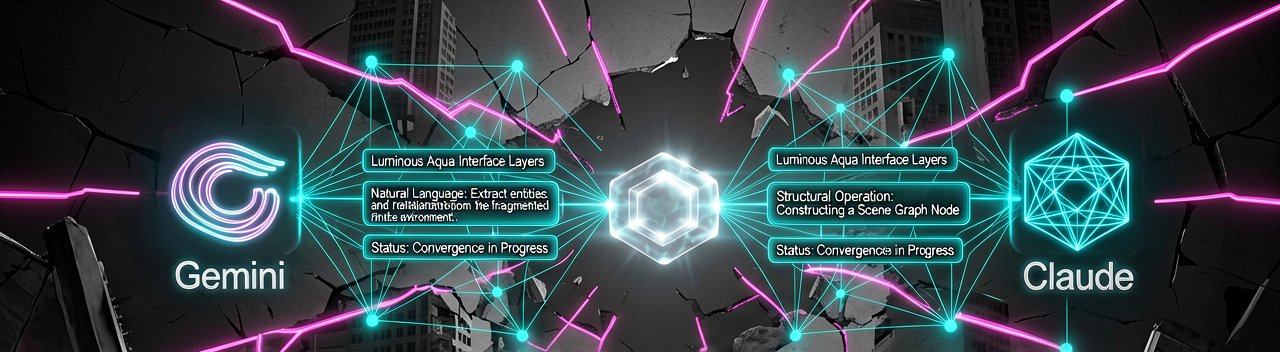
During live technical demonstrations, developers utilized contextual chat interfaces to instantly populate, arrange, and alter environments using simple text commands. Rather than manually browsing local asset folders, dragging meshes, adjusting transform gizmos, and setting up point lights, engineers can instruct the integrated AI to furnish an empty room or dynamically shift environmental lighting parameters based on a reference photograph. This interface translates natural language into precise structural operations, allowing developers to execute complex layout shifts in seconds—a workflow that previously demanded hours of manual clicking.
Eliminating the Burden of Tedious Operational Labor
The core philosophy driving Epic Games' implementation focuses on the systematic eradication of repetitive, non-creative maintenance tasks. According to statements detailed by Video Games Chronicle, the integration is designed specifically to help production teams build content faster while reducing the friction of level setup, complex character rigging, particle system population, and the calculation of skinning bone weights.
By delegating automated tasks to internal models, technical artists can bypass mechanical optimization loops and dedicate their cognitive energy toward high-level mechanical iteration, narrative framing, and gameplay balancing. This automated assistance effectively flattens the steep learning curve for complex engineering pipelines, acting as a massive force multiplier for smaller independent studios that lack the human resources necessary to hand-craft expansive AAA-grade assets from scratch.
Unifying the Creator Ecosystem and the Versatile Metaverse
The introduction of AI-assisted generation coincides with a radical consolidation of Epic Games' development platforms. Over the next two years, Epic plans to merge the standard Unreal Engine pipeline with the Unreal Editor for Fortnite (UEFN) into a singular, unified platform under the Unreal Engine 6 banner, as highlighted by Game Developer.
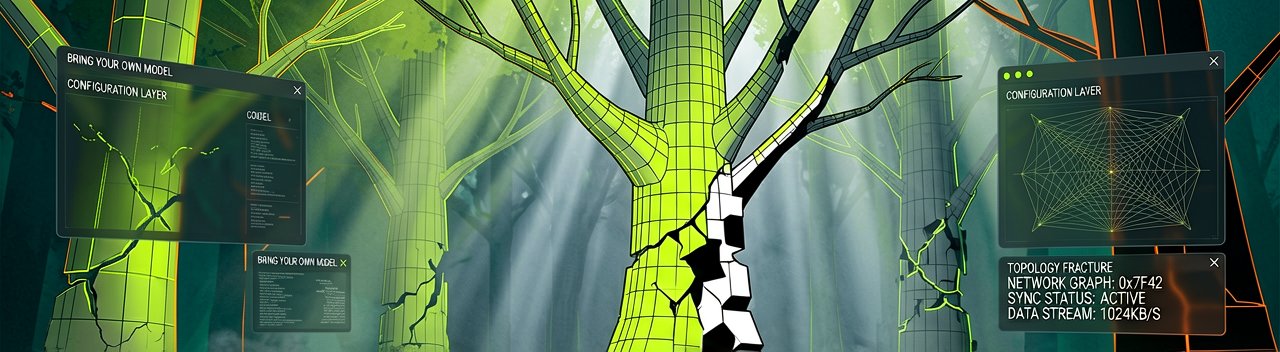
This synthesis depends heavily on Epic's new Scene Graph framework and the Verse programming language, which are designed to support highly portable, interoperable game code and intelligent assets across diverse ecosystems. By pairing open asset portability with flexible "bring-your-own-model" AI configurations, Epic is building a shared live economy where creators can effortlessly deploy smart, AI-generated content across standalone commercial titles and massive, persistent virtual platforms simultaneously.
Market Blowback and Ethically Conscious Implementation
Despite the massive efficiency gains promised by these automated pipelines, the immediate industry response highlights a deeply fractured developer landscape. As detailed by Gameranx, the announcement triggered swift public backlash from prominent indie creators, including threats of project cancellations, underscoring intense community anxieties regarding data sourcing, intellectual property protections, and the displacement of human artists.
Recognizing these severe cultural and legal friction points, Epic's executive leadership has taken a transparent stance regarding user autonomy. The integration pipeline explicitly allows studios to bring their own preferred, securely trained models rather than forcing a centralized data solution, ensuring that human creators maintain absolute final editing control and manual override capabilities over every AI-generated asset within the production pipeline.
Behind the Scenes of the Procedural Revolution
Beneath the Marketing Buzz: The sudden integration of Model Context Protocol architectures into Unreal Engine 5.8 and the blueprinting for Unreal Engine 6 represents more than an engineering upgrade; it is a defensive economic maneuver against the crushing weight of modern AAA production budgets. For over a decade, game development costs have escalated exponentially, with a significant percentage of capital funneled into labor-intensive micro-tasks like manual geometry cleaning, UV unwrapping, and repetitive collision-box placement. Senior technical directors have long warned that the current trajectory of blockbuster development—requiring five-to-seven-year production cycles and hundreds of millions of dollars—is fundamentally unsustainable for all but a handful of megacorporations.
Veteran developers view this transformation through the lens of historical automation cycles, drawing direct parallels to the introduction of speedtree for foliage generation in the mid-2000s or the industry-wide shift toward node-based material editors. In those eras, initial fears of creative homogenization eventually gave way to a massive expansion of scale and fidelity, as artists were freed from the mechanical drudgery of drawing individual leaves or writing raw HLSL shader code. The distinction today lies in the cognitive nature of the automation, where the engine is no longer just executing a rigid mathematical algorithm, but interpreting abstract, creative intent from a natural language prompt.
This paradigm shift changes the daily reality on the studio floor, transitioning the role of the environment artist from a meticulous digital sculptor to a high-level creative curator. In traditional pipelines, a developer might spend an entire week building out the mundane interior of a generic dystopian warehouse before getting to iterate on the specific, narrative-driven set pieces that players actually remember. With native LLM integration, that foundational layout can be generated, lit, and structurally optimized within seconds, allowing teams to instantly spend their limited time tuning unique interactive elements and mechanical nuance.
However, the transition is exposing a widening philosophical rift between studio executives seeking margin relief and grassroots developers fiercely protective of creative integrity. Mid-level artists and animators express valid concerns that widespread reliance on automated middleware will erode the entry-level junior positions that traditionally serve as the training grounds for the next generation of industry talent. If the industry automates the "tedious labor" that junior staff usually cut their teeth on, the bridge between an ambitious graduate and a seasoned senior architect risks being permanently severed.
Ultimately, Epic Games' "bring-your-own-model" architecture serves as a clever diplomatic compromise designed to navigate this highly volatile legal and cultural landscape. By decoupled the engine infrastructure from any specific, controversial training dataset, Epic shifts the burden of ethical compliance directly onto the individual studios. Larger publishers will likely spend millions training proprietary, closed-loop models exclusively on their own internal catalog of historic assets, while smaller indie teams will rely on open-source, permission-verified models to remain competitive in an increasingly demanding marketplace.
Reading Between the Lines: The Reality of Automated Creation
Reading Between the Lines: The corporate narrative surrounding Unreal Engine 6 frames native AI integration as a democratic liberation for creators, yet this techno-optimism glosses over a glaring structural contradiction. Epic Games promises that automating the "tedious work" will allow developers to focus purely on high-level creative vision. However, in a hyper-competitive attention economy, total elimination of friction rarely results in extra leisure or pure artistic contemplation. Instead, history dictates that when the cost of content production drops to near zero, the market reacts by demanding an astronomical increase in volume. Studios using these tools may simply find themselves trapped on a faster, automated treadmill, tasked with managing massive, procedurally bloated worlds that require even more human oversight to keep from feeling hollow.
Furthermore, the "bring-your-own-model" approach, while politically expedient, introduces a profound technical paradox regarding the uniqueness of independent games. If a vast swath of mid-tier and indie studios utilize the same handful of open-source foundational models to populate their environments, generate their collision logic, and write their auxiliary Verse scripts, a subtle stylistic stagnation is almost inevitable. The distinct, quirky imperfections that historically defined breakthrough indie hits risk being ironed out by optimization models trained on the mathematical averages of existing games. The industry faces a future where games become structurally flawless yet aesthetically indistinguishable, substituting authentic human idiosyncrasy for optimized corporate synthesis.
There is also a severe disconnect between the immediate technical realities of game engineering and the abstract promises of prompt-based world-building. Game development is notoriously fragile, a delicate house of cards where a minor collision bug or a misplaced trigger volume can break an entire 80-hour experience. Relying on an LLM to generate real-time scene graphs and complex layout alterations introduces non-deterministic variables into an engineering discipline that demands absolute precision. Debugging a broken game loop is painful enough when a human wrote the code; diagnosing a cascading engine failure caused by an opaque, black-box AI model prompt could easily transform saved production time into an architectural nightmare of endless troubleshooting.
Ultimately, Epic's strategic alignment of Unreal Engine 6 with a unified metaverse pipeline suggests that the primary beneficiary of this automation is not the traditional game developer, but the platform holder itself. By lowering the technical barrier to entry so dramatically, Epic turns every casual user into a high-speed content node for its broader ecosystem. The long-term goal appears less about rescuing AAA studios from their ballooning budgets and more about ensuring a constant, algorithmic influx of user-generated digital assets to populate a persistent, monetizable virtual landscape.
"We are rapidly approaching a golden age of game development where an aspiring creator can manifest a sprawling, photorealistic digital universe with nothing more than a few typed sentences and an ideas folder—only to realize that every other player on earth has generated three identical universes before lunch, leaving us all with an infinite supply of breathtaking worlds that nobody actually has the time to play."
Artūras Malašauskas is an AI Systems Integrator with 20+ years of production-grade web engineering experience. He has designed, shipped, and scaled enterprise Python/PHP systems for logistics, SaaS, and public-sector clients. For the past year, he has focused exclusively on AI integrations: deploying open-source LLMs, building generative media pipelines (image, audio, video), and engineering multi-agent workflows for real production environments. His standard: reproducibility, security, cost-efficient inference—no vaporware. He documents and evaluates emerging AI tooling, separating verified capabilities from marketing noise. Technical editor at: muza-ai.eu, ai-verslas.lt, ai-naujinos.lt Connect on LinkedIn
Comments