Nexon's Strategic Data Integration Paves the Way for AI-Driven Gaming Evolution

The global gaming market is undergoing a seismic structural shift where the technical barriers to game production are collapsing under the weight of automation. According to statements from the June 2026 Nexon Developers Conference (NDC), the annual volume of game launches on platforms like Steam has ballooned toward 20,000 titles, yet a mere fraction manage to secure sustainable player engagement. In this hyper-saturated landscape, South Korean gaming giant Nexon is systematically deploying advanced artificial intelligence and centralized data analytics to future-proof its sprawling intellectual property portfolio. By establishing unified corporate infrastructure that converts raw telemetry into structured, machine-learning-ready assets, the publisher is pioneering a highly defensible strategy focused on compounding the value of long-term user relationships.
At the center of Nexon’s operational modernization is the elimination of historical data fragmentation across individual game production teams. Previously, games operated on isolated technology stacks that created severe data silos and stymied organization-wide collaborative analytics. To resolve this structural bottleneck, Nexon partnered with Snowflake to establish "MonoLake," an enterprise-wide unified data platform capable of processing over 45 billion logs and 100 terabytes of incoming information daily, as detailed by Snowflake. This data democratization framework empowers over 2,000 internal producers and consumers to securely access business intelligence, driving an estimated $4.5 million in annual infrastructure cost reductions while yielding a 770% optimization in query performance. Nexon is currently advancing this architecture into "MonoLake 2," explicitly designed to curate an "AI-Ready Data" ecosystem where machine learning algorithms natively comprehend and utilize contextual live-service information, per insights from Inven Global .
Nexon’s dual-pronged mandate leverages these data foundations to simultaneously optimize game development lifecycles and heighten player immersion through its dedicated research branch, Intelligence Labs. Operating with an elite team of hundreds of data engineers, the lab has developed and deployed "GameScale," a proprietary solution package that manages everything from automated fraud detection to personalized, behavior-based matchmaking across flagship franchises like MapleStory and Sudden Attack, according to The Investor. Concurrently, Nexon is integrating deep learning models such as the "Nexon Voice Creator" text-to-speech engine and dynamic AI NPCs into active production pipelines, reducing mundane, repetitive scripting overhead for subsidiaries like Embark Studios. By utilizing machine learning as an infrastructure tool rather than a human replacement, Nexon is compressing development timelines while ensuring that future titles retain the deep, inimitable community context required to dominate a crowded attention economy.
Centralizing Telemetry to Fuel Advanced Machine Learning
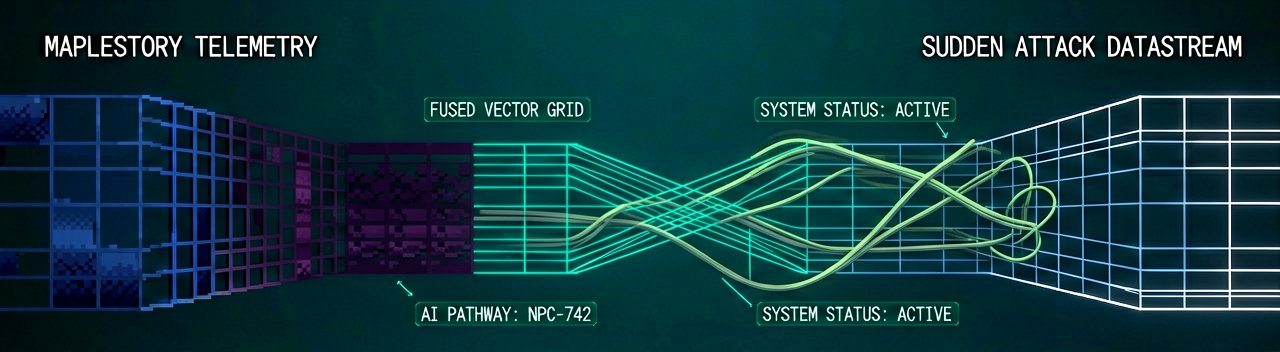
The operational pivot from decentralized game databases to MonoLake represents a fundamental shift in how gaming enterprises capitalize on live-service infrastructure. In historical development models, telemetry data from multiplayer sessions, microtransactions, and player progression remained locked within the specific database architecture of that individual title. By unifying these disparate pipelines into a singular data cloud, Nexon allows machine learning models to cross-reference behaviors across entirely different genres and demographics. This high-density data repository serves as the foundational training set for predictive player-churn models and real-time security systems. Without this centralized repository, the large language models (LLMs) and deep reinforcement learning tools currently being tested would lack the contextual volume necessary to output accurate, non-biased operational decisions.
Enhancing Player Experience Through Personalization and Context Capital
At the 2026 NDC opening keynote, executive leadership emphasized that as artificial intelligence makes building games faster and cheaper for the entire industry, competitive advantages will no longer be determined by graphical fidelity or raw code implementation. Instead, market victory will belong to studios possessing "context capital"—the uncopyable accumulation of community culture, player trust, and historical interactions, as reported by Aju Press. Nexon is leveraging machine learning to actively deepen this context by shifting from rigid, one-size-fits-all game design to hyper-personalized user experiences. Through AI-driven matchmaking that pairs users based on playstyle preference rather than basic skill metrics, and the testing of natural-language AI non-player characters, the company creates an adaptive environment where the game world evolves around individual player histories, vastly increasing long-term retention metrics.
Optimizing Development Cycles and Studio Efficiency
The macroeconomic realities of modern game development—marked by rising studio headcount costs and elongated production timelines—have forced major publishers to aggressively pursue operational efficiency. Nexon’s deployment of generative AI and machine learning tools focuses on eliminating repetitive, mundane tasks that traditionally delay game launches. For instance, the integration of advanced text-to-speech models allows developers to implement dynamic in-game commentary and complex voice-acted ping systems without requiring actors to return to recording studios for every minor content patch, a process validated by Game Developer. By streamlining world-building, scenario writing, and automated quality assurance testing through these specialized models, Nexon lowers its floor for contribution margins. This strategy allows the company to confidently fund ambitious, innovative titles while maintaining highly stable, highly profitable live operations across its existing multi-generational intellectual properties.
The Architectural Evolution of Context Capital
What Most Reports Miss: The shift toward artificial intelligence at Nexon is not merely a technical upgrade, but a fundamental re-engineering of corporate data custody designed to survive a collapsing digital advertising ecosystem. In the past, video game publishers heavily relied on third-party marketing networks and external demographic profiles to acquire users and optimize their product positioning. As modern privacy regulations and platform tracking restrictions dismantled traditional ad targeting, Nexon realized that the most valuable behavioral asset in existence was the telemetry generated inside its own servers. Centralizing this data under the MonoLake infrastructure allowed the enterprise to transition from a reactive publisher to an independent data sovereign, extracting deep behavior patterns that external competitors cannot replicate.
From a historical perspective, this shift explains why legacy franchises like MapleStory continue to post resilient monetization figures decades after their initial release. Traditionally, game maintenance relied on subjective feedback loops gathered from community forums or high-level monthly metrics. By applying predictive machine learning directly to unified telemetry pipelines, product managers can now spot localized economic imbalances or player frustration points days before they manifest as community complaints. For instance, algorithmic tracking can detect when a subtle shift in item drop rates inadvertently alienates middle-tier spenders, allowing live-operations teams to deploy targeted updates that rebalance the ecosystem before player churn can occur.
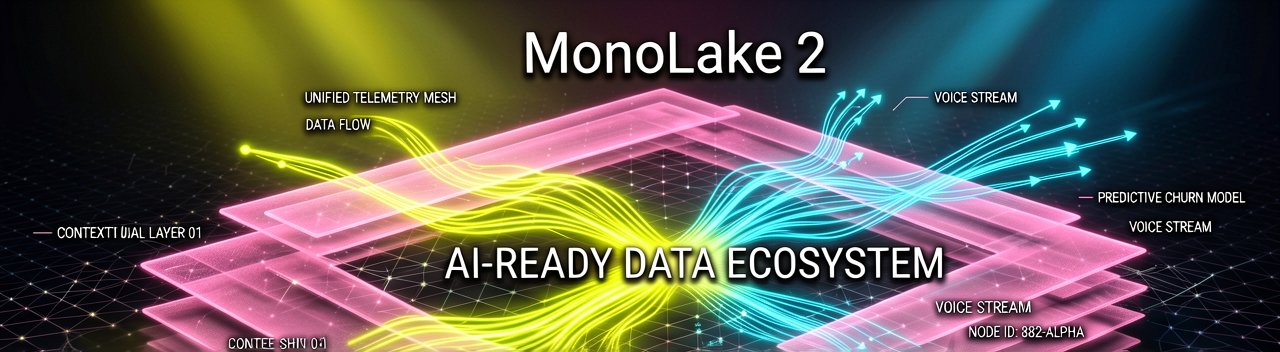
Stakeholder perspectives within Nexon’s development studios reveal a nuanced cultural evolution regarding the integration of these automated workflows. While early industry narratives frequently posited that machine learning would replace creative artists and narrative designers, internal initiatives at Intelligence Labs focus on expanding human capacity. By shifting mundane asset optimization, localization variants, and compliance testing to automated pipelines, engineers and writers are freed to focus on high-concept world design and deep narrative branching. This structural reallocation of creative energy reduces burnout across engineering teams, accelerating internal development cycles without sacrificing the human elements that define hit game design.
Ultimately, the monetization of this data infrastructure goes far beyond cutting operational expenses. By building a unified data framework, Nexon has turned its corporate infrastructure into an expansive engine for growth, allowing the company to rapidly launch and scale new intellectual properties with pre-optimized retention mechanics. The systemic value of an AI-driven development pipeline lies in its ability to compound learnings across disparate projects, ensuring that lessons learned from tactical shooters can instantly optimize the player onboarding flow of an upcoming massive multiplayer online game. This interconnected web of data, technology, and player psychology positions the company to dominate an unpredictable digital landscape where fast, data-informed adaptation is the only true barrier to entry.
The Pragmatic Friction of Algorithmic Creativity
Reading Between the Lines: The corporate enthusiasm surrounding Nexon’s automated data pipelines masks a deeper, industry-wide paradox: while machine learning models are exceptional at optimizing engagement within known parameters, they are fundamentally incapable of predicting the irrational, lightning-in-a-bottle cultural breakthroughs that define the gaming industry. By relying heavily on unified historical telemetry from MonoLake, Nexon risks trapping its development teams in an echo chamber of past consumer behaviors. The algorithm can effortlessly determine how to optimize a microtransaction loop in an existing live-service title, but it cannot invent an entirely new genre. Over-indexing on historical data introduces a structural bias toward risk aversion, potentially blinding the company to volatile, unquantifiable shifts in player taste that defy existing data models.
Furthermore, the claim that data democratization across thousands of internal producers eliminates friction overlooks the stark operational realities of game production. When telemetry is centralized and transformed into rigid, machine-learning-ready assets, individual creative autonomy often clashes with statistical optimization. A game director wishing to implement an unconventional mechanic may find their creative vision vetoed by an intelligence model that flags the feature as a churn risk based on historical correlations. This tension creates a quiet corporate contradiction where the quest for absolute efficiency can sterilize the eccentricities, subversions, and design flaws that frequently give cult-classic video games their unique identity and long-term cultural staying power.
From a market standpoint, Nexon's aggressive push into dynamic AI non-player characters and automated voice generation faces looming intellectual property and regulatory hurdles that corporate press releases rarely acknowledge. While these technologies promise to dramatically compress development timelines, they exist in a legal grey area regarding training data origins and union protections for creative talent. Should global regulators tighten restrictions on automated content generation or demand strict algorithmic transparency, Nexon's heavily integrated pipelines could face costly retrofitting requirements. The competitive advantage of "context capital" is only as durable as the legal and social frameworks that permit its collection and automated deployment.
As the entire gaming landscape rushes to replicate this centralized data blueprint, the ultimate trajectory of AI-driven development is likely not a golden age of infinite variety, but an era of extreme stylistic homogenization. When every major publisher utilizes similar enterprise data clouds to eliminate operational risks, games across the industry will inevitably begin to feel like they were designed by the same committee. Nexon’s structural survival will depend entirely on whether its executive leadership retains the institutional courage to occasionally ignore the flawless, highly optimized data reports in favor of a messy, human-driven creative gamble.
"Ultimately, the dream of an fully automated, data-perfect video game engine overlooks the fundamental nature of the consumer. If you perfectly optimize every single millisecond of a player's psychological journey based on forty-five billion daily data points, you haven't built a portal to another world—you've just built a remarkably complex spreadsheet that occasionally renders explosions."
Artūras Malašauskas is an AI Systems Integrator with 20+ years of production-grade web engineering experience. He has designed, shipped, and scaled enterprise Python/PHP systems for logistics, SaaS, and public-sector clients. For the past year, he has focused exclusively on AI integrations: deploying open-source LLMs, building generative media pipelines (image, audio, video), and engineering multi-agent workflows for real production environments. His standard: reproducibility, security, cost-efficient inference—no vaporware. He documents and evaluates emerging AI tooling, separating verified capabilities from marketing noise. Technical editor at: muza-ai.eu, ai-verslas.lt, ai-naujinos.lt Connect on LinkedIn
Comments