Unreal Engine 6 and the Death of the Fork: Epic’s Unified Architecture Explained

Epic Games isn't just upgrading its flagship technology; it's completely rewriting the rulebook on how game engines are maintained, shipped, and scaled. According to an official announcement by Epic's EVP of Development Marcus Wassmer on the Unreal Engine Blog, the studio plans to completely merge the core Unreal Engine 5 development branch with the Unreal Editor for Fortnite (UEFN) into a singular, integrated ecosystem known as Unreal Engine 6. This consolidation eliminates the fragmented workflow that forced developers to choose between traditional C++ standalone pipelines and the rapidly evolving user-generated content framework of the Fortnite ecosystem. Epic is moving away from purely chasing visual fidelity to focus entirely on structural interoperability, creating an environment where a single compiled asset can fluidly operate across isolated games and platforms.
At the center of this architectural shift is a brand-new gameplay framework called Scene Graph, built completely from scratch using the Verse programming language. For years, developers have struggled with the bloating of Epic’s traditional Actor and Blueprint systems, which often suffered from massive performance overhead when managing thousands of complex objects. Verse acts as a transactional programming model, designed to guarantee that gameplay logic executes identically across local clients and cloud servers without demanding manual replication code. By making code execution transactional, the engine can safely multithread simulations, a feat that traditional single-threaded systems in prior iterations routinely choked on. As reported by 80 Level, while traditional Blueprints and Actors will remain present in early iterations of the engine, Epic plans to gradually deprecate them as the Verse-driven framework reaches full technical maturity.
Solving the CPU Bottleneck and Scaling Simulations
The practical engineering benefits of this unified model directly address the industry's most notorious technical headache: CPU-bound frame stuttering. Unreal Engine 5 earned a reputation for spectacular graphics through Lumen and Nanite, but it frequently bottlenecked modern processors due to its heavily single-threaded simulation loop, leading to severe traversal stutter during open-world asset streaming. By restructuring the backend into a modular layout, Unreal Engine 6 brings multi-threaded simulation to the forefront, allowing underlying systems to distribute game logic dynamically across modern multi-core processors. Rather than burning rendering cycles waiting for game logic to catch up on a single main thread, the unified architecture ensures that asset streaming, physics calculations, and script execution operate on separate, concurrent tracks.
This massive multithreading capability isn't just about smoothing out frame rates on consumer hardware; it is built to support server infrastructures capable of orchestrating massive, persistent worlds. Epic’s overarching technical goal for the engine involves networking upgrades that allow data centers to seamlessly communicate, coordinating single simulations scaled for millions of concurrent players. This architectural flexibility is engineered to run down to highly optimized cross-platform builds, giving creators a direct path to deploy games as standalone executables or plug them directly into shared economies. The roadmap laid out at the State of Unreal event targets an Early Access release for Unreal Engine 6 at the end of 2027, giving the industry roughly eighteen months of public testing before a full commercial rollout introduces this definitive shift in production pipelines.
Behind the Scenes: Unlocking Microsecond Precision in the Unified Runtime
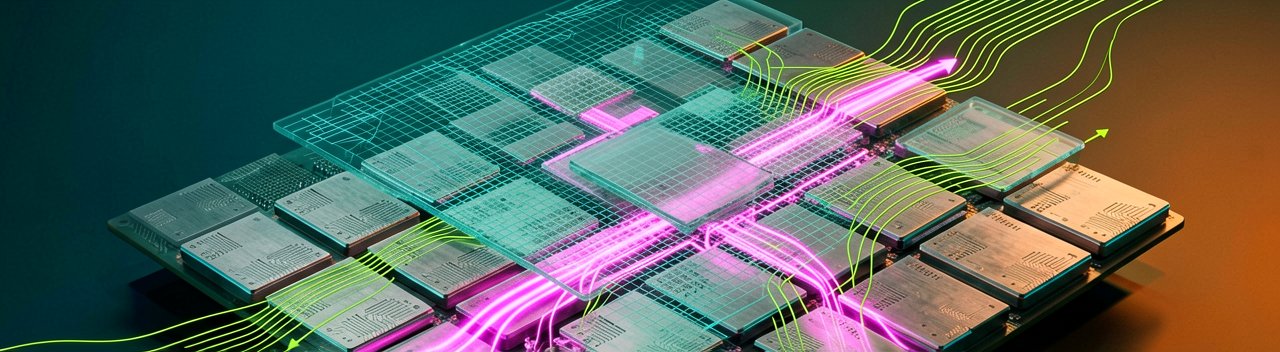
The true architectural marvel of the unified Unreal Engine 6 architecture lies beneath the high-level script interfaces, specifically within how memory allocation and cache lines are optimized for highly concurrent execution. In older iterations of the engine, the traditional object system relies on scattered, fragmented heap allocations that continuously cause CPU cache misses when iterating through massive game worlds. To solve this, the unified Scene Graph introduces a data-oriented execution model that packs structural component data into contiguous arrays of memory. By organizing entity attributes sequentially, the CPU can prefetch relevant data blocks long before execution threads request them, effectively reducing memory latency to a mere fraction of what traditional object-oriented architectures require during heavy computational load.
At the compiled execution layer, the transition to the Verse virtual machine enforces strict mathematical immutability by default, which changes the game for compiler optimization. Because variables within a transactional block cannot be mutated unexpectedly by parallel operations, the compiler can safely reorder instructions and vectorize heavy loops using SIMD (Single Instruction, Multiple Data) processing. In a real-world scenario, this means a physics or logic simulation dealing with tens of thousands of interacting projectiles can execute concurrently across a 16-core processor without needing heavy, blocking synchronization primitives. The system completely bypasses the traditional thread-locking overhead that frequently causes micro-stuttering in complex, interconnected gameplay systems.
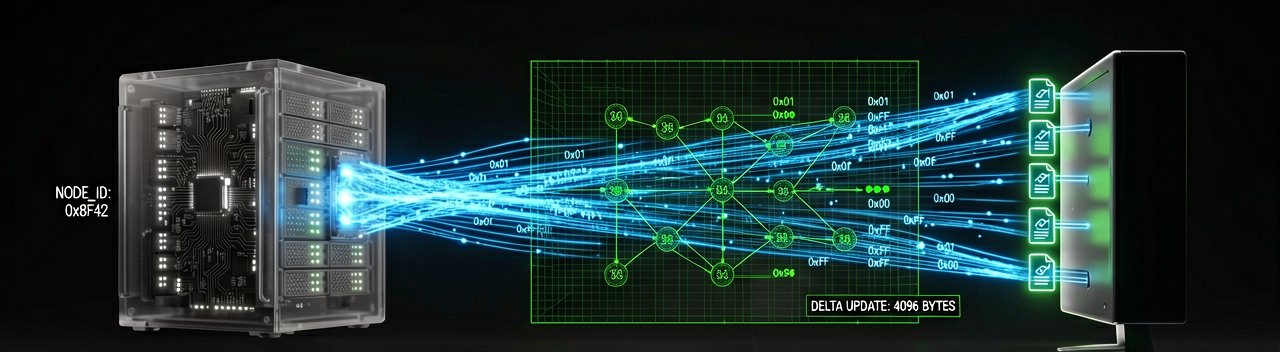
Furthermore, Epic has radically overhauled the replication layer to merge server-authoritative networking with local client prediction seamlessly. The unified engine utilizes a state-snapshot compression technique that delta-encodes modifications made strictly within the Verse transactional memory space. Instead of serializing an entire object's state across the network, the engine detects bit-level differentials inside the contiguous memory blocks and broadcasts only the precise sub-byte updates to the cloud infrastructure. This minimizes the packet payload size significantly, allowing the server framework to handle massive player densities without suffering from network buffer bloat or severe tick-rate degradation.
Resource management also benefits from a completely rewritten garbage collection pipeline designed specifically to eliminate the dreaded frame-time spikes associated with memory reclamation. Traditional engines pause execution threads to scan the object dependency tree for orphaned assets, a process that invariably drops frames when clearing large sections of memory. Unreal Engine 6 leverages a lock-free, concurrent reference-counting allocator that safely reclaims unused memory slots in the background while the main simulation thread continues uninterrupted. By decoupled memory lifecycle management from the rendering loop, the engine achieves a level of deterministic frame-pacing that systems engineers have spent over a decade trying to implement via custom engine forks.
Reading Between the Lines: The Structural Paradox of Epic’s Metaverse Mandate
Epic’s vision of a completely borderless asset economy sounds incredibly liberating on paper, but a realistic assessment of engineering trade-offs reveals some massive operational contradictions. The core promise of Unreal Engine 6 relies on the idea that content, custom code pipelines, and player economies can effortlessly hop between standalone AAA blockbusters and small, user-generated spaces inside the Fortnite ecosystem. However, game development is fundamentally a game of cutting corners and hyper-optimizing for explicit, fixed constraints. Forcing a single, unified architectural design to satisfy both a highly competitive, lightning-fast esports game like Rocket League and a localized, casual social space creates an immense tension that the engine's compilation tools may struggle to balance behind the scenes.
The decision to gradually deprecate Blueprints and traditional Actors in favor of the newer Scene Graph framework represents a massive gamble on community goodwill and developer re-education. Blueprints democratized game development for an entire generation of technical artists and indie creators, establishing a massive, decade-old ecosystem of documentation and marketplace plugins. Sweeping that foundational layer away means forcing studios to retrain entire engineering teams to adopt functional, transactional programming patterns in Verse. While this paradigm shift elegantly solves deep multi-threading issues, it introduces an exceptionally steep learning curve that could inadvertently alienate the precise grassroots community Epic needs to populate its expansive metaverse platforms.
Furthermore, Epic’s aggressive push into generative, AI-assisted development workflows within the new architecture—notably via the experimental infrastructure integrated into the engine stack—is bound to spark heavy pushback across the industry. The studio frames these integrated models as essential tools to help lean teams rapidly generate complex level setups and bone-weight configurations. In practice, many independent developers view deep AI integration as a vector for producing derivative, unpolished content that threatens to over-saturate storefronts while simultaneously inviting severe copyright ambiguities. Navigating the delicate line between actual structural optimization and a completely automated, algorithmic asset pipeline will likely be Epic’s trickiest public relations hurdle long before the engine enters its public testing phases.
Ultimately, the timeline itself demands a healthy dose of industry skepticism. Promising an Early Access window at the end of 2027 and a full commercial rollout by mid-2029 leaves developers in a difficult state of limbo for the next few years. Studios are being asked to build current, high-budget projects on Unreal Engine 5 while knowing full well that its foundational programming paradigms are already facing formal deprecation. History shows that sweeping engine migrations are rarely as clean or manageable as marketing presentations claim, meaning developers should probably prepare for a prolonged period of dual-pipeline headaches before this unified paradise truly stabilizes.
"Epic is asking us to believe that a single game engine can smoothly power everything from a hyper-competitive esports phenomenon to an unoptimized digital concert, proving that the tech industry's ultimate dream remains building a digital universe so vast and seamlessly interconnected that nobody remembers it was originally just a game about building fortresses and dodging shotgun fire."
Artūras Malašauskas is an AI Systems Integrator with 20+ years of production-grade web engineering experience. He has designed, shipped, and scaled enterprise Python/PHP systems for logistics, SaaS, and public-sector clients. For the past year, he has focused exclusively on AI integrations: deploying open-source LLMs, building generative media pipelines (image, audio, video), and engineering multi-agent workflows for real production environments. His standard: reproducibility, security, cost-efficient inference—no vaporware. He documents and evaluates emerging AI tooling, separating verified capabilities from marketing noise. Technical editor at: muza-ai.eu, ai-verslas.lt, ai-naujinos.lt Connect on LinkedIn
Comments