Chainguard’s New Scanner Targets the Hidden Danger of ‘Greyware’ in the npm Ecosystem

The open-source supply chain has been playing a dangerous game of whack-a-mole for years, but the rules just changed. Software security firm Chainguard launched an advanced source code scanner explicitly designed to hunt down both traditional malware and a more insidious threat known as "greyware" within the npm ecosystem. By embedding this automated tool directly into its distribution pipeline, the company is attempting to stop compromised packages before they can ever reach a developer's local environment or corporate build systems.
The timing of this release isn't accidental; it comes amidst a sharp rise in sophisticated, automated software supply chain attacks. According to an industry overview by ITBrief UK, conventional security models like CVE databases and reactive malware advisories are failing to keep pace with modern threat actors. Developers frequently pull down dependencies that seem completely benign on the surface but harbor hidden risks underneath.
The Real Danger of Greyware
What makes this specific initiative notable is the focus on greyware. While traditional malware relies on blatant obfuscation to hide its malicious intent, greyware plays by a different set of rules. It is transparent about what it does, fully executes its advertised features, and passes standard market security scans with flying colors. However, buried deep within its code are questionable maintainer behaviors—like quietly exfiltrating API keys, harvesting user credentials, or opening backdoor communication channels to remote third-party servers.
Flipping the Script on Detection
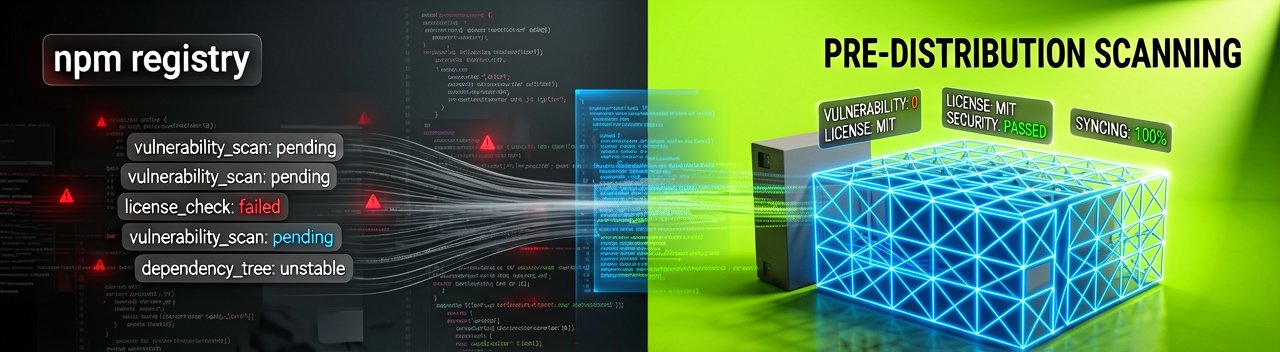
Most legacy firewalls work reactively, flagging a package only after it has been cached or requested. Chainguard’s system flips this workflow upside down by analyzing every single package before it is admitted into its verified library catalog. According to technical details shared by The New Stack, the scanner is already processing more than 100,000 packages a day and has blocked over 52,000 instances of malware and greyware that regular scanners missed. By combining this pre-distribution analysis with a mandatory build-from-source architecture and a configurable cooldown period, the system closes the exposure windows that attackers rely on to infect downstream enterprise applications.
What Most Reports Miss: The Structural Trap of Dependency Trust
The fundamental flaw of the modern software registry is not that developers are careless, but that the entire ecosystem is built on an architectural foundation of blind trust. When an engineer pulls an npm package, they are not just trusting the primary author; they are inheriting an exponential web of transitive dependencies that changes by the hour. Attackers have figured out that they do not need to breach a massive enterprise firewall when they can simply compromise a single, abandoned utility library maintained by a hobbyist on GitHub. This realization has shifted the threat landscape from sophisticated network breaches to highly targeted social engineering and automated repository takeovers.
Historically, the industry treated security as a perimeter problem, relying heavily on retrospective tools that scanned artifacts only after they arrived in a project's codebase. The problem is that once a compromised package is fetched via a command line, code execution has already occurred. Software security architects have long pointed out that waiting for a public CVE identifier to be published is a losing strategy, as the average exploit happens days or weeks before a vulnerability is officially registered. By the time an administrative alert triggers, the malicious code has often already harvested environmental variables and moved laterally through the internal network.
Industry engineering leaders have expressed a mix of relief and caution regarding this shift toward pre-distribution vetting. While the introduction of automated, upfront code analysis drastically reduces the surface area for Day-Zero exploits, it introduces new friction into the developer workflow. Maintaining an active inventory of verified software blocks requires massive computational overhead and continuous tuning to avoid false positives that can stall deployment pipelines. The long-term success of this model depends entirely on whether security vendors can maintain this aggressive scanning pace without introducing artificial delays into the rapid deployment cycles that modern tech firms demand.
Ultimately, the battle over open-source supply chains is moving toward a zero-trust model for individual code blocks, mirroring the transformations that occurred in network security a decade ago. It forces a cultural shift where third-party source code is no longer treated as inherently safe until proven compromised, but rather as potentially volatile material that must be isolated and verified before it ever reaches production. As these scanning frameworks mature, the pressure will inevitably mount on public registries themselves to adopt stricter ingestion pipelines, permanently altering how open-source software is produced and consumed globally.
Reading Between the Lines: The Cost and Contradictions of Closed Registries
While a heavily vetted, pre-scanned software repository sounds like the ultimate antidote to supply chain pollution, it introduces a subtle paradox into the open-source ethos. The entire value proposition of modern package ecosystems lies in their absolute fluidity and the lightning-fast distribution of new features and fixes. By inserting a strict gatekeeper that blocks or delays thousands of packages daily, security vendors are effectively creating a tiered internet of software components. This creates a stark division where wealthy enterprises operate within secure, curated gardens while smaller startups and independent developers continue to swim in the potentially contaminated public pool.
There is also a degree of security theater to grapple with when evaluating automated source-code scanners. Attackers are acutely aware of how static and dynamic analysis tools operate, meaning the emergence of greyware is merely an evolutionary response to better detection. When malware authors realize that blatant data exfiltration gets caught, they simply pivot to time-delayed execution, multi-stage payloads, or logic that triggers only under highly specific production workloads. A scanner might clean up the obvious pollution today, but it inevitably trains the next generation of threat actors to write cleaner, more sophisticated code that easily mimics legitimate developer behavior.
Furthermore, relying on a single vendor to dictate which open-source components are safe creates a new point of centralization in a historically decentralized landscape. If the industry shifts toward a model where a handful of security firms decide which packages are compliant, those firms effectively gain editorial control over software innovation. A false positive by an automated scanner can quietly kill an independent open-source project by blocking its downstream adoption before the maintainer even realizes their code has been flagged as suspicious.
Ultimately, the escalating war against greyware proves that software development has outgrown its innocent era of mutual trust. However, treating every minor utility library as a potential weapon of digital sabotage risks turning development into an administrative nightmare. As corporate security mandates become more rigid, the industry will have to come to terms with the reality that absolute safety is a myth, and the price of an airtight supply chain might just be the very velocity that made open-source software so revolutionary in the first place.
We spent twenty years convincing the world that free, community-built software was the future of technology, only to spend the next ten building multi-million dollar firewalls to protect ourselves from it.
Artūras Malašauskas is an AI Systems Integrator with 20+ years of production-grade web engineering experience. He has designed, shipped, and scaled enterprise Python/PHP systems for logistics, SaaS, and public-sector clients. For the past year, he has focused exclusively on AI integrations: deploying open-source LLMs, building generative media pipelines (image, audio, video), and engineering multi-agent workflows for real production environments. His standard: reproducibility, security, cost-efficient inference—no vaporware. He documents and evaluates emerging AI tooling, separating verified capabilities from marketing noise. Technical editor at: muza-ai.eu, ai-verslas.lt, ai-naujinos.lt Connect on LinkedIn
Comments