Athena Coalition Signals New Era in AI-Powered Open Source Security
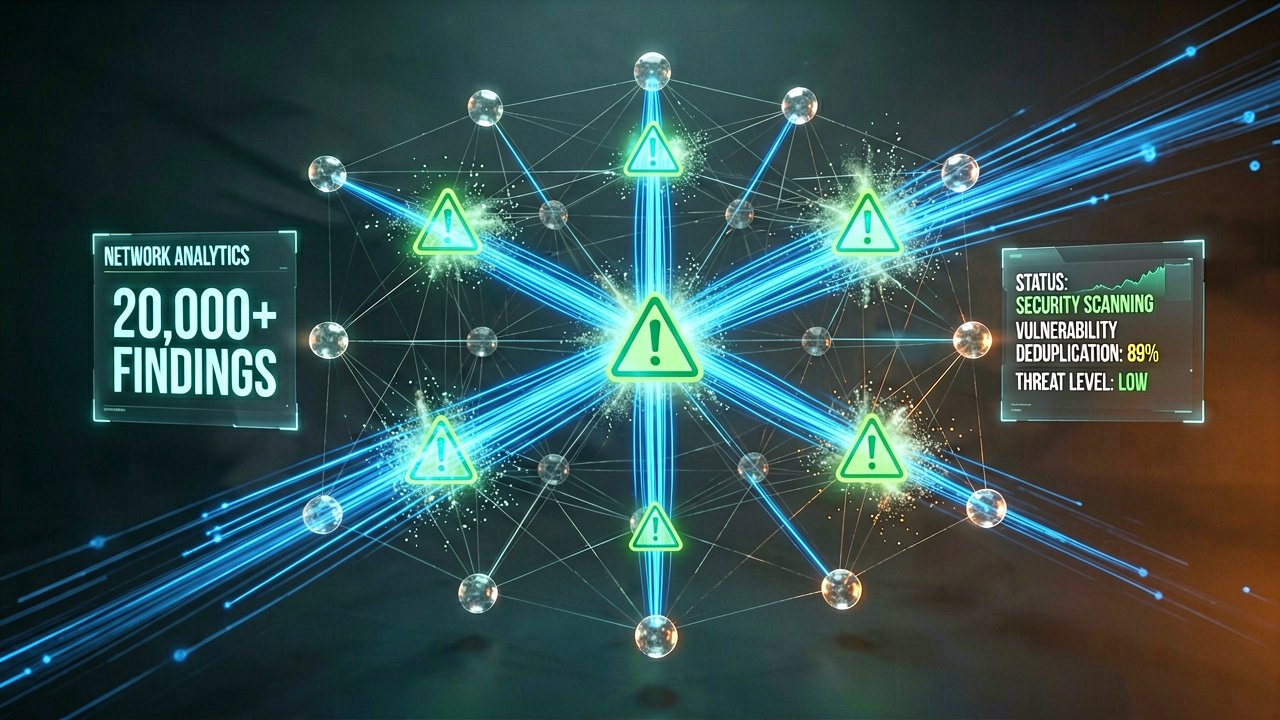
The defensive playbook for open-source software (OSS) has structurally shifted with the launch of the Athena Coalition by supply chain security provider Chainguard. This industry-wide alliance is designed to counter the weaponization of frontier artificial intelligence models capable of surfacing novel zero-day vulnerabilities at machine speed. By establishing an automated vulnerability intelligence sharing platform, the initiative aims to preemptively find, patch, and neutralize security flaws before malicious entities can weaponize them.
This initiative responds directly to a collapsing vulnerability lifecycle, where the timeline between discovery and active exploitation has compressed from years to mere hours. Traditional, fragmented patching cycles are no longer viable against autonomous fuzzers and advanced LLMs like Anthropic's Mythos or OpenAI's GPT models. Led by Chainguard, the Athena Coalition pools resources across an elite group of founding partners, including JPMorgan Chase, BNY, Cisco, Cloudflare, Docker, and PwC, according to coverage by Infosecurity Magazine .
The structural advantage of Athena lies in its unified pre-embargo pipeline, which already boasts significant operational momentum. According to details published via PR Newswire, the platform has processed over 20,000 findings and shipped more than 2,000 patches across 500 open-source projects, utilizing defensive insights derived from AI programs such as Anthropic’s Project Glasswing and OpenAI’s Daybreak.
A Shift to Multi-Layered, Embargoed Remediation
The coalition moves away from individual, siloed library forks toward a centralized clearinghouse that de-duplicates and aggregates vulnerability intelligence. Under strict pre-disclosure embargoes, vulnerabilities are addressed in batches across entire code libraries. This architecture hardens software against broader classes of exploits rather than just a single surfaced bug, creating a durable defense before a public CVE ever drops.

Network-Level Defenses and Upstream Integration
Because much of the world's critical digital infrastructure cannot patch at machine speed, Athena relies heavily on infrastructure and platform-level mitigations. Partners like Cloudflare and Cisco push non-patch mitigations, such as traffic-level rules and detection signatures, directly into network layers. Reports from ZDNET indicate that this virtual patching shields vulnerable systems across the internet, protecting public sectors like hospitals and utilities without requiring manual intervention from local administrators.
Market Impact and the Future of Coordinated Disclosure
Athena represents a paradigm shift in software supply chain economics by scaling a collaborative defense model that individual enterprise security teams could not sustain alone. By driving verified fixes back upstream to the open-source community, the alliance builds systemic digital resilience. Furthermore, Chainguard plans to deepen this framework by collaborating with the Linux Foundation to establish an open-source Security Incident Response Team (SIRT) alongside a formal maintainer-of-last-resort program.
The Hidden Architecture of Post-Exploit Remediation
Behind the Scenes of Automated Defense: The launch of the Athena Coalition reveals a deeper architectural crisis within the global software supply chain that simple patch metrics often obscure. For years, the open-source ecosystem has operated on a volunteer-driven, reactive model of bug hunting and coordinated vulnerability disclosure. When generative AI models and automated fuzzers began lowering the barrier to entry for discovering zero-day vulnerabilities, they effectively upended the traditional timeline that maintainers relied upon to build and test fixes. By creating a collaborative clearinghouse, the coalition attempts to solve the fundamental asymmetric warfare problem of modern cybersecurity, where a single attacker using specialized LLMs can outpace thousands of disparate software maintainers.
Historically, when a vulnerability was discovered, a complex game of telephone would occur behind closed doors. Enterprise tech giants, independent security firms, and open-source foundations would negotiate disclosures, often leaving downstream users exposed during the multi-week gap between a bug's discovery and its public fix. The Athena framework restructures this dynamic by utilizing an automated, pre-embargo pipeline to ingest raw vulnerability data from AI initiatives like Anthropic's Project Glasswing and OpenAI's Daybreak. Instead of letting these findings leak into the public domain where malicious actors could weaponize them, the platform aggregates and de-duplicates the intelligence, allowing enterprise members to coordinate mitigations at the infrastructure level simultaneously.

The strategic involvement of financial titans like JPMorgan Chase and BNY highlights the shifting economic reality of software dependencies. For major banks, a critical flaw in an upstream Linux or Kubernetes package is not just a localized IT issue; it represents systemic financial risk capable of halting transactions and triggering compliance penalties across global networks. By funding and participating in this pre-disclosure network, these institutions are moving away from traditional perimeter defenses and directly intervening in the production pipeline of the open-source software they consume. This represents a pragmatic acknowledgment that individual corporate firewalls are insufficient if the underlying open-source foundations are fundamentally compromised.
Crucially, the success of this defensive network relies heavily on the role of network-level gatekeepers like Cloudflare and Cisco. Because a vast majority of businesses, public utilities, and healthcare networks cannot deploy code updates at machine speed, physical software patching remains a lagging defense. To bridge this window of vulnerability, the coalition translates upstream intelligence into virtual patches—traffic rules, web application firewall signatures, and network detection mechanisms—pushed out across global delivery networks. This infrastructure-first approach effectively creates a protective layer over vulnerable systems, keeping them secure while development teams work through the slower process of upgrading production code packages.
Ultimately, the long-term viability of the Athena Coalition will be judged by its ability to integrate seamlessly with the broader open-source community without alienating independent maintainers. Historically, grassroots open-source developers have viewed corporate-led security initiatives with skepticism, fearing that enterprise partners might hoard vulnerability data for competitive advantage or overburden unpaid maintainers with automated compliance demands. By pledging to drive verified, pre-tested fixes back upstream and proposing a formal maintainer-of-last-resort framework with the Linux Foundation, the coalition is attempting to build a sustainable, symbiotic relationship that elevates global software security standards for all participants.
The Pragmatic Limits of Automated Containment
Reading Between the Lines: The prevailing narrative surrounding the Athena Coalition frames it as an equalizer in the AI arms race, yet it relies on a premise that demands healthy skepticism: that a corporate alliance can successfully institutionalize the inherently chaotic open-source ecosystem. While processing thousands of patches sounds impressive on a corporate balance sheet, it treats the symptoms of software decay rather than the cause. The fundamental friction of open-source security has never been a lack of automated bug-finding tools, but rather the human bottleneck of maintainer burnout. Flooding unpaid, overstressed developers with an AI-generated torrent of preemptive pull requests risks alienating the very community the coalition intends to protect.
Furthermore, the structural reliance on a pre-embargo pipeline introduces a central point of failure that contradicts the decentralized philosophy of open-source software. By concentrating early vulnerability intelligence within an exclusive club of founding enterprise partners, the initiative inadvertently creates a high-value target for sophisticated adversaries. A breach of the coalition's internal communication channels or automated aggregation platforms would grant an attacker a blueprint of undisclosed, highly exploitable zero-days across hundreds of core digital infrastructures. The line between a secure clearinghouse and a weaponizable repository of flaws is dangerously thin.
There is also an inherent tension between the marketing goals of commercial software supply chain vendors and the altruistic mission of upstream open-source security. Chainguard’s enterprise business model relies heavily on selling hardened, vetted container images to organizations desperate for compliance. By positioning itself as the gatekeeper of the Athena Coalition, the line between public utility and proprietary advantage blurs. If the ultimate value of these preemptive patches is weaponized to drive enterprise subscriptions before the fixes trickle down to the public repositories, the broader developer community may begin to view the alliance as an extraction mechanism rather than a defensive shield.
Finally, the promise of infrastructure-level virtual patching via Cloudflare and Cisco provides a convenient temporary cushion, but it risks disincentivizing root-cause remediation. Enterprise IT departments, reassured by the presence of network-level rules, frequently delay actual code updates indefinitely to avoid the operational downtime of breaking production environments. This creates a false sense of security, building an infrastructure that is secure on the surface but fundamentally hollow and fragile underneath. If an adversary discovers a way to bypass the network-layer rules, they will find an internal software ecosystem that has neglected core security hygiene for months.
"We are rapidly approaching a future where AI-driven security bots will spend all day enthusiastically patching code that other AI bots automatically generated, while the lone human developer left in the loop quietly changes their password to '123456' just to feel something again."
Artūras Malašauskas is an AI Systems Integrator with 20+ years of production-grade web engineering experience. He has designed, shipped, and scaled enterprise Python/PHP systems for logistics, SaaS, and public-sector clients. For the past year, he has focused exclusively on AI integrations: deploying open-source LLMs, building generative media pipelines (image, audio, video), and engineering multi-agent workflows for real production environments. His standard: reproducibility, security, cost-efficient inference—no vaporware. He documents and evaluates emerging AI tooling, separating verified capabilities from marketing noise. Technical editor at: muza-ai.eu, ai-verslas.lt, ai-naujinos.lt Connect on LinkedIn
Comments