The Human-AI Trust Deficit: Why the NSF is Investing in Calibrated Clinical AI
The business of healthcare artificial intelligence is undergoing a foundational pivot from pure algorithmic capability to human-centered integration. This market evolution is underscored by the National Science Foundation awarding its prestigious CAREER grant to Dr. Avishek Choudhury, an assistant professor at West Virginia University. Choudhury’s research targets a multi-billion dollar friction point in health tech: the dynamic and often fragile nature of clinician trust in machine learning recommendations. By shifting focus away from building standalone black-box diagnostic engines, the research signals a broader industry realization that technology cannot improve patient outcomes if providers refuse to use it.
Historically, enterprise health systems and venture capital flooded the market with predictive tools boasting near-perfect laboratory accuracy. However, real-world adoption has consistently stalled due to a misalignment with clinical workflows and rigid liability structures. Because licensed clinicians remain legally accountable for patient outcomes, blindly accepting a flawed AI suggestion presents an unacceptable professional risk. Conversely, outright skepticism negates the efficiency gains promised by digital transformation. The NSF’s investment highlights a strategic mandate to develop adaptive software architectures that dynamically calibrate trust based on the complexity of the medical scenario and real-time user cognitive load.
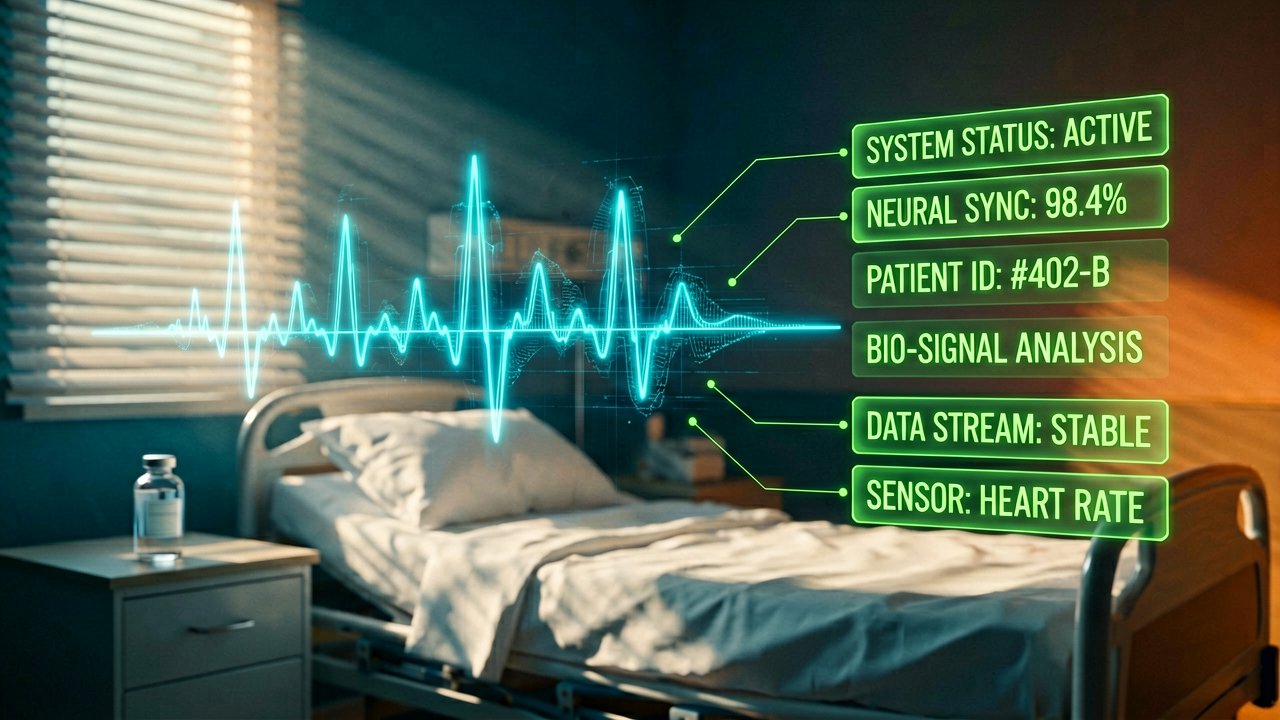
Choudhury’s project utilizes simulation-based experiments that track real-time behavioral and physiological indicators—such as eye-gaze patterns, heart-rate variability, and brain activity—to capture exactly when a doctor loses confidence in a system. For health tech vendors and medical device manufacturers, this methodology provides a blueprint for next-generation product design. The future of the market does not belong to systems that merely spit out automated conclusions, but to collaborative platforms that help providers transparently evaluate recommendations alongside their own independent clinical reasoning.
Market Barriers in Black-Box Diagnostics
The traditional approach of marketing clinical AI strictly on diagnostic sensitivity and specificity metrics has hit a hard ceiling. Healthcare executives are increasingly reluctant to purchase tools that treat medical decision-making as a linear process. Real-world clinical trust shifts continuously from one decision to the next, heavily influenced by user workload and historical software reliability. Furthermore, there is growing industry concern that over-reliance on automated tools could lead to automation bias, gradually weakening independent human cognitive faculties over years of practice.

The Strategic Pivot to Calibrated Trust
To cross the chasm into mainstream clinical operations, future AI systems must humanize their underlying algorithms. This paradigm shift requires enterprise software to move past binary trust models and embrace situational calibration. Software providers must design interfaces that reduce cognitive burden and actively align with established human factors engineering principles. Platforms that integrate multi-modal physiological feedback will allow systems to adapt their explanation depth dynamically, providing more transparency when a novice is out of their depth or backing off when an expert requires rapid, unhindered workflow execution.
Long-Term Economic and Regulatory Implications
As regulatory bodies like the FDA tighten oversight on software as a medical device, clear evidence of safe human-AI interaction is becoming a core compliance benchmark. Organizations that proactively address cognitive ergonomics and peer-level workflow integration will secure a definitive competitive advantage. By establishing empirical frameworks for safe technology uptake, academic initiatives funded by the NSF are actively defining the commercial parameters for sustainable, risk-mitigated healthcare automation.
Neuroergonomics and the Quantification of Trust
Behind the Scenes: The technical challenge of integrating artificial intelligence into clinical environments is moving away from software engineering and closer to the study of human biology. While software vendors traditionally measure system value through diagnostic accuracy, the National Science Foundation's funding of Dr. Avishek Choudhury's research at West Virginia University reflects a shift toward neuroergonomics and human factors engineering. By tracking physiological metrics like heart-rate variability, electrodermal activity, and brain responses during simulation-based clinical trials, researchers can map the exact moments a practitioner experiences cognitive friction or loses confidence in an algorithmic recommendation.
This approach addresses a critical flaw in legacy healthcare software evaluation, which historically relied on subjective post-incident surveys. Self-reported data often fails to capture the subtle, real-time onset of automation bias—the tendency for a tired clinician to unconsciously defer to an incorrect system recommendation. Measuring physical and cognitive responses allows tech developers to see how stress and heavy workloads alter a physician's decision-making process. The objective is to build a foundation for software that changes how it interacts with users depending on the current cognitive strain of the environment.

The Triad of Liability, Autonomy, and Patient Safety
The push for calibrated trust is heavily influenced by the legal realities of modern medicine, where licensed healthcare providers bear the ultimate liability for any diagnostic errors. Medical device manufacturers can market sophisticated machine learning tools, but hospitals remain cautious about deploying them if the software operates as an uninterpretable black box. When a clinician cannot verify the underlying logic of an automated recommendation, adopting it introduces major professional risk, while ignoring a valid alert limits the return on the hospital's technology investment.
Industry groups like the FUTURE-AI Consortium emphasize that long-term technology integration requires an explicit balance between automation and human autonomy. Over-reliance on automation risks degrading independent clinical reasoning skills over time, leaving providers less prepared for rare medical edge cases. Consequently, the commercial sector is shifting toward collaborative software architectures that help providers actively critique algorithmic suggestions rather than just presenting them with a final answer.
Regulatory Paths and Interface Standards
As regulatory frameworks like the European Union's AI Act and updated FDA oversight policies put more focus on software safety, human-machine interface design is becoming a core commercial requirement. Healthcare networks are no longer purchasing software based solely on the size of its training dataset or its standalone statistical accuracy. Instead, procurement teams look for empirical proof of safe human-system interaction within fast-paced clinical workflows, such as emergency departments and intensive care units.
This regulatory evolution forces health tech companies to redesign user interfaces to prioritize contextual transparency and cognitive alignment. Systems must be built to recognize when a user requires a detailed breakdown of an algorithm's reasoning and when a simple recommendation is sufficient for a highly experienced specialist. Software providers that adapt to these human factors principles will be best positioned to meet changing compliance standards and achieve widespread adoption in the market.
The Technical Fallacy of Computational Empathy
Reading Between the Lines: The institutional push to quantify and engineer clinical trust operates on a questionable premise: that human skepticism can be solved by adding more sensors and monitoring software. Academic initiatives like the NSF-backed research at West Virginia University provide valuable data on cognitive load, but they risk oversimplifying clinical intuition into a set of physiological metrics. Tracking heart rates and eye movements in a controlled simulation assumes that trust is a predictable, linear equation. In real-world hospitals, trust is highly messy, shaped by institutional politics, past system crashes, and the unquantifiable gut feelings of experienced physicians.
This approach exposes a clear contradiction in the current health tech market. Software vendors are eager to market tools that decrease administrative burden, yet the solutions being developed to monitor user trust require adding complex biometric layers and telemetry systems to already crowded clinical environments. Forcing a doctor to wear biometric monitors or work under eye-tracking cameras just to calibrate a diagnostic application risks creating the exact workplace stress and cognitive fatigue that the technology is supposed to fix. The market is attempting to solve the problem of intrusive technology by making it even more intrusive.
Furthermore, designing software that dynamically changes its explanations based on how stressed a user appears presents its own operational risks. An algorithm that reduces its transparency when it detects a high heart rate might accidentally withhold critical reasoning data during a fast-moving medical emergency, precisely when a clinician needs to quickly verify an unexpected recommendation. Conversely, inundating an over-tired resident with lengthy algorithmic justifications during a night shift could cause severe alert fatigue. Finding the right balance through automated systems remains highly difficult, as machine logic frequently fails to handle the unpredictable nature of real-time patient care.
Market Consolidation and the Legal Reality
Beneath the optimistic discussions of human-centric AI lies a difficult regulatory and legal reality that standard software updates cannot fix. Health tech companies often use terms like "collaborative AI" and "shared decision-making" to make their tools sound cooperative, but these terms also serve to shift legal responsibility away from the tech providers. So long as federal regulations and malpractice laws place all legal liability on the individual doctor signing the chart, clinicians will view any system that demands blind trust with natural suspicion. True calibration is impossible when one party takes all the financial and professional risk while the other party claims all the technological credit.
This dynamic will likely split the market into two distinct tiers. Large academic medical centers with substantial budgets will have the resources to deploy and test these highly integrated, human-factored AI platforms. Meanwhile, smaller community and rural hospitals will likely be left with rigid, off-the-shelf software tools that generate generic alerts without considering the user's workload or stress levels. Instead of closing the care gap, introducing highly complex, context-aware AI systems could worsen healthcare inequality by limiting the best tools to the most wealthy medical networks.
"We are spending millions of dollars to build highly advanced artificial intelligence that requires a team of engineers, neuroscientists, and biometric sensors just to convince a tired doctor to actually use it. In the end, the ultimate challenge of healthcare automation might not be teaching a computer how to think like a human, but convincing a human that a computer is worth listening to when it does."
Artūras Malašauskas is an AI Systems Integrator with 20+ years of production-grade web engineering experience. He has designed, shipped, and scaled enterprise Python/PHP systems for logistics, SaaS, and public-sector clients. For the past year, he has focused exclusively on AI integrations: deploying open-source LLMs, building generative media pipelines (image, audio, video), and engineering multi-agent workflows for real production environments. His standard: reproducibility, security, cost-efficient inference—no vaporware. He documents and evaluates emerging AI tooling, separating verified capabilities from marketing noise. Technical editor at: muza-ai.eu, ai-verslas.lt, ai-naujinos.lt Connect on LinkedIn
Comments