CrowdStrike's AI Agent Identity Tool Signals Shift in Enterprise Cybersecurity Strategy
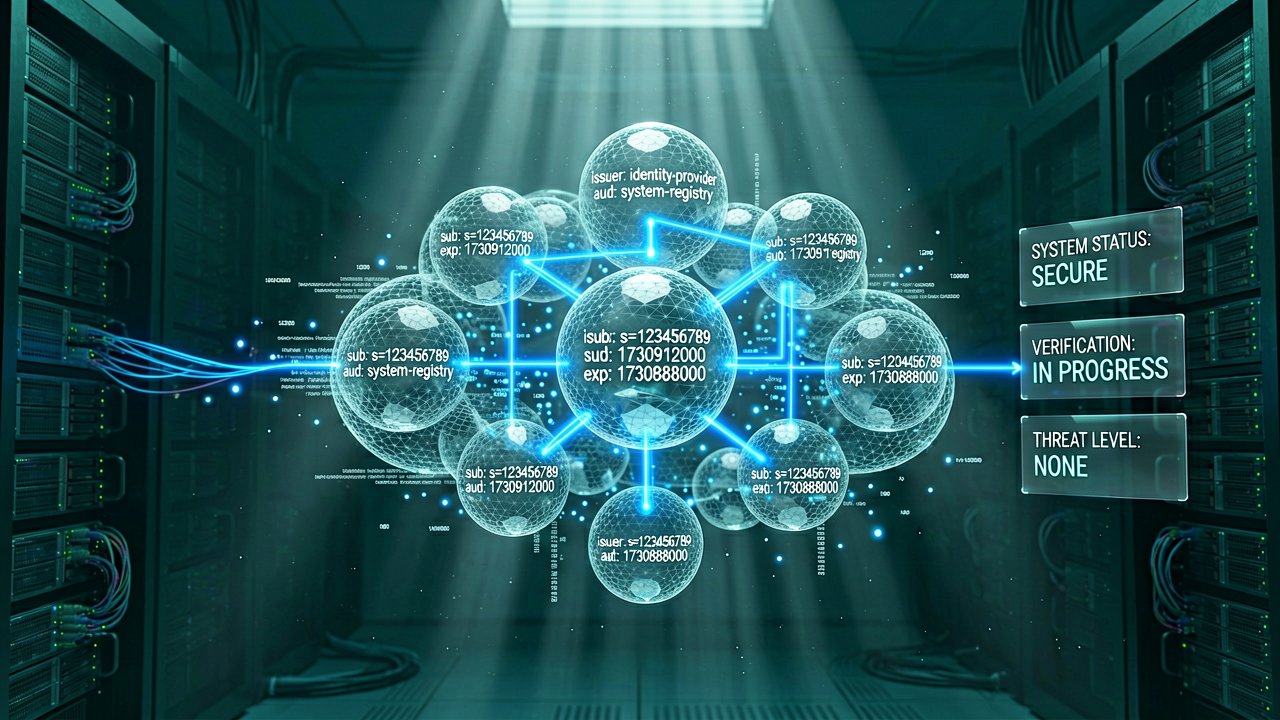
Enterprise identity architecture is undergoing an aggressive structural overhaul as autonomous artificial intelligence shifts from an experimental tool into a core driver of corporate operations. The rapid deployment of self-delegating AI systems creates vast security vulnerabilities, which has prompted CrowdStrike to launch its Continuous Identity for AI Agents feature. This capability establishes an explicit identity control plane built to monitor and restrict autonomous software systems in real time. The launch marks a critical market transition away from legacy, static authorization models that fail to track automated lateral actions inside complex corporate clouds.
Simultaneously, the enterprise validation of this platform-centric security approach has been solidified by a major market win. CrowdStrike announced that Grant Thornton Advisors LLC is officially standardizing its global Managed Security Services Provider (MSSP) operations on the CrowdStrike Falcon platform. By replacing legacy Managed Detection and Response (MDR) architectures with CrowdStrike’s AI-powered ecosystem, Grant Thornton underscores the growing convergence of corporate auditing, risk advisory, and real-time automated security enforcement in high-stakes regulatory environments.
The Expiry of Point-In-Time Authorization
Modern enterprise infrastructure can no longer depend on traditional perimeter-based security or static Access Control Lists (ACLs). When a human user triggers an enterprise AI agent, that agent routinely invokes third-party APIs, queries sensitive internal financial databases, and spawns automated sub-agents at machine speed. Granting a system-level privilege based on a single login timestamp creates a severe operational liability if the agent's intent is manipulated through prompt injection or nested permission abuse.
To eliminate these blind spots, the new industry framework requires cryptographically verifiable machine identities built on open standards like SPIFFE. Security controls must dynamically analyze every micro-action based on real-time device posture, data ownership, and contextual intent signals. If an autonomous agent exhibits anomalous behaviors, defense systems must execute targeted, zero-standing-privilege revocations immediately to isolate the threat without interrupting broader enterprise workflows.
Strategic Implications for Corporate Auditing and Advisory
The alliance with a tier-one advisory firm like Grant Thornton signals that cybersecurity is no longer evaluated as an isolated IT function, but rather as an existential component of corporate compliance and governance. Large-scale accounting and consulting networks handle highly confidential financial records and corporate strategies. This concentrated exposure makes them primary targets for advanced persistent threats and extortion schemes.
By standardizing on a singular cloud-native platform, global advisory networks can consolidate fragmented point solutions to deliver machine-speed threat remediation to their client base. This platform unification provides explicit operational advantages:
- Reduced Operational Complexity: Eliminates mismatched software agents across distributed cloud workloads.
- Unified Identity Telemetry: Harmonizes security logging across human employees, machine service accounts, and autonomous software agents.
- Regulatory Compliance Acceleration: Automates real-time tracking of data access pipelines to satisfy strict global data protection mandates.
The Competitive Landscape of the Agentic Enterprise
As corporate workforces continue to scale up their usage of LLM-based tools, security platforms are racing to define the governance architecture for the "agentic enterprise." The commercial rollout of these tools demonstrates how premier cybersecurity vendors are leveraging tactical acquisitions—such as CrowdStrike’s integration of SGNL technology—to capture market share before traditional identity and access management providers can adapt.
The primary battleground in enterprise security has moved beyond basic endpoint threat detection. The dominant vendors will be those capable of delivering a centralized risk engine that dynamically arbitrates trust across all infrastructure layers. Organizations that fail to adopt continuous, risk-aware identity verification protocols for autonomous software systems risk exposing their entire digital environments to automated, machine-speed data exfiltration.
The Hidden Vector of Autonomous Entitlements
Beneath the Corporate Hood: The rush to integrate agentic AI across enterprise ecosystems is quietly creating a massive, invisible attack surface rooted in non-human privilege escalation. Traditional identity systems were built around human paradigms, assigning access based on usernames, passwords, and multi-factor authentication tokens designed for a single user sitting at a screen. In stark contrast, an autonomous AI agent acts as a proxy with the authority to read, synthesize, and write data across disparate software environments. When these systems are granted blanket service-account permissions, they essentially operate as highly privileged, unchecked actors capable of moving laterally across a company's most sensitive cloud repositories without triggering standard endpoint alarms.
Security architects within global tier-one organizations are raising alarms over what is becoming known as "permission drift." A human employee might legitimately ask an internal AI assistant to draft a quarterly financial forecast, but to fulfill that request, the AI agent might autonomously query an internal payroll database, a private GitHub repository, and an unstructured cloud storage bucket. If the agent lacks an independent, real-time identity profile, the enterprise cannot verify whether the automated sub-actions comply with strict data governance policies. This regulatory blind spot transforms a productivity-boosting tool into a high-risk liability, especially under strict auditing frameworks where data lineage must be explicitly documented and defensible.
This reality is driving a fundamental realignment between enterprise cybersecurity vendors and global risk advisory firms. Chief Information Security Officers (CISOs) are no longer treating identity as an administrative checkbox handled by human resources; it has become an active battleground for runtime defense. Advisory networks like Grant Thornton are recognizing that advising corporate boards on financial risk is impossible without accounting for the automated scripts and AI systems running silently in the background. By standardizing operational frameworks on unified platform architectures, corporate governance experts can finally map data transactions back to a traceable entity, ensuring that autonomous actions are just as auditable as human ones.
Ultimately, the race to secure the agentic enterprise will redraw the competitive boundaries between legacy identity providers and modern cloud-security platforms. Security teams are increasingly fatigued by a fragmented stack of disconnected security tools that require manual correlation during an active breach. The enterprise market is consolidating around vendors that can merge endpoint telemetry, cloud workload visibility, and continuous identity verification into a single, automated policy engine. As autonomous software agents become permanent fixtures of the corporate workforce, the companies that successfully implement real-time identity controls will protect their intellectual property, while those relying on outdated, static defense models will find themselves defenseless against machine-speed exploitation.
The Paradox of Automated Oversight
Reading Between the Lines: The institutional rush to deploy automated identity governance masks a fundamental contradiction at the heart of modern enterprise risk management. Corporations are aggressively implementing autonomous AI agents to drive operational efficiency, yet they are simultaneously forced to deploy a second, parallel layer of AI simply to police the first. This creates a complex, self-referential security loop where enterprise defense increasingly relies on algorithms auditing other algorithms. While platforms promise seamless oversight, this escalating structural complexity often introduces unpredictable software dependencies and obscure failure modes that legacy IT teams are fundamentally unequipped to diagnose or remediate manually.
Furthermore, the marketing narrative surrounding "zero-standing-privileges" for AI agents frequently minimizes the harsh operational friction it introduces to real-world corporate networks. In highly volatile business environments, over-engineered security protocols that constantly restrict, challenge, or revoke autonomous machine permissions invariably stifle the very speed and productivity that justified the initial AI investment. Chief Information Officers often find themselves caught in a silent, structural tug-of-war against Chief Information Security Officers. One side quietly bypasses stringent data controls to maintain application performance, while the other side attempts to enforce restrictive, real-time micro-segmentation that risks breaking critical automated business pipelines.
This systemic tension raises serious questions about the long-term efficacy of standardizing global risk operations on a singular, monocultural platform. While consolidating telemetry into a unified cloud architecture undeniably eliminates visibility gaps and simplifies compliance reporting, it simultaneously establishes an incredibly lucrative, high-value single point of failure. If an advanced threat actor or a deeply flawed, automated software update manages to compromise or blind the central security engine itself, the entire enterprise defense apparatus collapses instantly. True operational resilience requires a pragmatic acknowledgment that software monocultures, no matter how sophisticated their underlying algorithms, inherently trade localized friction for catastrophic systemic fragility.
"We are rapidly entering an era where human executives will confidently sign off on quarterly audit reports generated by an AI, verified by an AI compliance officer, and secured by an AI identity platform—all while praying that nobody accidentally inputs a prompt that convinces the entire corporate infrastructure to grant itself an unapproved long weekend."
Artūras Malašauskas is an AI Systems Integrator with 20+ years of production-grade web engineering experience. He has designed, shipped, and scaled enterprise Python/PHP systems for logistics, SaaS, and public-sector clients. For the past year, he has focused exclusively on AI integrations: deploying open-source LLMs, building generative media pipelines (image, audio, video), and engineering multi-agent workflows for real production environments. His standard: reproducibility, security, cost-efficient inference—no vaporware. He documents and evaluates emerging AI tooling, separating verified capabilities from marketing noise. Technical editor at: muza-ai.eu, ai-verslas.lt, ai-naujinos.lt Connect on LinkedIn
Comments