Akamai Rolls Out Agentic Security Framework to Lock Down Autonomous AI Commerce

The internet is rapidly shifting from human clicks to autonomous decisions, and the infrastructure powering it is scrambling to keep pace. In a major move to police this wild new frontier, Akamai Technologies rolled out its comprehensive Agentic Security Framework on June 15, 2026. This newly minted system tackles one of the most glaring vulnerabilities in modern digital interactions: the total lack of standard identity and verification controls for autonomous AI agents executing financial transactions and harvesting web data. It represents a fundamental pivot from traditional bot-blocking tactics to a nuanced infrastructure designed to safely validate, track, and monetize AI-to-business commerce.
By moving beyond binary allow-or-block filters, this framework introduces an adaptive trust layer handled entirely at the network edge. Instead of shutting out helpful web-browsing models, businesses can now evaluate automated requests across an entire spectrum of trust signals in real time. It is a necessary protective layer arriving precisely as tech enterprises push deeper into machine-to-machine economies, ensuring that these automated workflows do not inadvertently expose backend APIs to novel injection vectors or malicious exploits.
The KYA Protocol and Heavyweight Financial Alliances
At the center of this security overhaul is the newly introduced "Know Your Agent" (KYA) protocol, developed to establish clear human accountability for autonomous actions. Akamai has coordinated an ecosystem of heavy-hitting partners to back the initiative, tapping into Akamai Press Room collaborations with Visa, Experian, and Skyfire. The framework integrates directly with Visa’s Trusted Agent Protocol to verify identity and authority at the precise point of transaction, ensuring that an AI buyer is explicitly tethered to a legitimate human user and an authorized wallet. Identity providers like Auth0 and Ping Identity are also baked into the setup, extending standard multi-factor authentication and behavioral profiling to these machine proxies.
Monetizing the Machine Traffic
Beyond defensive maneuvers, the framework introduces a novel commercial element by transforming automated traffic from an operational burden into a revenue source. Through specialized partnerships with companies like TollBit, web publishers and enterprises can now seamlessly redirect agentic traffic to dedicated, optimized destinations. This allows platforms to enforce distinct data-access rules and execute micro-transactional, tokenized pay-per-request models for AI engines scraping their pages. Instead of burning server resources on uncompensated data mining, organizations can use analytics engines like TrafficPeak to distinguish helpful commercial agents from malicious bots, opening up clear avenues to audit and profit from the autonomous economy.
Beneath the Surface of the Agentic Shift
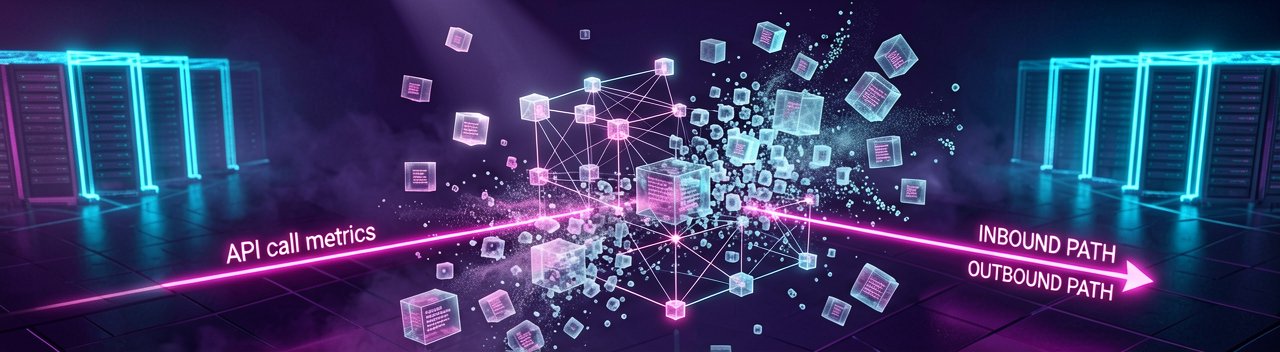
What most reports miss about this rollout is that it marks a quiet surrender to an inevitable reality: the old web is effectively dead, and trying to protect it with traditional firewall tactics is a losing battle. For the past decade, cybersecurity has treated automated scripts as a digital plague to be eradicated, filtered, or heavily throttled. Akamai's pivot acknowledges that within a few years, the vast majority of web traffic will not be humans staring at screens, but rather autonomous proxies negotiating deals, comparing supply chains, and purchasing API access in milliseconds. This framework is less about building a higher wall and more about constructing a sophisticated border control system for a new class of digital citizens.
The technical friction behind this transition is immense, particularly when it comes to the legal and financial liability of an autonomous purchase. If a shopping assistant AI misunderstands a prompt and mistakenly orders ten thousand dollars worth of enterprise software, who is legally at fault? Legacy payment rails are fundamentally unequipped to handle machine-level delegation without massive fraud risks. By bringing Visa and Experian into the fold, the framework attempts to build a real-time cryptographic audit trail that links every automated API call back to a legally binding human entity, solving the liability loophole before it cripples the emerging machine-to-machine economy.
From the perspective of content creators and enterprise publishers, this structural overhaul is a desperate lifeline. The widespread scrapers deployed by major LLM developers have historically pillaged web content with zero regard for copyright or server overhead, leading to a toxic cycle of lawsuits and aggressive paywalls. The integration with tokenized monetization platforms signals a shift toward an open-market model for data consumption. Publishers can finally stop playing an endless game of whack-a-mole with IP blocks and instead present AI agents with a clear, metered front door where data is treated as a transactional commodity.
However, seasoned infrastructure analysts look at this centralized trust model with a healthy dose of skepticism. By positioning itself as the ultimate arbiter of which AI agents are "trusted" and which are "malicious," Akamai is aiming to become the dominant tollbooth of the agentic web. This concentrates an incredible amount of gatekeeping power within a single edge network, raised to a level where a minor misconfiguration or an outage could instantly freeze autonomous supply chains across multiple industries. It is a bold, high-stakes gamble to standardize an economy that is still very much in its infancy, setting up a fierce ideological battle between centralized enterprise frameworks and decentralized, open-source agent protocols.

Reading Between the Lines:
The grand irony of the agentic security movement is that the very tech enterprises championing these protective frameworks are the ones driving the chaos they claim to fix. Silicon Valley is aggressively pushing autonomous agents into the wild with a "move fast and break things" mentality, while simultaneously demanding that infrastructure providers build immediate, ironclad safeguards to contain them. It creates a bizarre contradiction where a company might deploy a fleet of aggressive, unvetted AI agents to scrape competitors, while simultaneously paying a premium to Akamai to block those exact same tactics from hitting their own backend APIs. We are effectively watching the tech industry create both the disease and the cure, capitalizing on the friction at both ends.
Furthermore, the reliance on legacy financial giants like Visa to validate autonomous machine behavior feels like grafting a hyper-modern engine onto a horse-drawn carriage. The "Know Your Agent" protocol sounds robust on paper, but it fundamentally depends on traditional identity providers and centralized databases that were built for humans who change passwords every ninety days, not machines that mutate their operational parameters every few seconds. If a compromised AI agent manages to spoof its cryptographic handshake or manipulate its behavioral profile, it could theoretically drain a corporate wallet before traditional fraud detection systems even flag the activity as unusual. The latency of enterprise compliance simply cannot match the execution speed of malicious code.
Projecting this forward, the long-term implication is a highly stratified internet divided into premium, verified corporate corridors and a decaying public web. Small businesses and independent creators who cannot afford high-tier edge security suites will be left completely vulnerable to aggressive, automated resource draining. Meanwhile, the web's largest players will retreat behind automated gatekeepers, trading data exclusively with other verified, paying machines. This infrastructure does not just secure transactions; it formalizes the commercial balkanization of the internet, transforming the web from an open network of information into a strictly monitored corporate marketplace where every single byte of data carries a micro-tariff.
"We are rapidly hurtling toward a digital ecosystem where your AI assistant will have to negotiate a multi-layered security clearance, present a credit card, and sign a virtual non-disclosure agreement just to check the weather forecast for your morning commute."
Artūras Malašauskas is an AI Systems Integrator with 20+ years of production-grade web engineering experience. He has designed, shipped, and scaled enterprise Python/PHP systems for logistics, SaaS, and public-sector clients. For the past year, he has focused exclusively on AI integrations: deploying open-source LLMs, building generative media pipelines (image, audio, video), and engineering multi-agent workflows for real production environments. His standard: reproducibility, security, cost-efficient inference—no vaporware. He documents and evaluates emerging AI tooling, separating verified capabilities from marketing noise. Technical editor at: muza-ai.eu, ai-verslas.lt, ai-naujinos.lt Connect on LinkedIn
Comments