Vibe Coding's Small Business Revolution: Amelunxen's Campaign Maps the Shift
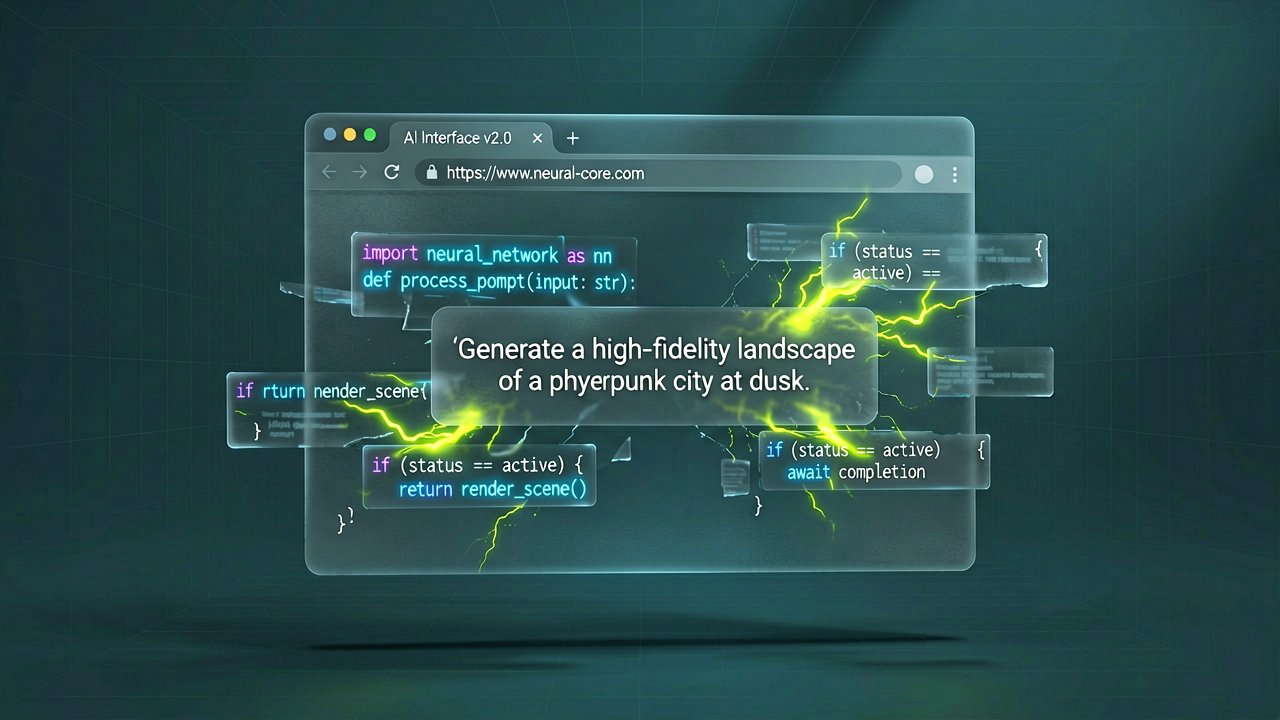
The software development landscape for small and mid-sized businesses (SMBs) is undergoing a structural paradigm shift driven by "vibe coding," a practice where creators build functional applications by describing features to artificial intelligence in plain language. Historically, developing bespoke software required massive engineering budgets and months of manual production. Emerging browser-based AI platforms like Cursor, Lovable, Bolt, and Replit have effectively dismantled these financial barriers, compressing development cycles from months to mere hours for non-technical founders, as documented by Forbes.
To address the systemic opportunities and hidden operational friction points of this transition, independent software architect and AI coach J. Amelunxen launched a public educational campaign highlighted by AiThority . The campaign centers around a short film illustrating that while AI-generated prototypes prove product viability quickly and cheaply, small businesses frequently stumble on the subsequent engineering phases. Rather than viewing the initial AI prototype as a finished product, technical leadership must treat it as a foundational proof-of-concept that requires subsequent expert architecture, debugging, and continuous infrastructure management to scale securely.
From a market standpoint, the rapid normalization of vibe coding—originally popularized by tech figures like OpenAI co-founder Andrej Karpathy—represents a profound democratizing force that simultaneously creates tactical risks for unguided businesses, according to coverage by The Independent. The strategic mandate for modern SMBs is shifting away from basic feature code generation toward what Amelunxen calls "Habitat Engineering." This approach integrates AI workflows directly into organizational structures to keep long-term oversight loads manageable, ensuring that automated systems augment human talent rather than introducing unsustainable operational debt.
The Democratization of Prototyping
Vibe coding removes traditional engineering bottlenecks by substituting syntax-heavy programming languages with natural language intent. Small businesses can immediately build internal utilities, manipulate disparate spreadsheets into cohesive applications, or launch minimum viable products (MVPs) to test consumer demand in real-time. This structural agility allows non-technical entrepreneurs to stay closely aligned with product iteration and customer feedback cycles without incurring early-stage technical overhead.
Managing Post-Prototype Technical Debt
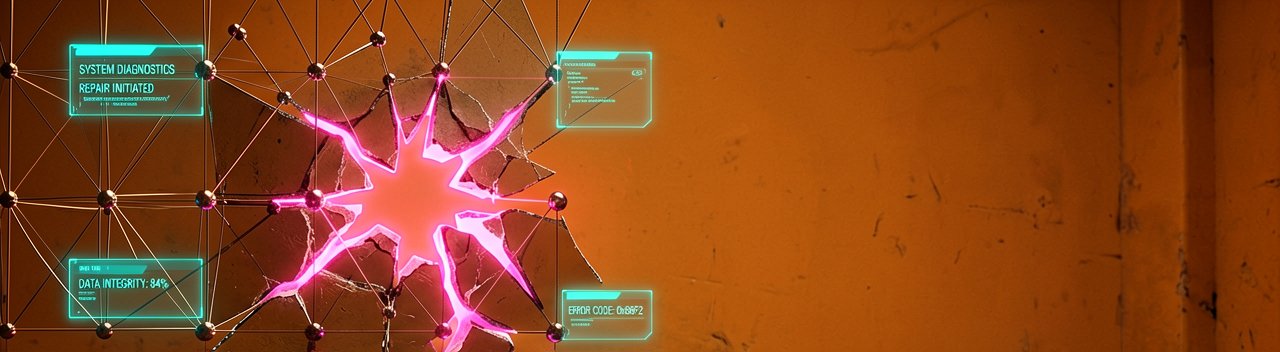
The primary hazard of the vibe coding movement is the false assumption that a working AI prototype equates to an enterprise-grade platform. AI-generated code frequently suffers from structural fragmentation, hidden vulnerabilities, and scaling limits that non-technical users cannot diagnose. To survive the post-prototype phase, businesses must adopt structured evaluation frameworks, choosing clean code rebuilds or targeted architecture repairs over blind deployment to protect operational integrity.
The Mechanical Reality of the Language Interface
Peeling Back the Interface: The rapid ascent of vibe coding from an elite developer meme to an operational small-business playbook obscures a fundamental truth about large language models. Presenting natural language instructions to an integrated development environment creates an illusion of human-like comprehension, yet the underlying system functions via statistical token association rather than conceptual understanding. In early iteration phases, this distinction matters very little because the immediate goal is simple visual feedback and functional basic logic. However, as an application increases in structural complexity, the absence of foundational architectural awareness within the AI engine introduces systemic drift, causing later prompts to inadvertently break earlier, functioning routines.
For independent founders who lack engineering backgrounds, this creates a deceptive productivity curve that begins with immediate gratification but ends in a highly technical roadblock. During the initial hours of a project, the developer "vibes" with the machine, witnessing an application materialize out of text prompts in near real-time. But when edge cases emerge, or when integration with legacy financial and inventory APIs fails, the non-technical creator lacks the vocabulary to instruct the AI to trace the root error. This breakdown highlights the growing market demand for hybrid technical consultants who specialize not in writing raw code, but in auditing automated code bases and debugging the opaque failures of AI-generated software.
From a historical perspective, this shift mirrors previous technical revolutions, such as the introduction of fourth-generation programming languages or the visual drag-and-drop tools of the early web era. Each iteration promised the total displacement of the traditional software engineer, yet each ultimately expanded the tech ecosystem while elevating the role of the architect. Vibe coding does not eliminate the necessity of deep technical knowledge; instead, it relocates that knowledge from syntax memorization to structural orchestration. The small businesses succeeding in this environment are those treating AI platforms as highly accelerated junior developers that still require rigorous senior oversight, code reviews, and structured version control.

Ultimately, the long-term viability of vibe-coded systems rests on establishing strict limits on how far an unverified prototype is allowed to advance toward production. While a founder can leverage plain-language tools to rapidly demonstrate product-market fit to stakeholders, the transition to a customer-facing, secure infrastructure demands a traditional engineering framework. Organizations that institutionalize this boundary protect themselves from accumulating catastrophic technical debt, turning what could be an operational liability into a sustainable engine for rapid corporate innovation.
The Hidden Cost of Automated Agility
Reading Between the Lines: The prevailing narrative around vibe coding celebrates the total erasure of development costs, yet it routinely ignores the compounding expenses associated with long-term software maintenance. In the rush to praise AI for eliminating the upfront premium of human engineers, the industry is blind to an impending maintenance crisis. Code that is generated through a series of natural language prompts lacks a cohesive architectural blueprint, functioning instead as a fragile patchwork of ad-hoc solutions. When a business relies on software that no single human fully understands, the cost of modifying that software later scales exponentially, turning an initial financial victory into a structural liability.
This technical friction reveals a stark contradiction in the democratized tech landscape. While small businesses use AI to rapidly bypass the traditional engineering bottleneck, they simultaneously become entirely dependent on the specific platform vendors hosting these AI tools. A business building an ecosystem on uncompiled, AI-managed code is essentially renting its core infrastructure without owning the underlying logic. Should a platform change its subscription pricing, alter its model weights, or deprecate a critical feature, the non-technical founder is left with an opaque mass of legacy code that they can neither migrate nor manually repair.
Furthermore, the widespread adoption of vibe coding risks creating an ecoystem flooded with highly derivative, visually uniform applications. Because language models generate solutions based on statistical probabilities from existing web data, they naturally default to standard, uninspired patterns. Small businesses may find that while they can launch products faster than ever, their software looks, feels, and operates identically to that of their competitors. True competitive advantage rarely stems from doing what is statistically predictable; it requires intentional, counter-intuitive design choices that automated prompt engines are fundamentally unequipped to invent.
As the market adjusts to this influx of automated software, the definition of technical literacy will inevitably change. Survival for small businesses will not depend on learning how to write prompts, but on developing the critical skepticism required to audit machine output. The organizations that thrive will treat AI-generated code not as a definitive solution, but as highly disposable scaffolding that must eventually be replaced by stable, hand-crafted infrastructure before scaling operations.
The true genius of vibe coding lies in its ability to let an entrepreneur build a complex application in an afternoon, only to realize by midnight that they have successfully automated a way to lose their data at unprecedented speed.
Artūras Malašauskas is an AI Systems Integrator with 20+ years of production-grade web engineering experience. He has designed, shipped, and scaled enterprise Python/PHP systems for logistics, SaaS, and public-sector clients. For the past year, he has focused exclusively on AI integrations: deploying open-source LLMs, building generative media pipelines (image, audio, video), and engineering multi-agent workflows for real production environments. His standard: reproducibility, security, cost-efficient inference—no vaporware. He documents and evaluates emerging AI tooling, separating verified capabilities from marketing noise. Technical editor at: muza-ai.eu, ai-verslas.lt, ai-naujinos.lt Connect on LinkedIn
Comments