Atoms Redefines App Development Landscape with AI-Driven No-Code Revolution
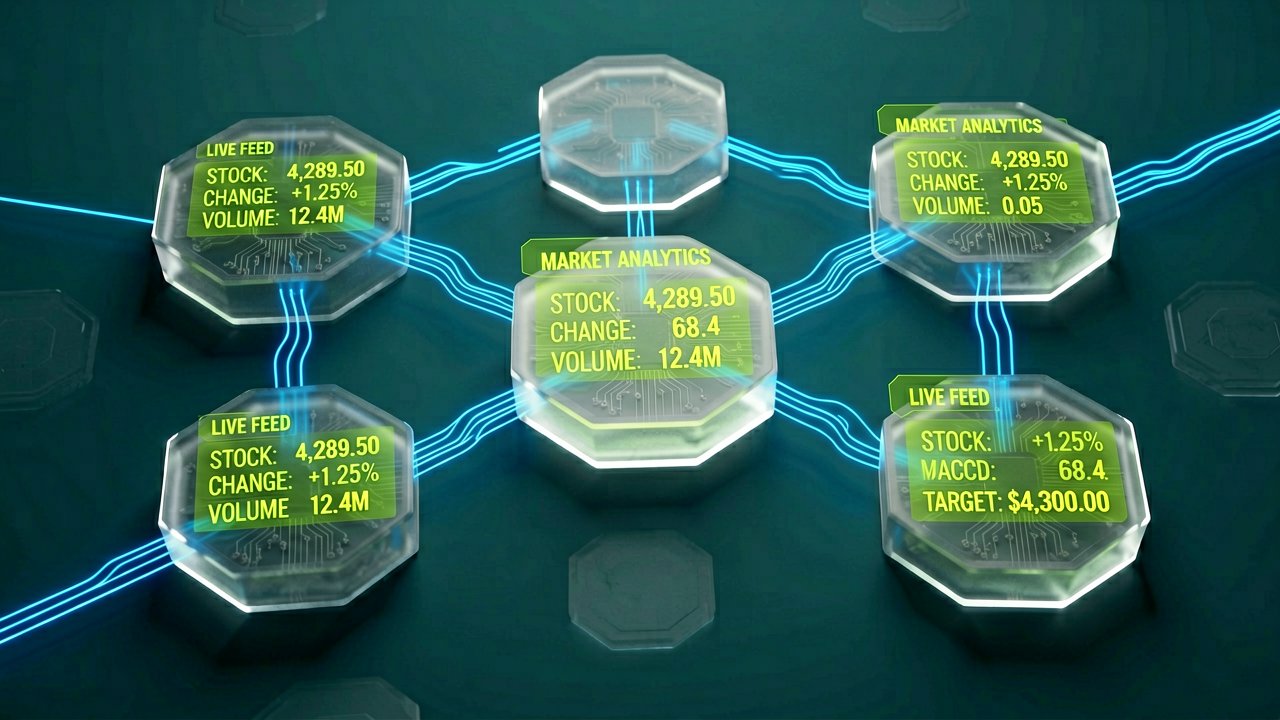
The traditional software development paradigm is undergoing a massive structural shift as autonomous multi-agent systems mature. Substack reports that Atoms, an AI-native platform with over 60,000 GitHub stars, has secured $31 million in funding from prominent investors including Ant Group and Cathay Capital. This significant capitalization signals strong market confidence in the platform's ability to transition from conversational code generation to full-scale automated business creation.
Unlike early generation AI code assistants that only generated superficial visual mockups, modern architecture addresses full-stack execution natively. By establishing built-in infrastructure for critical tasks such as database configuration, user authentication, and transaction processing through providers like Stripe, these frameworks collapse development cycles from months into hours. According to figures shared on LinkedIn, this consolidation has successfully attracted over one million builders, proving that the tech industry is actively embracing the "vibe coding" shift to democratize production-ready applications.
This rapid shift highlights a broader transformation within the global no-code AI platforms market. Industry evaluations by Grand View Research project this specific sector to surge to $44.15 billion by 2033, driven by a compound annual growth rate of 30.2%. As businesses demand hyper-efficient process automation, the ability to rapidly convert natural language prompts into working commercial entities is becoming a standard operational expectation rather than a luxury.
The Orchestration of Multi-Agent Development Teams
The core innovation driving this software revolution is the division of labor among specialized digital workers. Instead of relying on a single large language model to write an entire program, platforms deploy coordinated agent ecosystems where individual nodes focus on distinct business disciplines. A standard deployment utilizes specialized roles like Iris for market research, Emma for product specification, Alex for engineering, and Sarah for search engine optimization. This structured hierarchy mimics a human software enterprise, ensuring systematic planning, architecture validation, and quality assurance before execution ever begins.
Parallel Processing and the 'Race Mode' Paradigm
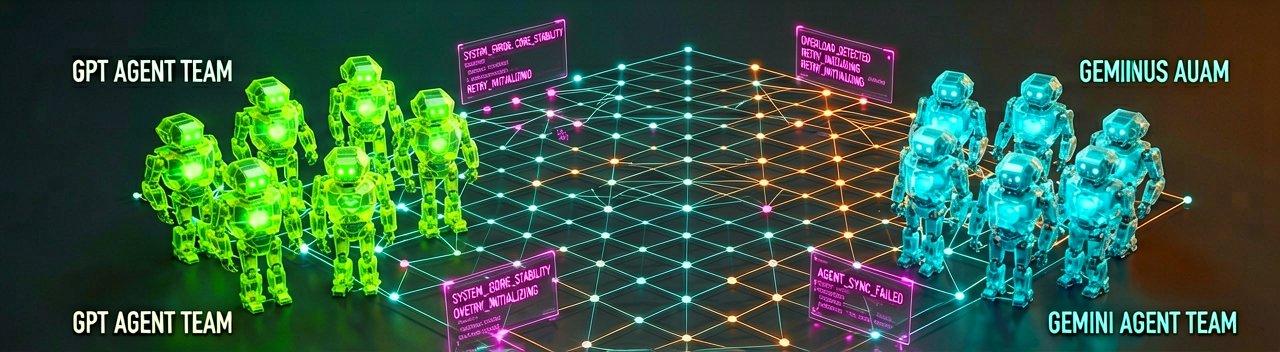
Traditional human-led engineering often struggles with the bottleneck of sequential prototyping, but autonomous systems bypass this limitation through parallel computation. A key operational milestone in this market is the introduction of features like Race Mode, which simultaneously deploys multiple independent AI teams using distinct underlying foundational models, such as GPT or Gemini. By developing parallel iterations of the exact same prompt in real time, founders can compare competing strategies, examine distinct code structures, and deploy the most resilient implementation instantly.
Shifting Competitive Dynamics from Engineering to Curation
As the barriers to technical execution completely disappear, corporate value is detaching from pure engineering capacity and re-anchoring to market strategy and product curation. Solo founders can leverage these platforms as complete startup teams, handling deep research, automated cloud provisioning, and initial content distribution networks out-of-the-box. The ultimate competitive advantage in this new economic landscape belongs to operators who can effectively articulate market demands and govern complex AI networks, effectively transforming product development into an accessible utility.
Challenging the Frictionless Development Myth
Reading Between the Lines: The marketing narrative surrounding AI-driven no-code platforms promises a frictionless future where technical barriers completely vanish, yet the operational reality reveals a shifting bottleneck rather than an outright elimination of complexity. While autonomous multi-agent systems excel at generating boilerplate structures, spinning up databases, and integrating standard payment gateways instantly, they simultaneously create an acute maintenance liability. Non-technical creators can now deploy highly complex, multi-layered architectures with a single prompt, but they remain fundamentally unequipped to debug these systems when underlying dependencies fail or when edge-case vulnerabilities emerge in production environments.
This dynamic introduces a stark economic contradiction within the software industry. As the marginal cost of generating code drops to near zero, the premium placed on system architecture, security auditing, and forensic debugging is skyrocketing. Instead of truly democratizing application creation for the absolute novice, these platforms are quietly optimizing the workflows of senior engineers who possess the structural literacy required to audit, correct, and orchestrate the output of hyper-productive AI agent teams. The democratization of generation is inadvertently widening the gap between those who can spawn an application and those who can realistically sustain its lifecycle.
Furthermore, the reliance on parallel processing and competing foundational models introduces unprecedented compliance and optimization challenges. When an operator deploys multi-agent teams running on entirely different architectures to build the same application, the resulting codebases often inherit the distinct biases, structural inefficiencies, and hidden technical debts of their respective training data. Enterprises adopting these automated development pipelines face a looming governance crisis, where tracing software telemetry and ensuring deterministic behavior across thousands of autonomously generated updates becomes a statistical nightmare.
Ultimately, this technological shift will reshape the broader digital economy by flooding the market with an unprecedented volume of functionally identical software. When anyone can launch a feature-complete SaaS platform in an afternoon, the software itself becomes entirely commoditized, destroying product utility as a defensible business moat. Strategic differentiation will revert heavily to old-world business fundamentals: proprietary data access, hyper-localized distribution networks, and high-touch human relationship management, proving that the ultimate consequence of automated engineering is a market that values execution less and distribution more.
"We have officially reached the golden age of software evolution where an AI can write a complete enterprise application in forty-five seconds, leaving the human creator with nothing left to do but spend the next four weeks trying to figure out why the user login button is suddenly trying to route transactions through a smart refrigerator."
Artūras Malašauskas is an AI Systems Integrator with 20+ years of production-grade web engineering experience. He has designed, shipped, and scaled enterprise Python/PHP systems for logistics, SaaS, and public-sector clients. For the past year, he has focused exclusively on AI integrations: deploying open-source LLMs, building generative media pipelines (image, audio, video), and engineering multi-agent workflows for real production environments. His standard: reproducibility, security, cost-efficient inference—no vaporware. He documents and evaluates emerging AI tooling, separating verified capabilities from marketing noise. Technical editor at: muza-ai.eu, ai-verslas.lt, ai-naujinos.lt Connect on LinkedIn
Comments