Neon, Silicon, and Cel-Shading: Inside Zenless Zone Zero 3.0’s Cutting-Edge RTX Overhaul
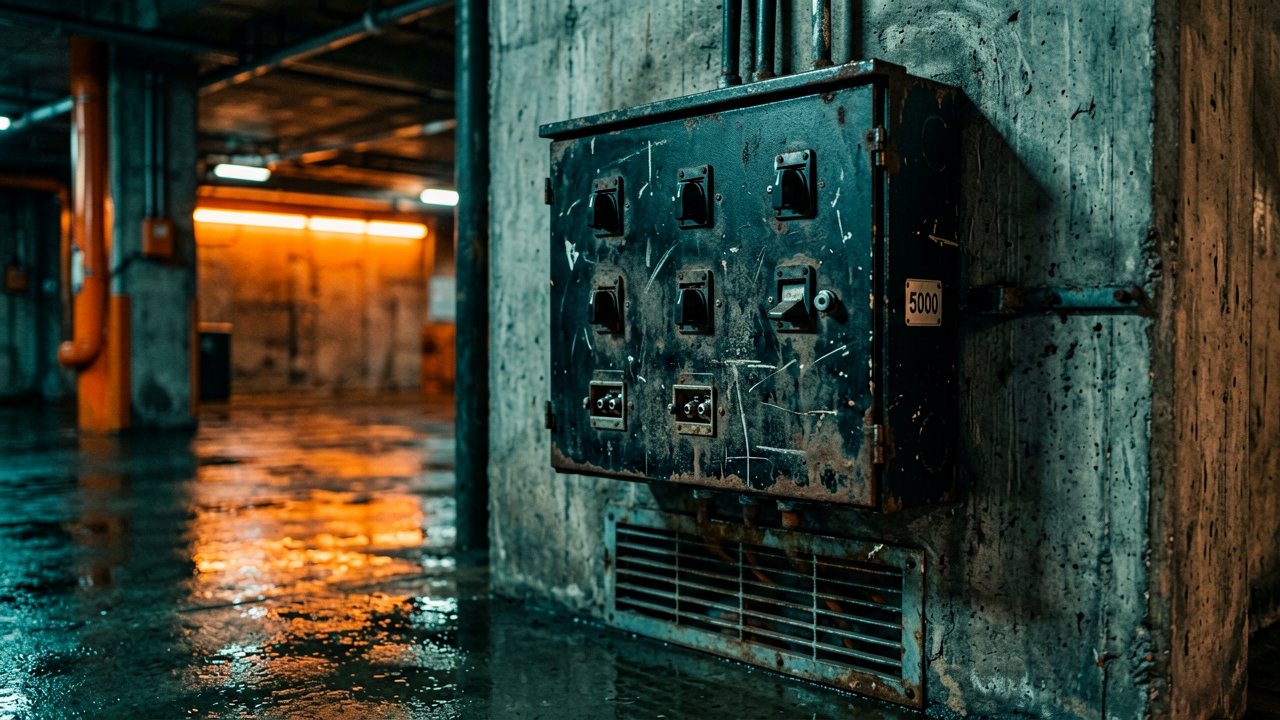
HoYoverse’s stylized urban brawler isn't exactly the first game you’d pin as a poster child for cutting-edge hardware tech, but the upcoming Season 3 update is about to completely shatter those assumptions. Dropping alongside its official debut on Steam, NVIDIA and the developers have rolled out a massive visual pipeline overhaul for Zenless Zone Zero Version 3.0. We are talking about a full-scale injection of advanced ray tracing techniques—specifically ray-traced reflections, ambient occlusion, and global illumination—aimed at transforming the glossy, rain-slicked streets of New Eridu into a masterclass of real-time lighting. It turns out that bringing realistic physical properties to a heavily stylized anime aesthetic creates a striking, hyper-polished look rather than an uncanny valley mismatch.
To pull this off without turning high-end gaming rigs into space heaters, the game leans heavily on Team Green's freshly minted neural rendering stack. Zenless Zone Zero Version 3.0 integrates DLSS Super Resolution and DLSS Frame Generation out of the gate, providing the exact architectural scaffolding needed to maintain fluid frame rates during the game's notoriously chaotic, particle-heavy combat. For players pushing the upper limits of hardware, the implementation is built around NVIDIA's latest DLSS 4.5 frameworks, optimizing how Tensor cores interpret rapid, multi-frame movement to keep pixel clarity razor-sharp. If you have ever watched your frame rate tank to a crawl during a chaotic chain attack in Lumina Square, you will appreciate how much heavy lifting this AI upscaling model does under the hood.
Balancing Ray-Traced Realism With Hyper-Fast Action Performance
The real test of this silicon partnership shows up in the raw performance metrics. In early preview builds showcased on hardware like an NVIDIA GeForce RTX 5070 Ti running at native 4K resolution, the addition of ray-traced ambient occlusion completely redefines spatial depth in the new sky city of Roscaelifer. Instead of flat, baked-in shading, shadows dynamically cling to complex geometry and character models based on the shifting neon signs overhead. However, tracing those rays is notoriously expensive on a GPU's compute budget, which is why the inclusion of DLSS Frame Generation is a mandatory piece of the puzzle here, effectively multiplying performance to hit steady triple-digit frame rates. HoYoverse has also noted that an even deeper optimization layer, DLSS Multi Frame Generation, is already baked into the roadmap for a future client patch to ensure that even mid-tier rigs can keep RTX features toggled on without sacrificing the twitch responsiveness that this fast-paced action RPG demands.
Under the Hood: Engineering the Perfect Pipeline
Behind the Scenes: HoYoverse’s rendering pipeline undergoes a dramatic mutation to support modern hardware ray tracing alongside its signature cel-shaded art style. For a systems engineer, retrofitting an existing rendering loop with complex bounding volume hierarchies (BVH) represents a logistical nightmare. The main challenge comes from Zenless Zone Zero's reliance on highly customized vertex shaders, which manipulate character outlines and non-photorealistic lighting on the fly. To prevent immense CPU bottlenecks during runtime, the engine uses specialized compute shaders to pre-calculate and update ray tracing acceleration structures directly within the GPU's localized memory before any primary shading passes execute.
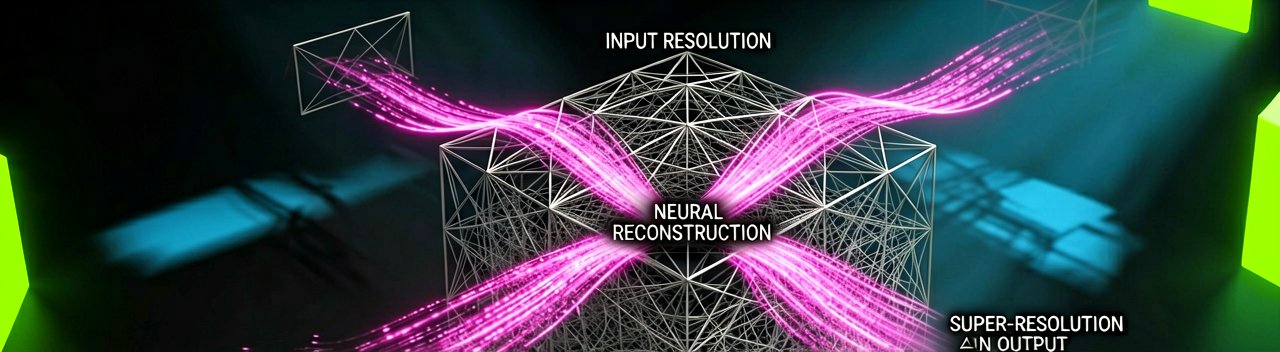
By shifting this computational load onto the GPU, the engine maintains an ultra-low latency dispatch cycle even when the screen is packed with complex effects. The ray-traced global illumination works by replacing generic, pre-baked light probes with a dynamic diffuse radiance cache. This cache updates asynchronously across multiple frames. Instead of forcing a brute-force recalculation of every ray hit on every single frame, the system dynamically scales down the ray count in areas of low visual contrast. It relies on the highly intelligent temporal feedback filters in NVIDIA's latest tech stack to reconstruct full resolution details smoothly.
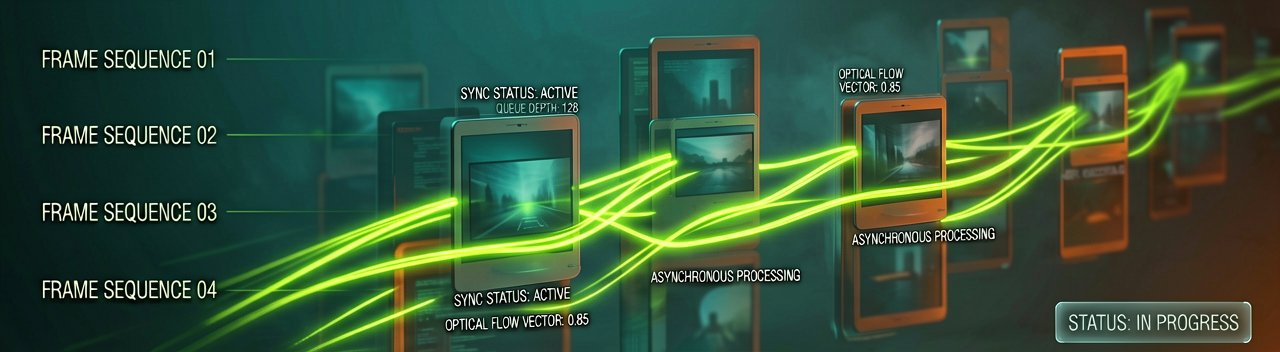
To further protect performance, the integration of DLSS 4.5 utilizes an upgraded, transformer-based AI architecture that completely redefines how motion vectors are parsed during combat. In a typical upscaling solution, lightning-fast player slashes and rapid character switches can throw off standard optical flow vector calculations, resulting in jarring ghosting artifacts around character outlines. The second-generation AI transformer model in DLSS 4.5 solves this by analyzing multiple successive historical frames at a deeper structural level. This training gives the model a much higher level of scene intelligence, allowing it to predict geometric motion accurately and keep fine details incredibly sharp through the chaotic particle storms of a high-tier Hollow raid.
This technical synergy is exactly what allows the game to bypass traditional engine limitations, such as the fixed registry locks that historically tied frame rates to specific intervals. By combining clean asynchronous compute pipelines with AI-driven frame reconstruction, Version 3.0 successfully isolates game state tick rates from the visual display loop. The end result is a highly responsive input pipeline that allows players to perform precise parries and dodges at triple-digit frame rates. This structural overhaul sets a fantastic new benchmark for how modern AI hardware features can elevate heavily stylized, non-photorealistic game engines to brand new heights.
The Price of Artificial Fidelity
Reading Between the Lines: The marriage of cutting-edge hardware tech and a cel-shaded anime brawler exposes a glaring paradox in modern game development. For years, the industry championed stylized graphics specifically because they aged gracefully and avoided the punishing hardware taxes of photorealism. Yet here we are, watching HoYoverse throw a full-scale suite of ray-traced reflections and global illumination at an engine that was originally optimized to run on a mid-range smartphone. It raises the uncomfortable question of whether we are genuinely pushing the boundaries of artistic expression, or if we are simply manufacturing a state-of-the-art silicon stress test to justify the skyrocketing costs of next-generation graphics cards.
While the architectural integration of DLSS 4.5 is undeniably impressive from a systems engineering perspective, it also reveals how dependent the industry has become on artificial intelligence as a mandatory crutch rather than an optional optimization layer. The fact that the developers must rely on a second-generation transformer model to prevent frame rates from tanking during chaotic chain attacks suggests that native rendering at high resolutions is becoming a relic of the past. If an engine requires deep temporal history analysis and synthetic frame generation just to stay stable under load, the line between raw hardware optimization and aggressive AI reconstruction becomes deeply blurred. It forces players to wonder if they are upgrading their GPUs for actual computing power, or simply for better AI prediction algorithms.
Furthermore, the true scalability of this update remains highly suspect when you look at the broader player base. While enthusiasts pushing an elite desktop setup will certainly marvel at the realistic ambient occlusion in the neon-lit corridors of New Eridu, the vast majority of Zenless Zone Zero's community will continue to experience the game on platforms that cannot even parse a basic bounding volume hierarchy. This creates a widening development divide where engineering teams spend massive resources tailoring high-end patches for a fraction of the market, while the core mobile and console clients receive standard, iterative optimization. Ultimately, this tech showcase serves as a fascinating proof of concept for NVIDIA's latest innovations, but it highlights a broader industry trend where the chase for visual perfection often outpaces practical, universal game performance.
It turns out that even in a post-apocalyptic urban wasteland, you still need a multi-thousand-dollar gaming rig to properly appreciate the way neon light reflects off a puddle of digital rainwater.
Artūras Malašauskas is an AI Systems Integrator with 20+ years of production-grade web engineering experience. He has designed, shipped, and scaled enterprise Python/PHP systems for logistics, SaaS, and public-sector clients. For the past year, he has focused exclusively on AI integrations: deploying open-source LLMs, building generative media pipelines (image, audio, video), and engineering multi-agent workflows for real production environments. His standard: reproducibility, security, cost-efficient inference—no vaporware. He documents and evaluates emerging AI tooling, separating verified capabilities from marketing noise. Technical editor at: muza-ai.eu, ai-verslas.lt, ai-naujinos.lt Connect on LinkedIn
Comments