NVIDIA Unleashes GeForce 610.62 Driver: Smoother Frames for June’s Fresh Releases and Big Bug Fixes
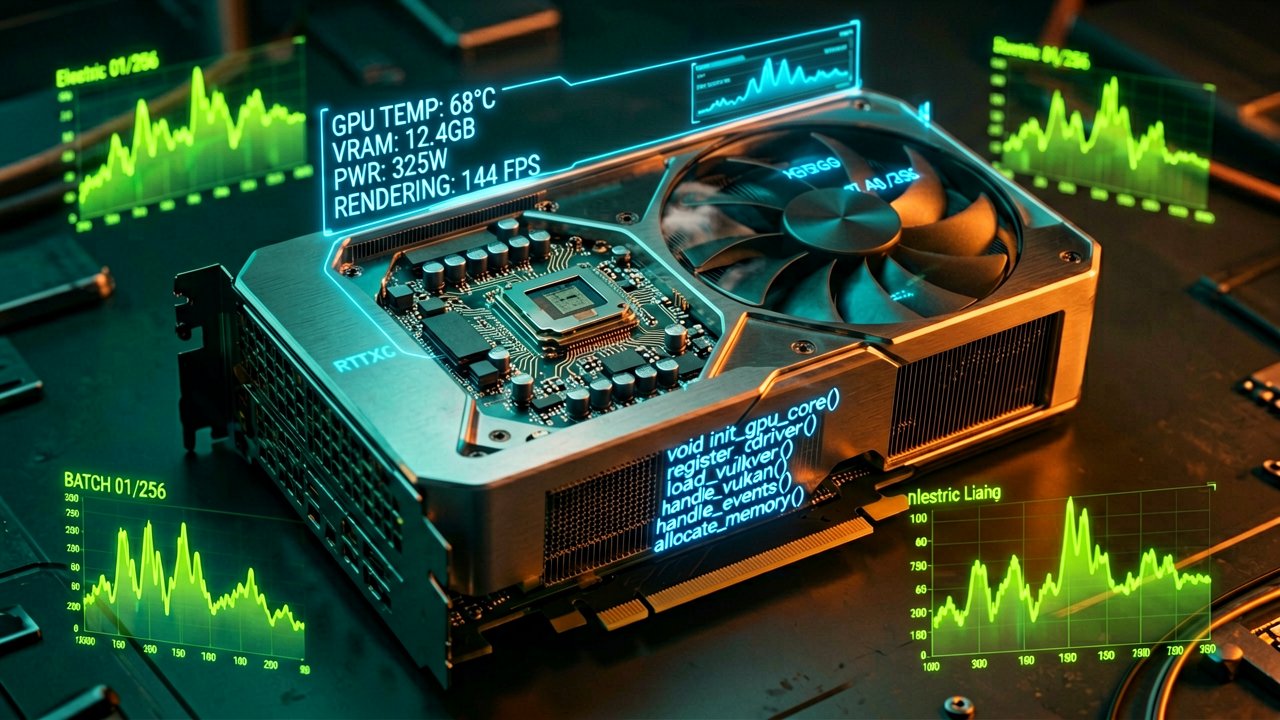
If you're gearing up to jump into the upcoming wave of summer releases, your graphics card is about to get a major performance booster shot. NVIDIA officially rolled out its latest GeForce 610.62 WHQL Game Ready Driver on June 16, 2026, delivering crucial real-time software optimizations tailored for modern hardware like the RTX 40-series GPUs. The headline act for this deployment is day-one support for 1047 Games’ fast-paced 6v6 movement shooter Empulse, ensuring players can instantly tap into the cutting-edge benefits of DLSS 4.5 Dynamic Multi Frame Generation and low-latency Reflex technologies when the game drops into Steam Early Access later this month.
While optimization for new software is always welcome, a breakdown by OC3D highlights that this update functions heavily as a critical house-cleaning release for existing desktop setups. Beyond the immediate performance enhancements for fresh titles, the package actively resolves a handful of frustrating, long-standing bugs that have been plaguing the community's favorite competitive landscapes. For instance, the new software patches away structural stability glitches causing crashes in World of Warcraft and eliminates the random, distracting visual artifacting that frequently cropped up during extended matches in Apex Legends.
Under-the-Hood Polish for G-SYNC and DLSS
The engineering team behind the package also targeted several underlying framework quirks to provide better quality-of-life consistency across premium hardware arrays. According to tech documentation verified by TechPowerUp , this 610.62 version resolves an annoying issue where DLSS configurations would randomly gray out inside specific games, restoring a standard path to upscaling toggles. Furthermore, Ada Lovelace desktop architectures—specifically the GeForce RTX 40-series cards—receive a vital fix addressing irregular frame pacing behaviors that hit multi-monitor configurations and certain displays when G-SYNC was actively running, offering a far slicker desktop and spatial rendering environment across the board.
The Paradox of AI-Driven Performance
Reading Between the Lines: The celebratory tech press usually greets these driver rollouts as a triumph of continuous engineering, but a deeper look reveals a rather uncomfortable contradiction at the heart of modern graphics hardware. We are told that architectures like the RTX 40-series represent the pinnacle of raw silicon horsepower, yet they seem increasingly unable to run next-generation titles out of the box without a complex web of software life-support. The fact that a game like Empulse requires an immediate injection of DLSS 4.5 Dynamic Multi Frame Generation just to guarantee an optimal day-one experience suggests that native rendering is becoming a luxury of the past, replaced by an artificial illusion of performance stitched together by machine learning algorithms.
This heavy reliance on algorithmic crutches exposes a growing divide between hardware capabilities and software optimization. Game developers, safe in the knowledge that chipmakers will deploy post-launch driver band-aids, are arguably disincentivized from shipping fundamentally polished, highly optimized code. Consequently, the burden of stabilization has shifted entirely from the game studios onto NVIDIA’s software engineers, who must continually rewrite microcode to fix rendering pipelines that should have been solid before the game ever went gold. It is a brilliant marketing loop for selling new GPUs, but it creates an unpredictable ecosystem for the consumer, who is left wondering if their expensive hardware is actually powerful or just really good at guessing what the next frame should look like.
Furthermore, the long list of bug fixes in the 610.62 package—sorting out everything from grayed-out DLSS toggles to G-SYNC multi-monitor stutter—highlights how fragile these premium configurations truly are. When an enthusiast spends thousands on a top-tier display array and a flagship graphics card, they expect a seamless experience, yet they remain vulnerable to basic frame-pacing regressions that take months to patch out. This constant cycle of breaking and fixing underlying desktop frameworks implies that as hardware ecosystems become more complex, true stability becomes a moving target that is never quite reached, only temporarily managed until the next title drops.
Looking ahead, this trajectory suggests that future hardware generations will be judged far less on their physical transistor counts and far more on the agility of their cloud-trained AI upscalers. If raw rasterization performance continues to plateau under the weight of physical semiconductor limits, the industry will have no choice but to double down on these heavy software interventions. For players, this means the longevity of a graphics card is no longer determined by its physical build quality, but by how long a manufacturer deems it economically viable to keep tweaking its driver code to support tomorrow's unoptimized engines.
Purchasing a modern high-end graphics card is a lot like buying a high-performance sports car, except the manufacturer secretly visits your garage every three weeks to retune the engine, occasionally fixes the air conditioning, and subtly rewires the dashboard just to ensure it doesn't stall at the next traffic light.
Artūras Malašauskas is an AI Systems Integrator with 20+ years of production-grade web engineering experience. He has designed, shipped, and scaled enterprise Python/PHP systems for logistics, SaaS, and public-sector clients. For the past year, he has focused exclusively on AI integrations: deploying open-source LLMs, building generative media pipelines (image, audio, video), and engineering multi-agent workflows for real production environments. His standard: reproducibility, security, cost-efficient inference—no vaporware. He documents and evaluates emerging AI tooling, separating verified capabilities from marketing noise. Technical editor at: muza-ai.eu, ai-verslas.lt, ai-naujinos.lt Connect on LinkedIn
Comments