Silicon Overhaul: How ASUS ProArt and NVIDIA RTX Spark Realign the Creative Workstation Market
The premium creator workstation segment is undergoing a fundamental structural transition. At Computex 2026, ASUS redefined the baseline parameters of on-device production by unveiling the ProArt P16 and ProArt P14 laptops, powered directly by the newly announced ASUS Press Room NVIDIA RTX Spark superchip architecture. By aggressively pivoting away from generalized x86 consumer silicon configurations toward deep hardware-level software co-engineering, this rollout signals a definitive shift from cloud-dependent generative tools to hyper-efficient, highly secured local AI execution pipelines.
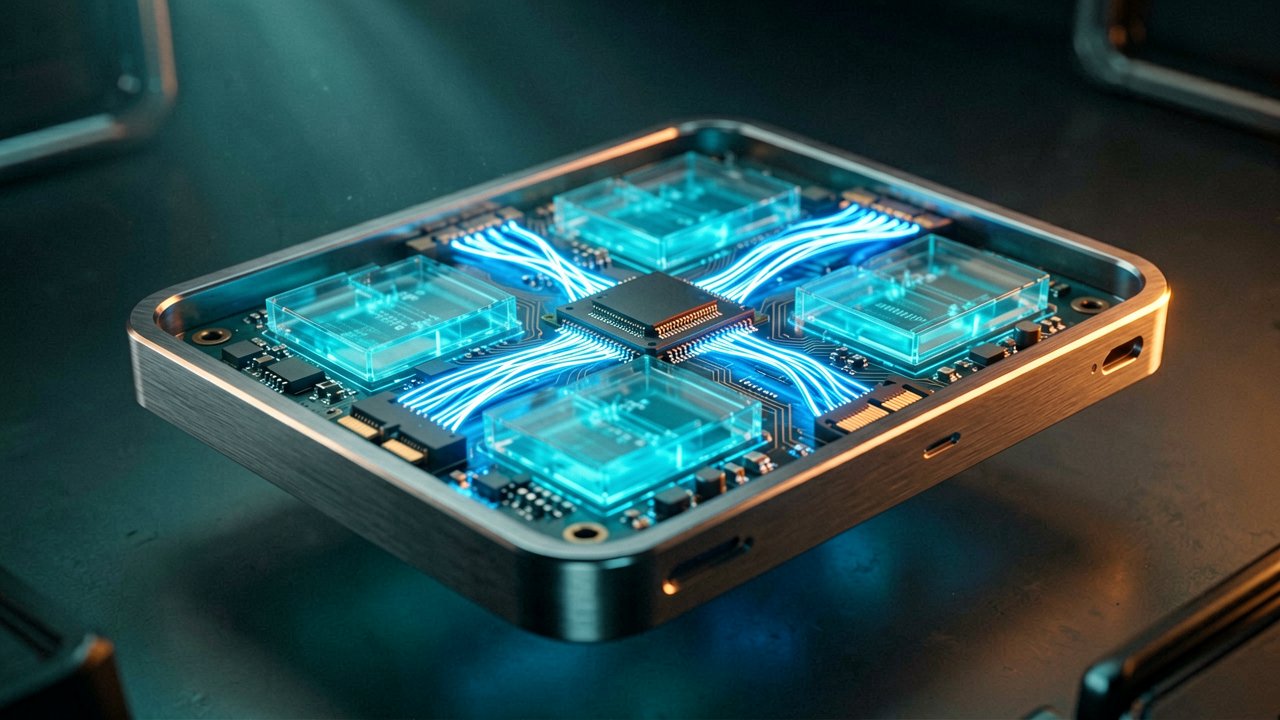
Historically, mobile creative units forced a compromising trade-off between thermal viability and peak computational headroom. The implementation of the RTX Spark platform effectively breaks this engineering bottleneck by consolidating an enterprise-grade, 20-core NVIDIA Grace CPU and a next-generation NVIDIA Blackwell RTX GPU containing 6,144 CUDA cores onto a unified, ultra-low-latency NVLink-C2C interconnect fabric, as documented by TechPowerUp. This cohesive architectural integration delivers up to 1 petaflop of local AI processing power, effectively positioning these portable systems as decentralized studio workstations capable of executing workflows that previously demanded multi-GPU server clusters.
Architectural Dominance via Unified Memory
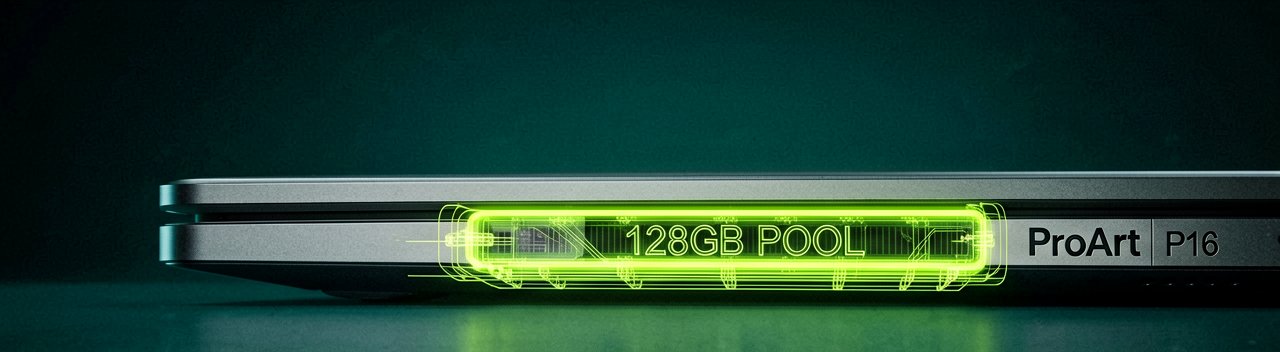
The defining structural upgrade within the ProArt RTX Spark framework is the implementation of a Unified Memory Architecture (UMA) supporting up to 128GB of high-speed system memory. For creative professionals, this memory pooling eliminates the traditional, restrictive VRAM ceiling that has long choked intricate 3D assets and ultra-high-resolution video pipelines. This massive shared pool allows local workflows to fluidly render expansive 90GB+ 3D scenes, seamlessly edit uncompressed 12K 4:2:2 video streams, and load highly complex 120-billion-parameter Large Language Models (LLMs) featuring context windows of up to 1 million tokens without experiencing data bottlenecking or out-of-memory pipeline crashes.
Ecosystem Co-Engineering and Real-Time Scaling
Hardware capability remains inert without deep ISV integration, a reality ASUS addresses through intensive ecosystem optimization. Software giants are fundamentally re-architecting their flagship applications to leverage the unique processing topologies of the RTX Spark platform; for instance, Adobe is rebuilding Photoshop and Premiere Pro from the foundational codebase up to secure an immediate 2x performance increase in AI-driven tools and standard timeline graphics rendering, according to PCMag Middle East. This hardware-software synergy is complemented by on-device proprietary utilities, such as the FLUX.2-powered MuseTree engine for localized, rapid generative image and video ideation, which explicitly extracts maximum acceleration from the architecture's native fifth-generation Tensor Cores using ultra-dense FP4 precision matrices.
Market Impact and Comparative Mobility Analysis
By bypassing traditional, separate CPU-GPU layouts, the extreme thermal and electrical efficiency of the consolidated RTX Spark superchip enables ASUS to dramatically shrink the industrial physical profile of its hardware. The ProArt P16 slashes chassis dimensions to an ultra-thin 12.9 mm profile while scaling total mass down to 1.77 kg—establishing an aggressive competitive advantage against incumbent portable workstations. When evaluated side-by-side against the reigning premium benchmark, the ASUS architecture undercuts the physical dimensions of the 2026 Apple MacBook Pro 16, which registers at a thicker 16.8 mm profile and a heavier 2.15 kg mass, as analyzed by Windows Central. Coupled with highly accurate, 1,600-nit peak brightness Lumina Pro OLED panels boasting a Delta E color variance of less than one, these units present a highly disruptive challenge to competitive computing ecosystems by offering uncompromised, all-day battery performance alongside desktop-class local terminal capabilities.
Unmasking the Silicon: How the NVLink Breakthrough Solved the Mobile Workstation Thermal Trap
Behind the Data Sheets: The true engineering triumph of the ASUS ProArt RTX Spark architecture lies not in raw core counts, but in the elimination of the PCI-Express bottleneck that has plagued mobile workstation design for a decade. Historically, mobile professionals faced a rigid thermal wall; cramming a discrete workstation CPU and an independent GPU into a slim chassis created dual heat sources that inevitably forced aggressive thermal throttling. By integrating the NVIDIA Grace CPU and Blackwell GPU onto a unified substrate via an ultra-high-bandwidth NVLink-C2C interconnect, engineers bypassed the high power draw and physical footprint of traditional discrete components. This consolidated architecture allows the system to dynamically shift power between processing units in real time, letting the chassis dissipate heat far more effectively than any split-silicon predecessor.
This technical pivot has sparked intense debate among industry veterans and silicon analysts regarding the future of the independent component market. For years, the hardware ecosystem relied on modularity, allowing manufacturers to mix and match processors from competing chipmakers to hit specific price-to-performance targets. The tightly bound nature of the RTX Spark platform signals a definitive industry shift toward highly integrated, single-vendor proprietary architectures. While this approach dramatically optimizes power efficiency and data throughput, it concentrates ecosystem control in fewer hands, forcing system integrators like ASUS to align their product roadmaps directly with the overarching architectural visions of their primary silicon partners.
From a studio software development standpoint, this architectural consolidation represents a massive paradigm shift in how creator applications are programmed. Software engineers at major creative suites are transitioning away from writing generalized code meant to run across fragmented hardware configurations. Instead, they are tailoring their computation models to treat system memory and graphics memory as a singular, fluid entity. This fundamental shift eliminates the costly data duplication cycles where information had to be constantly copied back and forth between system RAM and dedicated VRAM, a process that historically caused noticeable timeline stuttering during heavy color grading or complex multi-layered VFX compositing.

The operational implications of these decentralized local AI pipelines are already reshaping corporate IT and studio security strategies. Moving massive data sets to the cloud for generative rendering or heavy data processing introduces significant latency, high bandwidth costs, and serious intellectual property vulnerabilities. Industry compliance officers are increasingly pushing back against cloud-dependent creative workflows due to the risk of data leaks. By standardizing on compact, local 1-petaflop terminals, production houses can keep sensitive pre-release footage, confidential brand assets, and proprietary machine learning models completely within their local network perimeters, satisfying strict security mandates without sacrificing creative velocity.
Reading Between the Lines: The Hidden Costs of Monolithic Creative Ecosystems
The Reality Check: While the raw performance metrics of the ASUS ProArt RTX Spark platform are undeniably impressive, the industry's uncritical enthusiasm overlooks a looming economic contradiction for independent creative professionals. Upgrading to a unified silicon architecture inevitably means sacrificing long-term hardware repairability and modular component lifecycles. In a traditional workstation ecosystem, a blown motherboard component, a failing memory module, or a degraded battery does not render the entire machine obsolete. With the RTX Spark platform, the hyper-consolidation of the 20-core Grace CPU, the Blackwell GPU, and 128GB of system memory onto a single unified fabric effectively ensures that a solitary hardware failure equals total system replacement, significantly elevating the long-term total cost of ownership.
Furthermore, the strategic pivot toward entirely localized AI processing presents an optimization paradox that software developers are only beginning to address. ASUS and NVIDIA heavily market the 1-petaflop on-device capability as a complete liberation from cloud dependencies and fluctuating subscription fees. However, local machine learning models are inherently constrained by the physical thermal design power (TDP) limitations of a 12.9 mm chassis. While running a local 120-billion-parameter model is technically feasible, doing so under sustained workloads will inevitably force thermal throttling, rendering the actual real-world processing velocity significantly slower than a localized studio server array or a scaled cloud computing cluster.
This reliance on hyper-specific hardware architectures also introduces a dangerous software fragmentation risk across the broader creative industry. Because these laptops require deep, foundational software re-architecting to utilize their unified memory structures, smaller indie software developers face an steep uphill battle. Large conglomerates like Adobe possess the massive engineering capital required to rebuild their codebases specifically for the RTX Spark interconnect, but boutique open-source projects and specialized VFX toolmakers may struggle to keep pace. This disparity risks creating a polarized market where premium creative hardware only delivers its advertised performance leaps when running software from dominant tech monopolies, inadvertently restricting creative choice in the process.
Ultimately, the true barrier to widespread adoption will not be computational performance, but the premium pricing tiers dictated by such high levels of proprietary silicon integration. Historically, professional-grade creative tools justified their high costs through sheer longevity, frequently serving as reliable production workhorses for half a decade or more. In the rapid, volatile lifecycle of modern artificial intelligence, hardware architectures become structurally obsolete every eighteen months as new precision formats and tensor advancements emerge. Studios and freelancers alike must now calculate whether it is financially viable to amortize an expensive enterprise-grade mobile terminal when the underlying AI accelerators might be outpaced by the next generational chip architecture before the laptop's physical warranty even expires.
"We have finally achieved the dream of packing an entire Hollywood render farm into a sleek, ultra-thin laptop that fits comfortably in a standard backpack—though creative directors might need to upgrade their financial credit limits just as quickly as they upgrade their local AI parameters."
Artūras Malašauskas is an AI Systems Integrator with 20+ years of production-grade web engineering experience. He has designed, shipped, and scaled enterprise Python/PHP systems for logistics, SaaS, and public-sector clients. For the past year, he has focused exclusively on AI integrations: deploying open-source LLMs, building generative media pipelines (image, audio, video), and engineering multi-agent workflows for real production environments. His standard: reproducibility, security, cost-efficient inference—no vaporware. He documents and evaluates emerging AI tooling, separating verified capabilities from marketing noise. Technical editor at: muza-ai.eu, ai-verslas.lt, ai-naujinos.lt Connect on LinkedIn
Comments