Strategic Investment Opportunities in Undervalued AI Stocks Amid Market Volatility

The broader technology sector is currently experiencing a wave of tactical re-evaluations as recent earnings reports and revised forward guidance trigger short-term sell-offs. According to market commentary on Yahoo Finance, institutional investors are analyzing these macro pullbacks not as permanent structural defects, but as strategic entry points for long-term capital appreciation. While high-flying chip design firms trade near historic multiples, secondary infrastructure players and customized enterprise service providers are absorbing the brunt of recent price corrections, widening the gap between intrinsic business value and current market sentiment.
Market analysts are actively debating whether this volatility signals an optimal window to establish positions in select beaten-down artificial intelligence equities. According to research cited by The Motley Fool, specialized infrastructure and chip manufacturing assets—including CoreWeave and Broadcom—have faced noticeable post-earnings downward pressure. Broadcom's recent softer-than-expected guidance for its core AI chip division surprised Wall Street, mask-shifting long-term revenue upside and creating a potential discount for value-oriented buyers who look past immediate quarterly noise.
This localized compression arrives even as long-term demand indicators for cloud and data-center architecture continue their steep northward trajectory. Strategic macro overviews republished by AOL stress that hyper-scalers are projected to deploy massive infrastructure investments over the next five years. However, executing buy-the-dip strategies in this climate requires deep analytical scrutiny. High revenue concentration and delayed near-term profitability metrics mean that although structural tailwinds remain intact, initial portfolio positioning must remain calculated to mitigate localized cash-flow risks.
Dissecting the CoreWeave and Broadcom Valuation Dilemma
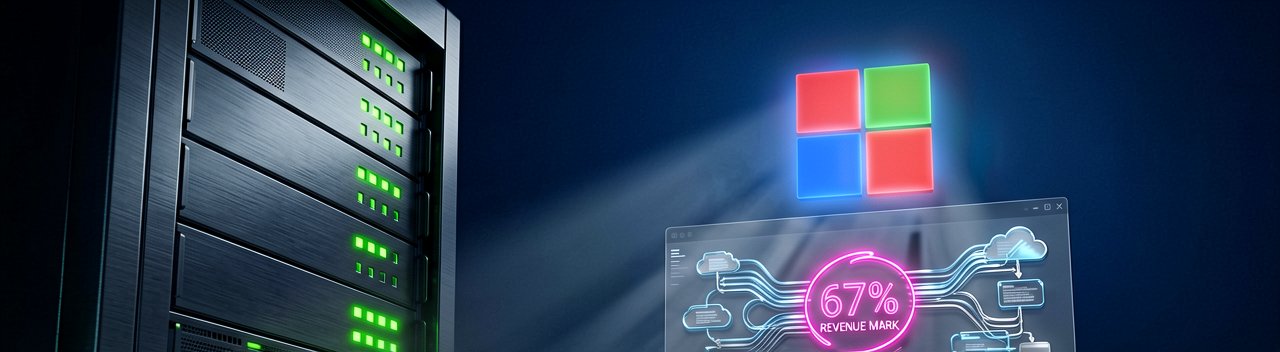
CoreWeave highlights the typical high-growth, high-risk paradigm currently dividing Wall Street analysts. The company boasts massive macro catalysts, notably its upcoming inclusion in the Nasdaq-100 index and an acceleration in hardware deployments. However, it currently commands a steep price-to-sales ratio of 8.2 and remains heavily reliant on Microsoft, which accounted for approximately 67% of its fiscal year 2025 revenues. Any capital expenditure moderation from its primary client could severely compress future margins, justifying the present valuation discount.
Conversely, Broadcom represents a fundamentally profitable giant facing temporary product-mix headwinds. Management noted that massive demand for rapidly expanding AI semiconductors has temporarily diluted overall gross margins relative to legacy software operations. Despite these short-term adjustments, its underlying market footprint across data-center connectivity and customized application-specific integrated circuits (ASICs) positions it as a resilient beneficiary of ongoing hyperscaler capital expenditures.
Navigating Risk Distribution in Volatile AI Subsectors
Mitigating down-side risk requires shifting focus away from generalized speculation toward verifiable contract pipelines and hardware backlogs. Investors must rigorously distinguish between software businesses struggling to monetize AI adoption and core infrastructure providers whose physical order books are filled several quarters in advance. Diversifying across structural layers—such as pairing infrastructure optimization platforms with diversified chip architects—helps insulate portfolios against sudden, single-customer spending adjustments.
Behind the Scenes of the Hyper-Scaler Spending Tug-of-War
The Hidden Mechanics of the AI Capex Cycle: What standard financial reports frequently overlook is the increasingly volatile power dynamic between the world's largest hyper-scalers and the secondary hardware ecosystem. While surface-level analysis focuses purely on quarterly capital expenditure figures, the true risk lies in the structural concentration of revenue. When a single tech giant accounts for over half of an infrastructure provider’s pipeline, the smaller entity essentially functions as an outsourced research and development arm, absorbing massive capital risks while remaining entirely dependent on the strategic pivots of its largest client.
This dependency exposes a sharp divergence in institutional sentiment regarding current valuation multiples. Risk-mitigation desks are quietly warning that the current pace of data center construction may outstrip immediate enterprise software monetization. If hyper-scalers choose to decelerate their infrastructure builds to allow demand to catch up with capacity, specialized cloud providers face an immediate margin squeeze due to heavy fixed depreciation costs. Consequently, the recent stock price compressions are less about deteriorating technology and more about the market pricing in this potential deployment deceleration.
Conversely, seasoned technology reporters note that historical market cycles often reward patience during infrastructure buildouts. The transition from mainframe computing to client-server architecture, and later to mobile cloud computing, faced identical periods of skepticism where physical buildout outpaced immediate application software development. Institutional asset managers who recognize this pattern are systematically accumulating positions in core connectivity and application-specific integrated circuit developers, viewing the current earnings-induced volatility as a classic mid-cycle consolidation rather than a structural peak.
The strategic shift forward requires looking past the raw volume of chips shipped to evaluate the efficiency of the underlying architecture. As data centers face unprecedented power grid constraints and cooling limitations, the premium is rapidly shifting from raw computational speed to energy-efficient networking and custom silicon. Companies that can maintain high gross margins while solving these thermodynamic bottlenecks are the ones quietly securing long-term enterprise contracts, shielding their stock valuations from the broader macro-driven liquidation trends currently impacting the sector.
Reading Between the Lines: The Friction Between Hype and Capital Efficiency
The Hidden Costs of Computational Dominance: Mainstream financial analysis persistently treats the artificial intelligence buildout as an infinite runway, yet this perspective ignores the hard physical and economic limits looming over the sector. Wall Street frequently celebrates massive hardware procurement announcements while failing to reconcile those expenditures with the realities of enterprise software adoption. The underlying contradiction is stark: while infrastructure providers are valued on the assumption of exponential, multi-year demand, the actual corporate buyers of these AI services are increasingly demanding immediate cost reductions and measurable returns on investment that current software applications struggle to deliver.
This valuation mismatch becomes particularly evident when examining the cash-flow profiles of secondary AI infrastructure plays. Operating a specialized, GPU-heavy cloud network requires immense up-front capital, forcing these companies to carry substantial debt loads or rely heavily on dilutive equity financing. When a single major client accounts for the vast majority of recurring revenue, the infrastructure provider possesses virtually no pricing power. Should that primary customer decide to insource its chip design or optimize its internal workloads to reduce reliance on external clusters, the financial shockwaves will hit the overleveraged infrastructure providers first and hardest.
Furthermore, the broader market remains overly optimistic about the pace of enterprise integration. Migrating legacy corporate workflows to sophisticated autonomous models is not merely a matter of purchasing API access; it requires sweeping data engineering, rigorous compliance auditing, and extensive security filtering. As corporate IT budgets tighten amid broader macroeconomic uncertainty, enterprises are quietly extending their evaluation timelines. This pragmatic slowdown directly collides with the hyper-aggressive growth projections baked into current AI stock valuations, setting the stage for further localized market corrections.
Ultimately, the strategic opportunities in this volatile landscape belong exclusively to companies that can decouple themselves from the raw computational arms race. The market is beginning to recognize that buying more silicon yields diminishing returns without corresponding breakthroughs in networking efficiency and power management. Investors who blindly chase the decline in stock price without analyzing a company's exposure to single-customer risk or its vulnerability to hardware commoditization are likely catching a falling knife rather than securing a generational value play.
"Investing in artificial intelligence infrastructure right now is remarkably similar to building the early transcontinental railroads: everyone agrees it is the undisputed future of human civilization, but history suggests the people who actually build the tracks usually go bankrupt right before the train finally arrives."
Artūras Malašauskas is an AI Systems Integrator with 20+ years of production-grade web engineering experience. He has designed, shipped, and scaled enterprise Python/PHP systems for logistics, SaaS, and public-sector clients. For the past year, he has focused exclusively on AI integrations: deploying open-source LLMs, building generative media pipelines (image, audio, video), and engineering multi-agent workflows for real production environments. His standard: reproducibility, security, cost-efficient inference—no vaporware. He documents and evaluates emerging AI tooling, separating verified capabilities from marketing noise. Technical editor at: muza-ai.eu, ai-verslas.lt, ai-naujinos.lt Connect on LinkedIn
Comments