HCL’s Investment in Sarvam AI and Zoho’s Server Launch Signal Growing AI Sovereignty Priorities
The global race for technological self-reliance has reached a critical inflection point as prominent Indian technology firms pivot heavily toward infrastructure ownership and localized intellectual property. In a major consolidation of domestic capabilities, IT services titan HCLTech announced a strategic $150 million investment to acquire a 10.46% stake in homegrown artificial intelligence startup Sarvam AI, anchoring a $234 million first close of the startup's Series B funding round, per an official press release hosted on HCLTech. Concurrently, enterprise software giant Zoho Corporation has officially ventured into IT hardware with the debut of "Nathu La," its first indigenously designed server platform engineered specifically to manage large language models and generative AI inference workloads, according to reporting by Business Wire. Together, these parallel market movements signal a profound structural shift away from a simple "AI-as-a-Service" implementation model toward a robust, full-stack sovereign framework that ringfences data, software, and computational hardware within national borders.
This dual-track advancement addresses escalating enterprise anxieties regarding global supply chain vulnerabilities, foreign regulatory dependencies, and the skyrocketing computational costs associated with proprietary western AI architectures. By injecting substantial capital into Sarvam AI, HCLTech secures direct participation in the development of foundational, multilingual large language models that are trained from scratch in India and tailored specifically for highly regulated fields like banking, insurance, and government technology, as detailed by Reuters. Meanwhile, Zoho’s entry into server manufacturing directly targets the underlying physical layer of AI economics, attempting to systematically break the monopoly of foreign hyperscalers and cloud infrastructure providers. These developments underscore a deliberate corporate consensus that true digital sovereignty cannot exist without native control over both the algorithmic models and the data center hardware on which they operate.
Upstream Integration and the Fight for Foundation Model Autonomy
HCLTech’s massive capital injection values Sarvam AI at $1.5 billion, catapulting the Bengaluru-based startup into unicorn status and establishing a critical precedent for Tier-1 IT service firms, according to data from TechCrunch. Historically, Indian tech majors acted primarily as downstream system integrators, deploying third-party American platforms like OpenAI or Microsoft Azure for global corporate clients. By transforming into a principal strategic investor in a sovereign foundational layer, HCLTech secures early access to localized agentic AI and voice-first pipelines designed to interact seamlessly across multiple vernacular languages. This move creates an immediate competitive moat against global advisory peers, matching a rising demand from sovereign entities and enterprise boards that require all data valuation loops, training audits, and model weights to remain strictly within regional jurisdictions.
Vertical Hardware Integration to Mitigate Hyperscaler Economics
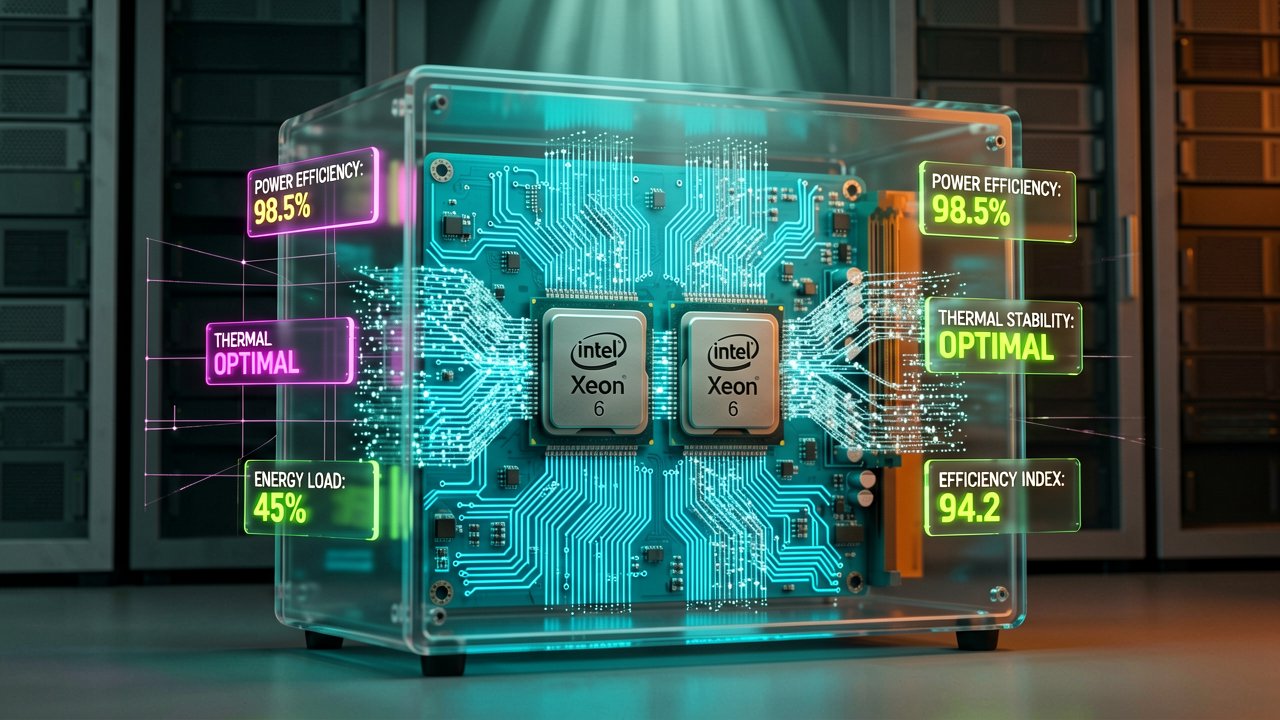
Compounding the push for software autonomy, Zoho Corporation’s five-year hardware research and development initiative culminates in an open-architecture server platform designed to dramatically compress operational margins, as explained by CIO Africa. Powered by Intel Xeon 6 processors and built on Open Compute Project principles, the "Nathu La" platform yields a 12% to 18% reduction in power consumption and slashes the total cost of ownership by 20% to 30%. Because inference costs scale exponentially as enterprise applications absorb generative features, relying entirely on foreign commercial cloud vendors introduces severe pricing volatility and margins erosion. Zoho’s vertical integration from custom motherboards and proprietary secure control modules up to the application layer allows the firm to optimize hardware directly for its software workloads, providing insulation from international semiconductor supply bottlenecks and foreign security audits.

Geopolitical Realities and the Paradigm of Regional Technology Stacks
These market maneuvers reflect a broader geopolitical consensus where data sovereignty and technological self-reliance are treated as core national security components. As international export curbs and cloud licensing regimes tighten, corporate reliance on non-domestic software layers poses a distinct operational continuity risk. The independent architecture realized by Zoho’s hardware engineering and HCLTech's foundation model backing ensures complete alignment with regional procurement standards and domestic digital infrastructure initiatives, as highlighted by Portal ERP. Moving forward, the global technology landscape will likely continue to fracture into localized, highly defensible regional technology ecosystems, making full-stack independence a baseline requirement for enterprise data governance and national technological resilience.
The Hidden Architecture of Digital Autonomy
Behind the Corporate Press Releases: The synchronized movements by HCLTech and Zoho represent a structural rebellion against the economic tax imposed by dominant Western cloud provider monopolies. For the past decade, enterprise technology firms have operated under an unwritten rule that computational scale could only be rented from a handful of hyper-scale cloud vendors. By bankrolling Sarvam AI’s foundation model research and designing physical hardware in-house, these organizations are actively attempting to rewrite the unit economics of corporate intelligence. Industry insiders recognize that the escalating costs of inference tokenization pose a severe threat to operating margins, making the creation of an entirely self-sufficient tech stack an economic necessity rather than a purely nationalistic goal.
The geopolitical undercurrents shaping these investments extend far beyond the immediate commercial advantages. As cross-border data privacy regulations tighten and international software licensing models face sudden political shifts, enterprise boards are realizing that data residency compliance is meaningless if the underlying algorithmic logic remains subject to foreign jurisdictions. Analysts tracking regional tech ecosystems note that cultivating localized models like Sarvam’s vernacular pipelines provides an essential buffer against the weaponization of intellectual property. This approach establishes a secure perimeter where local enterprise workflows can safely incorporate deep machine learning without exposing sensitive proprietary data loops to global cloud scraping practices.
Furthermore, Zoho's entry into server manufacturing highlights a long-term transition from traditional software development to hardware-software co-design. Standard off-the-shelf data center architectures are fundamentally unoptimized for the highly specialized, high-throughput demands of modern transformer models. By taking control of the physical motherboard design and power optimization frameworks, enterprise players can achieve significant efficiency gains that standard public cloud environments simply cannot offer. This level of granular control protects engineering teams from erratic global component shortages and allows for localized supply chain auditing, ensuring that the physical systems powering critical business infrastructure are entirely auditable and verifiable from the silicon level up.

This macro-level strategy ultimately changes the value proposition of system integrators and technology providers in the global marketplace. Instead of serving as mere implementation partners for foreign technologies, regional players are establishing their credentials as independent architects of end-to-end digital infrastructure. As more corporations demand complete structural sovereignty, the ability to deliver localized models paired with hyper-efficient, custom-engineered hardware will likely dictate the next era of enterprise cloud competition. This shift effectively marks the end of the uniform global cloud model, replacing it with specialized, highly defensible regional ecosystems built for long-term technological resilience.
Sovereignty or Subsidy: The Cost of Fractured Ecosystems
Reading Between the Lines: The aggressive push for technological sovereignty through localized investments and bespoke hardware development masks a deeper structural vulnerability. Corporate narratives celebrate these milestones as definitive declarations of independence, yet they gloss over the immense economic inefficiency of reinventing the wheel. Building specialized data center infrastructure and training foundational large language models from scratch demands continuous, multi-billion-dollar capital injections just to maintain parity with global hyperscalers. The market assumes that local enterprise client loyalty will naturally absorb these costs, but historical precedent suggests that corporate procurement teams will ultimately choose raw performance and cost efficiency over patriotic infrastructure alignment when margins come under pressure.
A glaring contradiction lies in the physical hardware layer itself, where the illusion of total self-reliance quickly unravels upon closer inspection. While Zoho’s indigenous design reduces reliance on foreign cloud providers, the underlying silicon, proprietary advanced packaging, and critical semiconductor manufacturing equipment remain heavily concentrated in a few tightly controlled global nodes. True hardware sovereignty cannot be achieved simply by designing motherboards and power distribution systems if the core microprocessors are still subject to international trade restrictions and foundry bottlenecks. By focusing heavily on assembly and high-level architecture, companies risk building an expensive localized infrastructure stack that remains deeply tethered to the very global supply chains they are trying to bypass.
Furthermore, fracturing the global AI landscape into isolated regional silos could inadvertently stall long-term algorithmic innovation. The current rapid evolution of artificial intelligence relies on open-source collaboration, massive shared global datasets, and cross-border academic research. Forcing the market into regional data compliance models and hyper-localized training loops severely restricts the diversity of information available to these systems, creating localized models that may suffer from narrow contextual blind spots. Enterprise clients could soon find themselves trapped in regional vendor ecosystems that offer heightened data regulatory compliance at the direct expense of cutting-edge computational capability and global operational compatibility.
As these sovereign strategies mature, the enterprise tech market is likely to see a stark divergence between political expectations and market realities. While government agencies and heavily regulated domestic industries will gladly subsidize these sovereign stacks to meet strict data residency mandates, competitive commercial sectors may find the "sovereignty tax" too high to bear. The long-term viability of these massive infrastructure plays will not be determined by the initial capital raised or the novelty of domestic hardware design, but by whether these localized stacks can deliver raw commercial utility on par with their unrestricted global counterparts without requiring permanent artificial protectionism.
"In the grand theater of modern technology, digital sovereignty is the ultimate prestige piece—breathtakingly expensive to produce, fiercely applauded by local critics, and quietly bypassed by enterprise accountants the moment a cheaper cloud subscription becomes available across the border."
Artūras Malašauskas is an AI Systems Integrator with 20+ years of production-grade web engineering experience. He has designed, shipped, and scaled enterprise Python/PHP systems for logistics, SaaS, and public-sector clients. For the past year, he has focused exclusively on AI integrations: deploying open-source LLMs, building generative media pipelines (image, audio, video), and engineering multi-agent workflows for real production environments. His standard: reproducibility, security, cost-efficient inference—no vaporware. He documents and evaluates emerging AI tooling, separating verified capabilities from marketing noise. Technical editor at: muza-ai.eu, ai-verslas.lt, ai-naujinos.lt Connect on LinkedIn
Comments