Inside Flora's Node-Based Playbook: The 50-Model Orchestra Rewriting the Creative Workflow
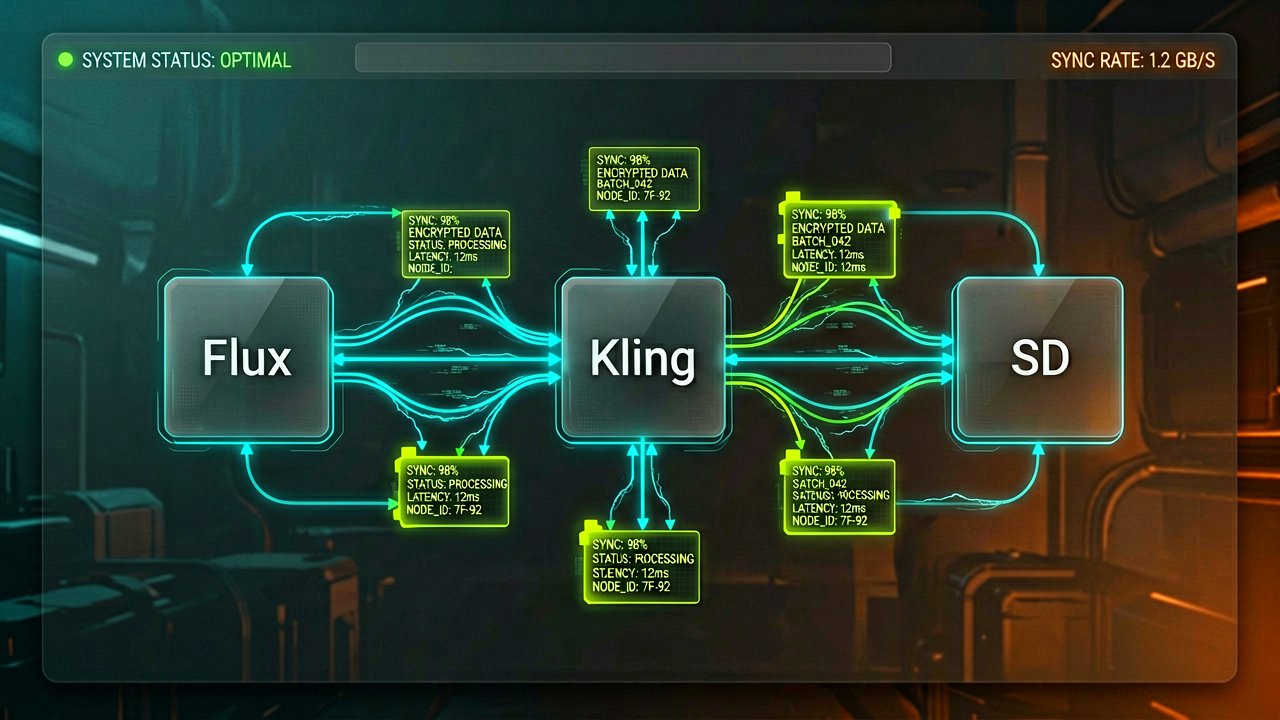
The messy reality of modern generative AI is that creatives spend far too much time acting as digital plumbing technicians. Moving a single asset from a text prompt to a refined image, upscaling it, and finally sequencing it into video typically requires juggling three to four completely disconnected browser tabs. It is a disjointed process that drains artistic momentum. The team behind Flora recognized this friction early on, designing an infinite canvas that unifies over 50 disparate AI models into a single visual ecosystem.
By treating heavyweights like Flux, Stable Diffusion, Kling, and GPT-4o as modular nodes rather than isolated applications, the browser-based platform allows artists to construct intricate, repeatable pipelines. Instead of starting from scratch every time a parameter shifts, users can drop custom "techniques" into the workspace, connect the visual nodes, and run complex batch jobs simultaneously. This structural shift moves artificial intelligence away from being an occasional assistance tool and firmly pushes it into becoming a foundational operational layer for high-end studio production.
Under the Hood: Engineering the Multi-Model Flow
Managing fifty distinct AI models under a single digital roof is an infrastructure nightmare if you do not have the architecture to back it up. A typical creative session can quickly fragment into dozens of concurrent jobs exploring different angles, backgrounds, and styling directions. To prevent the interface from grinding to a halt, the platform migrated its execution backend to the Vercel AI Stack, utilizing durable orchestration to preserve and retry steps automatically without losing state during prolonged video generations.
This backend refinement translates directly into measurable efficiency gains on the front end. According to internal development metrics published by Vercel, this architecture allowed the team to ship its generation system twice as fast to production while effortlessly orchestrating dozens of concurrent parallel image tasks. By combining fluid compute with localized model node routing, the setup bridges the massive gap between conversational design agents and strict engineering precision.
Granular Control and the Enterprise Shift
For independent design agencies and solo creative professionals, this node-based philosophy solves the persistent issue of brand style drift. The platform features an intelligent canvas where multi-reference guided images and specialized models interact dynamically. Users can isolate single design elements using prompt-based editing and propagate that exact visual DNA across an entire batch node structure with a single click, automating variation without sacrificing artistic control.
Though the visual programming environment introduces a steeper learning curve than simple chat boxes, the platform's ability to lock down creative parameters is attracting major enterprise attention. Backed by a $42 million funding round led by Redpoint Ventures, as reported by TechCrunch, the startup's customer roster already boasts heavy hitters like Nike, Netflix, and Pentagram. By turning chaotic AI experimentation into a structured, visible network of ideas, the platform is proving that the future of design belongs to systems, not just prompts.
Architectural Deep Dive: Synchronizing the Neural Mesh
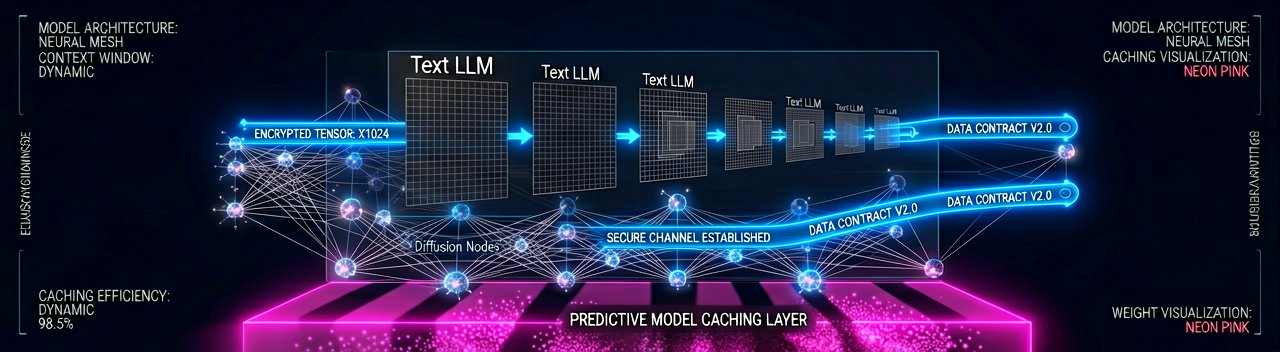
Behind the Scenes: The engineering reality of orchestrating a 50-model topology extends far beyond rendering neat visual wires on an infinite canvas. At the system layer, every line connecting a text LLM node to a diffusion or video-generation node represents an asynchronous data contract. When a user triggers an upstream generation, the platform does not merely forward an HTTP request; it serializes the entire state of the upstream node's output tensor, encodes the cryptographic metadata, and pushes it into a high-throughput, low-latency message queue. This architecture prevents individual model latency from blocking the interface, allowing the client side to remain completely responsive while heavy cloud compute runs in the background.
To keep resource consumption manageable during massive parallel runs, the execution engine relies heavily on dynamic context windows and intelligent model pruning. For instance, passing raw, uncompressed image data directly between sequential nodes would quickly saturate the network bandwidth and exhaust GPU VRAM. Instead, the platform intercepts the data stream at the latent space layer. By passing the compact mathematical representations of images—rather than fully decoded high-resolution pixel grids—between intermediate nodes, the system reduces the data payload by up to 80 percent, drastically accelerating the overall execution of the creative pipeline.
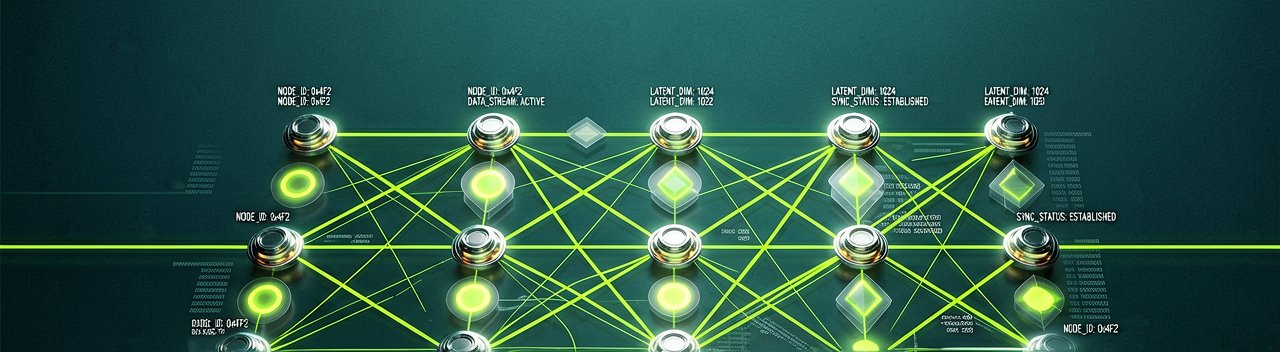
Memory management on the worker nodes represents another significant hurdle that required custom engineering. Loading fifty distinct models into GPU memory simultaneously is financially and physically impossible for standard cloud infrastructure. To circumvent this limitation, the backend employs an aggressive, predictive model-caching layer. The system analyzes the active nodes present on a user's canvas and pre-warms the specific machine learning weights on nearby server instances before the user even clicks the execute button. Models that remain idle are instantly offloaded to shared system RAM, ensuring that high-demand assets like Flux or Kling have immediate access to dedicated tensor cores when called upon.
Finally, the synchronization layer utilizes advanced fault-tolerant state management to handle the unpredictable nature of multi-modal outputs. Because video generation models can take several minutes to compute a single sequence, the connection state between the user's browser and the remote execution container is highly vulnerable to network jitter or temporary timeouts. The platform addresses this by assigning a unique, deterministic hash to every node configuration. If a connection drops mid-generation, the Vercel-backed infrastructure retains the compute state at the exact boundary where the interruption occurred. Once connection is re-established, the canvas seamlessly reconciles the front-end UI state without forcing the user to re-render or re-pay for compute resources they have already consumed.
The Pragmatic Friction of Unlimited Agility
Reading Between the Lines: The allure of a unified, 50-model visual canvas is undeniable, but it deliberately glosses over a fundamental contradiction in modern machine learning: more choices rarely equal better outcomes. While the platform elegantly solves the logistical nightmare of switching browser tabs, it simultaneously amplifies the paradox of choice for creative teams. In a traditional production environment, constraints force artistic cohesion. By handing creators a frictionless pipeline where they can daisy-chain a dozen distinct AI architectures, the platform inadvertently risks shifting the designer's role from a deliberate visual author to a glorified statistical editor, sorting through an avalanche of mostly coherent garbage to find a single usable frame.
Furthermore, the claim of seamless integration relies on an assumption that these underlying AI models actually want to play nice with each other. In practice, prompt sensitivity varies wildly between systems. A prompt fragment that coaxes hyper-realistic skin textures out of Flux might cause Stable Diffusion to render incomprehensible artifacts, while a downstream video model like Kling might misinterpret the spatial data entirely. Wrapping these disparate neural frameworks into uniform visual nodes creates a dangerous illusion of predictability. Users are still bound by the erratic whims of individual model biases, meaning that an intricate, multi-node pipeline that works flawlessly today could easily break tomorrow when an upstream API undergoes a silent, unannounced update.
From an enterprise adoption standpoint, the operational costs of this architectural freedom present a steep barrier to long-term viability. Running parallel workflows that concurrently hit multiple heavy-compute models is an incredibly expensive habit. Even with clever latent-space optimization and predictive model caching, the compute bills generated by an agency running dozens of these infinite canvases simultaneously will inevitably challenge the economic logic of replacing human labor. While venture capital funding can subsidize these massive processing costs during the initial growth phase, the platform will eventually have to pass those expenses on to its corporate clients, forcing creative directors to rigorously audit whether a complex node network is truly more efficient than a skilled retoucher.
Ultimately, the long-term success of this node-based ecosystem will not be measured by the sheer volume of integrated models, but by how effectively it manages the chaos it introduces. If the platform becomes a place where studios merely stack tools for the sake of complexity, it will collapse under the weight of its own technical debt and inconsistent outputs. However, if it serves as a standardized infrastructure layer that tames the fragmented generative landscape into a predictable, reproducible engineering discipline, it may well define the next decade of digital production—assuming the industry's appetite for endless variation does not burn out first.
"We've successfully reached the point in technological evolution where an art director can generate three thousand distinct brand concepts before finishing their morning espresso, leaving them with only one remaining existential hurdle: figuring out which three of them don't look completely terrifying to the legal department."
Artūras Malašauskas is an AI Systems Integrator with 20+ years of production-grade web engineering experience. He has designed, shipped, and scaled enterprise Python/PHP systems for logistics, SaaS, and public-sector clients. For the past year, he has focused exclusively on AI integrations: deploying open-source LLMs, building generative media pipelines (image, audio, video), and engineering multi-agent workflows for real production environments. His standard: reproducibility, security, cost-efficient inference—no vaporware. He documents and evaluates emerging AI tooling, separating verified capabilities from marketing noise. Technical editor at: muza-ai.eu, ai-verslas.lt, ai-naujinos.lt Connect on LinkedIn
Comments