GitHub's Multilingual Dataset Redefines Global AI Research Horizons
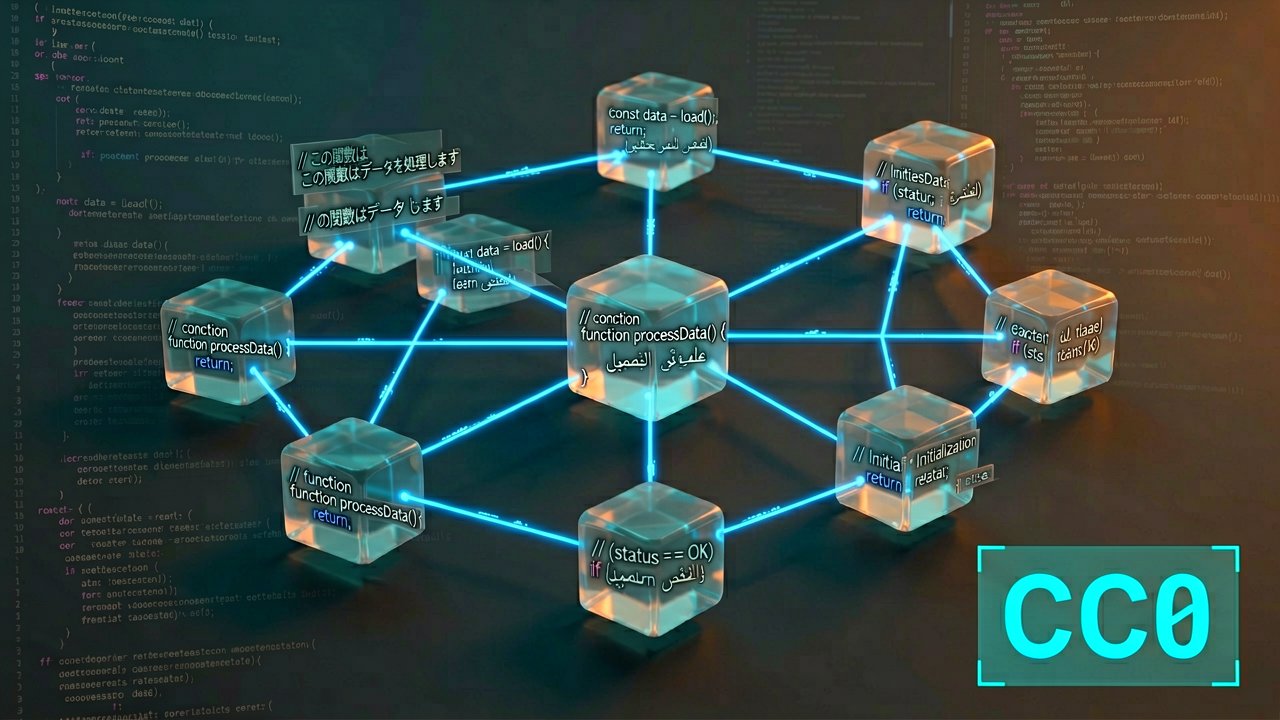
GitHub has unveiled a repository-level open dataset aimed at advancing artificial intelligence research across global languages. Released under the permissive CC0-1.0 license, the GitHub Multilingual Repositories Dataset allows engineers and researchers to locate public repositories containing non-English natural-language content across README files, issue threads, and pull request discussions. This initiative directly lowers barriers to entry for training open-source models outside the dominant English-centric paradigm.
The strategic deployment comes as part of GitHub’s broader alignment with parent company Microsoft’s European Digital Commitments established in 2025. By widening access to high-quality multilingual data, GitHub aims to cultivate an inclusive global developer ecosystem. Industry analysts view this as an intentional structural shift to address data scarcity in low-resource languages, which has historically bottlenecked localized generative AI capabilities.
Market Impact and Technical Implications
The modern artificial intelligence landscape remains severely constrained by data homogeneity. Most state-of-the-art foundation models are heavily skewed toward English web text, leading to poor performance, cultural misalignment, and elevated hallucination rates when deployed in non-Western markets. According to an official announcement on the GitHub Blog, this new data framework lets developers systematically extract structured, developer-focused communications to refine multilingual text understanding. By capturing the nuanced ways engineers coordinate code globally, the dataset provides a rich blend of technical jargon, colloquial problem-solving, and professional discourse in diverse native languages.
Strategic Alignment and Open Source Governance
This release reflects an ongoing geopolitical and corporate race to democratize localized AI architecture. Tech coverage from Help Net Security confirms that the tool fulfills key regulatory and open-access promises made to international governing bodies to promote open-source compliance and AI inclusivity. Providing clean, pre-filtered indexing at the repository level saves institutions thousands of computation hours typically wasted on scraping and deduplicating raw web text. Consequently, independent developers and regional academic hubs can now train specialized models that match the linguistic competence of commercial tools run by centralized tech giants.

An Inside Look at GitHub’s Structural Play for Sovereign AI
Behind the Scenes: This dataset launch is far more than a standard open-source contribution; it is a calculated response to the growing global demand for "sovereign AI." Over the past three years, non-anglophone nations and regional enterprises have grown increasingly frustrated by their reliance on Western foundation models that frequently stumble over local cultural nuances, legal frameworks, and linguistic structures. By surfacing structured multilingual data straight from active technical repositories, GitHub is providing the raw timber needed for regional developers to build independent, linguistically native systems from the ground up.
The timing of this release highlights an intriguing shift in how tech conglomerates manage international regulatory pressure. Industry insiders note that Microsoft and GitHub are ahead of the curve by voluntarily open-sourcing massive, high-utility data bundles. This move aligns perfectly with compliance mandates like the European Union’s regulatory frameworks, which favor transparency and open science. Instead of waiting for regulatory bodies to restrict or audit proprietary training loops, GitHub has flipped the script by positioning itself as the primary benefactor of the global research ecosystem.
From a technical standpoint, data engineering teams have long struggled with the sheer noise found in traditional web-scraping datasets. While common web crawls contain vast amounts of foreign-language text, they are often plagued by machine-translated spam, toxic content, and low-quality filler. GitHub's curated dataset offers a significant upgrade in quality because developer communications—such as pull requests, bug tracking, and inline documentation—require structured, logical thought and precise vocabulary. This dense, problem-solving prose serves as an ideal training ground for complex reasoning models.
However, the project is not without its internal friction points and developer anxieties. Within the open-source community, debates have already sparked regarding the ethical boundaries of repurposing public code discussions for commercial model training, even under a CC0-1.0 license. While technically compliant with platform terms of service, some creators feel uneasy knowing their community discussions are feeding corporate algorithmic engines. Balancing this community sentiment while maintaining a frictionless pipeline for global AI labs remains the tightrope GitHub's leadership must walk in the coming years.

The Hidden Cost of Automated Inclusivity
Reading Between the Lines: There is a distinct irony in celebrating the democratization of AI through a platform owned by Microsoft, the world's most aggressive commercial AI gatekeeper. While GitHub pitches this multilingual dataset as an altruistic equalizer for global research, the underlying corporate mechanics suggest a dual-purpose strategy. By providing the raw linguistic scaffolding to independent developers, GitHub effectively subsidizes the costly, labor-intensive data cleaning process through open-source crowd-sourcing. The platform reaps massive goodwill and regulatory favor today, while positioning its parent company to absorb, partner with, or acquire the very regional startups that this data helps create.
Furthermore, the prevailing assumption that throwing more multilingual data at large language models will magically erase cultural bias deserves deep skepticism. Natural language pulled from developer repositories is inherently skewed toward a highly educated, tech-literate, and internet-connected demographic. A French or Hindi pull request discussion does not reflect the broader societal nuances or colloquial realities of France or India; it reflects the hyper-specific, Westernized subculture of software engineering. Substituting general web text with repository text may simply swap out general hallucinations for specialized, technocratic biases that fail to serve average citizens.
The long-term operational impact also exposes an unaddressed vulnerability in open-source AI development: the massive computation gap. Access to clean data is only half the battle, and arguably the cheaper half. Lowering the data barrier does little to change the fact that training modern foundation models requires millions of dollars in localized hardware and specialized silicon. Without affordable access to the processing power dominated by a handful of tech giants, regional research institutions utilizing this dataset risk becoming perpetual clients of the very cloud infrastructure providers they are trying to break away from.
"We are officially entering the golden age of digital equity, where every nation has the sovereign right to build its own state-of-the-art AI model—provided they rent the necessary supercomputers from the exact same corporate landlords."
Artūras Malašauskas is an AI Systems Integrator with 20+ years of production-grade web engineering experience. He has designed, shipped, and scaled enterprise Python/PHP systems for logistics, SaaS, and public-sector clients. For the past year, he has focused exclusively on AI integrations: deploying open-source LLMs, building generative media pipelines (image, audio, video), and engineering multi-agent workflows for real production environments. His standard: reproducibility, security, cost-efficient inference—no vaporware. He documents and evaluates emerging AI tooling, separating verified capabilities from marketing noise. Technical editor at: muza-ai.eu, ai-verslas.lt, ai-naujinos.lt Connect on LinkedIn
Comments