MiniMax M3 Goes Open Source: A Hyper-Fast Multimodal Titan Disrupting the Frontier

The open-source AI community just landed a massive win as Shanghai-based startup MiniMax Group officially released the weights for its flagship multimodal large language model, MiniMax M3. Announced in early June 2026, the model is shaking up the landscape by offering an aggressive blend of frontier-level capabilities without the typical closed-source price tag. Developers looking to ditch restrictive commercial APIs have a formidable new alternative that natively blends text, image, and video processing from the ground up.
What makes this release particularly compelling is the jaw-dropping speed improvement engineered directly into the architecture. According to the official repository on GitHub , the M3 model delivers a 9× acceleration in prefill speeds and a staggering 15× leap in decoding speeds compared to its predecessor, the M2, when handling ultra-long contexts. This effectively slashes per-token computation down to just a fraction of previous requirements, answering the industry’s desperate need for snappier, more cost-efficient local execution.
Breaking the Architectural Bottleneck
Historically, pushing a model to handle a massive context window caused a massive drag on performance. MiniMax bypasses this bottleneck entirely through its proprietary MiniMax Sparse Attention (MSA) architecture. Instead of evaluating every single historical token—a brute-force approach that scales exponentially in compute costs—MSA selectively targets critical data segments. This keeps the memory footprint lean and enables a guaranteed 1-million-token context window that doesn't crawl to a halt during heavy workloads.
A Native Coworker for Complex Workflows
Beyond raw speed, the M3 is built to function as an autonomous teammate rather than a basic text responder. The model's data pipeline scaled pretraining to over 100 trillion tokens, embedding native multimodality from day one rather than slapping it on as a post-training afterthought. Early implementations showcased by third-party optimization platforms like Unsloth demonstrate that the model is heavily optimized for multi-step agentic workflows, long-range software engineering tasks, and complex browser navigation, making it a highly disruptive tool for developers globally.
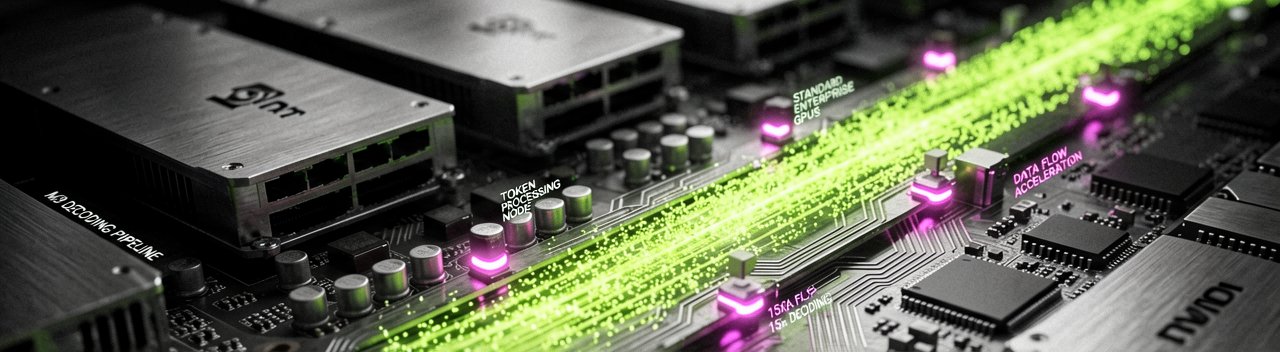
The Architectural Chess Game Behind MiniMax M3
Behind the Tech Frontier: The race to open-source capable multimodal models has long been bottlenecked by the staggering financial toll of infrastructure. When MiniMax decentralized its M3 model, it was not just a bid for developer mindshare; it was a calculated architectural pivot designed to challenge the resource-heavy paradigms of its Western counterparts. While Silicon Valley giants continue to throw raw compute and cluster scaling at long-context degradation, MiniMax engineered its way around the hardware wall. By relying on a highly optimized sparse attention mechanism, the architecture selectively drops redundant attention heads during deep-context lookups, ensuring that processing a massive document feels as snappy as generating a single sentence.
This efficiency breakthrough signals a massive shift for enterprise developers who have grown weary of volatile API pricing and data privacy liabilities. In the months leading up to this open-source release, mid-sized tech firms frequently reported that running proprietary vision-language models at scale was financially unsustainable. The arrival of M3 provides a localized escape hatch. Because the model achieves its 15× decoding acceleration without demanding specialized, liquid-cooled server architectures, small-scale data centers can host frontier-level multimodal pipelines on standard commercial hardware, effectively democratizing high-tier AI agent deployment.
Industry analysts point out that MiniMax’s strategy mirrors the classic open-source playbook used to disrupt entrenched monopolies, yet with a distinctively modern, multimodal twist. By seeding the global developer ecosystem with a model pretrained on an astronomical 100 trillion tokens, the company bypasses traditional distribution hurdles. Developers are already using the codebase to build specialized, domain-specific variants for legal document analysis, medical imaging synthesis, and automated software engineering. This massive influx of community-driven optimization serves as a force multiplier for MiniMax, feeding improvements back into their core ecosystem at zero internal R&D cost.
However, the open-source rollout also highlights an intensifying geopolitical undercurrent in the AI landscape. As regulatory bodies worldwide scrutinize proprietary frontier models, open-sourcing weight files presents a unique regulatory paradox. It grants global transparency and builds immense goodwill among open-source purists, but it also relinquishes centralized control over downstream modifications. For MiniMax, taking this risk is an essential gamble to establish its architecture as the default foundational standard for the next generation of autonomous web agents and multimodal software tools.

The Reality Check: Speed, Scale, and the Open-Source Paradox
Reading Between the Lines: While a 15× leap in decoding speed and an open-source license make for spectacular headlines, a healthy dose of industry skepticism is warranted. The AI sector routinely falls victim to "benchmark optimization," where models are hyper-tuned to perform brilliantly on paper but stumble under the chaotic weight of messy, real-world data. MiniMax M3’s reliance on Sparse Attention is a brilliant engineering shortcut, but shortcuts always come with a tax. In practice, aggressively pruning attention heads can lead to "needle-in-a-haystack" amnesia, where a model occasionally drops critical, subtle nuances buried deep within a massive 1-million-token dataset.
Furthermore, the narrative of absolute accessibility deserves a closer look. Open-sourcing the weights of a model pretrained on 100 trillion tokens is a massive gift to the community, but "open" does not automatically mean "affordable." Running a multimodal giant locally—even one as heavily optimized as the M3—still requires a formidable hardware footprint that remains out of reach for the average indie developer. The true beneficiaries here are not garage hobbyists, but well-funded mid-market enterprises capable of provisioning clusters of high-end enterprise GPUs to handle the model's native video and image processing pipelines at scale.
There is also an undeniable strategic irony in MiniMax’s sudden philanthropy. Historically, tech companies pivot to open-source when they realize they cannot win the closed-source API monetization war against entrenched titans. By commoditizing the underlying model, MiniMax shifts the battleground from raw intelligence to infrastructure and tooling. The long-term implication is a fracturing market where the foundational model itself becomes a loss-leader, forcing companies to find new ways to monetize the surrounding scaffolding, custom fine-tuning services, and enterprise-grade security layers.
"We are rapidly approaching an era where foundational AI models are so fast and universally free that the only thing left to charge for is the electricity required to keep the servers from melting."
Artūras Malašauskas is an AI Systems Integrator with 20+ years of production-grade web engineering experience. He has designed, shipped, and scaled enterprise Python/PHP systems for logistics, SaaS, and public-sector clients. For the past year, he has focused exclusively on AI integrations: deploying open-source LLMs, building generative media pipelines (image, audio, video), and engineering multi-agent workflows for real production environments. His standard: reproducibility, security, cost-efficient inference—no vaporware. He documents and evaluates emerging AI tooling, separating verified capabilities from marketing noise. Technical editor at: muza-ai.eu, ai-verslas.lt, ai-naujinos.lt Connect on LinkedIn
Comments