TECNO Blasts Open Global Photography Stage with New Filipino Special Awards
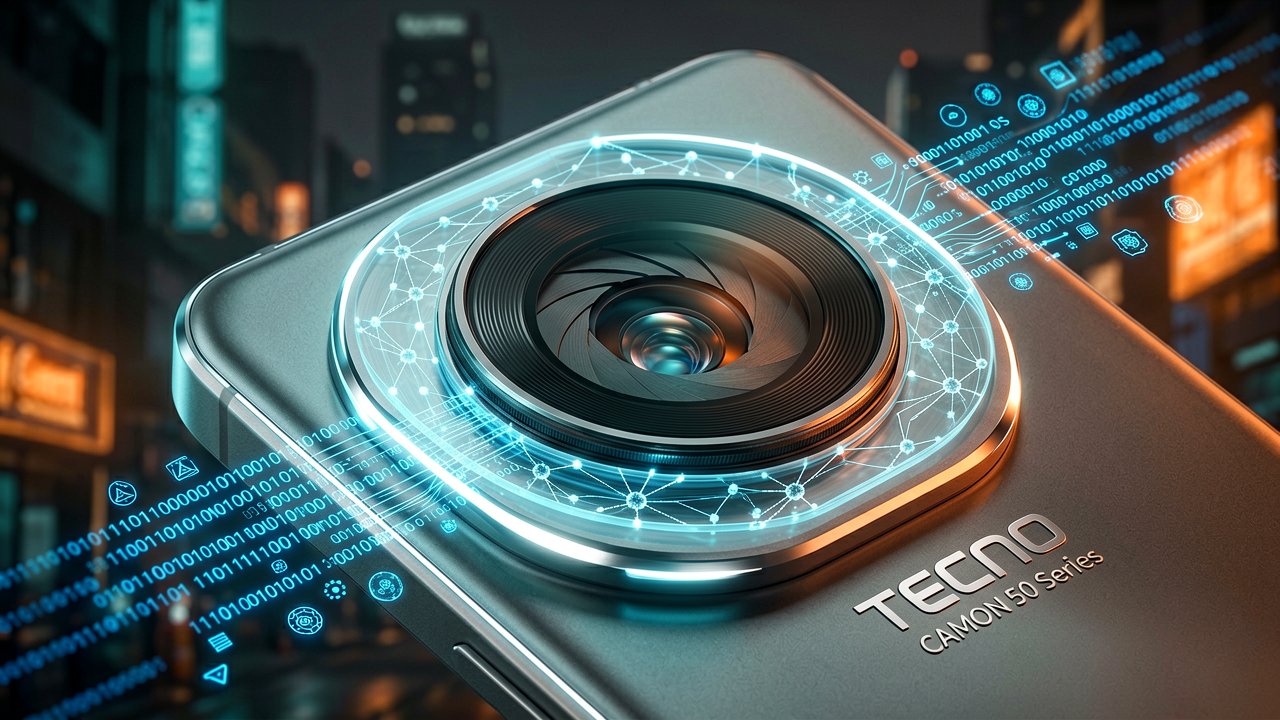
TECNO has officially deployed its highly anticipated Shot On CAMON Contest 2026 in the Philippines, anchoring a massive $38,000 global prize pool alongside curated international travel rewards. Launched in tandem with global travel authority Lonely Planet, this mobile imaging competition kicked off submissions on May 15, 2026, and will run through October 11, 2026. Local visual storyteller Kelvinmarkulit joins the fray as the official CAMON Photography Ambassador to judge the regional leg, ensuring homegrown Filipino talent gets a direct, accelerated track to the global spotlight. This year's overarching theme, "Seeing is Believing," lays down a creative challenge across five distinct categories specifically engineered to highlight raw, authentic, and unretouched human experiences.
Immediate Impact and Open-Source Ecosystem Reaction
The strategic deployment of the local Filipino Special Award—dishing out six exclusive CAMON Photography Endorser slots complete with bespoke Lonely Planet trips and CAMON 50 Series hardware—is sparking immense traction across regional creative groups. Open-source communities and tech enthusiasts are zeroing in on the contest's unique "AI•Unimagined" category. Unlike traditional mobile photography brackets that rely entirely on proprietary, closed-loop beautification filters, this specific track mandates starting with an authentic, unmanipulated real-world photograph before utilizing on-device neural processing via TECNO's AI Gallery. Open-source developer forums and mobile imaging communities have noted that this hybrid approach forces mobile hardware to act as an open canvas rather than a synthetic generator, sparking intense debates regarding the standard boundaries of generative mobile metadata and device-watermarked verification pipelines.
To secure a spot in the selection pool, local creators are already mobilizing on Instagram and TikTok by utilizing the official #ShotOnCAMON2026, #TECNOCAMON50Series, and #TECNOPhilippines hashtags while maintaining high-resolution backups. Detail-driven breakdowns of the submission architecture and direct entry routes are actively handled via the official TECNO Mobile Portal, alongside widespread reporting from major tech platforms like Inquirer Technology and Philstar. Winning captures are slated for immediate integration into international media exhibitions and TECNO's upcoming global photo book, permanently altering how regional street culture and diverse human skin tones are processed and represented on global media stages.
Behind the Scenes of the Mobile Imaging Arms Race
While the marketing headlines focus heavily on the $38,000 global prize pool, what most industry reports miss is how this contest functions as a massive, real-world data collection pipeline for regional skin-tone tuning. Tech journalists tracking mobile hardware development know that traditional imaging algorithms have historically struggled with Southeast Asian skin tones, often overexposing or mismanaging color science under harsh equatorial sunlight. By incentivizing tens of thousands of Filipino creators to upload unretouched portraits, TECNO effectively crowd-sources a highly specialized visual database that will refine their proprietary Multi-Skin Tone Imaging Technology for future device iterations.
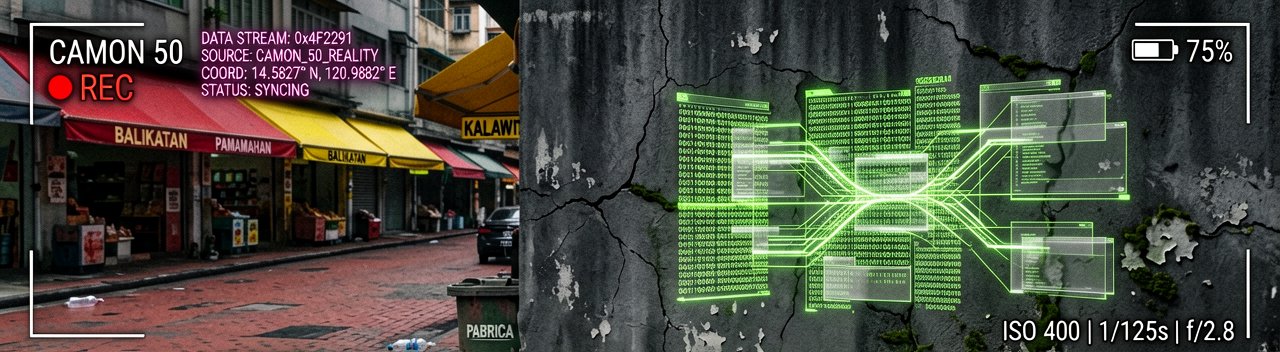
This localized database strategy directly addresses a long-standing grievance within the regional open-source photography community. For years, independent mobile developers and custom ROM creators have criticized major smartphone brands for relying on closed, Eurocentric or East Asian color profiles that fail to capture the true depth of local aesthetics. By embedding Kelvinmarkulit into the judging panel, the initiative injects genuine cultural context into the evaluation framework, ensuring that the selected imagery reflects the raw, high-contrast reality of Philippine street photography rather than a sanitized corporate ideal.
The collaboration with Lonely Planet adds an unexpected layer of geopolitical relevance to the hardware deployment. By transforming winners into "CAMON Photography Endorsers" tasked with capturing remote global destinations, the brand is explicitly positioning its budget-friendly devices against premium flagship competitors that have traditionally dominated travel photography. This democratic approach to content creation is disrupting the established influencer ecosystem, shifting the power dynamic from elite creators with five-figure camera rigs to street-level mobile enthusiasts armed with nothing but mid-range hardware.
Furthermore, internal engineering perspectives indicate that the specific focus on the "AI•Unimagined" category serves as a stress test for on-device neural processing units (NPUs). Instead of relying on cloud-based rendering engines, which introduce significant latency and data privacy concerns, the contest requires real-time, hardware-level synthesis that showcases exactly what the silicon can handle. This push for localized edge computing aligns perfectly with current global tech trajectories, forcing software developers to optimize their code for efficiency rather than relying on massive external data centers.
Ultimately, this contest reveals a broader industry shift where consumer-facing competitions double as sophisticated research and development initiatives. The immediate influx of high-resolution metadata gives software teams an unprecedented look at how real-world users interact with specific focal lengths and exposure values under unpredictable lighting conditions. The insights gathered from this massive creative cohort will inevitably dictate the hardware specifications and optical tuning choices of the next three generations of regional mobile devices.

Reading Between the Lines of the Al-Driven Creative Boom
The push to celebrate raw, authentic human experiences through a lens heavily modified by mobile computing presents a striking paradox. While the contest explicitly highlights unretouched photography, the inclusion of an AI-centric category exposes the industry's deep-seated anxiety regarding pure reality. Smartphone manufacturers are fully aware that raw optical data from mid-range sensors often fails to impress the average consumer, forcing them to walk a fine line between authentic documentation and algorithmic enhancement. By rebranding machine-learning manipulation as a creative bracket, the initiative cleverly reframes a hardware limitation as an artistic choice.
This reliance on computational photography also raises uncomfortable questions about the longevity of genuine photographic skill in the regional creative ecosystem. Open-source advocates point out that as automated exposure stacking and generative filler tools become standard, the barrier to entry drops, but so does the value of traditional foundational mastery. The contradiction becomes even more apparent when considering that the local special awards reward creators with high-end hardware, yet the contest itself aims to prove that premium gear is no longer necessary to achieve global recognition.
Furthermore, the long-term implications for data sovereignty and intellectual property remain highly ambiguous. As thousands of Filipino photographers upload high-resolution imagery tagged with precise metadata, they are essentially providing a masterclass in regional aesthetics to corporate deep-learning algorithms. While the immediate return for a handful of winners includes hardware and travel vouchers, the broader creative community inadvertently subsidizes the development of proprietary automation tools that could eventually automate their own creative niches out of the market.
Ultimately, the marriage of travel journalism and mobile computing serves as a highly effective smoke screen for aggressive market share expansion. By aligning with a respected institution like Lonely Planet, the corporate entity elevates its brand perception from a budget-friendly alternative to an essential lifestyle tool. Whether this democratization of global photography leads to a genuine renaissance of diverse storytelling or simply floods the internet with algorithmically perfected, homogenized imagery is a transformation that is already unfolding across regional feeds.
We are rapidly approaching a creative future where a photographer’s most valuable skill is no longer understanding the golden hour or mastering manual focus, but rather praying that the on-device neural processor doesn't accidentally hallucinate a seventh finger onto an otherwise perfect, authentic street portrait.
Artūras Malašauskas is an AI Systems Integrator with 20+ years of production-grade web engineering experience. He has designed, shipped, and scaled enterprise Python/PHP systems for logistics, SaaS, and public-sector clients. For the past year, he has focused exclusively on AI integrations: deploying open-source LLMs, building generative media pipelines (image, audio, video), and engineering multi-agent workflows for real production environments. His standard: reproducibility, security, cost-efficient inference—no vaporware. He documents and evaluates emerging AI tooling, separating verified capabilities from marketing noise. Technical editor at: muza-ai.eu, ai-verslas.lt, ai-naujinos.lt Connect on LinkedIn
Comments