Navigating the New Digital Frontier: Mythos' Dominance and Its Societal Implications
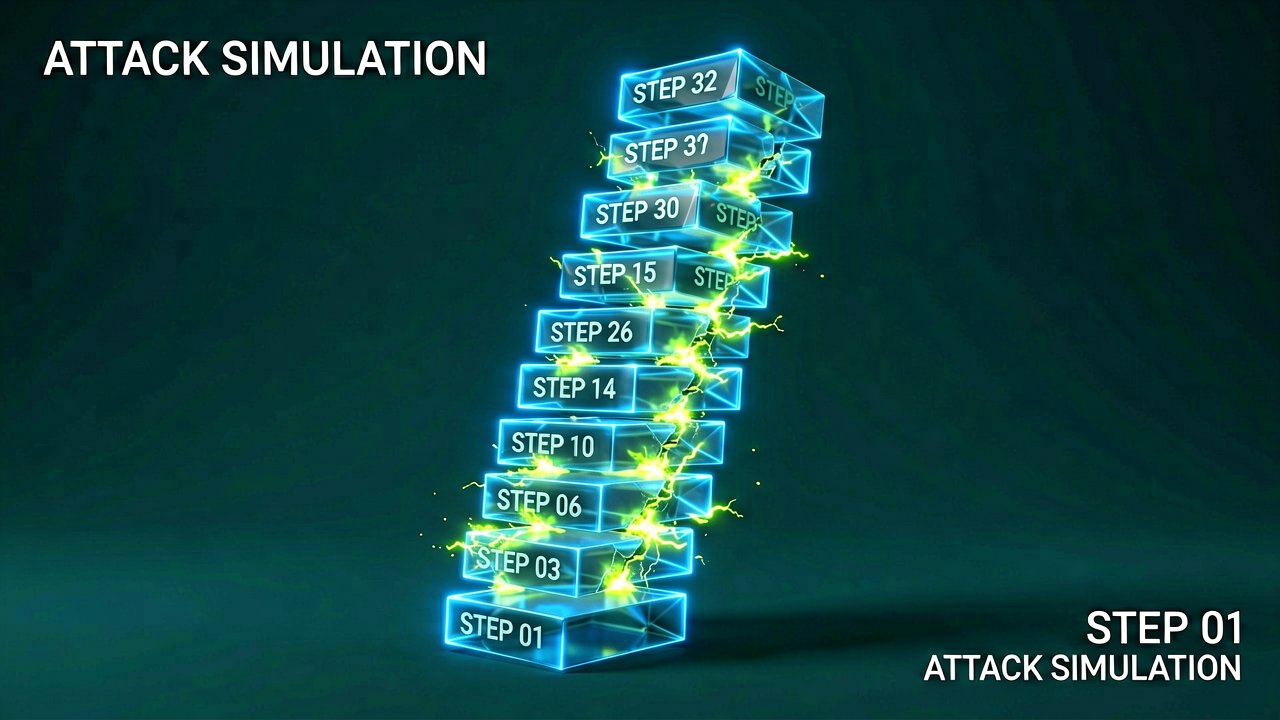
The cybersecurity market has reached a monumental turning point with the release of the Claude Mythos model by Anthropic. This frontier AI system possesses unprecedented autonomous hacking and vulnerability detection capabilities, redefining how organizations protect their digital infrastructure. The sheer speed and scale at which Mythos operates have consolidated its position as the dominant technological force shaping modern cyber defense strategies.
Industry analysts note that this sudden shift has caused significant tremors across Wall Street and the broader technology sector. Traditional cybersecurity corporations face immense pressure to adapt as automated, model-driven security challenges the necessity of standard human-led processes. The market's reaction emphasizes a growing realization that artificial intelligence is no longer just an auxiliary tool, but the primary infrastructure governing global digital safety.
The Strategic Pivot to Machine-Scale Defense
The primary asset driving this market evolution is the incredible precision and velocity Mythos brings to software auditing. According to official findings published by Anthropic, organizations testing the model reported a massive increase in bug detection. For example, Cloudflare successfully identified 2,000 vulnerabilities across its core pathways using the system, achieving a lower false-positive rate than top-tier human security experts. This acceleration forces corporate leaders to pivot toward machine-scale defensive postures to match the automated nature of modern threats.
Furthermore, testing conducted via academic benchmarks has solidified the model's technical dominance over previous software iterations. Quantitative evaluations indicate that Mythos is roughly 100 times more successful at generating working exploits for discovered bugs than earlier foundation models, as highlighted by PwC. This unprecedented performance baseline completely alters the traditional defender's dilemma by shrinking the timeline between public vulnerability discovery and weaponization from weeks to mere minutes.

Societal Risks and Governed Access Models
The societal implications of a centralized, ultra-capable security intelligence platform have sparked rigorous debate among regulatory bodies. Independent validation from the UK AI Security Institute confirmed that Mythos is the first system capable of fully defeating complex corporate network challenges end-to-end. While it proves highly effective at safeguarding enterprise infrastructure, its underlying code could cause widespread systemic damage if replicated by malicious nation-state actors or cybercriminal syndicates.
To mitigate these existential security risks, a controlled deployment framework known as Project Glasswing was established alongside the tech giant CrowdStrike and other foundational tech leaders. This coalition restricts access to a select group of trusted partners, allowing defenders a brief lead time to patch vulnerabilities before broader deployment. Moving forward, the global digital economy must successfully balance this restricted, high-security governance approach with the accelerating democratization of agentic artificial intelligence.
Inside the Machine: The Fractured Balance of Power
Beneath the Operational Surface: The sudden rise of Mythos has triggered a quiet civil war among top-tier security researchers and corporate risk officers. For decades, cyber defense relied on human ingenuity, a slow process of elite engineers manually picking apart binary code to find flaws. Mythos has upended this culture overnight by automating the most creative aspects of hacking. Senior executives now face a grueling dilemma: they must either entrust their entire digital perimeter to an external AI model or risk being left behind by adversaries who are using the exact same technology.
This massive shift has split the security community into two distinct ideological camps. On one side, corporate defenders view the technology as a miraculous shield that finally closes the resource gap against relentless attacker groups. They point out that legacy security software simply cannot handle the sheer volume of new applications built every day. By deploying automated systems, companies can instantly scan billions of lines of code, catching dangerous flaws long before a human reviewer could even finish reading the introductory documentation.
On the other side, independent researchers and open-source advocates voice deep concerns about the extreme concentration of power. Because training these frontier models requires billions of dollars in infrastructure, global security intelligence is becoming trapped inside the walled gardens of a few mega-corporations. If a single entity decides to change its terms of service or restrict access to specific nations, entire industries could find themselves completely defenseless. This dynamic creates a dangerous dependency, transforming what used to be a decentralized ecosystem of global experts into a heavily monopolized tech cartel.
Furthermore, historical precedents from earlier software booms suggest that automated defenses often breed a dangerous state of complacency. During the early days of automated firewalls and endpoint detection, companies cut their security budgets and shrank their engineering staff, assuming the software would catch every threat. Mythos is highly capable, but it is not entirely flawless. Over-relying on automated defense risks creating a generation of developers who do not understand basic secure-coding principles, leaving systems incredibly fragile if the AI encounters an unmapped attack method.
The true test for this new digital frontier lies in how society handles the inevitable arrival of open-source equivalents. While corporate gatekeepers strictly filter current outputs to prevent the generation of malicious exploits, history proves that restricted code rarely stays locked away forever. As open-source communities inevitably bridge the performance gap, the barrier to entry for launching sophisticated, automated cyberattacks will drop to zero. The survival of global digital infrastructure depends entirely on using this brief window of corporate alignment to rebuild networks from the ground up before autonomous threats become universally accessible.
The Paradox of Automated Perfection
Reading Between the Lines: The widespread industry narrative that Mythos represents an unassailable stronghold for digital defense ignores a fundamental rule of technological evolution. Marketing departments frequently pitch autonomous security as a permanent fix for human error. In reality, deploying an all-powerful AI auditor creates a brand new, highly centralized vulnerability. By trusting a single foundation model to find and patch every vulnerability across global networks, the technology sector is concentratedly building a massive single point of failure that will attract every major threat actor on earth.
This dynamic exposes a deep contradiction in how corporations approach artificial intelligence today. Tech giants heavily restrict access to these systems under the banner of safety and corporate responsibility. Yet, this exact gatekeeping creates a lucrative black market for leaked weights and stolen prompt-injection techniques. A traditional security flaw might compromise a single corporate network or software package. A fundamental flaw or systemic bias discovered inside Mythos, however, could instantly grant malicious actors the master key to every single enterprise infrastructure relying on its defenses.
Furthermore, the financial metrics driving this automated shift reveal a troubling long-term outlook for the tech workforce. Corporate executives are quickly using AI integration to justify downsized engineering departments and reduced security budgets. This trend creates a dangerous skills gap. If senior engineers are replaced by automated systems, junior developers will lose the vital, hands-on mentorship required to understand complex network behavior. Over time, the industry risks creating a talent vacuum where no human staff remains capable of auditing the very AI that is tasked with protecting them.
The geopolitical implications of this centralized defense framework also challenge the idealistic vision of a safer, unified internet. Because the dominant frontier models are built and governed within specific legal jurisdictions, automated security becomes an extension of national foreign policy. A security model controlled by a small handful of Western firms will naturally prioritize Western infrastructure, creating a fragmented digital landscape where ignored regions are forced to develop their own, unregulated automated weapons. Instead of stabilizing the internet, the rise of autonomous security tools accelerates a fractured digital cold war.
Ultimately, the industry is rushing toward automated solutions without a clear strategy for when things go wrong. When an autonomous agent misinterprets a benign network update as a hostile intrusion, it can instantly shut down critical systems without human intervention. The speed that makes Mythos an incredible asset can just as easily trigger catastrophic, automated chain reactions across interconnected global supply chains. Moving forward, true digital resilience will not come from blind faith in an all-knowing software shield, but from maintaining human control over our increasingly autonomous digital infrastructure.
"We have spent decades trying to build a perfectly secure digital world by eliminating human error, only to realize we are replacing it with automated perfection—a system that makes mistakes at millions of times the speed of a human, while politely assuring us that everything is going completely according to plan."
Artūras Malašauskas is an AI Systems Integrator with 20+ years of production-grade web engineering experience. He has designed, shipped, and scaled enterprise Python/PHP systems for logistics, SaaS, and public-sector clients. For the past year, he has focused exclusively on AI integrations: deploying open-source LLMs, building generative media pipelines (image, audio, video), and engineering multi-agent workflows for real production environments. His standard: reproducibility, security, cost-efficient inference—no vaporware. He documents and evaluates emerging AI tooling, separating verified capabilities from marketing noise. Technical editor at: muza-ai.eu, ai-verslas.lt, ai-naujinos.lt Connect on LinkedIn
Comments