Warner's Cybersecurity Bill Signals Growing Urgency to Counter AI Threats in Critical Infrastructure

The legislative landscape for national security is shifting rapidly as U.S. lawmakers confront the reality of automated, machine-speed cyber warfare. Senator Mark Warner has introduced the Combat Emerging Threats to Critical Infrastructure Act, a pivotal bill designed to overhaul federal defense frameworks as sophisticated artificial intelligence tools increasingly threaten essential public services. The proposed mandate forces a hard deadline on federal defense agencies to modernize legacy protection plans that have left vital economic sectors exposed to autonomous exploitation.
This legislative push directly targets systemic vulnerabilities across all 16 critical infrastructure sectors, ranging from the energy grid to transit networks and the defense industrial base. Under the current regime, some of these critical sectors have not seen a comprehensive security roadmap update in over a decade. By transforming bureaucratic guidelines into legally enforceable mandates, the bill reflects an escalating consensus in Washington that manual defense strategies are entirely obsolete against modern, AI-generated offensive vectors.
Mandating CISA to Modernize Defensive Playbooks
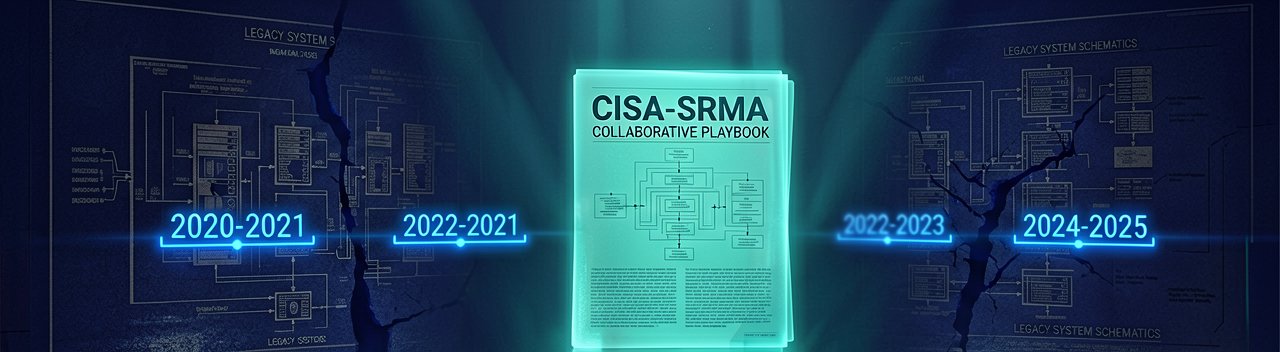
The core mechanism of the legislation strips away the administrative inertia that has plagued federal cybersecurity oversight. The bill legally compels the Nextgov/FCW reported Cybersecurity and Infrastructure Security Agency (CISA) to collaborate with individual Sector Risk Management Agencies (SRMAs) to update sector-specific cyber defense plans within nine months of enactment. Furthermore, the legislation establishes a strict biennial recurrence model, requiring CISA to re-evaluate and re-issue these defensive strategies every two years to keep pace with the hyper-evolution of generative models and automated vulnerability scanners.
Countering the Reality of Machine-Speed Exploits
The urgency behind this overhaul is underscored by specific intelligence warnings regarding highly specialized offensive models. Lawmakers have drawn attention to commercial and open-weight systems, noting that advanced adversarial iterations—including models capable of autonomous asset mapping—can autonomously discover and weaponize software flaws at scale. This threat environment is already driving concurrent regulatory shifts, such as CISA's latest binding operational directive forcing federal agencies to patch the highest-risk vulnerabilities in as little as three days, as reported by Wired.
Market Impact and Strategic Public-Private Alignment
For private enterprise, which owns and operates the vast majority of U.S. critical infrastructure, this bill signals an impending wave of rigorous, AI-centric compliance standards. Industrial manufacturers and grid operators will face heightened pressure to transition away from legacy perimeter defenses and adopt continuous, AI-driven monitoring capabilities. The legislation has already drawn notable support from major industry trade groups, including the National Electrical Manufacturers Association, highlighting a growing recognition that industrial supply chains must achieve operational resilience against multi-stage, automated network intrusions.
An Impending Compliance Wave for Private Operators
Behind the Bureaucratic Push: The hidden friction in implementing Senator Warner's legislation lies in the fragmented nature of private sector compliance. Because private entities own and operate more than 80 percent of the nation's critical infrastructure, federal mandates often clash with the operational realities of industrial environments. For decades, legacy systems governing water treatment plants and energy grids relied on air-gapping—physical isolation from the internet—as their primary defense. The integration of enterprise cloud networks and remote monitoring has shattered that isolation, leaving legacy operational technology exposed to automated scanning tools that probe for vulnerabilities far faster than human IT teams can patch them.
Industry groups are privately raising concerns about the financial and operational strain of biennial strategy updates. While multinational energy conglomerates possess the capital to deploy advanced AI-driven anomaly detection systems, small-to-medium regional utility providers operate on razor-thin margins. Representatives from municipal water associations and localized cooperative grids warn that continuous compliance cycles could inadvertently redirect limited capital away from physical infrastructure upgrades and into perpetual software auditing, potentially creating a two-tiered defensive landscape across the country.
Furthermore, the legislation highlights a long-standing structural weakness within Washington: the uneven technical capabilities of different Sector Risk Management Agencies. While the Department of Energy maintains deep cybersecurity expertise through its national laboratories, other designated sector leads, such as the Department of Agriculture or the Department of Health and Human Services, historically lack equivalent technical resources. CISA's mandated collaborative role is designed to bridge this capability gap, but senior defense analysts warn that the agency risks becoming an operational bottleneck as it attempts to simultaneously overhaul sixteen distinct, highly specialized industrial playbooks under an aggressive nine-month timeline.
The Practical Paradox of Algorithmic Defense
Reading Between the Lines: The fundamental flaw in Washington’s current legislative approach is the assumption that bureaucratic mandates can outpace the operational velocity of generative models. While forcing federal agencies to rewrite defensive playbooks every two years sounds rigorous on paper, it fundamentally misinterprets the lifecycle of modern software threats. A static compliance document, even one updated biennially, remains a reactive instrument. In the time it takes for CISA and its sister agencies to draft, review, and clear a updated strategy through interagency committees, the underlying algorithmic attack vectors will have mutated several times over, rendering the new guidelines partially obsolete upon publication.
This reality exposes a glaring contradiction within the bill’s strategic objective: it attempts to counter machine-speed attacks using human-speed bureaucracy. By legally compelling infrastructure operators to adhere to rigid federal frameworks, the legislation risks codifying a compliance-first mindset. Operators may prioritize checking boxes on an official CISA checklist over developing agile, real-time threat-hunting capabilities. History demonstrates that check-the-box security creates a false sense of immunity, as sophisticated state-sponsored actors routinely exploit the blind spots left by standardized, slow-moving regulatory frameworks.
Furthermore, the push for widespread adoption of defensive AI technologies introduces a highly volatile feedback loop. As private utilities deploy autonomous defense systems to monitor their networks, they inadvertently provide adversaries with a predictable target. Offensive models can be trained to probe, map, and trick these specific defensive algorithms through adversarial manipulation. Instead of securing the grid, the mandate may simply accelerate a digital arms race where both the weapon and the shield are governed by complex black-box systems that neither the regulators nor the infrastructure operators fully comprehend.
"We are effectively ordering a bureaucracy famous for its love of paper trails to build a digital firewall against an invisible, self-evolving adversary, hoping that a stricter filing deadline will somehow terrify the code into submission."
Artūras Malašauskas is an AI Systems Integrator with 20+ years of production-grade web engineering experience. He has designed, shipped, and scaled enterprise Python/PHP systems for logistics, SaaS, and public-sector clients. For the past year, he has focused exclusively on AI integrations: deploying open-source LLMs, building generative media pipelines (image, audio, video), and engineering multi-agent workflows for real production environments. His standard: reproducibility, security, cost-efficient inference—no vaporware. He documents and evaluates emerging AI tooling, separating verified capabilities from marketing noise. Technical editor at: muza-ai.eu, ai-verslas.lt, ai-naujinos.lt Connect on LinkedIn
Comments