CATS’ AI Security Shift: A Blueprint for Urban Infrastructure Safeguards
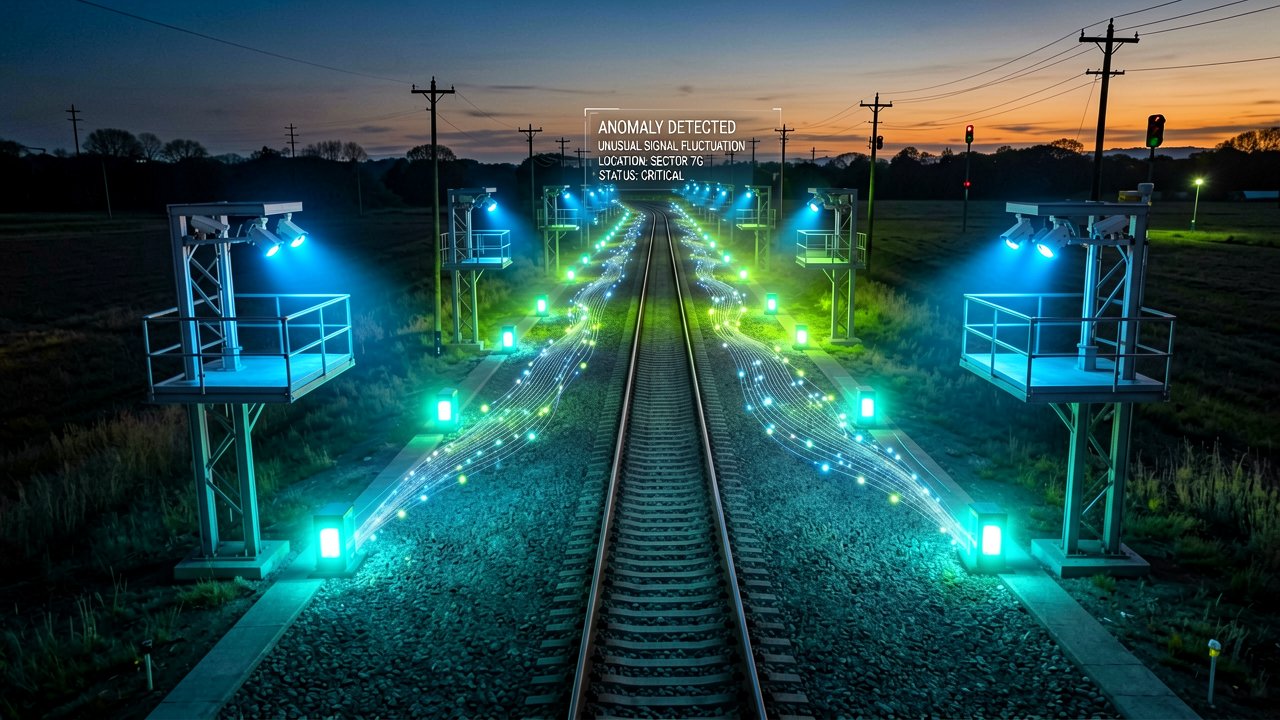
The Charlotte Area Transit System (CATS) is undergoing a major technological transformation by exploring and piloting artificial intelligence solutions to harden its public safety framework. Facing an open-architecture light rail network that traditionally lacks physical turnstiles or access barriers, municipal leaders are shifting away from reactive policing toward automated, proactive surveillance. This strategic pivot aligns with a massive security budget expansion from approximately $10 million in fiscal year 2023 to a projected $30 million for fiscal year 2027, as outlined by transit officials in reports documented by QC News. By integrating machine learning directly into its physical and digital architecture, CATS is establishing a blueprint for how mid-sized American cities can defend critical urban infrastructure against modern safety liabilities.
The operational rationale behind this AI deployment stretches far beyond simple automation; it addresses severe structural and financial vulnerabilities within the transit network. According to data shared with the Metropolitan Transit Commission and published by WBTV, CATS has grappled with an estimated 45% fare evasion rate, causing millions of dollars in lost revenue that could otherwise fund systemic infrastructure expansions. To combat this, CATS is designing a multi-layered AI system in partnership with local academic institutions, including the University of North Carolina at Charlotte and Central Piedmont Community College. Rather than relying entirely on manual ticket inspections, upcoming initiatives combine system-wide electronic fare validators with intelligent camera networks to flag non-compliant riders dynamically, allowing mobile security forces to optimize their deployments in real time.
Market Context and Strategic Shifts
The move by CATS reflects a broader macro trend among public transit agencies nationwide as they adapt to post-pandemic ridership patterns, rising security concerns, and strict budgetary realities. Historically, public transportation departments deployed closed-circuit television (CCTV) cameras purely for forensic investigations after an incident occurred. However, managing networks that scale up to thousands of endpoints is mathematically impossible for human security teams to monitor manually. By leveraging advanced video analytics, public safety systems can transform raw video feeds into automated risk detectors that scan for weapon profiles, restricted area intrusions, and anomalous passenger behavior. This shift is turning transit infrastructure into a responsive web of edge-computing nodes capable of identifying vulnerabilities before they manifest as operational disruptions.
The Balance of Machine Vision and Human Enforcement
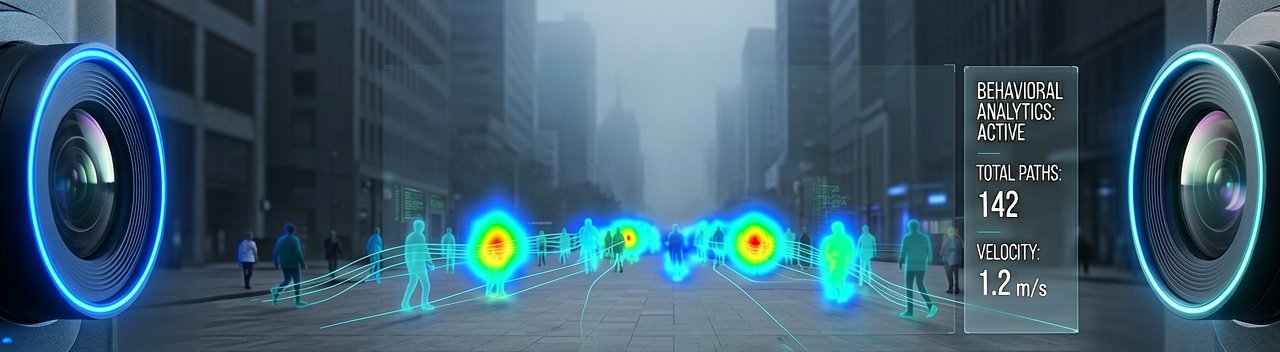
Despite the operational efficiencies promised by computer vision, the transition to AI-assisted infrastructure protection introduces complex regulatory, social, and technical hurdles. Security analysts emphasize that algorithmic detection cannot completely replace an active, visible human security presence, which remains vital for establishing public trust and managing volatile situations. Furthermore, the exploration of facial recognition technology across CATS' network of 4,500 cameras has sparked localized pushback regarding algorithmic bias and systemic accuracy errors among diverse populations. To address these criticisms, transit administrators are intentionally shifting their technical focus toward non-identifying behavior metrics—such as tracking movement patterns, checking validator bypass loops, and deploying dedicated fare enforcement units. This balanced approach ensures that municipal tech investments protect public infrastructure without compromising civil liberties.
Tangible Dividends of Data-Driven Policing
Early data indicates that Charlotte's aggressive hybrid security model—blending increased officer mobility with strategic technology integration—is already yielding measurable dividends. As reported by AOL News via official transit updates, CATS recorded a 69% decrease in crime on the LYNX Blue Line light rail alongside a 67% reduction in bus operator and passenger assaults during the first quarter of 2026 compared to the same period in the prior year. By building an open-platform video management system capable of hosting diverse AI models, Charlotte is demonstrating that public infrastructure safety does not require retrofitting cost-prohibitive physical barriers. Instead, the future of urban defense relies on intelligent software layers that maximize the efficiency, reach, and speed of existing municipal personnel.
An Inside Look at Infrastructure Defense
What Most Reports Miss: The shift to algorithmic security at CATS is not merely a plug-and-play software upgrade, but an aggressive operational response to the architectural limitations of Charlotte's transit network. Unlike closed, subterranean subway systems in cities like New York or London, the LYNX Blue Line was built as an open, at-grade light rail system. This layout permits unhindered pedestrian access across dozens of stations, making traditional physical access control like turnstiles structurally unfeasible without hundreds of millions of dollars in civil engineering retrofits. Consequently, transit administrators have been forced to treat software and machine vision as virtual barriers, substituting steel gates with real-time digital detection layers.
Internal discussions among transit planners reveal that the implementation process faces deep integration friction between legacy hardware and modern edge-computing models. The agency’s sprawling network relies on an assortment of older analog and early-generation digital CCTV cameras that were never designed to feed high-bandwidth video into real-time neural networks. Upgrading these nodes requires a delicate balancing act of deploying specialized server farms at transit hubs while selectively installing high-definition cameras at high-risk platforms. Engineers are working around these hardware constraints by prioritizing behavior-based analytics—such as loitering detection and sudden crowd dispersion patterns—which demand less raw processing power than granular biometric tracking.
Stakeholder perspectives within Charlotte's municipal government highlight a distinct philosophical divide regarding the long-term roadmap of data collection. While security officials view the data harvest as a critical asset for predictive policing and optimizing patrol routes, community advocates and legal experts express ongoing concerns about surveillance creep and data retention policies. To mitigate public backlash and ensure regulatory compliance, CATS executives have consistently emphasized a policy of anonymized data processing. The system is explicitly configured to flag operational anomalies and fare non-compliance signatures rather than building permanent identity profiles, setting a vital precedent for privacy-conscious municipal AI deployment.
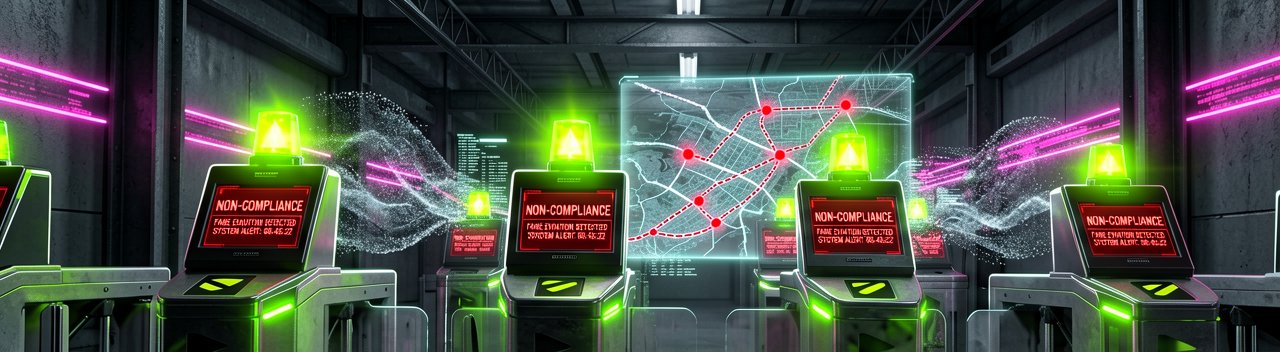
The economic reality of this transition also reshapes the local labor market for public safety personnel. Frontline transit officers are transitioning from stationary platform guards into highly mobile tech-enabled responders who rely on automated dispatch cues. When an AI node flags a high-probability fare evasion event or a potential safety hazard, the alert is routed to the closest mobile unit via encrypted digital dashboards. This operational velocity explains the dramatic reduction in transit-related assaults, proving that the true value of urban infrastructure AI lies in its ability to dramatically shorten human response times during critical windows of vulnerability.
The Friction Between Automation and Human Realities
Reading Between the Lines: The celebratory narrative surrounding CATS’ technical shift masks a fundamental contradiction in municipal asset protection: software cannot physically detain a non-compliant rider or de-escalate a physical altercation. While predictive algorithms and automated camera feeds are highly efficient at flagging system anomalies, they ultimately amplify the pressure on the human enforcement layer. Generating thousands of automated alerts daily creates a high risk of alert fatigue among dispatchers, potentially rendering the expensive digital net useless if mobile units are too thinly stretched to respond to every automated prompt.
Furthermore, relying on machine vision to solve structural revenue shortfalls like a 45% fare evasion rate relies on the questionable assumption that non-compliance is purely an enforcement problem. Historical data from urban transit networks suggests that high fare evasion is frequently tied to deeper systemic issues, such as confusing digital payment interfaces, unreliable ticketing kiosks, or broader socio-economic disparities. By framing a systemic civic issue as a technical vulnerability to be monitored and optimized, transit officials risk spending millions on advanced surveillance infrastructure to chase marginal revenue returns that might be better recovered through simplified fare structures or physical design tweaks.
The long-term fiscal sustainability of this AI blueprint also demands measured skepticism. Computer vision platforms require continuous software patches, dataset retraining to avoid algorithmic drift, and frequent hardware replacements as cameras degrade in harsh outdoor environments. These recurring operational costs frequently outpace the initial capital grants used to fund the pilot programs. If the digital surveillance apparatus fails to permanently lower crime or substantially recover lost fare revenue, mid-sized cities may find themselves locked into expensive, long-term vendor contracts for specialized software that drains municipal funds away from core transit operations like vehicle maintenance and route frequency.
Ultimately, Charlotte’s experimental framework projects a future where urban infrastructure is hyper-monitored yet structurally fragile. If the system succeeds, it proves that data-driven coordination can temporarily substitute for physical access barriers in open-air transit designs. However, if the underlying human security apparatus cannot keep pace with the influx of automated data, the entire initiative risks becoming an expensive digital facade—an elaborate mechanism that meticulously documents infrastructure vulnerabilities in high definition without possessing the actual physical capacity to prevent them.
"We have successfully entered an era where municipal transit systems can automatically detect exactly who hasn't paid their three-dollar fare using millions of dollars in military-grade computer vision, proving that if a city cannot afford to build a proper turnstile, it can at least afford to watch you walk past where one should have been."
Artūras Malašauskas is an AI Systems Integrator with 20+ years of production-grade web engineering experience. He has designed, shipped, and scaled enterprise Python/PHP systems for logistics, SaaS, and public-sector clients. For the past year, he has focused exclusively on AI integrations: deploying open-source LLMs, building generative media pipelines (image, audio, video), and engineering multi-agent workflows for real production environments. His standard: reproducibility, security, cost-efficient inference—no vaporware. He documents and evaluates emerging AI tooling, separating verified capabilities from marketing noise. Technical editor at: muza-ai.eu, ai-verslas.lt, ai-naujinos.lt Connect on LinkedIn
Comments