Anthropic’s $15M Cyber Defense Initiative Redefines Public Sector AI Integration
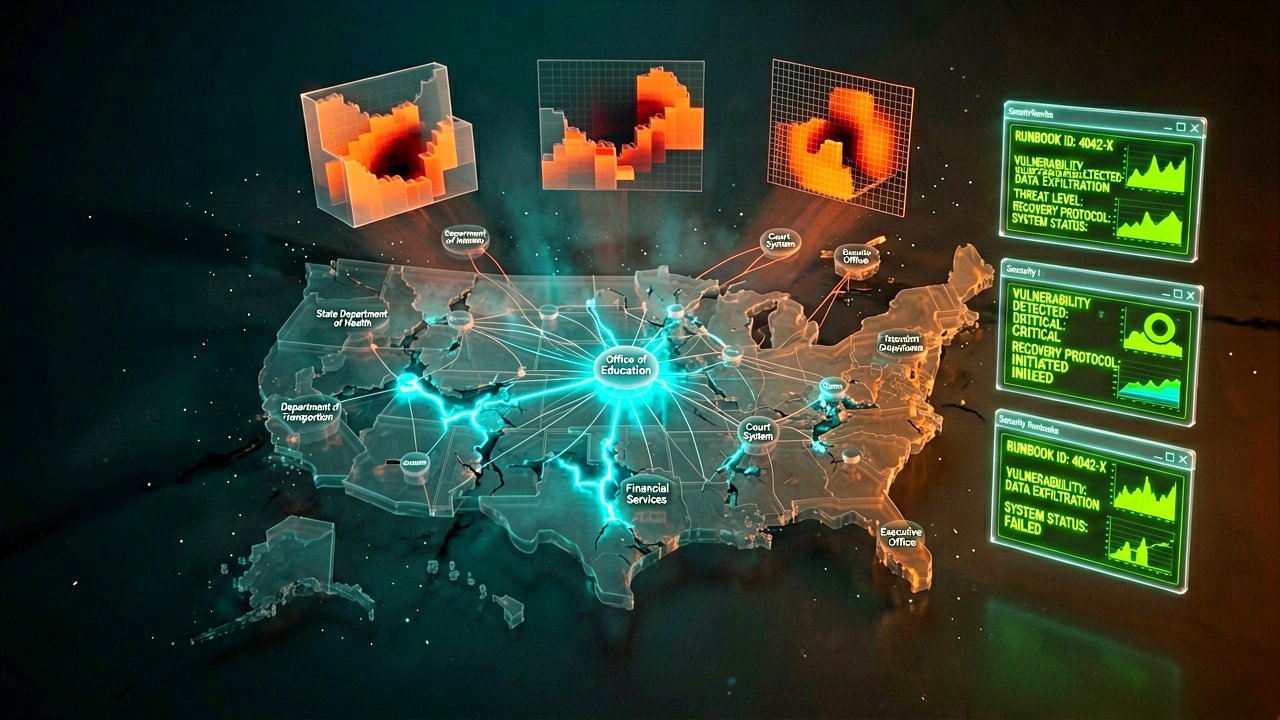
Anthropic has officially launched a $15 million cyber defense program structured to fortify state, local, tribal, and territorial (SLTT) governments against escalating, automated digital threats. The proactive initiative establishes a subsidized framework providing under-resourced public agencies with advanced AI-native developer and security tools. As reported by GovTech, the inaugural cohort features major state participants including California and Texas, whose agencies are deploying the software to identify system vulnerabilities before malicious actors can exploit them.
The program serves as a critical real-world proving ground for Anthropic's enterprise ecosystem. Participating SLTT entities are scheduled to receive $100,000 each in cloud service credits, enabling them to scan, triage, and patch complex digital infrastructure over a six-month cycle. According to coverage from StateScoop, this rollout introduces a curated suite consisting of Claude Security, Claude Code, and the foundational Opus 4.8 model alongside specialized cyber runbooks designed for high-stakes public infrastructure administration.
This targeted capital and resource allocation signals a broader macroeconomic shift where frontier AI developers directly subsidize state defense mechanisms to establish early market dominance. By onboarding critical civic architectures into its model ecosystem, Anthropic is positioning its intelligence layer as the indispensable baseline for regional national security. This strategy directly addresses chronic public-sector budget deficits while simultaneously building an insulated, government-approved market moat against immediate hyper-scale competitors.
The Mythos Paradigm and Controlled Public Sector Access
The operational mechanics of this defense program run parallel to the rollout of Anthropic’s highly capable Mythos model architecture. While the general public version of Mythos enforces strict guardrails that restrict direct cybersecurity manipulation, selected public sector cohorts are granted specialized access parameters to bolster active defense. Per technical insights from Webiano Digital, this distribution framework utilizes infrastructure vetted via Project Glasswing, an elite vulnerability remediation campaign backed by industry heavyweights like AWS, CrowdStrike, and Palo Alto Networks.
Bridging the Budgetary Divide in Civic Defense
Historically, local and territorial agencies have struggled to defend themselves due to restricted tech budgets and an inability to compete with private-sector cybersecurity compensation. This strategic deficit has turned municipal networks into prime targets for sophisticated ransomware and state-sponsored espionage. Anthropic's credit injections function as immediate financial bridges, allowing resource-constrained tech officers to rapidly modernize legacy code bases without navigating protracted government procurement cycles.
Geopolitical Alignment and Sovereign Market Moats
This initiative represents a calculated effort by Anthropic to align its corporate roadmap with domestic defense priorities following historical friction regarding dual-use technology deployments. By establishing direct operational relationships with chief information security officers across all tiers of localized governance, the firm positions its Claude ecosystem as the sovereign standard for civic digital resilience. Consequently, this deep public sector onboarding creates a highly defensible, structurally integrated software market that remains resilient against shifting macroeconomic cycles.
Unveiling the Infrastructure: What Most Reports Miss
Beyond the Headlines: The structural reality of Anthropic’s $15 million investment is less about altruistic public-sector support and more about securing an early, unbreakable footprint within state-level tech architecture. For decades, federal intelligence agencies have enjoyed direct access to bespoke cybersecurity defense tools, while local municipal systems remained severely exposed due to a perpetual lack of funding. By circumventing traditional, multi-year government procurement bottlenecks through immediate cloud credit infusions, Anthropic is essentially standardizing its Claude infrastructure across critical regional networks before entrenched defense contractors can mobilize competitive enterprise AI alternatives.
This aggressive deployment strategy directly leverages the technical momentum of Project Glasswing, an elite collaborative framework operating alongside major cybersecurity mainstays. For the tech leaders within the inaugural California and Texas cohorts, the arrival of localized cyber runbooks solves a critical human-capital problem. Local governments cannot compete with the soaring salaries offered by private Silicon Valley firms, leaving them structurally unable to maintain adequate security staff. Introducing automated code triaging via specialized models acts as a force multiplier, allowing a handful of state engineers to oversee infrastructure that would typically require an entire department to defend.
However, the integration of these highly advanced model variants into civic governance reopens intense internal industry debates surrounding dual-use technology and defensive boundary control. AI models trained to autonomously identify and patch complex security flaws inherently possess the dual capability to exploit those exact same vulnerabilities if misconfigured or repurposed. Anthropic is mitigating these systemic risks by maintaining centralized oversight and restricting advanced capabilities strictly to pre-vetted, state-sanctioned cohorts. This controlled access strategy ensures that while regional governments gain a massive boost in defensive capability, the underlying autonomous orchestration layers remain firmly insulated from wider public access.
Ultimately, this initiative marks the beginning of a profound shift toward automated sovereign defense models, where private AI developers act as the primary structural guardians of regional civic infrastructure. As municipal frameworks become increasingly reliant on continuous, model-driven security patches, the line between private technology vendors and state national security operations continues to blur. For the broader market, this establishing of direct operational dependency ensures that Anthropic is not merely selling a software service, but is actively stitching its artificial intelligence ecosystem into the permanent fabric of public governance.
Reading Between the Lines: The Structural Paradox of Subsidized Defense
Peeling Back the Corporate Narrative: The positioning of Anthropic’s multi-million dollar program as a benevolent rescue mission for underfunded local governments obscures a calculated strategy to exploit public sector vulnerabilities for corporate data harvesting and model validation. While providing $100,000 credit blocks solves immediate budgetary headaches for state chief information security officers, it simultaneously transforms critical civic infrastructure into a low-cost testing lab. By running Claude Code and advanced architectures across diverse, legacy municipal networks, Anthropic gains invaluable exposure to chaotic, real-world edge cases that simply cannot be replicated in a sterile laboratory environment.
This dynamic introduces a stark contradiction in the broader AI safety conversation. Anthropic has historically championed stringent safety protocols, frequently warning against the catastrophic risks of deploying autonomous agents capable of interacting with critical systems. Yet, through this very program, the company is actively embedding autonomous code-writing tools into the administrative backbones of major states like California and Texas. The deployment reveals a pragmatic willingness to fast-track autonomous orchestration in the real world when the prize is a direct, long-term dependency relationship with government entities that possess virtually zero exit liquidity once integrated.
Furthermore, the long-term economic sustainability for these local agencies remains highly suspect. The six-month window funded by these introductory credits acts as a classic software trial period adapted for geopolitical infrastructure. Once the initial subsidized credits inevitably run out, local governments will find themselves trapped in an operational dilemma. They will either have to abruptly dismantle an AI-reliant defense architecture they can no longer manage manually, or find room in their already strained public budgets to pay full enterprise subscription fees to prevent critical security lapses.
This structural lock-in highlights the ultimate triumph of private technology over sovereign administrative capability. By embedding proprietary code deep within tribal, local, and state networks under the guise of an emergency intervention, Anthropic is effectively outsourcing national security operations to private algorithms. The resulting landscape is one where public safety is no longer a matter of public policy, but rather a contractual line item managed by a handful of tech firms holding the exclusive keys to automated threat remediation.
Moving critical civic defense from analog negligence to automated dependency simply proves that in the modern tech era, the cheapest way to secure a government contract is to give the first dose of infrastructure away for free.
Artūras Malašauskas is an AI Systems Integrator with 20+ years of production-grade web engineering experience. He has designed, shipped, and scaled enterprise Python/PHP systems for logistics, SaaS, and public-sector clients. For the past year, he has focused exclusively on AI integrations: deploying open-source LLMs, building generative media pipelines (image, audio, video), and engineering multi-agent workflows for real production environments. His standard: reproducibility, security, cost-efficient inference—no vaporware. He documents and evaluates emerging AI tooling, separating verified capabilities from marketing noise. Technical editor at: muza-ai.eu, ai-verslas.lt, ai-naujinos.lt Connect on LinkedIn
Comments