Enterprise AI Governance Gets a Boost as Linx Security Partners with Claude Compliance API
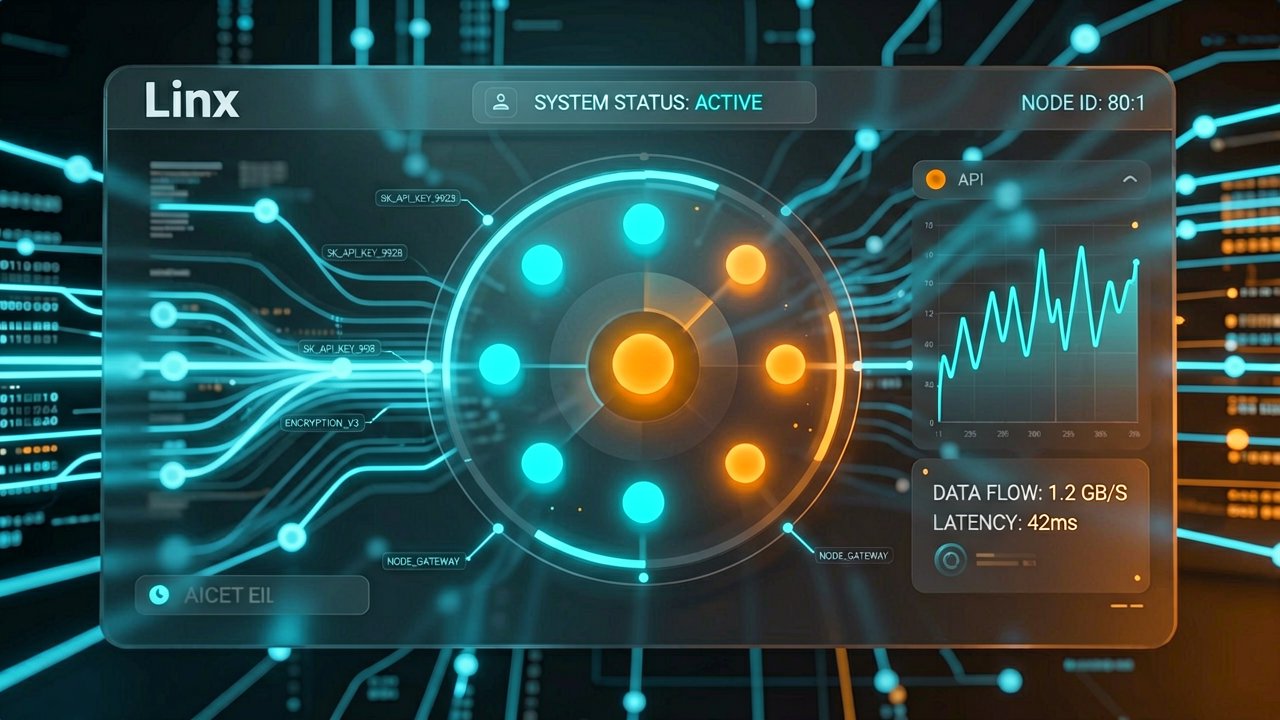
The enterprise adoption of large language models has triggered an unprecedented expansion of the corporate attack surface, forcing a shift from standard data-loss prevention to rigorous identity security. In a direct response to this infrastructure challenge, AI-native identity governance platform Linx Security has announced a native integration with the Claude Compliance API developed by Anthropic. This technical partnership aims to bring comprehensive visibility, access control, and continuous risk auditing to enterprise deployments of Claude, eliminating a historical compliance blind spot where administrative visibility ended at the LLM login page.
According to an official announcement published by PRNewswire, the integration allows IT and security teams to view all provisioned accounts, active administrative roles, and underlying permissions inside Claude natively from the Linx management dashboard. By hooking into Anthropic's specialized enterprise compliance framework, the joint solution replaces slow, manual CSV privilege exports with programmatic monitoring. This integration also maps complex access relationships, such as identifying associated API keys and monitoring shared resources or project workspaces.
As organizations scale their reliance on automated systems, the nature of corporate identity has structurally transformed. Enterprises face a massive imbalance where non-human entities, including automation scripts, API integrations, and autonomous AI agents, outpace human workers by a staggering margin of 80 to 1, as documented by FinTech Global. This shift heavily complicates standard regulatory audits. Without centralized governance over what these non-human identities can access or execute within an LLM environment, companies risk severe data exposure and structural vulnerabilities that bypass traditional firewalls.
Intelligent Access Certification and Risk Reduction
The technical implementation leverages Anthropic's own language models to provide contextual intelligence for identity governance and administration teams. When compliance managers launch access certification campaigns within the Linx platform, the system generates automated recommendations to approve or deny user entitlements. This intelligence helps distinguish between safe, standard employee usage and high-risk, over-provisioned access profiles that threaten corporate least-privilege mandates.
Taming the Agentic AI Attack Surface
This development follows a wider trend in security engineering focused on controlling autonomous processes. Security teams face mounting friction because a significant majority of organizations view security risks as the primary hurdle to scaling automated workflows, a reality highlighted by data from BriefGlance. By combining programmatic auditing via the Claude Compliance API with real-time tracking, security officers can establish an explicit audit trail for every machine-to-machine data exchange, securing both the data pipeline and the enterprise ecosystem at large.
Behind the Scenes: The Invisible Strain on IAM Infrastructure
The rush to embed agentic workflows into daily operations has broken the traditional boundaries of Identity and Access Management (IAM). For years, identity governance focused heavily on a linear relationship: one employee mapped to one corporate account accessing a defined list of software-as-a-service applications. The introduction of platforms like Claude into the corporate workflow changes this math entirely by introducing dynamic, self-replicating digital entities. When an employee permissions an AI agent to read email, query data lakes, and generate code, that agent effectively acts as an unmonitored shadow employee with administrative-level reach.
Chief Information Security Officers (CISOs) are quickly discovering that legacy governance frameworks are blind to these non-human operations. Traditional identity tools look for human behavioral anomalies, such as impossible travel or unusual login hours, but completely fail to detect an API key silently draining terabytes of proprietary source code within a permitted LLM workspace. This integration between Linx Security and the Claude Compliance API targets this exact infrastructure deficit, attempting to establish a baseline of visibility before autonomous agents outpace the engineering team's capacity to audit them.
From a regulatory standpoint, the partnership addresses an immediate legal bottleneck for highly regulated sectors like banking and healthcare. Compliance frameworks such as SOC 2, HIPAA, and Europe’s AI Act demand strict audit trails regarding exactly who—or what—accessed sensitive customer data. Up until now, security teams had to choose between blocking generative tools entirely or accepting massive compliance gaps due to a lack of granular event logging. By treating the LLM as an enterprise node that requires continuous credential rotation and access certification, organizations can finally treat AI governance as a standardized compliance line item rather than an exceptional risk vector.
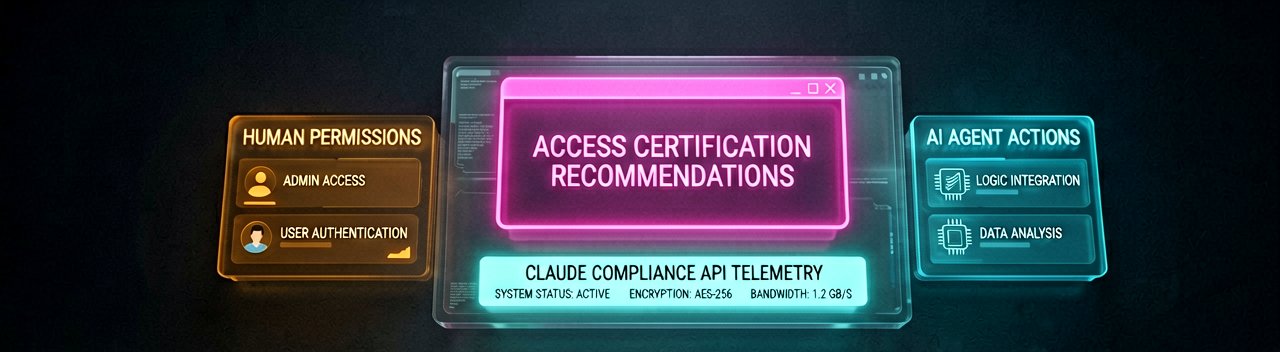
The deeper strategic shift here lies in the evolution of security tool consolidation. Enterprises are experiencing acute platform fatigue, pushing vendors to move away from isolated security tools toward comprehensive data fabrics. Security operations center analysts do not want another standalone dashboard to monitor Claude usage separate from their broader identity perimeter. Integrating compliance telemetries directly into an identity platform like Linx allows enterprises to correlate an engineer's broader corporate access privileges with their specific prompts and code generations inside the AI environment, creating an end-to-end telemetry pipeline.
Looking ahead, this partnership signals a broader industry realization that securing generative models is fundamentally an identity problem, not a network problem. Firewalls and secure web gateways cannot stop data leakage when an employee or automated script is fully authorized to interact with an enterprise LLM. True control requires a real-time understanding of entity intent, credential health, and context-dependent access levels. As enterprise workflows become increasingly agent-driven, the organizations that survive the transition without experiencing a major data breach will be those that prioritize rigorous identity boundaries over simple perimeter defense.
Reading Between the Lines: The Fallacy of Automated Oversight
The enterprise security apparatus has long been addicted to solving the problems created by automation with even more automation, and this integration is no exception. By relying on Anthropic’s own language models to generate access certification recommendations, the industry is effectively asking the algorithm to police itself. This introduces a subtle, cyclical paradox where a security team uses AI-generated insights to validate the permissions of autonomous AI agents. If the underlying logic of the LLM suffers from a blind spot regarding context or privilege escalation, the automated governance layer is highly likely to rubber-stamp a critical vulnerability under the guise of machine-optimized efficiency.
Furthermore, this partnership exposes a glaring contradiction in how modern software enterprises define data boundaries. While vendors champion these integrations as an end to shadow AI, they simultaneously highlight how deeply fractured the modern corporate environment remains. A security platform can perfectly catalog every API key and human user interacting with Claude, but it cannot inherently verify the integrity of the data being ingested on the other side of that API. Security teams are being handed a highly sophisticated map of access pipelines while the actual data flowing through those pipes remains as unpredictable and difficult to sanitize as ever.
The operational reality of managing a 80-to-1 ratio of non-human to human identities also means that human oversight is becoming a functional myth. Even with clean dashboards and streamlined visualizations, enterprise security teams are already buried under alert fatigue. Adding thousands of automated agent permissions to the daily review queue will inevitably lead to a checklist mentality where managers approve access requests simply to clear their screens. The strategic shift toward agentic workflows may ultimately succeed not because it is perfectly secure, but because corporate leadership has decided that the financial gains of rapid automation outweigh the inevitable, calibrated costs of the compliance breaches that follow.
"We are rapidly entering an era where software programs will grant permissions to other software programs to watch what a third software program is doing with corporate data—leaving human security officers with the crucial responsibility of staring at the dashboard, drinking their coffee, and praying the algorithms don't decide to form a union."
Artūras Malašauskas is an AI Systems Integrator with 20+ years of production-grade web engineering experience. He has designed, shipped, and scaled enterprise Python/PHP systems for logistics, SaaS, and public-sector clients. For the past year, he has focused exclusively on AI integrations: deploying open-source LLMs, building generative media pipelines (image, audio, video), and engineering multi-agent workflows for real production environments. His standard: reproducibility, security, cost-efficient inference—no vaporware. He documents and evaluates emerging AI tooling, separating verified capabilities from marketing noise. Technical editor at: muza-ai.eu, ai-verslas.lt, ai-naujinos.lt Connect on LinkedIn
Comments