Private AI and Airgapped Systems Reshape Enterprise Data Security Strategies

The global corporate shift toward artificial intelligence faces a critical hurdle as massive public cloud deployments clash with rigorous corporate governance. Historically, enterprises moved data to centralized software platforms to run advanced analytics. However, widespread concerns over intellectual property leaks and changing global regulations are forcing a reverse trend. Businesses now demand localized AI systems that operate directly inside their existing perimeters to ensure complete control over their proprietary information.
According to an interview with Robert Gilman, senior account executive for the Department of War at Cloudera, this security landscape requires bringing advanced computational models straight to the data source rather than exporting sensitive logs externally. This strategic movement relies heavily on Private AI frameworks. Private AI allows organizations to build, fine-tune, and run large language models on internal servers or private clouds without exposing any prompts, training weights, or system configurations to third-party vendors. By keeping data processing contained locally, highly regulated sectors can tap into modern automated tools while keeping data risk minimized.
Market studies emphasize that 77 percent of modern organizations still lack the baseline data security pipelines required to safeguard public cloud AI pipelines effectively, as noted in market analysis by ExecutiveBiz. This baseline deficiency accelerates the enterprise departure from shared multi-tenant SaaS environments toward single-tenant infrastructures. Organizations are realizing that true technological speed and national or corporate sovereignty do not have to be opposing priorities. Instead, a strict local boundary serves as the ultimate facilitator for rapid, worry-free deployment of sensitive automation technologies.
The Critical Imperative of Airgapped Infrastructure
For defense, intelligence, and highly regulated commercial agencies, traditional internet-connected clouds are completely unfeasible for processing classified records. These environments utilize airgapped infrastructure, which refers to physical systems entirely disconnected from the public internet and unsecure external networks. Deploying generative AI within an airgapped enclave ensures that proprietary data never crosses a digital boundary where threat actors could intercept it.
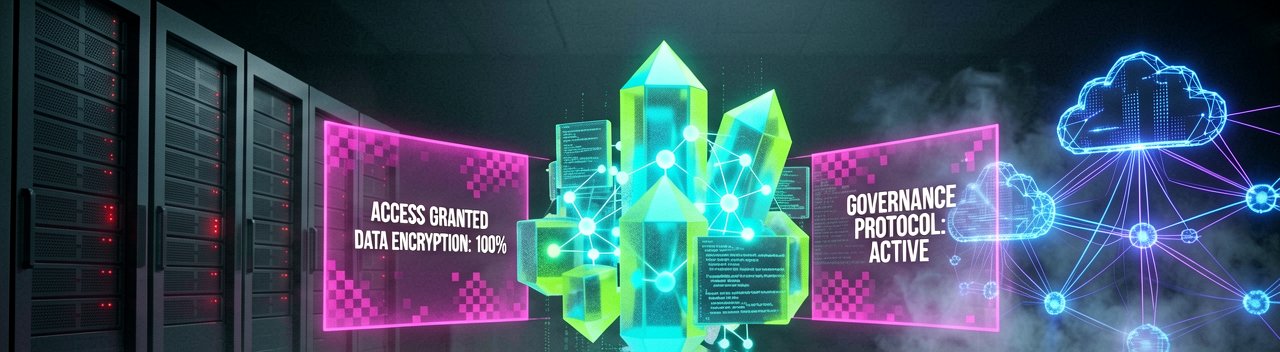
Intelligence teams leverage localized natural language processing models inside these isolated enclaves to quickly parse through complex, classified datasets. Running these offline platforms allows operators to flag critical tactical patterns and speed up complex field analysis without breaking compliance protocols. Consequently, airgapped capabilities have shifted from a niche infrastructure design to a primary benchmark for successful, modern security deployments.
Unified Governance Across Hybrid Environments
As companies utilize a mix of on-premises data centers, private edges, and legacy hardware, maintaining operational consistency becomes incredibly challenging. Security teams cannot afford fragmented oversight where disparate regulations apply to separate data silos. A robust Private AI framework requires a central administration layer that enforces identical data security policies, lineage tracking, and audit controls everywhere the organization operates.
This cross-environment consistency prevents compliance gaps when moving models from staging to production. By ensuring open API compatibility and using uniform governance protocols across both physical and virtual enclaves, enterprises can safely deploy automated fraud detection, automated case management, and real-time logistics tracking. The ultimate goal is achieving complete data transparency under the hood, allowing security teams to inspect and verify every operational layer within their corporate firewall.
The Hidden Architecture of Isolated Intelligence
What Most Reports Miss: The shift toward localized AI is not just about avoiding standard public cloud costs or installing simple network filters. Instead, it represents a complete overhaul of corporate tech infrastructure. In the past, companies rushed to connect every internal tool to public cloud web servers to save money and move quickly. However, the rise of modern automation tools has changed the risk calculus. Leaders now realize that sending raw company intellectual property across external lines can lead to permanent data leaks and massive legal liabilities.
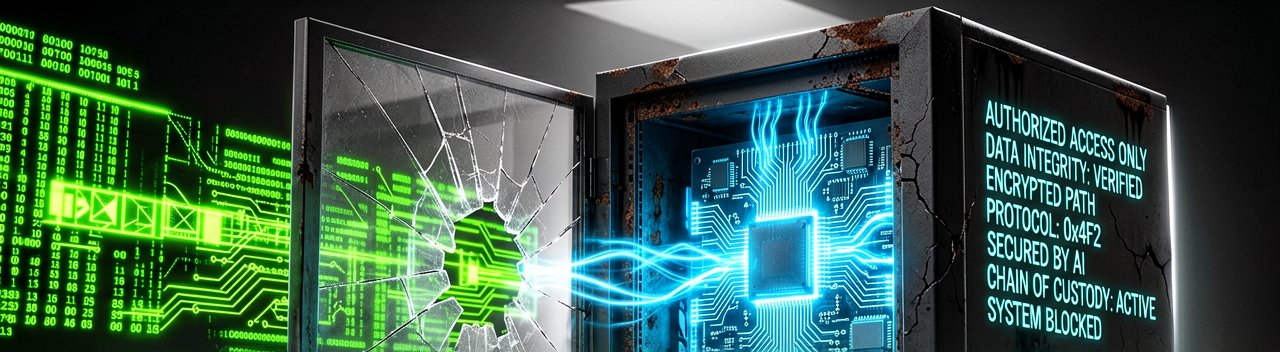
Building an entirely offline infrastructure presents massive technical challenges that require expert management. Traditional cloud setups rely on a constant connection to the internet to download quick security updates and balance processing loads. In an airgapped environment, engineers must manually package, test, and transport massive machine learning models across a physical gap using secure hardware storage. This manual process requires strict, military-grade chain-of-custody protocols to ensure that no malicious code enters the clean network environment during routine infrastructure updates.
This operational friction creates a complex balancing act between keeping data totally secure and keeping the software fresh. Machine learning models can quickly become outdated or less accurate if they do not receive regular streams of new information. In an isolated network, data scientists must build specialized internal pipelines to retrain models using only locally generated data pools. This strict setup forces companies to become entirely self-sufficient, managing their own computing power, hardware maintenance, and data processing without relying on third-party engineers.
The Real-World Cost of Total Control
From the perspective of data compliance officers, the high cost of maintaining these isolated systems is a necessary expense for protecting vital infrastructure. Industries like defense, energy, and banking operate under strict compliance rules where a single data leak can result in catastrophic fines or jeopardize national safety. By investing in private, on-premises server racks, these organizations create an ironclad environment where data access can be tracked down to the exact physical machine.
This strict isolation also completely changes how internal teams interact with modern software tools. Employees cannot simply download third-party browser extensions or connect external data plugins to speed up their daily workflow. Every single tool must be built, inspected, and deployed locally by internal IT teams. While this high level of control slows down initial deployment timelines, it provides enterprises with complete peace of mind, knowing their core data assets remain entirely safe within their corporate perimeter.
The Paradox of Isolated Innovation
Reading Between the Lines: The corporate rush to wall off corporate networks from the public internet creates a massive paradox in modern software engineering. The core strength of generative models stems from their exposure to vast, diverse public datasets and continuous open-source updates. By cutting off an enterprise network from the global web, organizations risk creating a digital echo chamber. Models trapped inside static perimeters inevitably experience performance decay over time as their local training pools fail to reflect the fast-moving evolution of external language and open software standards.
Furthermore, the claim that private AI delivers absolute data security overlooks the profound threat of internal vulnerabilities. History shows that malicious actors frequently target the human element through compromised credentials and physical social engineering rather than trying to breach complex network firewalls. An airgapped system creates a false sense of security that can lead to lax internal monitoring. When a rogue employee or an accidental insider threat introduces a compromised USB drive into a highly sensitive local enclave, the damage can spread unchecked without external cloud-based security monitoring tools to spot the anomaly.
The hardware logistics also reveal a deep contradiction in enterprise budgeting. Organizations choose localized infrastructure to avoid unpredictable cloud bills, yet they trade those fees for massive up-front capital investments in highly specialized graphics processing units. Because these physical chips depreciate rapidly as newer hardware generations enter the market, enterprises effectively turn into hardware management companies. They lock themselves into rigid physical architectures that make it incredibly difficult and expensive to pivot when the broader industry embraces more efficient software paradigms.
The Realities of the Local Frontier
This dynamic leaves corporate decision-makers caught in an unsustainable cycle of infrastructure updates. To keep local models running competitively, IT departments must constantly run manual patch deployments and complex hardware maintenance routines. This severe operational burden strains internal technical teams, who are forced to spend their time maintaining basic baseline uptime rather than building actual productive automation tools that push the business forward.
Ultimately, the future of enterprise data security will likely not belong to absolute purists on either side of the infrastructure debate. The organizations that thrive will be those that accept a messy compromise, using hybrid cloud gateways to carefully filter public insights into highly protected zones. Expecting a corporate network to remain entirely isolated while attempting to match the rapid speed of global cloud innovation remains an idealistic dream that rarely survives the harsh realities of corporate balance sheets.
Building an airgapped data center to protect your company's intellectual property is a brilliant strategy, right up until the moment an overworked systems engineer accidentally leaves a sticky note with the master network password stuck to the monitor.
Artūras Malašauskas is an AI Systems Integrator with 20+ years of production-grade web engineering experience. He has designed, shipped, and scaled enterprise Python/PHP systems for logistics, SaaS, and public-sector clients. For the past year, he has focused exclusively on AI integrations: deploying open-source LLMs, building generative media pipelines (image, audio, video), and engineering multi-agent workflows for real production environments. His standard: reproducibility, security, cost-efficient inference—no vaporware. He documents and evaluates emerging AI tooling, separating verified capabilities from marketing noise. Technical editor at: muza-ai.eu, ai-verslas.lt, ai-naujinos.lt Connect on LinkedIn
Comments