DevSecOps Crisis Exposes Critical Gaps in AI-Driven Development Pipelines
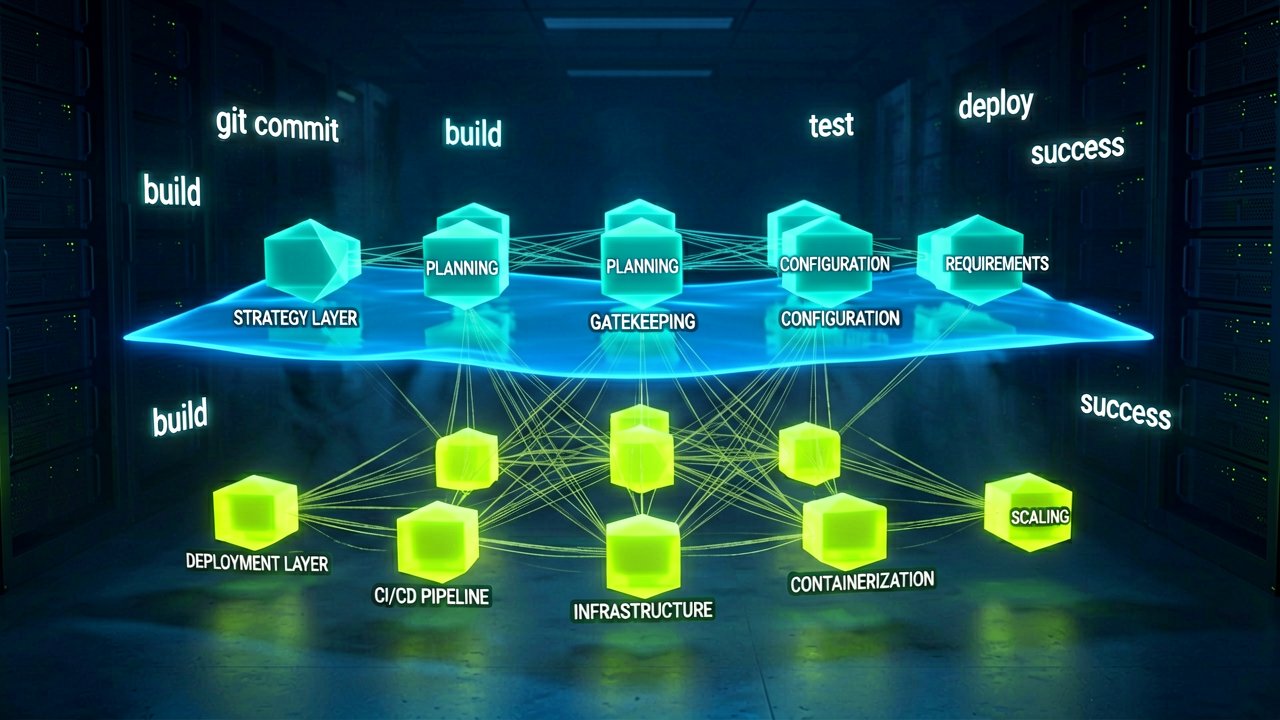
The rapid acceleration of artificial intelligence in software development has broken traditional continuous integration and continuous deployment pipelines. Organizations are increasingly deploying AI-generated code to meet hyper-accelerated timelines, but their foundational security frameworks remain heavily outdated. Enterprise delivery networks designed for human-engineered release cadences are failing to manage the scale, velocity, and unpredictability of machine-generated code repositories.
A widespread market failure exists between executive strategy and technical execution. According to a global analysis published by Check Point Software Technologies , 77% of organizations have updated their cloud security strategies to account for artificial intelligence. However, only 26% of those enterprises possess the actual architecture required to enforce those policies. This massive 51-point structural gap leaves automated workflows completely exposed to malicious code insertions, algorithmic biases, and infrastructure misconfigurations.
Compounding this architectural disconnect is an severe breakdown in developer accountability and testing enforcement. Market research covered by DevOps.com reveals that 68% of IT professionals have implemented artificial intelligence across their software delivery workflows, yet 60% of those teams admit to regularly shipping completely untested code straight into production. The immense volume of unverified, machine-authored scripts creates systemic technical debt that overwhelms standard DevSecOps automation frameworks.
The Reality of AI-Accelerated Security Incidents
Corporate risk exposure has transitioned from potential vulnerabilities to active operational disruptions. Recent enterprise figures indicate that 78% of organizations have already confirmed or suspected security incidents tied directly to artificial intelligence within their environments. Attackers are successfully weaponizing automated tools to scan infrastructure, identify flaws, and deploy targeted malware faster than traditional human-in-the-loop security models can detect or intercept them.

Structural Gaps in Network and Identity Governance
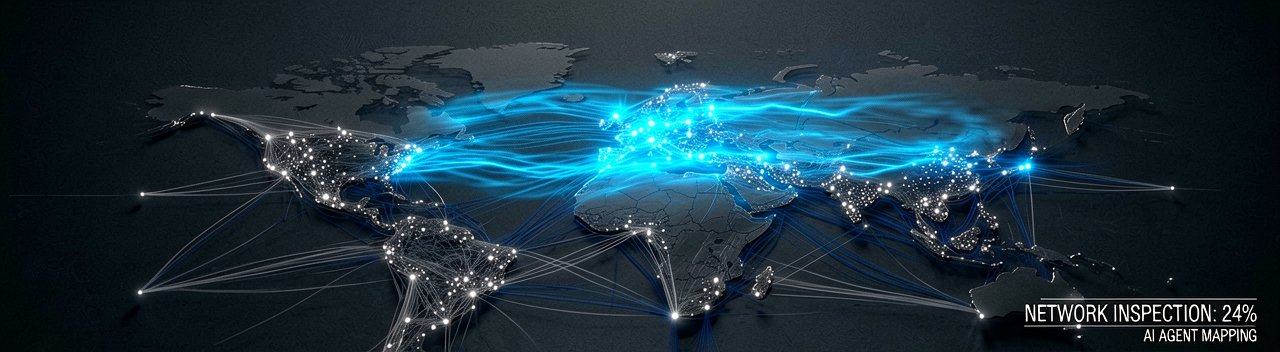
Modern DevSecOps pipelines suffer from severe structural bottlenecks, particularly in traffic inspection and non-human identity management. Only 24% of enterprises are currently capable of inspecting artificial intelligence data traffic without triggering severe infrastructure performance degradation. Furthermore, 48% of security leaders identify non-human identities, including autonomous AI agents and dynamic application programming interfaces, as their primary security exposure point due to a widespread lack of granular access controls.
A Strategic Move Toward Continuous Automated Remediation
Surviving the modern DevSecOps crisis requires a comprehensive shift away from legacy, binary pass-fail scanning gates. Software leaders must transition toward autonomous security platforms that utilize context-aware risk assessments, runtime visibility, and automated code-fixing agents. Bridging the gap between intent and capability requires embedding guardrails directly into developer environments to evaluate code lineage from initial prompt to live deployment without manual intervention.
Behind the Scenes of the Prompt-to-Production Rush
The modern engineering floor has fundamentally transformed into a high-velocity assembly line where developers function more like editors than authors. While executive boards demand immediate efficiency gains from generative tools, the middle management layer is left to navigate the operational fallout. This systemic push has created a culture of implicit trust in machine output, where security teams are frequently viewed as bottlenecks rather than enablers. The historical friction between speed and security has intensified, leaving security engineers to defend a perimeter that expands with every automated pull request.
Veteran pipeline architects point out that legacy static application security testing systems were never built for the sheer volume of code being produced today. When an engineer can generate hundreds of lines of complex infrastructure-as-code scripts with a single conversational prompt, traditional nightly security scans become obsolete before they even finish running. This mismatch forces engineering leads to make calculated risks on dependencies and package origins, often skipping thorough software bill-of-materials verification simply to prevent the continuous integration pipeline from grinding to a halt.
From the Chief Information Security Officer perspective, the financial and regulatory stakes have reached an unprecedented peak. Regulatory bodies are demanding greater transparency into software supply chains, yet mapping the precise lineage of a piece of code that was synthesized across multiple public and private language models is an architectural nightmare. Security leaders are trapped between the operational reality of developers shipping unverified code and the legal reality of personal liability for systemic corporate data breaches and infrastructure failures.
The root of this crisis traces back to a fundamental misunderstanding of automated code generators, which are trained to optimize for syntactic plausibility rather than structural security. By treating these tools as plug-and-play replacements for junior developers without establishing corresponding validation layers, enterprises have inadvertently automated the generation of technical debt. Resolving this misalignment requires a complete cultural overhaul, forcing organizations to re-engineer developer metrics away from raw deployment frequency and toward verifiable code integrity.
Reading Between the Lines: The Fallacy of Automated Compliance
The tech industry remains deeply enamored by the metric of developer velocity, yet this obsession actively obfuscates a compounding structural deficit. Organizations celebrate a 30% increase in code output while turning a blind eye to the reality that their security teams are still operating at human scale. Adding automated security scanners to a broken pipeline only produces an unmanageable volume of alerts, effectively burying critical vulnerabilities under a mountain of false positives that engineers eventually learn to ignore.
This dynamic exposes a glaring contradiction in enterprise strategy: the simultaneous mandate for rapid AI adoption and zero-trust security architecture. Corporate boards approve massive budgets for generative coding agents while starving the governance programs meant to oversee them. The result is an illusion of control where policy updates exist purely on paper, and the actual technical infrastructure is held together by ad-hoc patches and unverified open-source libraries that have been scraped into language model training sets.
Projecting this trend forward reveals a looming landscape where software stability becomes increasingly fragile and unpredictable. As machine-generated code is fed back into public datasets, future AI models will inevitably train on the flawed outputs of their predecessors, accelerating a phenomenon of algorithmic degradation. Enterprises that fail to establish strict code lineage tracking today are anchoring their digital transformations to a foundation of synthetic technical debt that will eventually require an expensive, manual refactoring process to undo.
"We have successfully optimized our pipelines to ship bugs at the speed of thought, proving that if you give a developer a machine-learning engine, they can automate a year's worth of security compliance failures in an afternoon."
Artūras Malašauskas is an AI Systems Integrator with 20+ years of production-grade web engineering experience. He has designed, shipped, and scaled enterprise Python/PHP systems for logistics, SaaS, and public-sector clients. For the past year, he has focused exclusively on AI integrations: deploying open-source LLMs, building generative media pipelines (image, audio, video), and engineering multi-agent workflows for real production environments. His standard: reproducibility, security, cost-efficient inference—no vaporware. He documents and evaluates emerging AI tooling, separating verified capabilities from marketing noise. Technical editor at: muza-ai.eu, ai-verslas.lt, ai-naujinos.lt Connect on LinkedIn
Comments