Palo Alto Networks and Deutsche Telekom Forge Pan-European AI Security Shield
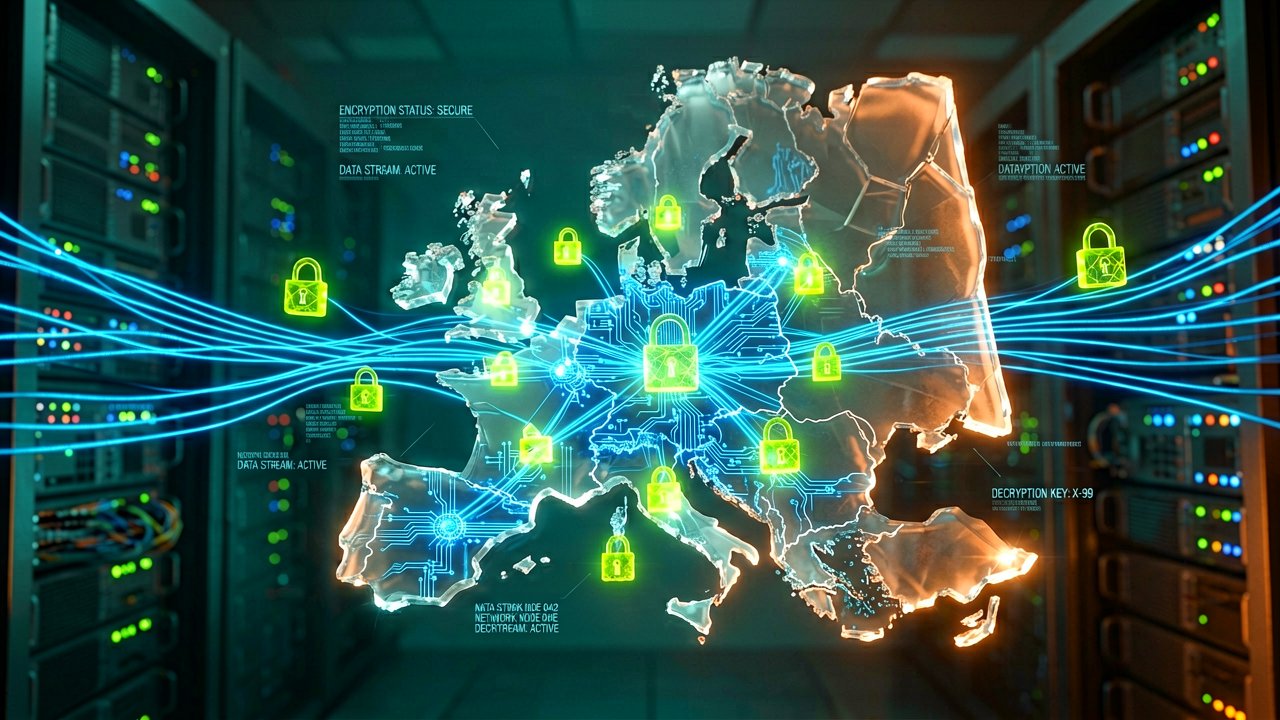
Palo Alto Networks and Deutsche Telekom have launched a powerful joint cybersecurity architecture named Sovereign Cortex with T Security to defend European industries against rapidly accelerating cyber threats. According to a Deutsche Telekom Press Release, modern attackers can progress from initial network access to total data exfiltration in as little as 72 minutes, which is four times faster than last year. This unprecedented speed necessitates immediate, real-time AI capabilities that traditional human-led security operations centers can no longer provide on their own.
The alliance addresses a critical tension in the European tech landscape by merging advanced automated defense mechanisms with stringent localized regulatory compliance. While organizations require cloud-delivered artificial intelligence to counter machine-speed exploits, they face strict continental data custody mandates. The collaborative framework directly resolves this friction, allowing enterprises to utilize cutting-edge security systems without violating localized statutory protections.
Scheduled for initial deployment in the third quarter of 2026, the service positions both companies at the forefront of the highly regulated European enterprise market. By combining Silicon Valley software innovation with established continental telecommunications infrastructure, the partnership establishes a blueprint for future cross-border defense networks. The initiative underscores a broader industrial pivot toward platform integration and sovereign compliance frameworks.
Balancing AI Defense and Data Sovereignty
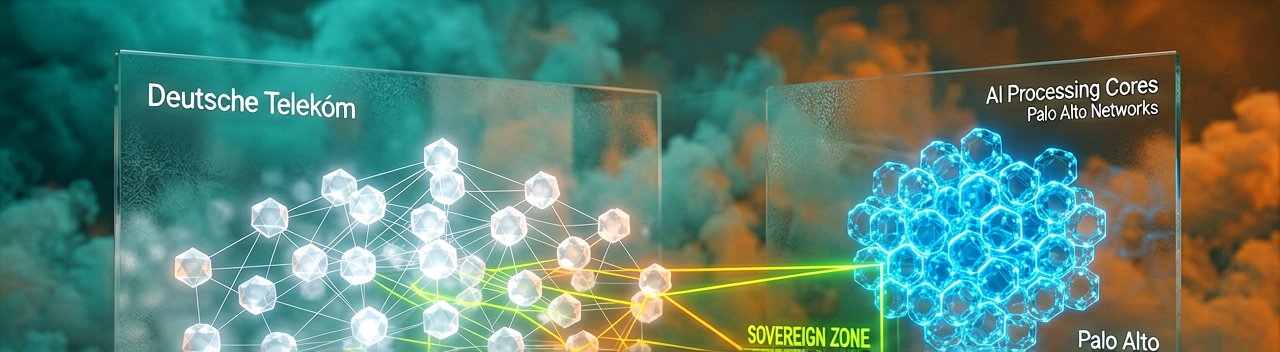
The primary value proposition of Sovereign Cortex with T Security lies in its dual-layer operational model. Palo Alto Networks provides its core agentic Security Operations Center technology to continuously ingest, parse, and neutralize threats. Meanwhile, Deutsche Telekom serves as the independent European trust anchor to supervise telemetry, maintain audit logs, and oversee the entire infrastructure environment.
According to an official statement hosted by Palo Alto Networks, this structure enforces verifiable data sovereignty controls at every layer. The joint architecture operates on Deutsche Telekom's Sovereign Google Cloud platform, which guarantees that customer metrics and threat data remain entirely within European borders. Furthermore, technical support personnel are located exclusively in Europe, and all contractual agreements are bound strictly by European law.
Compliance With Tightening European Regulations
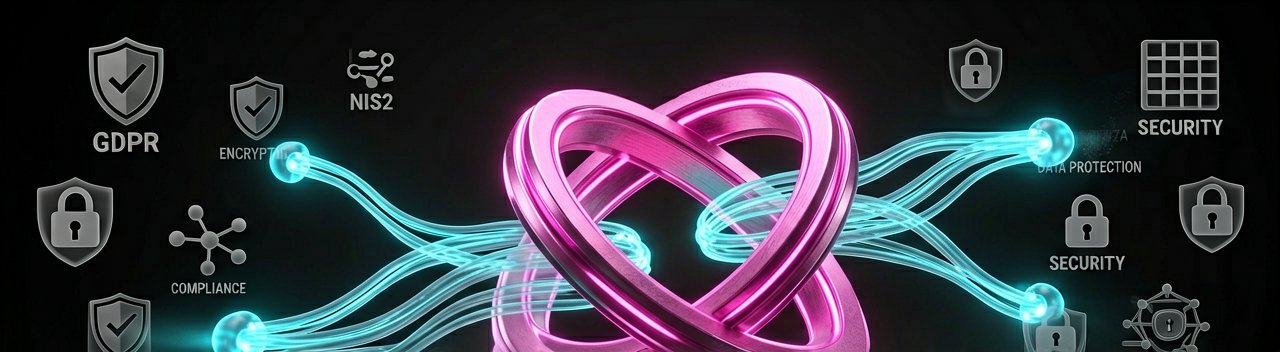
This strategic move is directly timed to coincide with a wave of sweeping legislative overhauls across the European Union. Enterprises are currently racing to realign their operations with a series of strict, legally binding frameworks. The architecture is engineered from the ground up to satisfy these shifting legal environments, specifically targeting compliance with three major European regulatory pillars:
- GDPR: Enforces rigorous data protection rules and places strict boundaries on processing automated security telemetry.
- NIS2: Sets heightened cybersecurity risk management and reporting requirements across critical industrial sectors.
- DORA: Restructures digital operational resilience for the broader financial services ecosystem.
To satisfy these requirements, TelecomTV reports that encryption keys are fully managed by Deutsche Telekom using Google Cloud’s External Key Manager. By keeping the key-encryption-keys inside localized data centers entirely separate from the underlying software providers, the system ensures that non-European entities cannot access protected intellectual property or consumer logs.
Market Impact and Targeted Demographics
The roll-out strategy targets highly scrutinized sectors where a single compliance failure can result in massive financial penalties or catastrophic infrastructural disruption. The platform will initially serve public sector offices, financial service giants, healthcare networks, and critical national infrastructure operators before rolling out to the broader mid-market.
For Palo Alto Networks, this deal expands its geographic footprint by embedding its software directly into European telco-managed accounts. Financial analysis published by Yahoo Finance notes that this platformization strategy helps the security firm capture larger amounts of recurring revenue from highly regulated customers. For Deutsche Telekom, the partnership strengthens its competitive stance as a trusted infrastructure partner, capturing enterprise demand from organizations hesitant to rely solely on unmitigated U.S. cloud giants.
Deep-Dive Analysis: The Geopolitical and Technical Blueprint of Sovereign Defense
Behind the Scenes: The collaboration between Palo Alto Networks and Deutsche Telekom marks a decisive shift in the ongoing struggle between rapid technological adoption and geopolitical digital isolationism. For years, European enterprises have been caught in a regulatory vice. On one side, the relentless speed of automated cyber attacks required the massive computational power of American hyperscale clouds and security platforms. On the other, the European Court of Justice’s dismantling of legacy data-sharing frameworks forced risk officers to view foreign-hosted software with intense legal skepticism. This new architectural framework represents a practical truce, acknowledging that while threat intelligence must be global, operational custody must remain strictly local.
From an engineering perspective, decoupling cloud-delivered AI telemetry from localized data custody is an incredibly complex task. Traditional cloud security platforms rely on funneling massive streams of global metadata back to centralized data lakes to train machine learning models. Under the Sovereign Cortex with T Security framework, this flow is fundamentally re-engineered. By utilizing Deutsche Telekom’s Sovereign Google Cloud infrastructure, raw data traffic is scrubbed, anonymized, and processed within European borders. The system leverages advanced external key management, ensuring that even if a foreign entity or cloud provider is compelled by external legal warrants to hand over data, the cryptographic keys remain entirely under European control, rendering the seized information useless.
This hybrid operational model also signals a profound evolution in the traditional relationship between telecommunications providers and software vendors. Historically, telecom companies viewed Silicon Valley security giants as existential threats to their own managed security services portfolios. However, the sheer velocity of modern exploits has forced an industrial realization that neither entity can secure the contemporary enterprise alone. Deutsche Telekom contributes its massive localized infrastructure, trusted brand equity, and deeply entrenched regulatory relationships, while Palo Alto Networks provides the highly sophisticated platform architecture needed to stop machine-speed extortion tactics. This creates a highly repeatable model for how Western tech alliances will likely be structured moving forward.
The financial implications for the broader cybersecurity marketplace are equally disruptive, accelerating the ongoing industry trend toward platform consolidation. Enterprise customers are increasingly exhausted by the operational overhead of managing disconnected point solutions from dozens of different vendors. By bundling core security operations center functions directly into the region's foundational network infrastructure, this partnership makes it significantly harder for smaller, specialized security startups to compete in the European market. It establishes a highly defensible market position that appeals directly to chief information security officers who are under intense pressure to simultaneously consolidate their vendor ecosystems, reduce operational complexity, and guarantee absolute compliance with the impending penalties of the NIS2 directive.
Reading Between the Lines: The Friction of Sovereign Automation
Reading Between the Lines: While the promotional narrative surrounding the Sovereign Cortex with T Security platform paints a picture of seamless, automated continental defense, the underlying reality presents an intricate paradox. The foundational premise of modern AI-driven cybersecurity is its reliance on unfettered, global data ingestion. By restricting telemetry data strictly within European borders to satisfy sovereignty mandates, the system risks blinding its threat detection models to novel attack methodologies originating or mutating in other geopolitical spheres. A localized data lake is inherently a smaller data lake, which introduces a persistent engineering challenge: balancing the strict legal purity of data isolation with the operational necessity of global threat intelligence sharing.
Furthermore, the operational division of labor between Palo Alto Networks and Deutsche Telekom introduces potential friction points in real-time incident response. In a standard deployment, cloud security platforms function with absolute autonomy, isolating compromised endpoints and updating firewall rules in a matter of milliseconds. Under this sovereign arrangement, Deutsche Telekom acts as a localized intermediary, overseeing logs and managing encryption keys. If an active exploit occurs, this multi-layered oversight structure could inadvertently introduce operational latency, which is a dangerous liability when modern attackers can fully compromise a network in under an hour and a half. The ultimate success of this alliance relies entirely on whether the software's automated actions can bypass human bureaucratic check-points without triggering compliance alarms.
The long-term market implications also reveal a distinct tension for European enterprise autonomy. By leaning so heavily on a combined American-European tech stack to achieve digital sovereignty, European enterprises are essentially trading one form of dependency for another. The architecture relies on an American software giant's proprietary algorithms running on an American hyperscaler’s modified infrastructure, merely wrapped in a European telecom company's regulatory custody. This dynamic highlights the continent's continued struggle to cultivate its own native, hyperscale technology giants, relying instead on legal frameworks and clever partnerships to police the foreign infrastructure it cannot easily replace.
"Ultimately, the European tech sector has perfected the art of outsourcing its heavy engineering to Silicon Valley while keeping the regulatory red tape firmly manufactured at home; this new shield successfully ensures that when a cyber crisis hits, organizations can at least file their compliance paperwork entirely within local business hours."
Artūras Malašauskas is an AI Systems Integrator with 20+ years of production-grade web engineering experience. He has designed, shipped, and scaled enterprise Python/PHP systems for logistics, SaaS, and public-sector clients. For the past year, he has focused exclusively on AI integrations: deploying open-source LLMs, building generative media pipelines (image, audio, video), and engineering multi-agent workflows for real production environments. His standard: reproducibility, security, cost-efficient inference—no vaporware. He documents and evaluates emerging AI tooling, separating verified capabilities from marketing noise. Technical editor at: muza-ai.eu, ai-verslas.lt, ai-naujinos.lt Connect on LinkedIn
Comments