Shadow AI Threats Escalate: A Deep Dive into Invisible Cybersecurity Risks

The enterprise perimeter is fracturing under the weight of unsanctioned artificial intelligence adoption. Driven by employees seeking immediate productivity gains, "Shadow AI"—the utilization of consumer-grade generative models and external applications without IT or security oversight—has quickly transformed from a minor operational compliance issue into an acute existential threat. As corporate information moves silently across localized networks into public clouds, corporate security teams are left blind to the sheer volume of proprietary data escaping their purview.
A staggering 77 percent of organizations have updated their security strategies to counter these shifts, yet only 26 percent possess the technical architectural capability to actually enforce them, according to data from the Check Point Software 2026 Cloud Security Report. This architectural enforcement gap means most enterprise defensive lines remain strictly performative while staff routinely feed intellectual property, financial transcripts, and software source code into third-party servers. As security practitioners struggle with visibility, the explosive growth of automated workflows and unmanaged AI endpoints has dramatically widened the attack surface.
Furthermore, this visibility crisis is compounded as adversarial groups weaponize the same toolsets to launch hyper-targeted phishing campaigns, bypass authentication schemes, and build polymorphic malware. Modern security professionals warn that ignoring the unchecked expansion of these shadow frameworks effectively nullifies traditional defense models. Without zero-trust infrastructure tailored directly to AI data paths, enterprises will inevitably discover their exposures only after data breaches have been commercialized by malicious actors.
The Anatomy of Invisible Risks and the Enforcement Gap
Unlike traditional shadow IT, which typically involved unauthorized SaaS project management software or cloud storage, Shadow AI integrates dynamically via browser extensions, hidden OAuth tokens, and embedded API connections. Industry telemetry shows that the average enterprise actively uses roughly 14 distinct AI tools, yet internal IT groups are aware of only four or five, as noted by Red Team Partner. This massive disparity means that for every sanctioned productivity tool deployed, nearly ten unvetted data tunnels are quietly siphoning operational communications directly out of the organization.

Shifting from Blanket Prohibitions to Behavioral Governance
Market realities indicate that attempts to completely outlaw AI usage within corporate workflows are counterproductive and fundamentally doomed to fail. Restricting access outright incentivizes employees to circumvent controls using personal devices or obfuscated networks, which drives the underlying risk further underground. Security architecture must pivot toward continuous discovery, real-time context auditing, and automated data loss prevention frameworks that categorize risks continuously. The strategic objective is to achieve full operational transparency, transforming high-risk, invisible shadow tools into sanctioned, ring-fenced enterprise assets.
Deep-Dive: The Hidden Pipeline of Enterprise Data Leaks
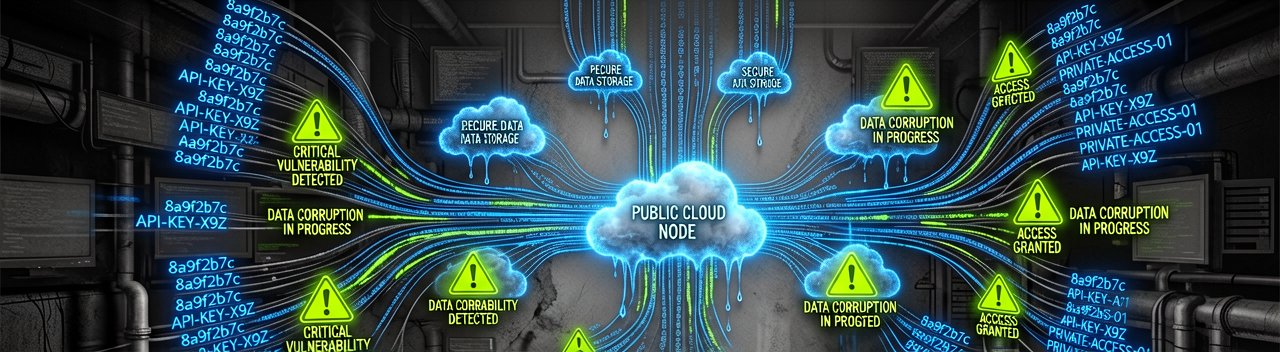
Behind the Scenes of the Invisible Perimeter: The mechanisms fueling Shadow AI are far more insidious than employees simply copying and pasting corporate memos into public web forms. Modern workplace productivity is increasingly driven by automated browser extensions, smart note-takers that automatically join video conferences, and background IDE plugins that quietly upload local code repositories to optimize autocomplete algorithms. Chief Information Security Officers are discovering that these tools often gain access via corporate OAuth tokens, bypassing traditional perimeter firewalls entirely and establishing persistent, unmonitored data tunnels into external clouds.
This silent pipeline introduces unprecedented regulatory liabilities under modern data privacy frameworks. When a well-meaning employee uploads an unredacted customer dataset to a public model for analysis, that data is frequently ingested to train future iterations of the software. Once proprietary code or personally identifiable information becomes part of a model's weights, removing it is practically impossible, creating permanent compliance violations that standard digital forensics tools cannot trace or remediate.
Software developers and data scientists represent an especially high-risk group within the enterprise ecosystem. In their push to accelerate product release cycles, engineers routinely use unauthorized code-generation assistants to debug internal applications. This practice exposes proprietary software architecture and API keys to third-party providers, giving threat actors a potential blueprint of the organization’s internal network defenses before a single line of production code is ever officially deployed.
The solution requires a fundamental shift away from legacy, signature-based security blocks toward intelligent, behavioral governance. Forward-looking security teams are deploying localized proxy layers capable of intercepting AI-bound traffic, stripping out sensitive variables in real-time, and substituting them with synthetic tokens. By shifting the defensive strategy from total prohibition to programmatic sanitization, organizations can finally close the enforcement gap without stifling the operational velocity that AI tools provide.
Reading Between the Lines: The Productivity Paradox and Regulatory Illusion
Reading Between the Lines: The corporate panic surrounding Shadow AI exposes a fundamental hypocrisy in modern enterprise management. For years, executives have demanded hyper-efficiency and exponential productivity gains from their workforces, effectively forcing employees to seek out automated shortcuts. Now, the very tools that enabled workers to meet these aggressive corporate targets are being demonized as existential security threats. This creates a contradictory corporate environment where employees are quietly rewarded for the output of their unsanctioned tools while being technically prohibited from using them by outdated IT policies.
Furthermore, the current market rush toward enterprise-grade, "secure" AI alternatives is largely an illusion of safety. Many vendor-provided enterprise solutions boast strict data-privacy compliance and isolated cloud environments, yet they still rely on the exact same foundational models as their consumer counterparts. This creates a false sense of security among leadership teams who assume that a paid corporate license automatically mitigates risk, ignoring the fact that complex supply-chain vulnerabilities and prompt-injection attacks remain entirely unaddressed by a simple service-level agreement.
Looking ahead, the long-term implication of this cat-and-mouse game will likely be a severe fragmentation of corporate infrastructure. As security teams deploy increasingly aggressive decryption and monitoring tools to hunt down rogue AI traffic, tech-savvy employees will inevitably pivot to localized, open-source models running entirely on edge hardware. This impending shift from cloud-based Shadow AI to unmonitored offline AI will render traditional network visibility tools completely obsolete, transforming the current data-leak problem into a localized endpoint security nightmare that organizations are entirely unprepared to handle.
The modern enterprise strategy for managing AI risks mirrors a homeowner trying to secure a leaking roof by drafting a strict policy against rain; we spent decades teaching employees to find creative digital workarounds, and now we are shocked to discover they actually learned the lesson.
Artūras Malašauskas is an AI Systems Integrator with 20+ years of production-grade web engineering experience. He has designed, shipped, and scaled enterprise Python/PHP systems for logistics, SaaS, and public-sector clients. For the past year, he has focused exclusively on AI integrations: deploying open-source LLMs, building generative media pipelines (image, audio, video), and engineering multi-agent workflows for real production environments. His standard: reproducibility, security, cost-efficient inference—no vaporware. He documents and evaluates emerging AI tooling, separating verified capabilities from marketing noise. Technical editor at: muza-ai.eu, ai-verslas.lt, ai-naujinos.lt Connect on LinkedIn
Comments