Architecting Accountability: Inside Microsoft and IMDA’s Global Framework for AI Safety
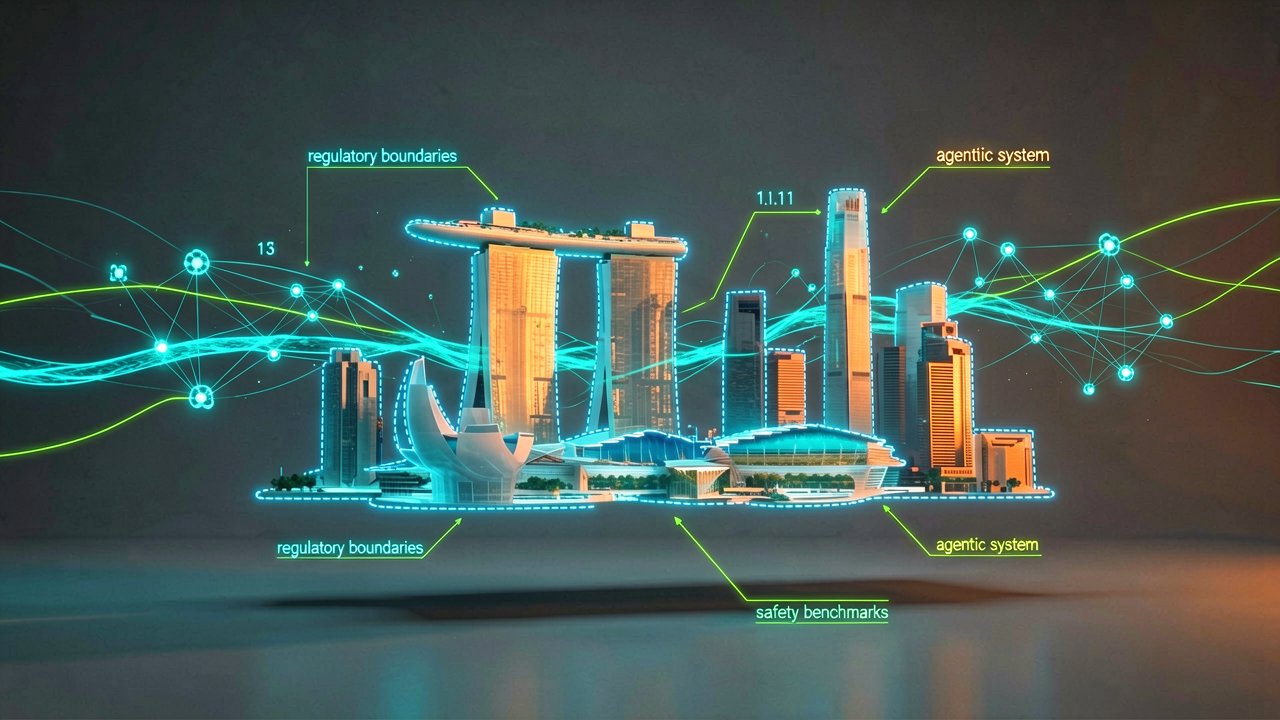
The race to monetize artificial intelligence has outpaced the development of international regulatory safeguards. In a decisive move to address this gap, Microsoft Corporation and Singapore’s Infocomm Media Development Authority (IMDA) signed a Memorandum of Understanding (MOU) on June 12, 2026. This alliance represents a critical strategic shift from localized, reactive policies to institutionalized, proactive risk mitigation. By combining commercial engineering resources with a sovereign regulatory sandbox, both organizations aim to craft benchmarks that could define the parameters of global AI compliance.
The alliance operates against a turbulent market landscape. Regulatory bodies worldwide are grappling with the systemic risks of autonomous technologies, accelerated by the rise of highly advanced systems like Anthropic's Claude Mythos Preview, which has drawn global concern for its ability to autonomously exploit software vulnerabilities. As reported by The Straits Times, this reality highlights the urgency of establishing secure access pipelines to evaluate models before widespread commercial deployment. For Microsoft, anchoring its safety initiatives within Singapore’s neutral, highly digitized economy provides a blueprint for managing global regulatory scrutiny.
Deep Technical Research into Agentic and Multilingual Systems
A primary technical objective of the partnership is joint research into agentic AI and model evaluation methodologies. As outlined by the Infocomm Media Development Authority (IMDA), the scope covers the joint creation of testing tools and benchmarks tailored for complex multi-modal behaviors. A specific emphasis is placed on multilingual AI safety, a crucial prerequisite for creating universally applicable standards across diverse global regions. Furthermore, the collaboration leverages Singapore’s Model AI Governance Framework for Agentic AI to enforce meaningful human accountability while implementing automated controls over autonomous lifecycles.
Constructing Trusted Access for Frontier AI Models
Beyond academic research, the agreement lays the foundation for a policy framework governing how infrastructure operators and sovereign governments can safely evaluate massive foundation models. Working in tandem with the Singapore AI Safety Institute, the parties intend to co-author a comprehensive white paper. According to a market report from Seeking Alpha , this upcoming paper will examine demand-side requirements alongside supply-side policy considerations for model providers. The ultimate goal is to standardize safety and security verification protocols, bridging the historical disconnect between tech developers and national security entities.

Market Impact and the Sovereign Advantage
By executing this strategy, Microsoft secures an essential regulatory testing ground, balancing consumer innovation with risk control. Industry analysts observe that establishing an ecosystem of mutual trust is essential as technologies scale faster than any individual corporate actor can safely manage. For enterprise buyers, these collaborative benchmarks alleviate compliance anxieties, positioning Microsoft's enterprise AI offerings as exceptionally reliable options for strictly regulated industries worldwide.
Sovereign Sandboxes and the Geopolitical Realities of AI Control
Behind the Corporate Press Release: The partnership between Microsoft and Singapore’s IMDA exposes a deeper structural tension within the technology industry: the fragmentation of global AI governance. For years, tech conglomerates have operated in a regulatory vacuum, deploying massive foundation models while internal safety teams struggled to keep pace with commercial release schedules. By embedding its engineering talent directly within Singapore's regulatory infrastructure, Microsoft is executing a tactical pivot designed to circumvent the bureaucratic gridlock of western legislative bodies. Singapore offers a streamlined, highly sophisticated ecosystem where policy adaptation occurs in months rather than years, serving as an ideal testing ground for standards that can later be exported to more rigid jurisdictions like the European Union or the United States.
This alliance is not merely a philanthropic pursuit of ethical software development; it is a calculated effort to institutionalize compliance frameworks before adversarial state actors or restrictive trade blocs dictate the terms of engagement. Singapore’s unique position as a neutral, hyper-digitized trade hub allows it to act as a geopolitical buffer zone. In this environment, multi-modal systems can be evaluated against cross-border data flows without triggering immediate national security vetoes from competing superpowers. The corporate perspective here aligns with long-term market survival, as establishing a shared vocabulary for AI vulnerabilities ensures that next-generation enterprise platforms remain legally viable across fragmented international markets.
Historically, technical standardization has favored the first movers who successfully bridge the gap between abstract academic research and commercial scalability. The emphasis on multilingual and regional benchmarks within this specific agreement highlights a glaring deficiency in existing safety models, which remain overwhelmingly optimized for Western languages and cultural contexts. By co-developing evaluation tools with the Singapore AI Safety Institute, Microsoft intends to address localized vulnerabilities and algorithmic biases that could otherwise lead to catastrophic failures in high-stakes deployments, such as regional financial clearinghouses or autonomous supply chain networks across Southeast Asia.

Ultimately, the creation of a trusted access framework for frontier systems signals a shift away from self-regulation toward collaborative verification. Industry insiders note that enterprise buyers are increasingly hesitant to integrate deep-tier agentic systems without explicit, state-vetted assurances regarding model boundaries and defensive guardrails. The forthcoming white paper slated by the partners will likely dictate how compute providers, infrastructure developers, and sovereign states negotiate the boundaries of model inspection. This formalization marks the end of the experimental era for generative systems, replacing corporate discretion with a standardized, auditable framework for global AI deployment.
The Compliance Illusion: Skepticism Surrounding Public-Private Guardrails
Reading Between the Lines: The collaborative optimism surrounding the Microsoft-IMDA alliance masks a fundamental conflict of interest between corporate profit motives and sovereign regulatory duties. Tech monopolies frequently embrace state-sponsored safety initiatives not out of altruism, but as a preemptive strategy to capture the regulatory apparatus. By co-authoring the very benchmarks used to evaluate "frontier" systems, Microsoft effectively helps write the rules of a game it is already winning. This dynamic risks creating an artificial barrier to entry, where open-source competitors and smaller startups are choked out of the market by compliance overhead that only trillion-dollar tech giants possess the capital and engineering hours to clear.
Furthermore, the technical focus on benchmarking "agentic systems" contains an inherent contradiction that safety institutes are hesitant to openly acknowledge. An agentic AI model is valued precisely for its capacity to operate autonomously, adapt to novel environments, and execute multi-step workflows without constant human intervention. Attempting to strictly standardize and predict the boundaries of an emergent, adaptive system is an exercise in chasing a moving target. The industry’s current evaluation tools are notoriously static, relying on historical datasets that fail to replicate the chaotic, real-world edge cases these autonomous agents will inevitably encounter once deployed at scale.
There is also a profound geopolitical irony in anchoring a "global" AI safety standard within a singular city-state, no matter how digitally advanced it may be. While Singapore provides an agile regulatory sandbox, its domestic policies and localized threat models do not neatly translate to the fragmented legal landscapes of the West or the developing global South. A framework optimized for a tightly controlled, highly compliant digital infrastructure may prove entirely ineffective when exposed to jurisdictions characterized by systemic data fragmentation, varying privacy laws, and differing definitions of corporate liability. This geographical mismatch suggests the resulting white papers may become prestigious corporate public relations assets rather than universally enforceable security doctrines.
Ultimately, the true measure of this alliance will not be found in the signing of memorandums or the publication of joint policy papers, but in the first inevitable failure of a certified model. When an approved agentic system causes severe financial disruption or a critical data breach, the finger-pointing between corporate developers and state-backed evaluators will expose the frailty of shared accountability. Until these frameworks include legally binding financial liabilities for model providers rather than voluntary compliance checklists, international safety alliances will remain a sophisticated form of theater, reassuring markets while shifting the ultimate risk onto the enterprise consumer.
Co-authoring your own safety regulations is the ultimate corporate masterclass: it allows a tech giant to proudly install the emergency brakes on its new autonomous vehicle, while quietly ensuring it retains exclusive ownership of the mechanics' garage.
Artūras Malašauskas is an AI Systems Integrator with 20+ years of production-grade web engineering experience. He has designed, shipped, and scaled enterprise Python/PHP systems for logistics, SaaS, and public-sector clients. For the past year, he has focused exclusively on AI integrations: deploying open-source LLMs, building generative media pipelines (image, audio, video), and engineering multi-agent workflows for real production environments. His standard: reproducibility, security, cost-efficient inference—no vaporware. He documents and evaluates emerging AI tooling, separating verified capabilities from marketing noise. Technical editor at: muza-ai.eu, ai-verslas.lt, ai-naujinos.lt Connect on LinkedIn
Comments