BlueVoyant Launch Signals Shift to Autonomous, Agentic Security Operations

The enterprise cybersecurity paradigm is transitioning from manual triage to autonomous intervention. According to an official press release via PR Newswire, BlueVoyant launched BlueVoyant AI, an "Agentic SecOps" platform engineered to discover, prevent, detect, investigate, and stop digital threats across enterprise ecosystems. This software launch addresses the structural limitations of modern Security Operations Centers (SOCs) that face overwhelming alert fatigue, adversarial automation, and a persistent shortage of skilled security practitioners.
The platform architecture relies heavily on ensemble machine learning models that process real-time security telemetry to deliver deterministic automated response workflows. Rather than simply alerting human defenders to a potential breach, autonomous agents within the system possess the authorization to execute sub-minute containment actions. As detailed in the BlueVoyant Press Release, these automated actions include instantly isolating compromised infrastructure, revoking network credentials, and erasing malicious email chains across an organization's entire digital footprint.
This deployment model highlights a broader strategic shift within the cyber defense market toward what industry analysts categorize as AI Systems Security (AISS). BlueVoyant is commercializing this technology under two distinct models: a fully managed service supported 24/7 by their elite human SOC analysts, and a self-service software-as-a-service (SaaS) platform for internal corporate security teams. As reported by AI CERTs News, this expanding market segment is projected to reach approximately $8 billion by 2030 as enterprises phase out legacy Security Orchestration, Automation, and Response (SOAR) frameworks that require intensive, manual playbook configuration.
Deep Microsoft Ecosystem Integration and Data Network Effects
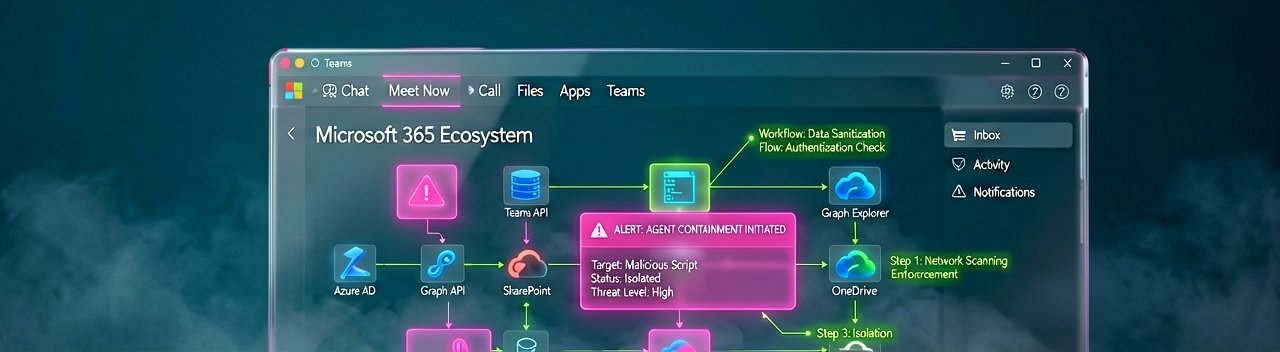
Unlike standard cybersecurity platforms that train algorithms on generic threat intelligence repositories, this new platform leverages nearly a decade of operational data gathered from over 2,500 customer deployments in Microsoft-native environments. This specialized telemetry allows the platform's proprietary models to instantly ingest and understand changes in the Microsoft Security ecosystem without rebuilding playbooks from scratch. By mapping attack paths and running continuous network-wide threat hunts, a single novel threat detected in one environment instantly populates defensive logic across all organizations connected to the platform fabric.
Deterministic Control and the Product Roadmap
To reduce the risks of AI hallucinations or erroneous system isolation, the underlying operating principle pairs algorithmic speed with strict human oversight. Routine triage, data enrichment, and known-threat response are handled entirely by software agents, while complex contextual investigations remain anchored to human analyst approval. BlueVoyant has also exposed this platform data to enterprise collaboration environments like Slack, Microsoft Teams, and Claude Desktop via the Model Context Protocol (MCP). Looking ahead, the company's publicly disclosed development roadmap aims to extend these agentic workflows to secure non-human machine identities, which represent a critical, unprotected vector in modern enterprise cloud operations.
Behind the Scenes: Inside the High-Stakes Shift to Autonomous Cyber Defense
Behind the Scenes: The evolution of the modern Security Operations Center (SOC) has reached a critical tipping point where human cognition can no longer keep pace with machine-speed exploits. For nearly a decade, enterprises relied heavily on Security Orchestration, Automation, and Response (SOAR) frameworks to streamline their workflows. However, these legacy systems required engineers to manually program rigid, logic-based playbooks that broke the moment an adversary altered their attack methodologies. Security leadership frequently reported that maintaining these brittle playbooks consumed more engineering hours than the actual threats they were designed to mitigate, creating an unsustainable operational burden.
This systemic vulnerability is precisely why the shift toward agentic architecture represents a fundamental behavioral realignment rather than a simple software update. Inside enterprise environments, security analysts have historically been hesitant to grant automated software the authority to isolate production servers or revoke executive credentials due to the risk of costly false positives. BlueVoyant's deployment strategy addresses this historical friction by introducing a hybrid, deterministic model. By delegating high-volume, low-risk telemetry triage to autonomous agents while keeping human operators in the loop for critical business disruption decisions, the platform establishes a pragmatic middle ground that builds institutional trust in algorithmic decision-making.
From a stakeholder perspective, the financial implications extend far beyond the reduction of mean time to detection (MTTD) and mean time to resolution (MTTR). Chief Information Security Officers (CISOs) are facing unprecedented regulatory pressure and boardroom accountability regarding material data breaches. Simultaneously, the persistent global shortage of tier-three security analysts has driven up recruitment and retention costs across the industry. By automating the foundational layers of threat hunting and incident validation, enterprise security organizations can reallocate their highly compensated human talent to proactive architecture design, threat modeling, and strategic risk management.
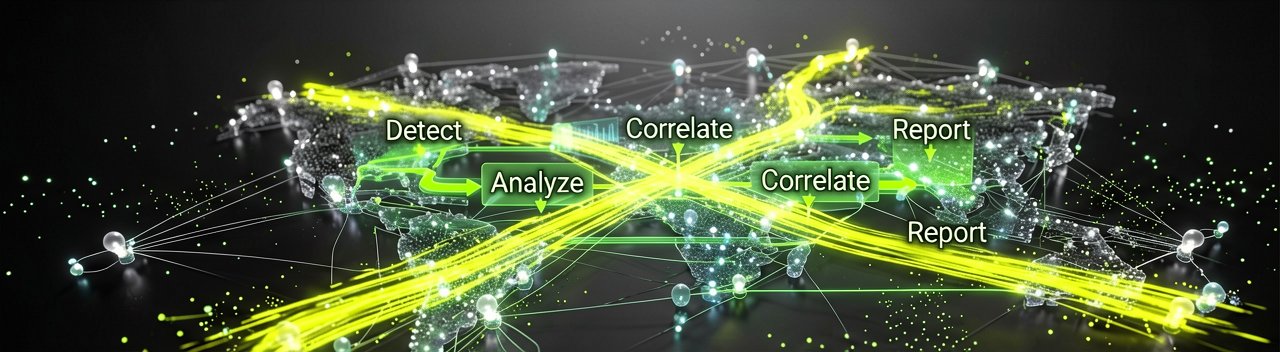
The operational data network effects generated by deep ecosystem integrations, particularly within widespread environments like Microsoft Sentinel, further illustrate the strategic value of this platform shift. When a novel adversary technique is discovered and neutralised within one enterprise environment, the underlying machine learning models immediately distribute that defensive logic across the entire customer fabric. This crowdsourced immunization model effectively changes the economics of cyber warfare, forcing adversaries to completely re-engineer their exploit kits rather than reusing the same infrastructure across multiple corporate targets.
As organizations continue to integrate these autonomous workflows into unified communication channels like Slack and Microsoft Teams via advanced protocol frameworks, the daily workflow of the security team changes dramatically. Incident response shifts from reactive, high-stress fire drills to supervised operational oversight. The ultimate trajectory of this technology points toward a landscape where enterprise defense is entirely predictive, allowing organizations to map, simulate, and block complex lateral movements across cloud environments minutes before an adversary can establish a permanent foothold.
Reading Between the Lines: The Hidden Frictions of Algorithmic Autonomy
Reading Between the Lines: The cybersecurity industry possesses a long, well-documented history of rebranding automated scripts as revolutionary artificial intelligence. While agentic security operations promise to alleviate the chronic alert fatigue plaguing modern SOCs, this paradigm shift introduces a delicate paradox regarding accountability and trust. Marketing narratives frequently highlight sub-minute containment metrics, yet they rarely address the systemic blast radius when an autonomous agent inevitably misinterprets a legitimate, albeit unusual, administrative action. In highly integrated corporate environments, an overzealous AI agent revoking access privileges during a critical database migration could accidentally trigger the very business downtime that enterprise security is deployed to prevent.
Furthermore, the heavy reliance on data network effects across shared customer ecosystems introduces subtle, structural vulnerabilities. If multiple organizations depend on a unified, algorithmic defensive fabric, a sophisticated adversary could theoretically manipulate telemetry inputs to systematically poison the training data or induce widespread false positives across the entire network. This vulnerability shifts the tactical battleground from standard perimeter defense to algorithmic integrity management. Security teams find themselves in a complex position where they must defend the very machine learning models that were purchased to protect them, creating an additional layer of operational overhead that few organizations are staffed to handle.
There is also a stark operational contradiction within the dual SaaS and managed service deployment models. Enterprise leadership often views autonomous tools as a mechanism to permanently reduce security headcount and lower budgetary expenditures. However, true agentic systems demand highly specialized engineers to continually audit agent behavior, manage API configurations across sprawling cloud environments, and step in when deterministic logic collides with unexpected enterprise infrastructure. Rather than eliminating human labor, these tools change the required skill set, shifting the hiring bottleneck from entry-level triage analysts to scarce, highly compensated AI safety and compliance engineers.
Ultimately, true autonomy remains an elusive milestone that relies heavily on the quality and contextual clarity of internal corporate documentation. An AI agent is only as precise as the data architecture underpinning it, meaning that organizations with fragmented asset management, poorly labeled infrastructure, or shadow IT departments will likely experience diminished performance. Until enterprises achieve comprehensive, real-time visibility into their own digital footprints, autonomous security tools will function less like independent defenders and more like highly accelerated amplifiers of existing data discrepancies.
"We are rapidly approaching a state of security nirvana where software agents hunt software threats across software infrastructure at the speed of light—leaving human executives perfectly positioned to explain to the board why a minor algorithmic glitch accidentally quarantined the entire payroll department on a Friday afternoon."
Artūras Malašauskas is an AI Systems Integrator with 20+ years of production-grade web engineering experience. He has designed, shipped, and scaled enterprise Python/PHP systems for logistics, SaaS, and public-sector clients. For the past year, he has focused exclusively on AI integrations: deploying open-source LLMs, building generative media pipelines (image, audio, video), and engineering multi-agent workflows for real production environments. His standard: reproducibility, security, cost-efficient inference—no vaporware. He documents and evaluates emerging AI tooling, separating verified capabilities from marketing noise. Technical editor at: muza-ai.eu, ai-verslas.lt, ai-naujinos.lt Connect on LinkedIn
Comments