The Real Cost of Building: In-House Code Security AI Runs 12 Times Higher Token Costs Than Commercial Tools
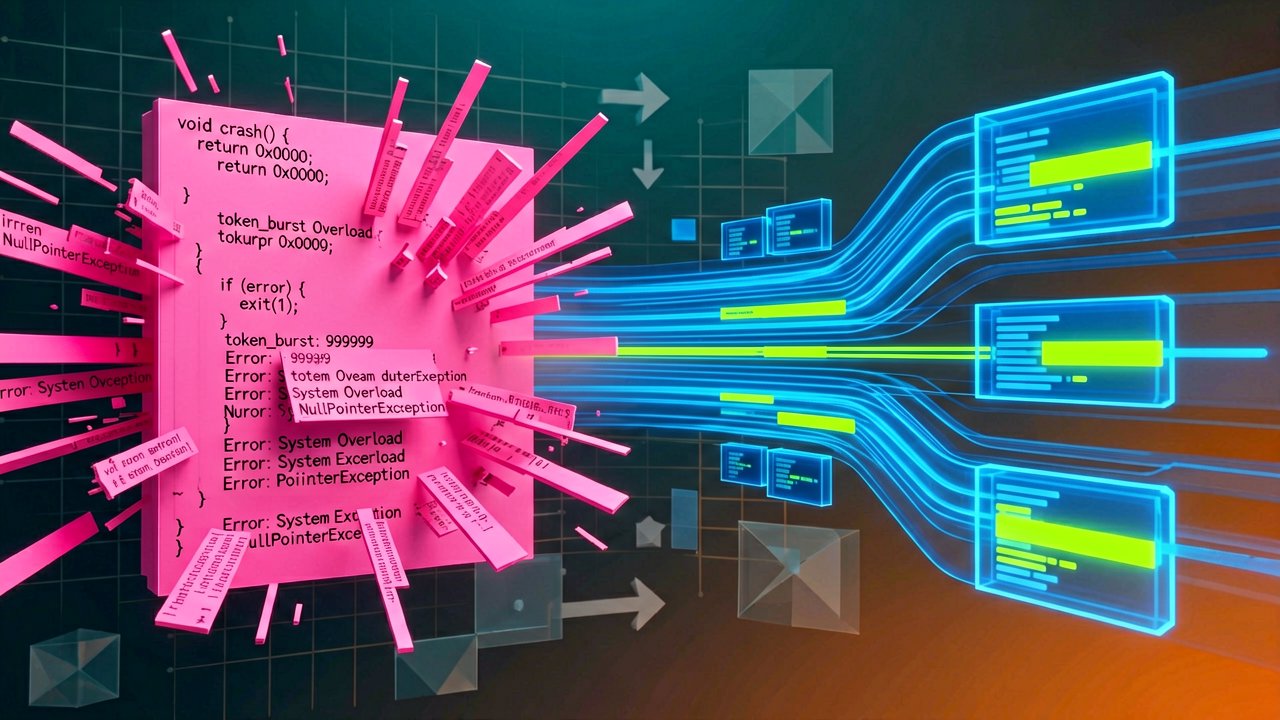
The enterprise shift toward securing software development pipelines with Artificial Intelligence has reached a critical economic crossroads. While engineering teams frequently lean toward constructing proprietary systems to retain control over internal source code, recent data reveals a massive financial premium to this path. An industry report by Endor Labs demonstrates that building in-house code security solutions utilizing the exact same large language models and tasks as commercial alternatives results in a staggering 12-fold increase in token expenses. This discrepancy introduces a major financial variable into the classic "build versus buy" dilemma during a period of rapidly inflating frontier model costs.
This dramatic cost differential stems directly from how context windows and orchestration mechanisms are handled by internal software engineers compared to specialized platforms. Standard engineering workflows typically require massive context injections to catch systemic vulnerabilities and architectural weaknesses, which exponentially expands token usage. Conversely, commercial solutions integrate deterministic program analysis alongside agentic reasoning to drastically reduce the volume of data passed to underlying foundation models. As frontier model providers adjust pricing tiers upwards for next-generation intelligence, the financial penalty for unoptimized, home-grown AI agents becomes an unsustainable line item for standard IT budgets.
The Token Economics Gap
The fundamental driver of this price disparity lies in prompt construction and structural context optimization. In-house prototypes often resort to passing entire code repositories or substantial code blocks into a prompt window to provide the AI agent with sufficient background information. Commercial application security platforms minimize this data overhead by utilizing advanced parsing methods, structural call graphs, and specialized semantic filters to isolate only the exact data segments requiring verification. This targeted data handling drastically lowers the input token load, allowing commercial platforms to fulfill identical security tasks at a fraction of the cost.
Scalability Realities and Rising Frontier Pricing
Engineering departments that scope budgets based on older model cycles face immediate cost overruns as more advanced reasoning architectures hit the open market. Maintaining a custom AI architecture requires continuous engineering upkeep to optimize API calls, handle rate limits, and mitigate false positives. Hand-rolling security scripts often ignores the massive downstream operational overhead needed to support multi-agent orchestrations over thousands of weekly pull requests. Relying on an unoptimized framework forces companies into a continuous cycle of scaling up raw infrastructure spending rather than scaling their actual defensive capabilities.
The Sunk Cost Fallacy of Proprietary Security
Reading Between the Lines: The persistent urge for enterprises to build their own AI security tooling often masks a deeper corporate vanity masquerading as data stewardship. Engineering leaders frequently justify the exorbitant development cycles and runaway token bills by citing strict intellectual property protection and the unique nature of their internal codebase. Yet, this argument falls apart under close scrutiny. The vast majority of enterprise software relies heavily on the exact same open-source frameworks, standard design patterns, and common architectural models found across the broader industry. By building a bespoke security agent from scratch, organizations are essentially paying a twelve-fold premium to train a general-purpose model on highly predictable, non-unique code flaws.
This dynamic exposes a glaring contradiction in current corporate AI strategies, where the pursuit of customization actively diminishes operational accuracy. To keep escalating token costs somewhat under control, internal development teams are often forced to artificially truncate their context windows or utilize smaller, less capable open-source models. This compromise directly undercuts the original goal of building a superior, hyper-contextualized internal tool. The enterprise ends up with a fragmented solution that costs significantly more than a commercial platform but possesses only a fraction of the reasoning capability, creating a dangerous illusion of security while missing complex, multi-file vulnerabilities.
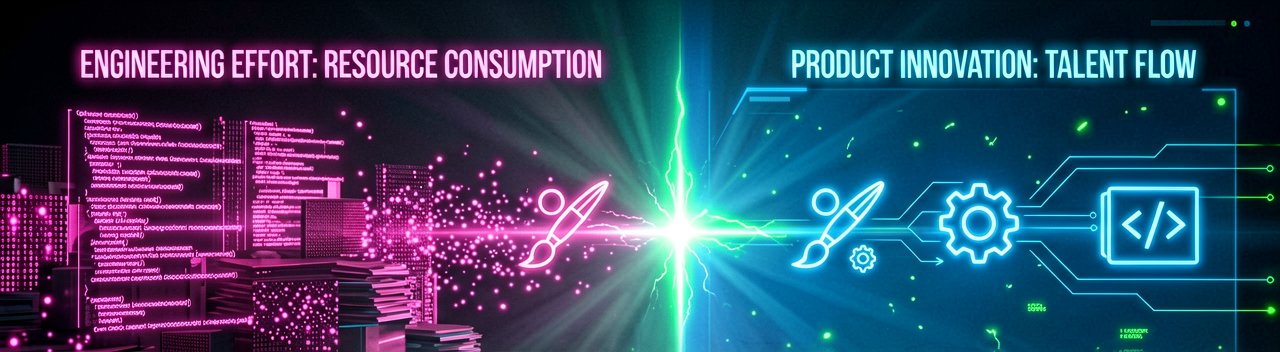
The long-term economic implications extend far beyond the immediate API billing cycle to threaten core talent retention and organizational focus. Top-tier software engineers are hired to build customer-facing products and drive core business revenue, not to spend their weeks constantly refactoring prompt templates, managing rate limits, and debugging the hallucinations of a home-grown security bot. When a company transforms its core engineering department into an amateur AI research lab just to replicate existing market tools, it incurs a massive opportunity cost that rarely shows up on an initial balance sheet but severely hampers long-term market competitiveness.
As the AI landscape matures, the market will likely force a painful reckoning for organizations stubborn enough to stick with unoptimized internal code-scanning infrastructure. The era of loose, experimental AI budgeting has drawn to a close, replaced by strict mandates for measurable efficiency and provable return on investment. Companies that continue to treat infrastructure budgets as a bottomless resource for vanity engineering projects will find themselves financially outpaced by pragmatic competitors who simply bought a license, secured their pipeline on day one, and directed their engineering talent toward actual product innovation.
"Pouring millions of tokens into a home-grown security bot just to discover that your developers used 'password123' is the modern corporate equivalent of building a custom, hand-crafted hypercar to drive half a mile to the local grocery store—it looks impressive in the PowerPoint deck until the first maintenance bill arrives."
Artūras Malašauskas is an AI Systems Integrator with 20+ years of production-grade web engineering experience. He has designed, shipped, and scaled enterprise Python/PHP systems for logistics, SaaS, and public-sector clients. For the past year, he has focused exclusively on AI integrations: deploying open-source LLMs, building generative media pipelines (image, audio, video), and engineering multi-agent workflows for real production environments. His standard: reproducibility, security, cost-efficient inference—no vaporware. He documents and evaluates emerging AI tooling, separating verified capabilities from marketing noise. Technical editor at: muza-ai.eu, ai-verslas.lt, ai-naujinos.lt Connect on LinkedIn
Comments